Leviticus
By Brian Eggert |
Note: Neon will release Leviticus in theaters on June 19, 2026.
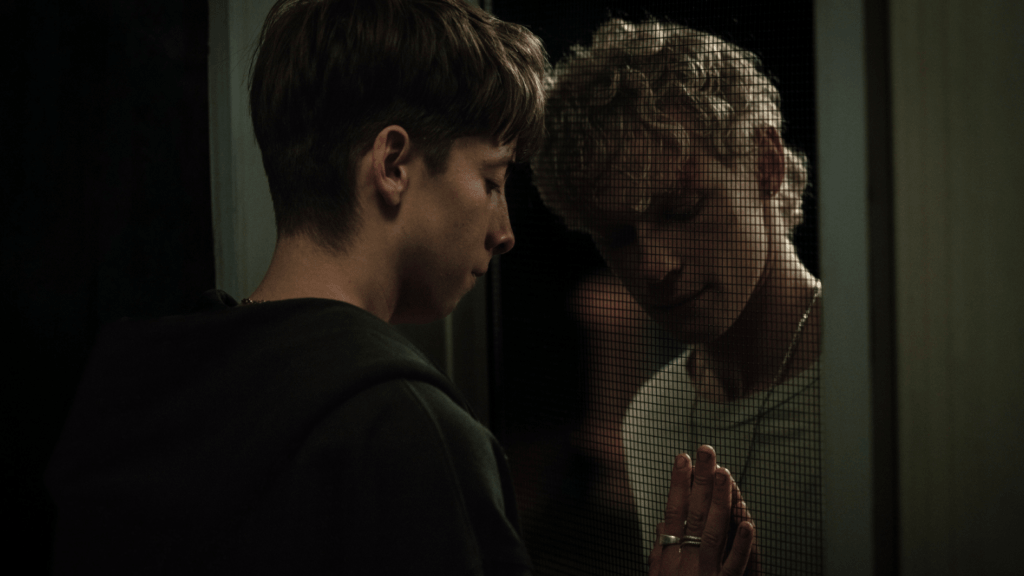
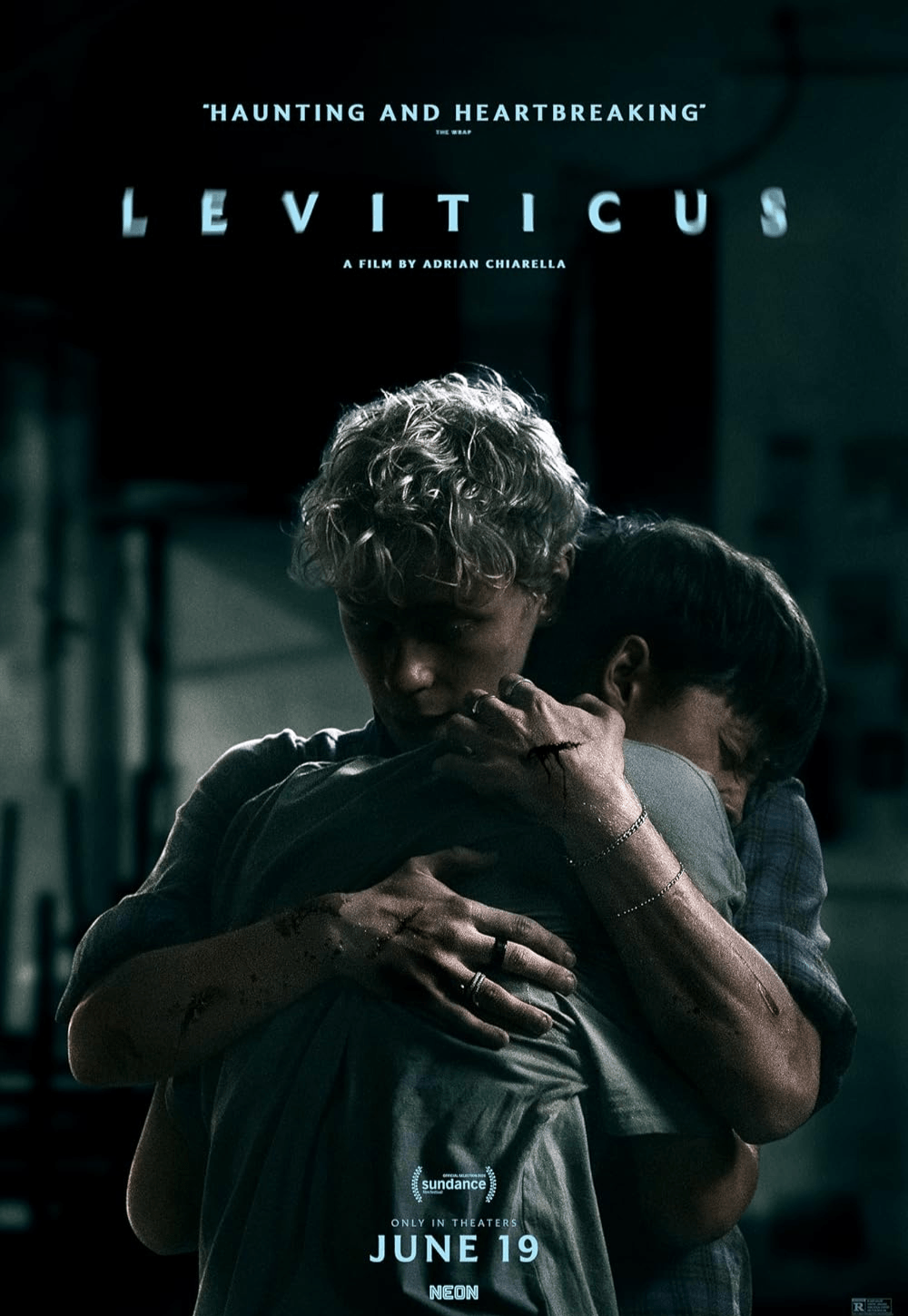
The Book of Leviticus details how to appease God by performing ritual sacrifices to purify the sinful. It’s also a loaded title for writer-director Adrian Chiarella’s supernatural horror movie, a potent allegory for the cruelty and damaging effects of SOCE (Sexual Orientation Change Efforts), and the near-constant fear and anxiety members of the LGBTQ+ community experience from groups that make them feel unwanted or targeted. The story follows two teenage boys in a downtrodden Australian suburb who are outed and subjected to a cultish form of conversion therapy: They are cursed with an unshakable presence designed to control their sexual desires. This unidentified spirit-demon-thing manifests to the boys as the embodiment of their queer desire. When they try to indulge that desire, it responds by pursuing and attempting to kill them. However, no one else but the targeted victim can see this wraith, which leaves them even more alienated than they already feel.
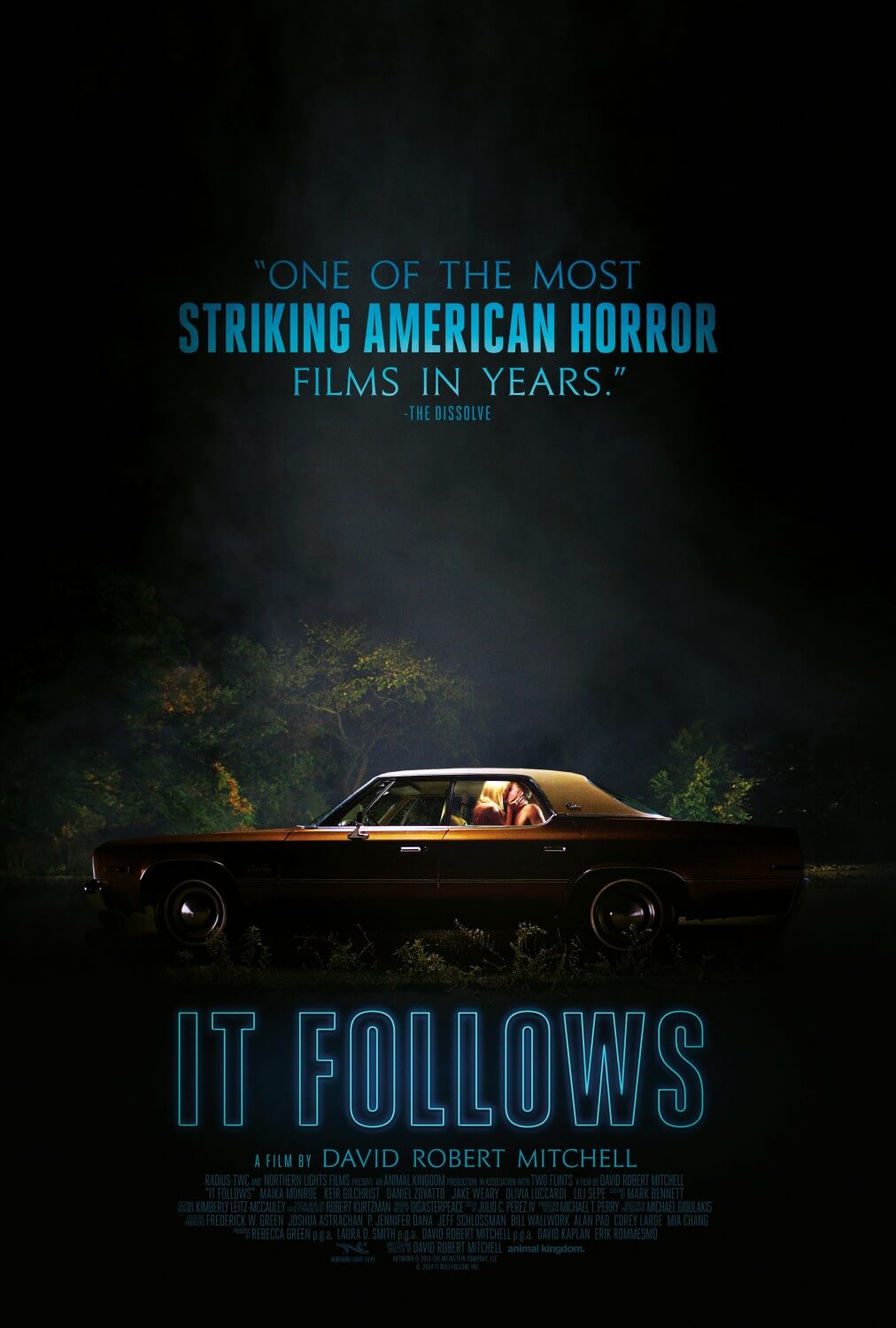
If you just said to yourself, “That sounds like It Follows,” then you’re not alone. Leviticus is the latest feature since David Robert Mitchell’s 2014 breakthrough to employ an Unseen Force as a metaphor. Similar invisible entities have become the latest trend among independent horror filmmakers, as they rely mostly on the viewer’s imagination to instill fear rather than on practical monster effects or computer-generated imagery. They can be executed cheaply, and what is more, the idea of something is often more frightening than seeing the source of that fear. These forces—seen, or not, in the Smile franchise and this year’s Passenger—have become the new zombies. They hold the potential to become a metaphor for any number of social conditions, from the spreading of STDs to the looming specter of trauma.
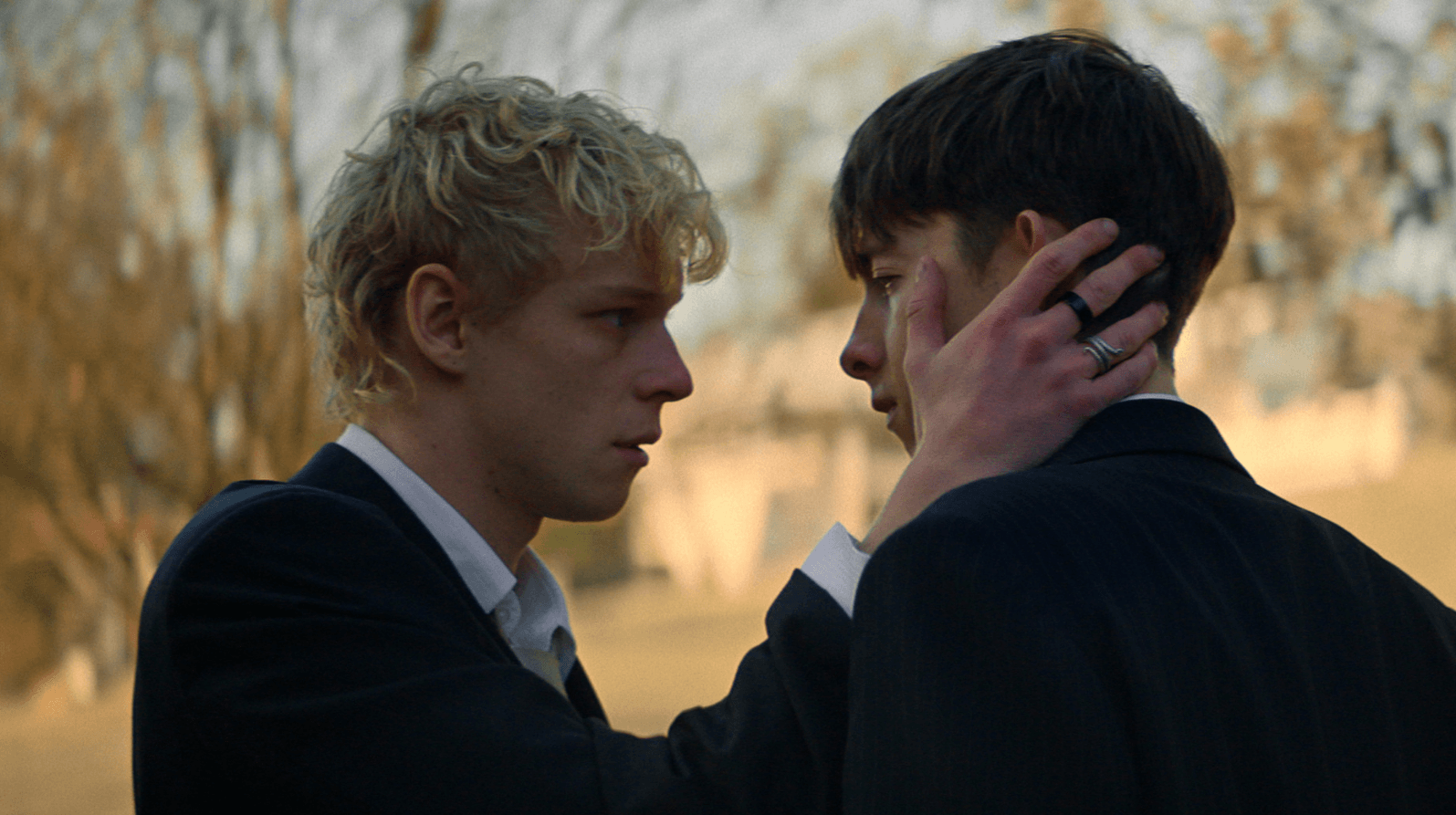
At the center of Leviticus are the shy Naim (Joe Bird) and the more aggressive Ryan (Stacy Clausen). Chiarella introduces them bonding like immature boys. They push, call each other names, and throw rocks inside an old, abandoned mill on the outskirts of town. Their playfighting turns into wrestling, then touching and kissing. Naim and his mother, Arlene (Mia Wasikowska), have just moved to town. He has had trouble making friends, while his mother has latched onto a local religious group for support. It’s only after his budding romance with Ryan that he begins to feel at home. But that security crumbles when Ryan ignores Naim at school, and when Naim visits Ryan’s house, only to find him kissing another boy, Hunter (Jeremy Blewitt), the local pastor’s son. Feeling betrayed, Naim outs Hunter and Ryan to the religious community leaders—Hunter’s parents. They respond by bringing members of their church together and calling on a “Deliverance Healer” (Nicholas Hope), who performs what looks like a crackpot ritual. Except, things get serious when the shaman lights a flame and says the words, “Two flames: one to defile, one to reform.”
Consequently, Ryan and Hunter are stalked by some nameless Christian spirit enforcer that, for Hunter, looks like Ryan. For Ryan, it looks like Naim. And when Naim’s mother soon subjects him to the same rite, the presence appears to Naim in the form of Ryan. Chiarella outlines some basic rules, such as the thing appearing as the object of the cursed victim’s affection, and it only appears when the individual is alone. The stronger Naim feels for Ryan, the more deadly and convincing the Ryan-specter becomes. For this reason, the premise of Leviticus is brilliant because it captures how the desire and yearnings of LGBTQ+ people are twisted into something dangerous by prejudicial zealots who need everyone to conform to their lifestyle. The victims here are those imperiled by an insidious scheme to turn their longings against them.
Leviticus is the latest emotionally intelligent, socially conscious, so-called elevated horror film to come out of the festival circuit and earn a buzzy release. It’s reassuring to see so many independent horror films performing well at the box office, particularly in the last month, with Backrooms and Obsession. The trend proves there’s still a substantial demand for smaller, well-made movies. But this is nothing new; it’s true of independent horror going back to George A. Romero’s Night of the Living Dead (1968) and John Carpenter’s Halloween (1978). Today’s horror directors, Chiarella among them, seem to be repeating a commercially viable template. Romero and Carpenter, along with Tobe Hooper (The Texas Chain Saw Massacre, 1974) and Wes Craven (A Nightmare on Elm Street, 1984), have had countless imitators. Today, the A24 and Neon mode of horror, recently popularized by Ari Aster (Hereditary, 2018) and the aforementioned Mitchell, has been adopted by Curry Barker, Michael and Danny Philippou, Kane Parsons, Osgood Perkins, and others.
Mind you, I’ve enjoyed watching these directors’ movies, but it’s also clear that their formal execution and thematic interests have become less novel and more formulaic over time. Of course, some of the best horror movies ever made have applied a proven style to a new story, so there’s no shame in innovating (as opposed to originating). But the signs have been commonplace. The current wave of indie horror practitioners often employs predictable nods to art cinema icons, emulating everyone from Terrence Malick and Paul Schrader to Andrzej Żuławski. The cinematography is thoughtfully crafted, albeit restrained to match a brooding tonality, which is only interrupted by a jump-scare or two. Leviticus and its contemporaries often look and feel like quiet indie dramas with a Sundance-qualified aesthetic. The major difference is the subject matter.
And that’s what works best about Chiarella’s film, too. If it’s predictably assembled in a style designed to sell on the festival circuit—Leviticus debuted at this year’s Sundance Film Festival and was picked up by Neon—it’s nonetheless a tender story, anchored by Bird and Clausen’s sympathetic performances and a particularly unsettling turn by Wasikowska. Her character tells Naim, “We need fear. It’s how we survive.” In other words, she and her religious group have such disdain for the LGBTQ+ community that they want to instill fear and pressure until they conform to heteronormativity. Her worldview doesn’t allow anything else, disturbingly so. In the end, Chiarella’s scenario works better as a metaphor than a complete narrative with a satisfying conclusion, but he spins a frightening yarn about what it feels like when your natural desires have been demonized. He ends the film without any real closure for Naim and Ryan, as though he forgot to write a third act. Then again, as we have seen in recent years, this sort of fear from an intolerant world never completely subsides; even after social progress and institutional change, the world can always regress. The film’s open-endedness conveys that chillingly.
Thank You for Supporting Independent Film Criticism
If the work on DFR has added something meaningful to your love of movies, please consider supporting it.
Here are a few ways to show your support: make a one-time donation, join DFR’s Patreon for access to exclusive writing, or show your support in other ways.
Your contribution helps keep this site running independently. However you choose to support the site, please know that it’s appreciated.
Thank you for reading, and for making this work possible.
Brian Eggert | Critic, Founder
Deep Focus Review