Spider-Man: Brand New Day
By Brian Eggert |
(Editor’s Note: This review alludes to major plot points in Spider-Man: Brand New Day. Read it after you see the movie, which you definitely should do if you’re an MCU fan, to avoid spoilers.)
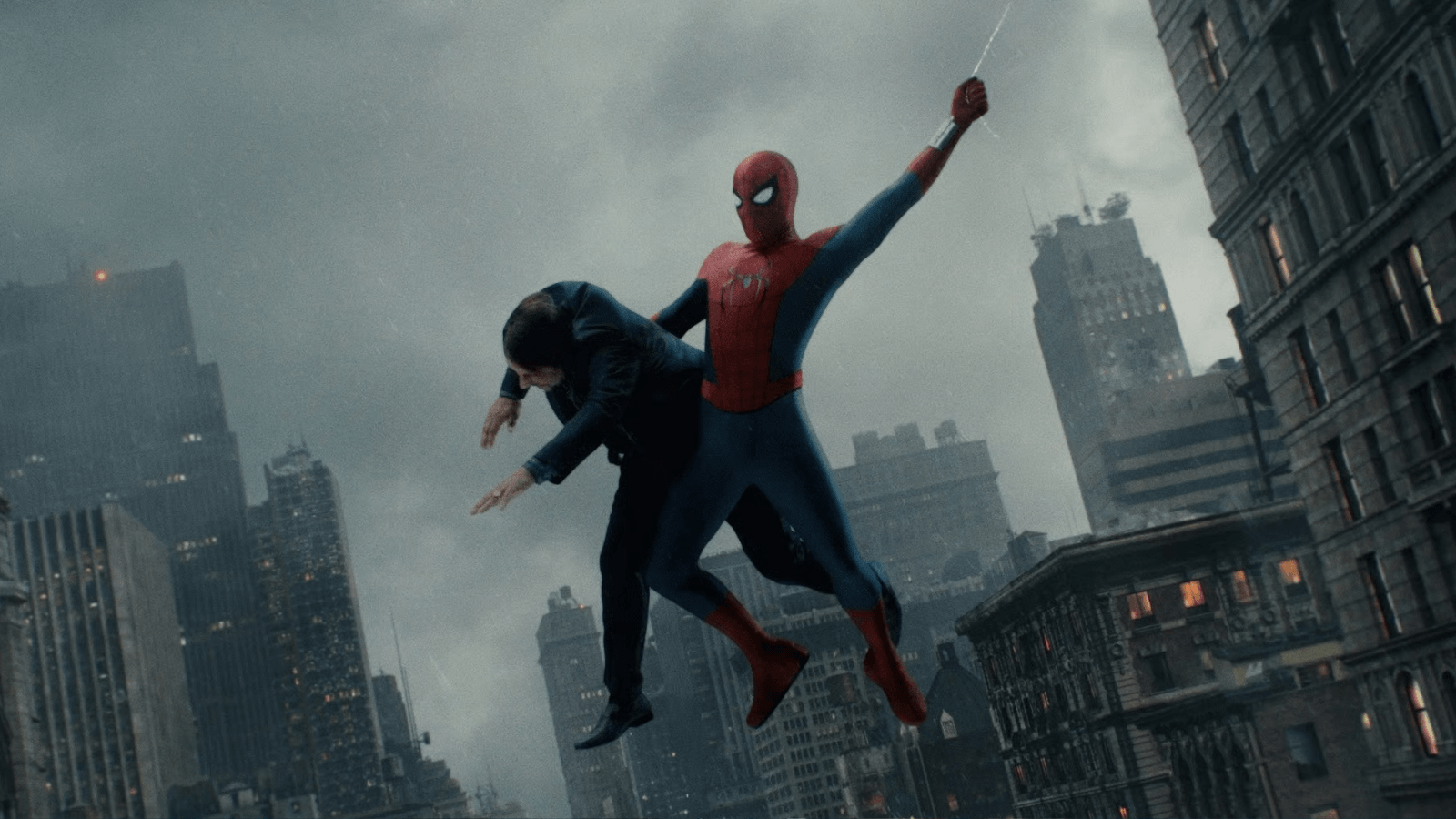
Covering the Marvel Cinematic Universe, I’ve often felt like Spider-Man must feel when web-slinging around New York. When gravity pulls Spidey downward and accelerates him, it’s the same sense of exhilaration I often feel watching one of these movies. But at the upward arc, as he gets some height and starts to decelerate, there’s a moment he lingers midair, an almost weightless instant that nothing’s happening. What follows could be another web line and swing, or Spider-Man could do nothing and go splat on the pavement. This reminds me of the time in between MCU entries: I become cynical and start to think about how these big-budget comic book movies contributed to the current state of Hollywood—how they’ve killed the mid-budget movie, overtaken theater screens, and made studios more interested in IP than originality. But then I see something like Spider-Man: Brand New Day, and I feel that rush again, and I’m right back there with the web-head, zipping toward the next adventure.
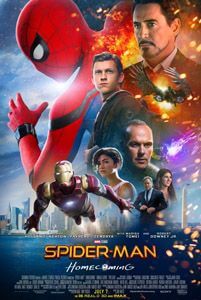
To be sure, the latest installment is the best of Tom Holland’s four Spider-Man features thanks to its emotional payoffs and surprising new story threads, which Marvel Studios has kept under wraps with sworn secrecy and vague marketing. Screenwriters Chris McKenna and Erik Sommers return, having shaped this series since Spider-Man: Homecoming (2017) through its two sequels, Far From Home (2019) and No Way Home (2021). The writers weave an elaborate web from threads established in earlier MCU movies and TV shows, using heartfelt emotions and themes that promise exciting things to come for these characters and the grander cinematic universe. Admittedly, part of why I enjoyed Brand New Day so much is that the movie’s storyline hadn’t been telegraphed to me in overly detailed trailers. That said, I allude to many of the hush-hush plot elements below. So if you missed the spoiler warning above, consider this a second warning to stop reading and finish after you’ve seen the movie.
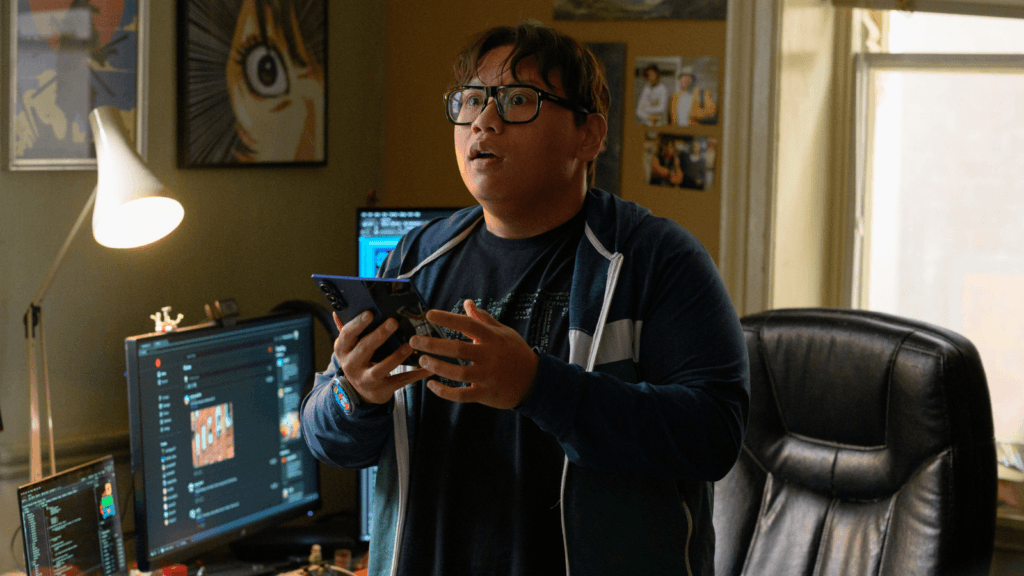
Destin Daniel Cretton, director of Shang-Chi and the Legend of the Ten Rings (2021) and this year’s Wonder Man TV series, a grounded Hollywood satire set in the MCU, opens his film with Peter Parker living in the aftermath of the fan-servicey, multiversal mayhem of No Way Home. His beloved Aunt May (Marisa Tomei) died in that movie, and any memories of Peter have been magically wiped from the minds of his former high-school pals: his best friend Ned (Jacob Batalon) and his first love MJ (Zendaya), both now enrolled at MIT. His only friend, if that word applies, is NYPD detective Jean DeWolff (Liza Colón-Zayas), the Commissioner Gordon to Peter’s Bruce Wayne. Peter’s solitude eats away at him, not that he allows himself a moment to think about it. Without friends or family, Peter has devoted himself to his alter ego. An early montage shows him ridding New York’s streets of several B-grade villains: the ninja gang The Hand; the albino crime lord Tombstone (Marvin Jones III); and Mac Gargan (Michael Mando), who dons a mechanical tail and calls himself Scorpion.
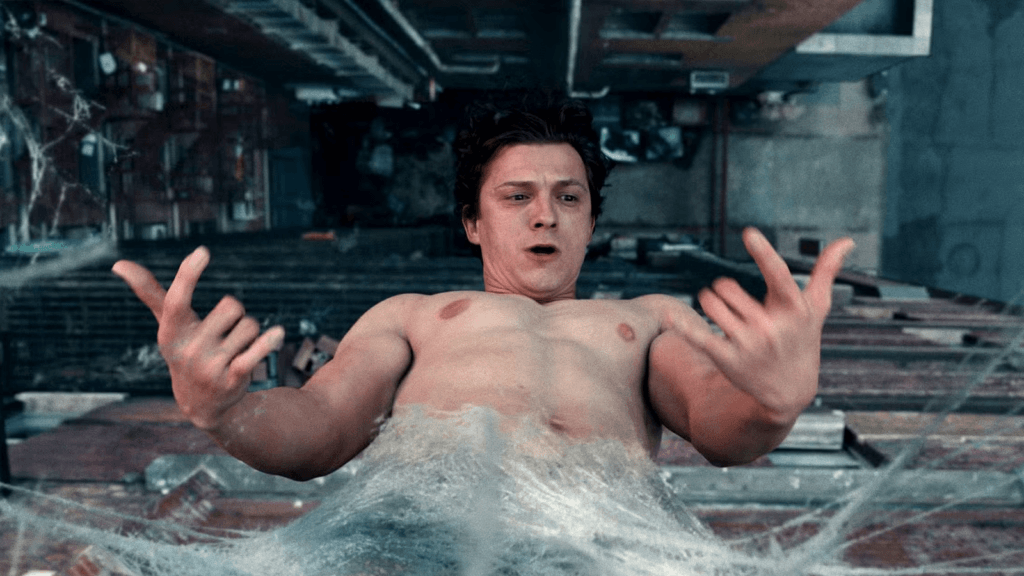
More urgent than Spider-Man’s rogues’ gallery is a sudden shift in Peter’s arachnid DNA, imbuing him with disorientingly heightened senses and physical web-shooters in his wrists. Maybe he’s worried about becoming the tarantula-like Man-Spider, so he researches what’s happening to him and tries to restore his usual DNA balance. He also yearns for his old friends and keeps tabs on them from a not-so-safe distance, and in doing so, puts them in danger from a curious antagonist who can possess people’s minds, leaping between them like the killer from Fallen (1998). This unnamed figure learns Peter’s identity and attempts to exploit his love for MJ, if only to distract him from a plan to infiltrate the government’s Department of Damage Control. The secretive organization, run by Bill Metzger (Tramell Tillman), aims to “redirect destructive energy into something useful.” It’s a sly way of saying it polices superheroes, going so far as to nab them off the streets in veritable kidnappings—imagery that cannot help but evoke footage of ICE taking random Americans off the streets because they look different.
If the plot in the first half sounds overstuffed with characters, it echoes the material’s comic-book roots, where other Marvel characters might show up in the pages of The Amazing Spider-Man for a single issue, contribute some facet to the story, and then move on. However, both Jon Bernthal’s Punisher and Mark Ruffalo’s Bruce Banner appear in extended supporting roles, and each allows for memorable set pieces with considerable dramatic weight. After this year’s mind-numbing hour-long special, The Punisher: One Last Kill, Bernthal returns as a softer, slightly less unhinged version of Frank Castle, one capable of humor and aching remorse. Elsewhere, Banner teaches physics at ESU and has developed a suppressor that will curb his transformations into the Hulk. Peter hopes to modify that gizmo to prevent whatever’s happening to his DNA. But as genial as Ruffalo is playing Banner, his character’s fractured mind conceals a deep-seated rage. Both he and Peter learn that no matter how much someone wants to repress a naturally occurring feeling or change, the repressed will return with a vengeance.
Brand New Day’s central theme is less about the difficulties of being a superhero than the dangers of trying to prevent the inevitable, whether it’s feelings bubbling to the surface or a sweeping evolution. This feeds into the story in a fourth-act twist, when Peter’s mysterious enemy is revealed to be a teen whose supernatural abilities signal the future of humanity and, by extension, the MCU’s exciting next phase. Sadie Sink plays the character, whom I won’t reveal here, with a fiery intensity that recalls her best work on Netflix’s Stranger Things and Fear Street trilogy. Her character enriches the movie’s themes about change and the repression of emotions, and signals the arrival of mutants, as well as those who fear and target them, in the MCU. But like Peter, her character has no one else. And without someone to talk to, processing grief and trauma becomes a woeful prospect, leaving several characters (Spidey, Hulk, Punisher, etc.) to lash out violently in ways they regret later.
Of course, there’s no denying that Brand New Day is an archetypal superhero movie in the summer blockbuster mold, catering to crowds hungry for big-screen spectacles, popcorn, and escapism. On that front, the movie delivers. As Cretton proved with Shang-Chi, he’s a superb director of dance-like battles, often drawing on wuxia visuals and slow motion to deliver iconic frames. In Brand New Day, he sets the action to a playful blend of needle drops and Michael Giacchino’s score. If the production’s not-so-great CGI looks questionable, particularly in those scenes of Spider-Man and MJ swinging through the city, the well-developed emotional stakes mean the action scenes never feel like spectacle for their own sake. An encounter between Spider-Man, Hulk, and Punisher ends with a devastating dramatic turn, and later, the thrilling finale comes equipped with a Neo-level moment and a gasp-inducing climax that leads to potential tears. While entertaining, the action seems like an afterthought to the movie’s drama, though they are thoughtfully woven into the story. And though the 145-minute runtime feels somewhat long in the moment, it’s only because the writers have a few tricks up their sleeves. Upon reflection, the movie earns its length.
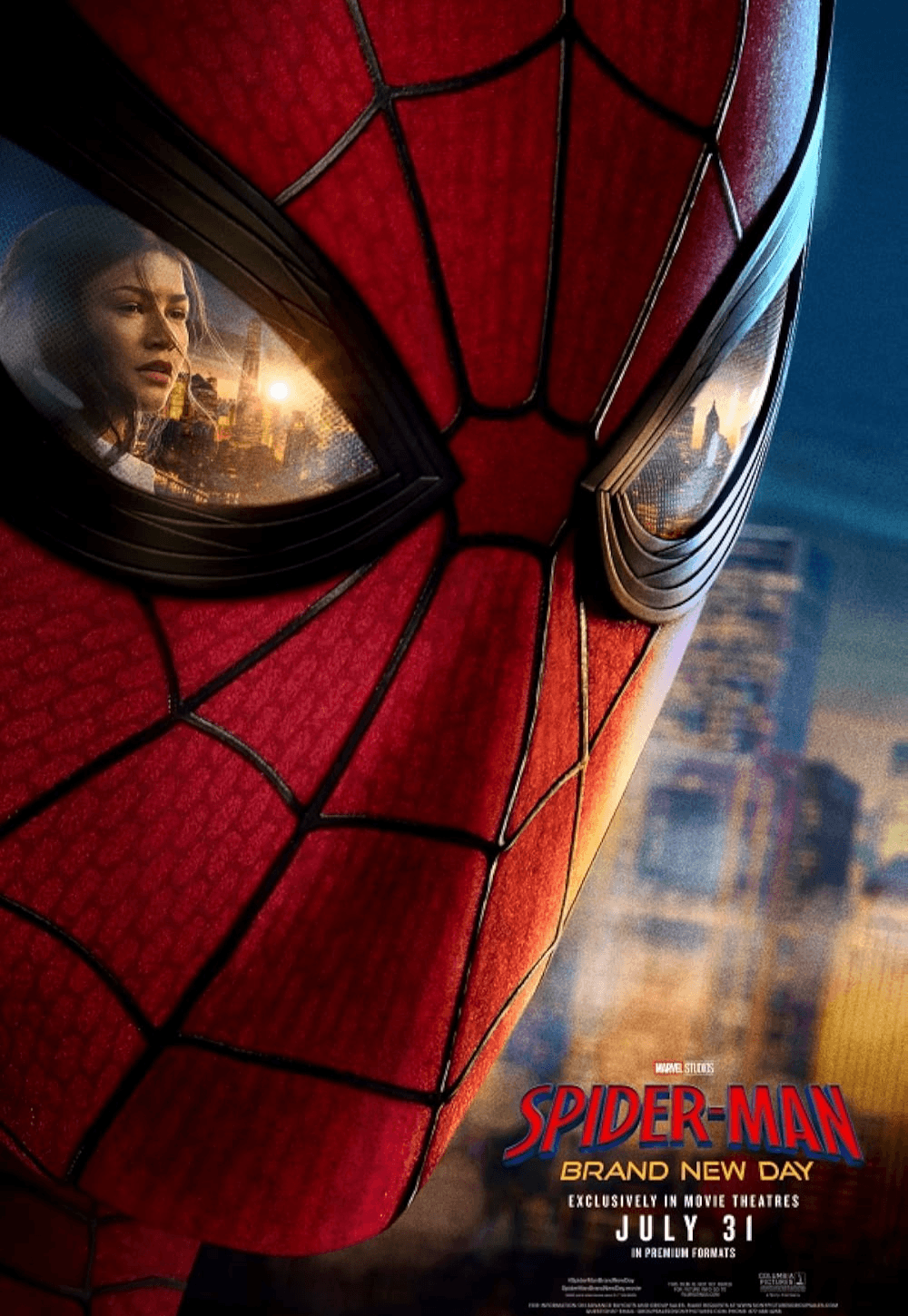
At the center of Spider-Man: Brand New Day is the charming rapport between real-life couple Holland and Zendaya, who have an earnest chemistry and play off each other well. Both have matured as performers since first playing Peter and MJ nearly ten years ago, and their growth is evident here, lending an extratextual gravitas to their rather bittersweet dynamic. Best of all, what at first seems like a typical “Spider-Man faces a mysterious new villain!” movie is really a megabudget yarn about the necessity of friends, the inevitability of emotional release, and the acceptance that things change. Although the rest of the MCU is still having banal discussions about the multiverse, leading to this December’s Avengers: Doomsday and next year’s Avengers: Secret Wars, Spider-Man remains anchored by heartwarming (and heartbreaking) drama and multidimensional characters. This level of intimacy and emotionally driven storytelling may be lacking from the two overcrowded MCU crossover events to come, so savor it here while you can.
Like DFR? Support us.
This site exists because readers like you care about film. If DFR has enriched your experience with movies, I’d be grateful for your support. You have a few options:
• Join DFR’s Patreon community
• Make a one-time donation on PayPal
• Buy me a coffee
Whatever option you choose, it helps keep my work independent. And it means a lot to me.
Thank you for reading, and for making this work possible.
Brian Eggert | Critic, Founder
Deep Focus Review