Fjord
By Brian Eggert |
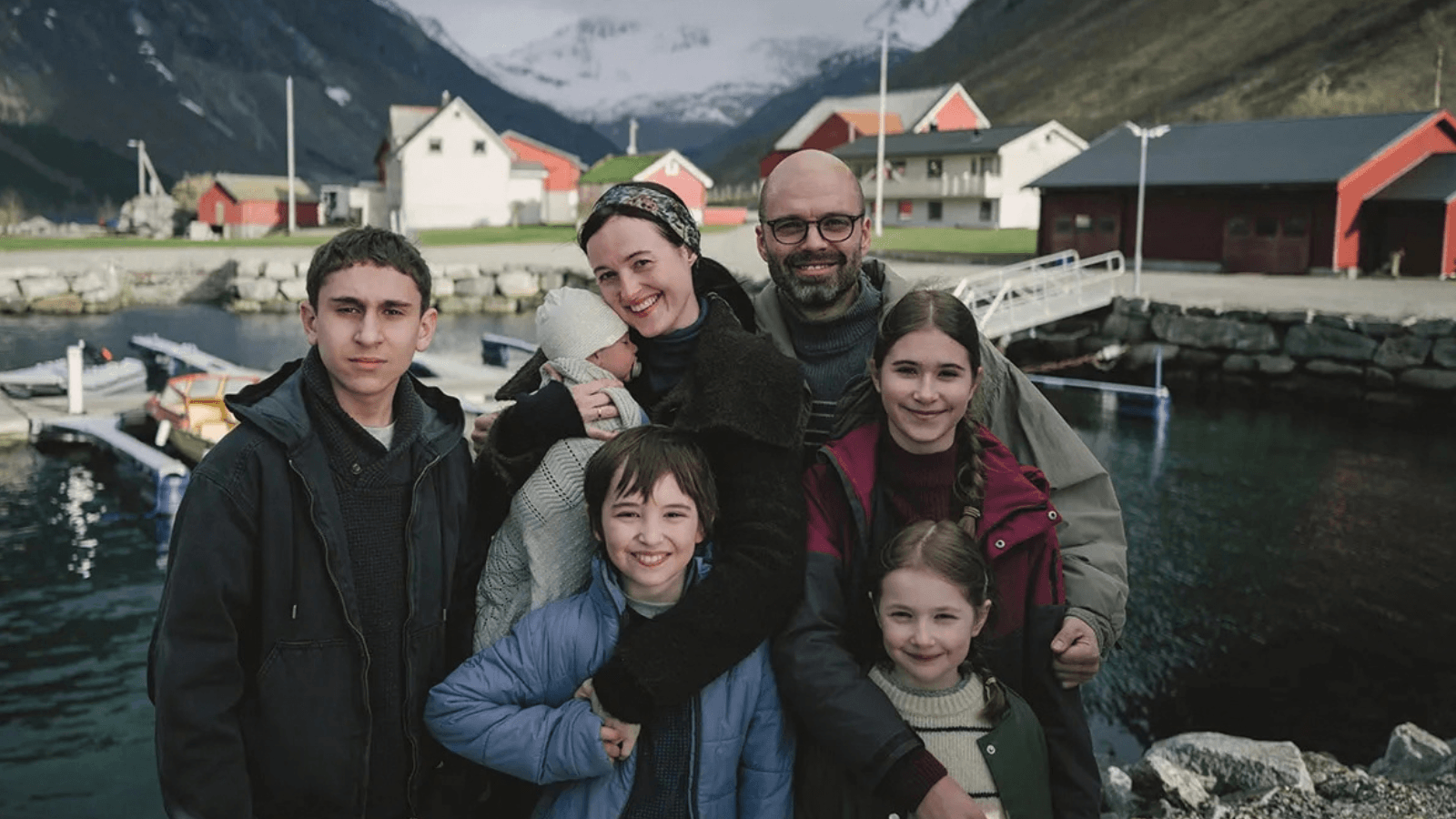
“No Dracula here,” assures Mats, the school headmaster in a small village on the Norwegian coast. With that, Mats welcomes four new students who have just arrived from Bucharest, the capital of Romania, home of the fabled vampire, to his comparatively progressive, secular, and humanist country. It’s a seemingly throwaway line of dialogue early in Fjord, the latest from director Cristian Mungiu, a master at conceiving open-ended thrillers that serve as allegories for larger sociopolitical issues. Mats’ remark echoes the prevalent attitude many Norwegians hold toward outsiders in this thorny, immersive film. It signals the expectation that, whatever traditions and beliefs they once held in their homelands, immigrants must set them aside and conform to the order of things in Norway. This becomes a hard lesson for Mihai and Lisbet Gheorghiu (Sebastian Stan and Renate Reinsve), the devoted Christian couple who arrive in their new home with their five children, including an infant, only to face prejudice and legal persecution for their beliefs—as sudden and unexpected as the avalanches that occasionally befall the community. In true Mungiu fashion, Fjord explores how, rather than reacting to The Other with openness and curiosity, people more often follow their impulse to recoil and reinforce the safe space of their jealously guarded ideology.
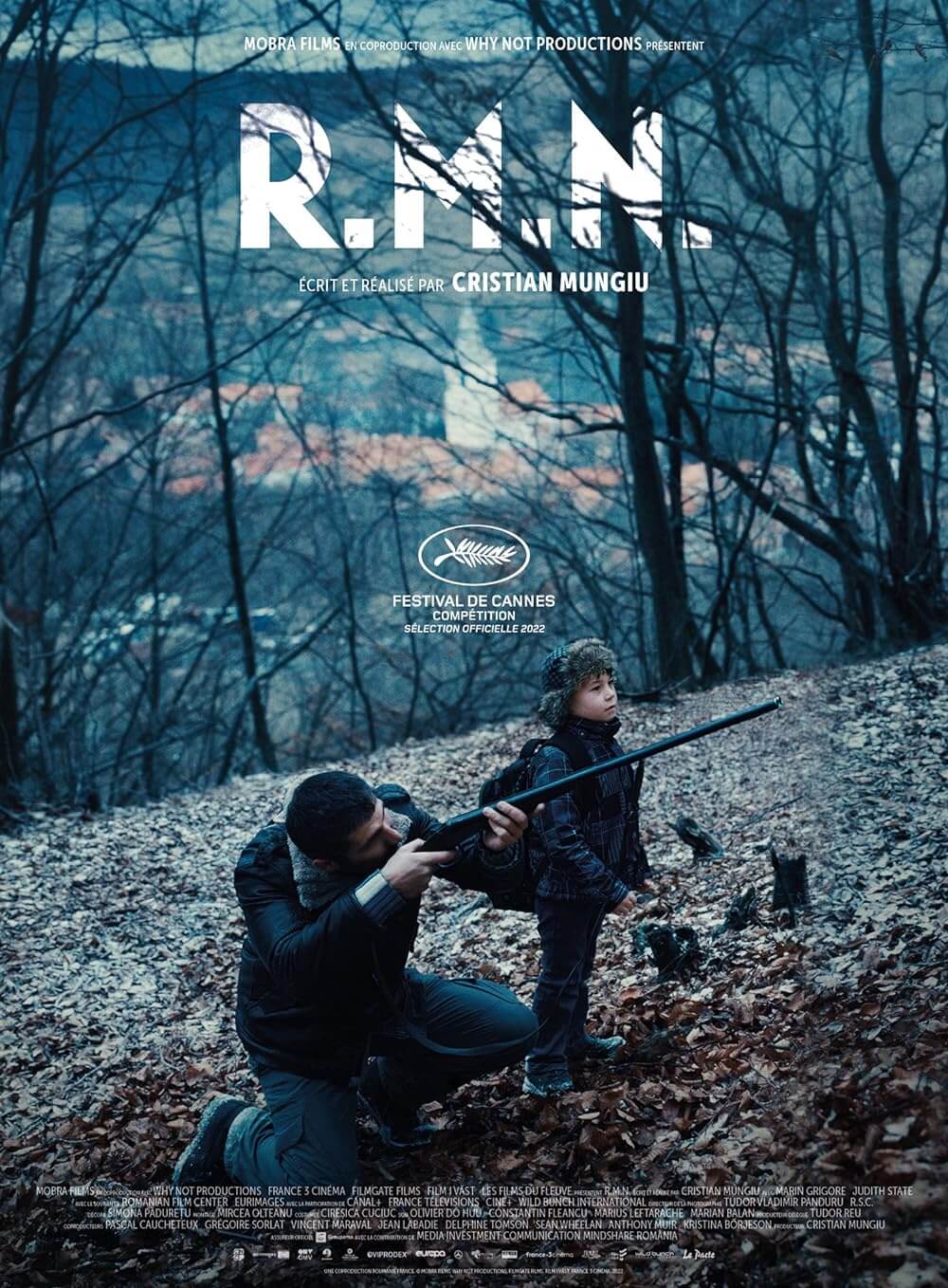
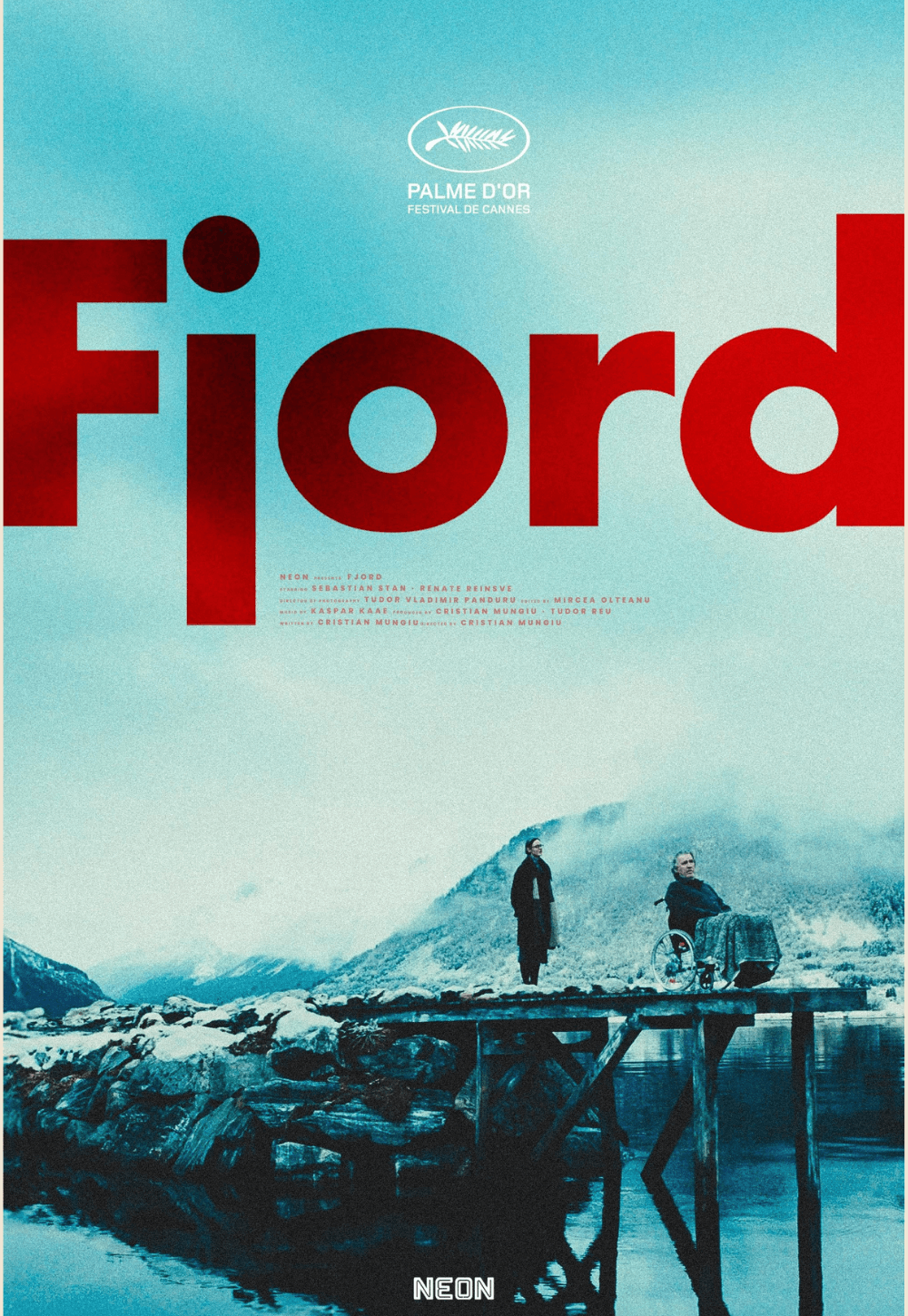
Humanity’s tendency to draw social boundaries and rely on groupthink has long been central to Mungiu’s work, whether it stems from Nicolae Ceaușescu’s dictatorship over communist Romania or religious extremism. In his previous film, the brilliant R.M.N. (2023), a Transylvanian village with mixed cultural origins (from Germany, Hungary, France, etc.) rallies against Sri Lankan migrant workers. In Beyond the Hills (2012), a former nun is targeted by a Romanian Orthodox convent on the suspicion of a same-sex relationship, leading to a tragic conclusion when she falls victim to cruel punishment. Mungiu won the Palme d’Or at this year’s Cannes Film Festival for Fjord, an honor he received once before in 2007, for his sobering thriller 4 Months, 3 Weeks and 2 Days—about a woman who goes through back channels to secure an illegal abortion in 1980s Romania, under Ceaușescu’s autocratic rule. In each case, Mungiu’s work invites comparisons to Michael Haneke, the German-born Austrian auteur whose films Code Unknown (2000), Caché (2005), and The White Ribbon (2011) similarly weaponize the formal austerity and intellectual rigor of arthouse cinema to splay open a tense situation and let the audience sort it out.
In Fjord, Mungiu raises unanswerable questions about cultural colonization through the expectation to assimilate, and, as usual, his premise is entrenched in specificity while addressing universal themes. Although his film occupies the Gheorghius’ subjectivity, the same scenario could play out in almost any country where a minority belief system clashes with a more dominant one. As evangelical Christians, the Romanians are outsiders, even though their move marks a homecoming for the Norway-born Lisbet. The couple met during her missionary work in Romania. Now relocated, she serves as a nurse in a senior assisted living facility, while Mihai, though trained as an aeronautical engineer, has landed a job handling the IT for the local school—the same school attended by their two oldest children, Elia (Vanessa Ceban) and Emmanuel (Jonathan Ciprian Breazu). Almost immediately, the school treats their religion as unwelcome. One day, spotting a keyboard in the school cafeteria, Mihai plays a few notes of “Amazing Grace,” and a colleague, Frida (Lisa Loven Kongsli), asks him to play “something more cheerful.” Lisbet, too, is told not to bring up religion with patients unless they do first.
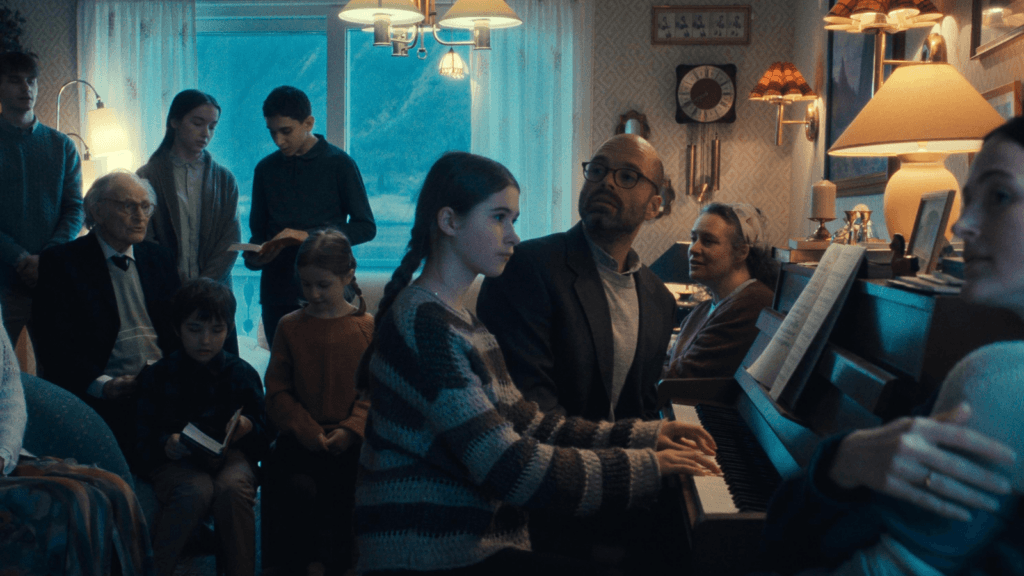
Of course, it’s part of the evangelical—and, in some respects, Christian—mission to convert as many souls as possible to their cause. It’s the same drive that fueled worldwide colonization, religious wars, and Manifest Destiny across the Americas. Never mind if someone’s a nonbeliever or even uninterested in the message. Most of us have encountered or had a knock on their door from someone who insisted we take their pamphlet or listen to their spiel about the redeeming power of Jesus, seemingly unable to see or care that we were clearly uninterested. Hell, I was confirmed Catholic as a teen, even though I vocally protested and pronounced my atheism to anyone who would listen. That’s their thing, and as much as I don’t share their views, they can try to convert me, and I’ll politely decline. Granted, their desire to proselytize and push their views on others goes against my innate Minnesotan worldview of minding my own business. But just because I don’t agree with them doesn’t mean I think they deserve persecution, and that’s what happens in Mungiu’s film. The situation cannot be resolved so easily, though.
In their new surroundings, one of the most appealingly secularized countries in the world, the Gheorghius preach their worldviews because it’s normal to them. In school, where religious discussions are frowned upon, the Gheorghiu children spout their views. Lisbet, too, brings up the subject of prayer with a woman who just lost a loved one. Besides these minor faux pas, the real trouble starts when a bus driver and a teacher overhear Elia and Emmanuel arguing, with the latter remarking that his sister was punished “for being stupid.” Bruises on Elia’s back and face prompt the school’s leaders to raise concerns of abuse at home. They follow a strict protocol and contact Child Services. With chilling speed, the authorities scoop up the Gheorghius’ children, including the still-breastfeeding youngest, and place them in foster care, while an investigation and possible criminal charges are underway. Mihai is believed to have beaten the children, but it’s not that simple. Is a spanking the same as hitting? What about when Lisbet pushes Elia to prevent the baby from getting splashed with scalding hot milk? And what in these discussions is lost in translation? Often, Mihai speaks English to the locals, but the English and Norwegian words for “hitting” may have more nuanced meanings in Romanian, and if Mihai commits to a word in a police report it could be self-sabotage.
Questions arise about every aspect of the Gheorghius’ parenting, but the problem lies in a prejudicial attitude about ideologies that don’t conform to the Norwegian way. Child Services, acting as a sovereign entity within the government, thoroughly dismisses the Gheorghius’ modus vivendi. The department is populated with condescending bureaucrats who condemn the family’s entire worldview and failure to assimilate. The prosecutor (Christian Rubeck) puts the family’s beliefs on trial, rather than the particulars of the Gheorghiu home. Certainly, as a nonbeliever, it’s tempting to condemn the Gheorghius. Their conservative patriarchal family structure and views on same-sex relationships feel archaic, and on depression they say, “It’s a sin to be sad for no reason.” Every aspect of their lives remains tethered to their religion in a way that can be exasperating. But should Mihai go to jail for what is a corrective pat on the butt? Should Lisbet be separated from her baby because of a teacher’s misguided assumption, validated by an unrecorded, possibly coercive interview with the children? Based on what Mungiu shows us of the family dynamic, it’s not how I would want to live, but it’s not criminal either. What becomes apparent is that Lisbet and Mihai have been targeted because their Christianity represents a sharp difference within their new community.
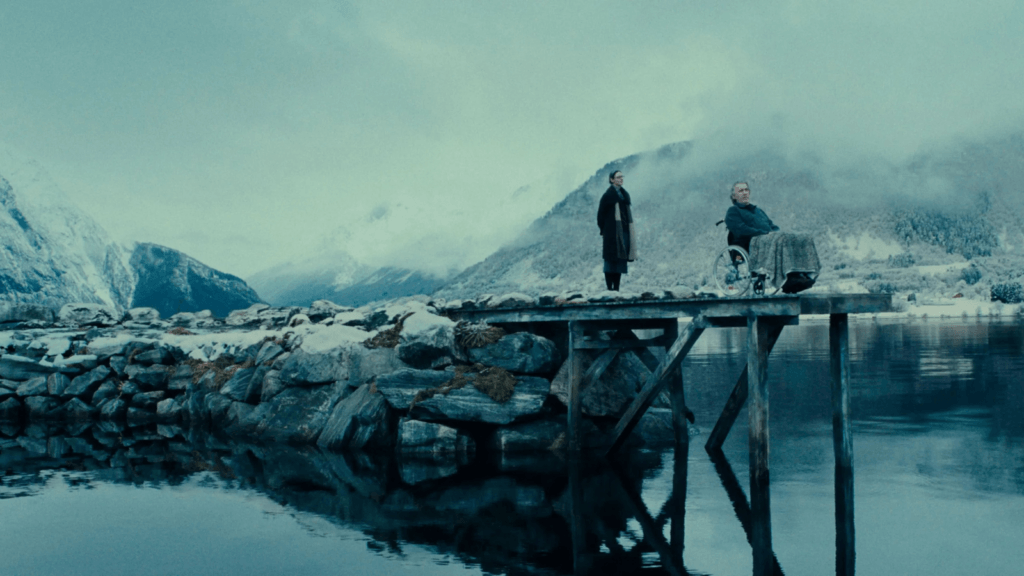
Among the film’s few detractors, some critics have bristled at Mungiu’s way of tipping the moral scale to the Gheorghius’ side. I would argue that’s the point: to see through the perspectives of outsiders you may not agree with, and to acknowledge that even progressive systems can target difference. Although my own views align with the Norwegians, Mungiu presents several deplorably chilly characters on their side. The unsympathetic social worker, Gunda (Ellen Dorrit Petersen), remains adamant in her refusal to compromise and assumes the worst about Lisbet and Mihai. Other lawyers and caseworkers are just as unbending, each demanding that Lisbet and Mihai remain calm and relaxed in an impossibly stressful situation. Wouldn’t a warning, followed by a cultural liaison or transition course, be more appropriate for immigrants, as opposed to taking the children away? Isn’t being ripped away from their family potentially more traumatic for a child than a spanking? And what of the foster family that looks down on Lisbet and Mihai for not allowing their children to have phones or watch YouTube? This absolutism prompts Mihai to enlist the Romanian press to help his cause.
On the periphery, Mats (Markus Scarth Tønseth) and his less judgmental family watch the Gheorghius’ lives implode from next door. His partner, Mia (Lisa Carlehed), a sympathetic attorney, agrees to defend the Gheorghius in the Child Services case. They have been good neighbors, with Lisbet donating her time to look after Mats’ ailing father, Åke (Øyvind Venstad Kjeksrud). Their daughter, Noora (Henrikke Lund-Olsen), has grown close to Elia, having dropped her close friendship with another, now-jealous girl. Noora has entered a rebellious phase, complete with performative cutting, a joyride on a boat, and a possibly requited crush on Elia. Both Mihai and Emmanuel are blind to this, and the boy even carries a torch for her. But a strange thing happens with Noora: When the three teens are together on the docks early in the film, Elia seems to walk on water at one point. It’s a detail that might even be missed, until it happens again in the final frames with Noora. What should we make of this, especially with a girl who has no stated religious beliefs? The moment recalls the almost spiritual presence of bears in Mungiu’s R.M.N., an ignored population within a diverse community. Mungiu’s slight notes of magical realism add a touch of fantasy to his otherwise unflinching portrait, as though Noora’s love for Elia is tantamount to religious belief. Few feelings are more zealous than teenage infatuation. We all have passions, Mungiu seems to say; the trick is understanding them in others.
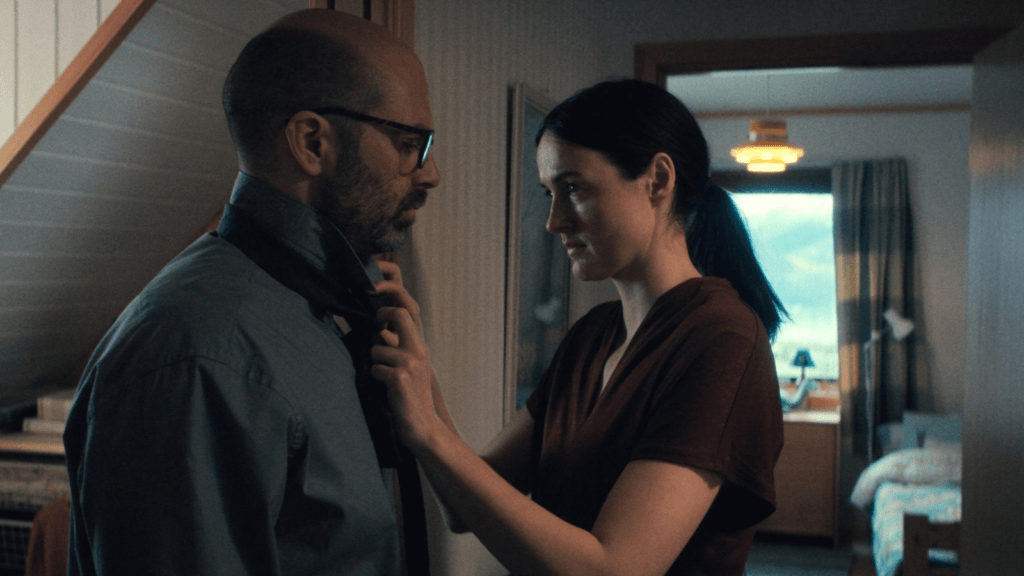
Fjord is spare yet immersive in its bleak minimalism, allowing the astounding performances to peek through the overcast skies. Shot by Tudor Vladimir Panduru, the director’s cinematographer on R.M.N. and Graduation (2016), the film features largely handheld camerawork and a blue-gray color palette to evoke the equivocations in this moral puzzlebox. More central than Mungiu’s aesthetics are the performances. Reinsve and Stan have acted opposite each other before in one of my favorite films in recent years, A Different Man (2024). That nothing about their performances here recalls that film is a testament to their considerable, chameleon-like skill. Fjord also marks the first time Stan, who was born in Constanța, Romania, has spoken in his first language in a film. Before moving to the US, his family left Romania during the Revolution and settled in Austria, where he had a bit role in Haneke’s 1994 drama 71 Fragments of a Chronology of Chance. Given the visual and thematic similarities between Haneke and Mungiu, Stan’s casting seems more than apt, despite the actor’s tendency to dabble in commercial projects such as the MCU. Stan and his costar remind us that they’re two of today’s most versatile performers.
Fjord runs nearly two and a half hours, but it’s as tense as any thriller. Like other Mungiu films, it explores the dangers of an oppressive society. Mihai sums up its message in a rare moment of thematic transparency: “They’ve never had Communism [in Norway]. One person shouldn’t have too much power, or it will be abused.” Mungiu thoughtfully warns against single-minded political structures of any kind, and he yearns for compassion toward other cultures—and households. As Mia thoughtfully observes, “No one knows what goes on in a family.” Mungiu uses his story’s specifics to speak on larger issues and even provide a thought experiment: Imagine a Hindu family moving into a predominantly Christian neighborhood, or an Islamic family on a mainly Jewish street. How would these outsiders be greeted and judged? In a frightfully divided world, recognizing that the definition of “civilized” varies from one culture to another is vital. It’s about respecting how people want to live their lives—even the subplot about Åke, who’s sickly and wants to die, makes a case for medically assisted suicide. People have a right to think what they want, but they shouldn’t be targeted for their beliefs, just as they shouldn’t force their beliefs on others. But that’s idealistic, and with his engrossing, superbly made film, Mungiu acknowledges that the world isn’t so simple.
Like DFR? Support us.
This site exists because readers like you care about film. If DFR has enriched your experience with movies, I’d be grateful for your support. You have a few options:
• Join DFR’s Patreon community
• Make a one-time donation on PayPal
• Buy me a coffee
Whatever option you choose, it helps keep my work independent. And it means a lot to me.
Thank you for reading, and for making this work possible.
Brian Eggert | Critic, Founder
Deep Focus Review