Reader's Choice
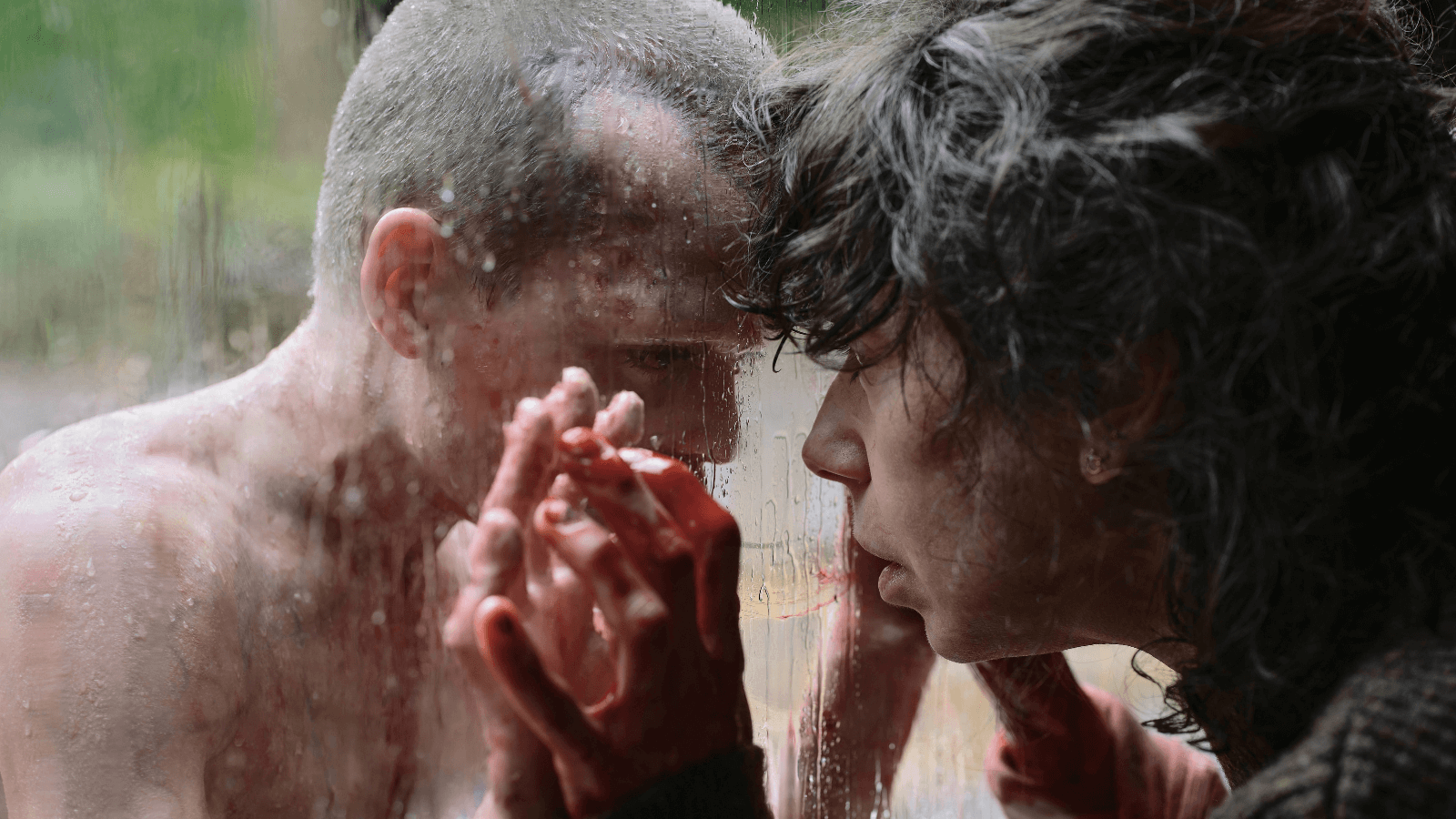
Bring Her Back
By Brian Eggert |
It’s tempting to accuse Bring Her Back and its directors, Danny and Michael Philippou—the Australian twin-brother duo behind 2023’s Talk to Me—of falling into the trap affecting so much of modern horror. Every other horror filmmaker has tried to dramatically elevate their movie with themes of loss and trauma, adding formulaic emotional weight to their premise through some manner of profoundly emotional messaging. I’ve complained about the trend before, particularly involving cases of blatant literalism, such as last year’s The Substance, where its otherwise resonant message proves so surface-level that there’s nothing to mine afterward. Few choices are more banal than horror movie characters who engage in open dialogue about “trauma” and other such buzzwords; when a movie states its themes in such overt terms, it’s condescending to the viewer. It doesn’t trust that audiences are smart enough to interpret a movie or figure out what a work of art means. And there’s a little of that in Bring Her Back, but not enough to render this nasty, squirm-inducing, emotionally raw experience ineffective. When a movie is this well done, its clichés evaporate.
Talk to Me distinguished itself with a chaotic youth energy, suggesting the movie’s supernatural conduit—the hand of a psychic encased in plaster—would function like a teen party game and social media phenomenon. The A24 hit grapples with heavy themes of lost loved ones and shattered family units, but in an unhinged and scary way rather than the morose and serious mood of most so-called elevated horror. Bring Her Back, the second feature from the former YouTubers known as RackaRacka, also distributed by A24, confronts many of the same ideas as its predecessor. Both feature notes of traumatic loss; both find the main character(s) clinging to a makeshift family; both introduce a horror element that amplifies those themes in increasingly disturbing ways. The difference between the two movies is the tonal shift to something more grim and serious in the second feature, even though they grapple with similar circumstances. Quite simply, the main contrast is that Bring Her Back is less fun than Talk to Me.
That doesn’t mean Bring Her Back is a lesser film, just a different sort than one might’ve expected from the Philippous—and it’s perhaps unfair to have any expectation at all, given they’ve only released two features. Still, as RackaRacka, the brothers have made chaotic videos, comic scenes, and short films with a zippy kineticism echoed by their behavior in press and promotional interviews. They’re rambunctious and playful people, by the looks of it. It’s reasonable to assume they would carry that energy into their directing style on their features. And sure enough, with Talk to Me, elements of that style manifest in their filmmaking. But Bring Her Back shows that the Philippous can exercise self-control, muting their signature exuberance for a dread-fuelled movie. Here’s a story about the deep love a parent feels for their child and how, when the child dies, it leads to unfathomable horror.
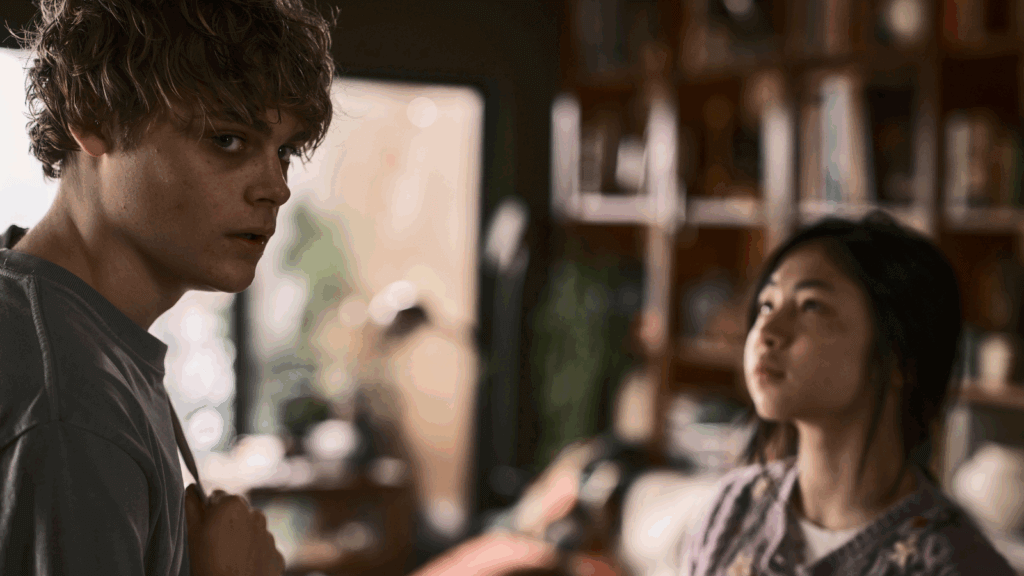
The story opens with siblings Andy (Billy Barratt) and Piper (Sora Wong), who find their father dead on the shower floor. Andy, just under 18, cannot yet apply for guardianship over his younger, visually impaired sister. Desperate, he convinces their social worker, Wendy (Sally-Anne Upton), to keep them together. She agrees and places them with Laura (Sally Hawkins), a former social worker turned foster mother whom Wendy trusts. Laura has experience working with visually impaired children—like her own child, Cathy, who drowned in the family’s pool. Laura already has another foster child, Oliver (Jonah Wren Phillips), who doesn’t speak and wanders around her isolated house, moving in strange, borderline catatonic ways. Maybe that’s why she keeps him locked in a room (hint: it isn’t). When Andy and Piper arrive, Laura has a clear favorite in Piper, given her similarities to Cathy, whereas Laura and Andy clash over her invasions of privacy and odd behavior.
Laura is, to quote Andy, “fucking weird.” Hawkins plays her with affable smiles that initially recall Poppy, her tragically optimistic character from Mike Leigh’s Happy-Go-Lucky (2008). The Philippouses use her genial presence as a weapon, disarming the viewer, albeit briefly, despite eccentricities like her bohemian attire, her taxidermied pet dog, and insistence that Andy kisses his father’s corpse on the lips at the funeral. The strange details snowball, as do the culty warning signs. She maintains a white painted ring around her property, keeps her shed where she takes Oliver for late-night excursions padlocked, and watches a messed-up video of some kind of ritualistic murder-resurrection. She also manipulates Andy in an apparent attempt to get Piper to herself, making him look unstable and an unreliable potential guardian for his sister. When her motivations and plans come into focus, Andy must scramble to save Piper.
Barratt is excellent as a teen grappling with his feelings about his father’s death—mixed up in the “trauma” (yes, he uses the “T” word) of finding the body on the bathroom floor—and the reality that his father abused him. Likewise, Hawkins, usually a shining presence, proves menacing and devious but not incapable of conjuring sympathy. She’s at once a warped villain and a portrait of how a profound loss and grief (more buzzwords) can lead to nightmarish choices. However familiar and overdone these ideas may be in horror today, they’re backed by performances and filmmaking that legitimize them in this context. For instance, even though we’ve seen a visually impaired character running from baddies in films such as Wait Until Dark (1967), that doesn’t make Wong’s role any less thrilling. Fortunately, the Philippous avoid turning her into a helpless victim, even though that’s how many characters see her, and I felt an all-consuming dread over what Laura had in store for her.
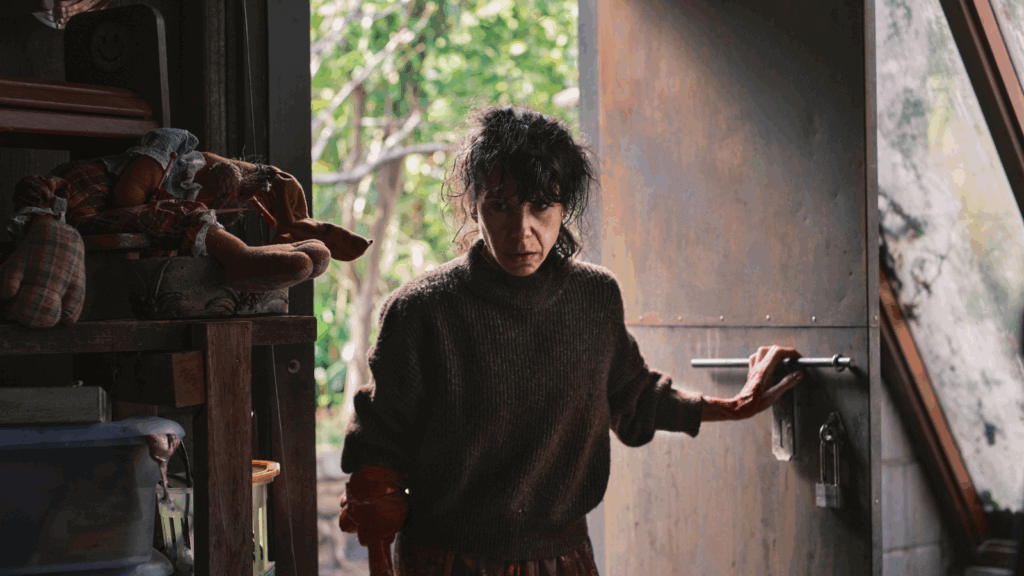
Working with the same confident cinematographer (Aaron McLisky), editor (Geoff Lamb), composer (Cornel Wilczek), and many other crew members from Talk to Me, the Philippous create another visceral experience, albeit more slow-burning than their debut. Still, Bring Her Back feels like a live wire, exposed and sparking with a wild current. They have a knack for creating unsettling imagery that looks slick with blood, sweat, and rain. A scene where Oliver chews on a knife made me gasp audibly, whereas the boy’s transformation throughout the film is downright grotesque. Every gory effect looks and feels potent. Never did I ask myself, “How did they do that?” I was too involved in the moment. This is also an exceedingly wet movie, saturated in motifs of rain-swept sorrow and drowning in swimming pools. And it’s a movie teeming with circles—a written symbol and a hand motion used in whatever ritual Laura has in store. The screenplay, credited to Danny Philippou and Bill Hinzman (as with Talk to Me), resists over-explaining the details of Laura’s plan and disperses information gradually. The scheme remains just cryptic enough that we understand what she wants to happen, but without clarifying the mythology or backstory with exposition.
Bring Her Back confronted my belief that themes of grief and trauma are overused in horror movies. On the one hand, yes, they’re practically omnipresent, which can be tiresome. On the other hand, the Philippous kept me engaged for 100 minutes, not thinking about how they’ve redeployed threadbare themes. As with most art, it’s not about the idea alone; it’s also about the execution. The Philippous’ brand of filmmaking is brutal and honest. Their movie creates unbearable tension from start to finish, and while not the jolt of manic electricity that was Talk to Me, it feels instead like a festering wound. What’s so impressive about both works is that the directors exercise remarkable control over their craft and the management of the audience. In Bring Her Back, each moment felt like it was building toward something. With every disturbing detail, every vague allusion to what’s happening, and every thoughtful choice by the excellent cast, it delivers.
(Note: This review was originally published on Patreon on June 3, 2025.)
Like DFR? Support us.
This site exists because readers like you care about film. If DFR has enriched your experience with movies, I’d be grateful for your support. You have a few options:
• Join DFR’s Patreon community
• Make a one-time donation on PayPal
Whatever option you choose, it helps keep my work independent. And it means a lot to me.
Thank you for reading, and for making this work possible.
Brian Eggert | Critic, Founder
Deep Focus Review