Renoir
By Brian Eggert |
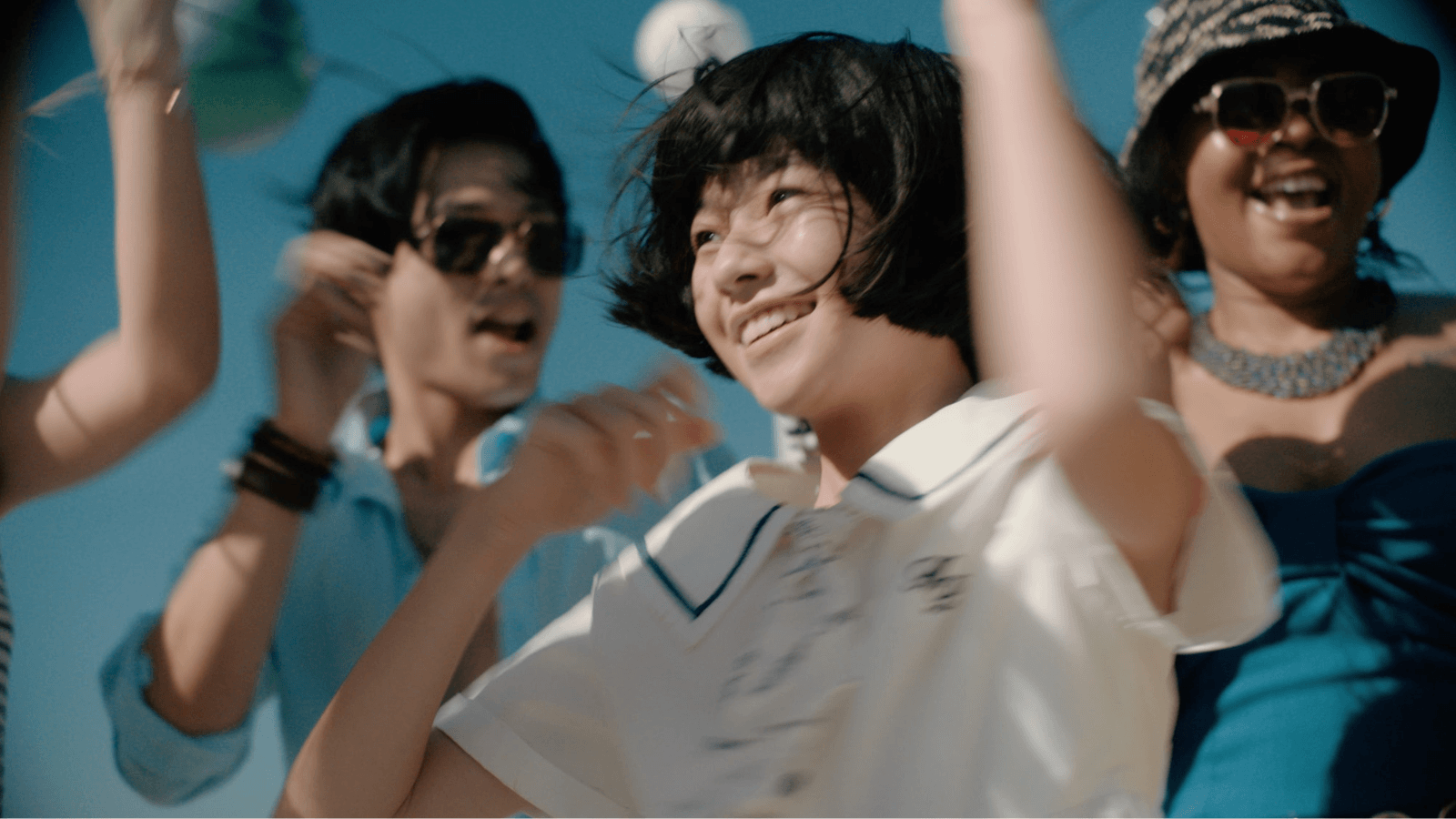
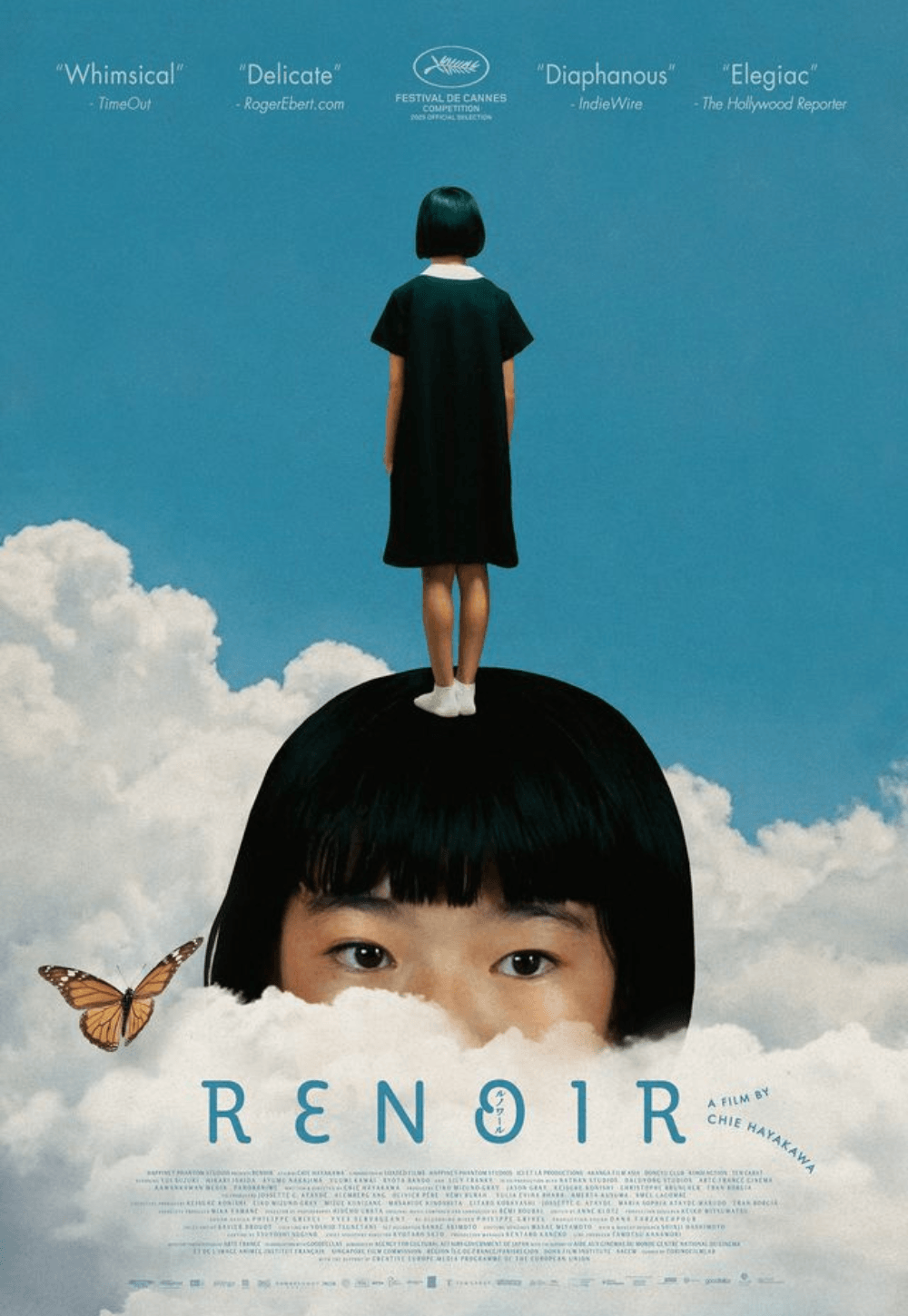
The protagonist in Renoir is Fuki, an eleven-year-old girl who’s curious about everything. Like an alien exploring another planet, she’s drawn to new experiences, such as touching her mother’s blouse flapping in the wind while riding a bike, or wondering how it would feel to be an orphan. Played by first-time actor Yui Suzuki, Fuki is a little odd but also innocent. Just as she expresses a natural interest in how death works, she also does typical kid things, such as holding a marker between her nose and upper lip like a makeshift mustache. During Fuki’s meandering summer break in 1987, her kindly father (Lily Franky) is ailing from cancer and in the “final stage.” Fuki’s mother (Hikari Ishida) doesn’t quite know how to address this, and Fuki must process her pain alone, all while trying to understand what those around her are feeling. Renoir asks whether our empathy can ever truly grasp the full extent of others’ experiences.
One reason Fuki fails to process what’s happening is Japan’s culturally ingrained reticence to discuss difficult topics. For instance, one friend of the family is shocked to learn that Fuki’s father knows about his cancer. Usually, doctors withhold terminal diagnoses to protect the patient from the emotional stress of knowing they will die. Sometimes, a cancer patient never learns they have cancer before dying because the family is so worried about the consequences of telling them—a similar cultural distinction explored in Lulu Wang’s The Farewell (2019). Fuki doesn’t subscribe to this line of reasoning. She wants to know about death. She wonders whether people cry because they feel sorry for the dead or sorry for themselves. But Fuki does not cry, not even after losing a parent. Is she a psychopath? Or is she just so far removed from her emotional self that she cannot process those feelings? And will she grow up, become more emotionally mature, and look back at her behavior with regret?
This autofictional story, the second film by Japanese writer-director Chie Hayakawa, debuted at the Cannes Film Festival last year. It’s a quiet, haunting film that often views the world through Fuki’s eyes—an extension of Hayakawa’s childhood experiences with her dying father. That perspective may have been more compelling had Hayakawa maintained it through Renoir’s two-hour runtime. However, the story sprawls outward from Fuki, exploring moments with her mother and other characters in her absence, making the perspective feel inconsistent. As for the title, Hayakawa explains in the press notes that reproductions of Pierre-Auguste Renoir’s paintings were popular in Japan when she was a child, and, like Fuki, she begged her father for a print. “The story’s connection to the painting or to Renoir the artist doesn’t run deeper than that,” writes the filmmaker. But Renoir’s impressionist paintings of nostalgic subjects view the past through a vague, subjective light, with evocative colors and feelings, albeit in broad strokes and without finer detail. That’s perhaps a perfect way to describe what Hayakawa does with her film.
The film floats between passages that are both beautiful and chilling. Lonely, Fuki makes friends with a girl at school whose parents are comically anal retentive. Looking for someone to talk to, Fuki calls a message line and connects with a young man who claims to be a psychology student, and they begin speaking. She even agrees to meet him in secret. They go to his house, where he gives her a drink, puts his arm around her, and then rushes her away when his mom comes home unexpectedly. One can guess what might have happened had the scene not been interrupted. Fuki’s curiosity about death and closeness it lead her to examine pictures of starving children and visit an art installation about bombs dropped on Japan in World War II. She performs a séance, hypnotizes her neighbor, and casts a black magic spell, all to see what’s real and what’s imaginary. There’s a thinly creepy undertone to Fuki that, if taken a little further, could have turned her into the titular character from the Australian child-terror film Celia (1989).
Hayakawa’s direction registers as introspective about an almost impenetrable subjectivity, with cinematographer Hideho Urata’s crisp imagery and the patient efforts of composer Rémi Boubal and editor Anne Klotz setting a melancholic, searching tone. Renoir is ultimately about Fuki trying to figure out the world around her and grapple with what she’s feeling. But her family and culture ask that she suppress those feelings. For instance, when Fuki’s mother finds that she’s been writing about her family in her diary, she tells her daughter not to write such private things. Where else can a girl be honest and explore her emotions if not in a diary? Growing up in a family not unlike Fuki’s, where meaningful communication was so infrequent that I felt isolated, I identified with Fuki’s (and, by extension, Hayakawa’s) childhood experiences. I used to resent that aspect of my childhood, only to realize later that it wasn’t just me—everyone in that house felt alone as they grappled with their own solitude. Hayakawa has realized that, too, and made an intuitive, ambiguous film about it.
Like DFR? Support us.
This site exists because readers like you care about film. If DFR has enriched your experience with movies, I’d be grateful for your support. You have a few options:
• Join DFR’s Patreon community
• Make a one-time donation on PayPal
• Buy me a coffee
Whatever option you choose, it helps keep my work independent. And it means a lot to me.
Thank you for reading, and for making this work possible.
Brian Eggert | Critic, Founder
Deep Focus Review