Passenger
By Brian Eggert |
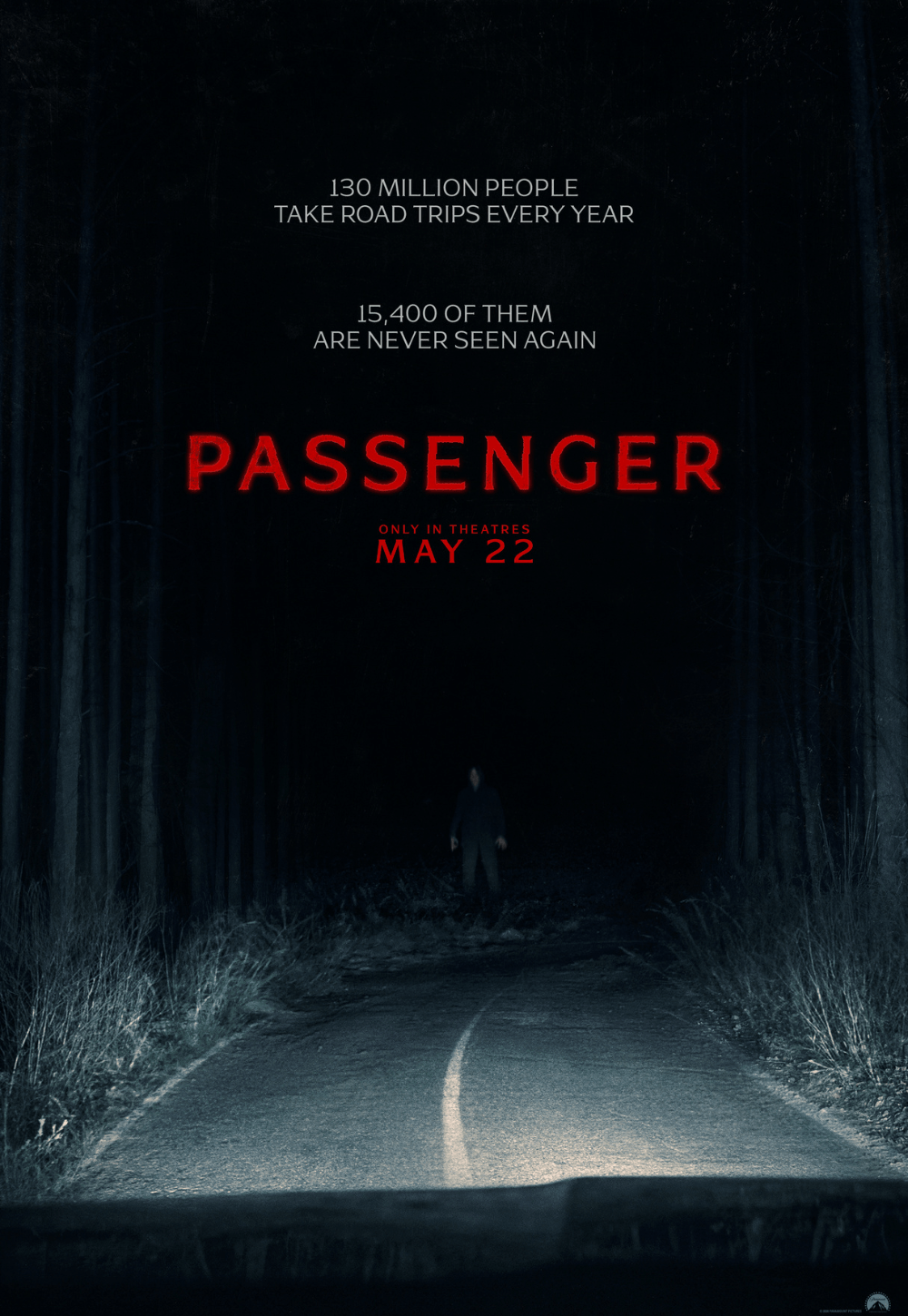
Passenger is about a couple who give up their New York City apartment to become van-dwellers and live on the road. Based on what we learn about them later, they never should have done this. And it’s not just because there’s a demonic hitchhiker targeting anyone who stops at night. Rather, it’s because the achingly bland Maddie (Lou Llobell) and Tyler (Jacob Scipio) clearly don’t communicate. Neither the performances nor the screenwriters, Zachary Donohue and T.W. Burgess, instill any magnetism between the couple; their personalities seem doomed to repel one another. While on the road, Maddie relies on a GPS tracker; Tyler prefers a medallion honoring Saint Christopher, the patron saint of travelers. Maddie grew up in a series of orphanages and yearns for a stable home; Tyler was raised in an abusive household, so he feels a restless need to keep moving, believing home isn’t a place—it’s where the heart is. But Maddie and Tyler don’t discuss their differences until six weeks into their new life. By then, it’s almost too late.
This horror flick from Paramount Pictures belongs to a subgenre in which a mostly unseen supernatural force stalks, torments, and slaughters its victims. Examples such as It Follows (2014), the Smile series, and countless others usually feature characters running around at night, trying to escape a malignant presence that’s either invisible or lingering in the shadows. Passenger is unique, I suppose, in that it’s also a road movie. Most of these movies take place in creepy houses, rundown buildings, or neighborhoods. This one takes place in a mobile haunted house that travels along highways and through van camps. Despite their ever-changing backdrop, Maddie and Tyler remain so boring as characters that I struggled to feel invested in the unfolding story.
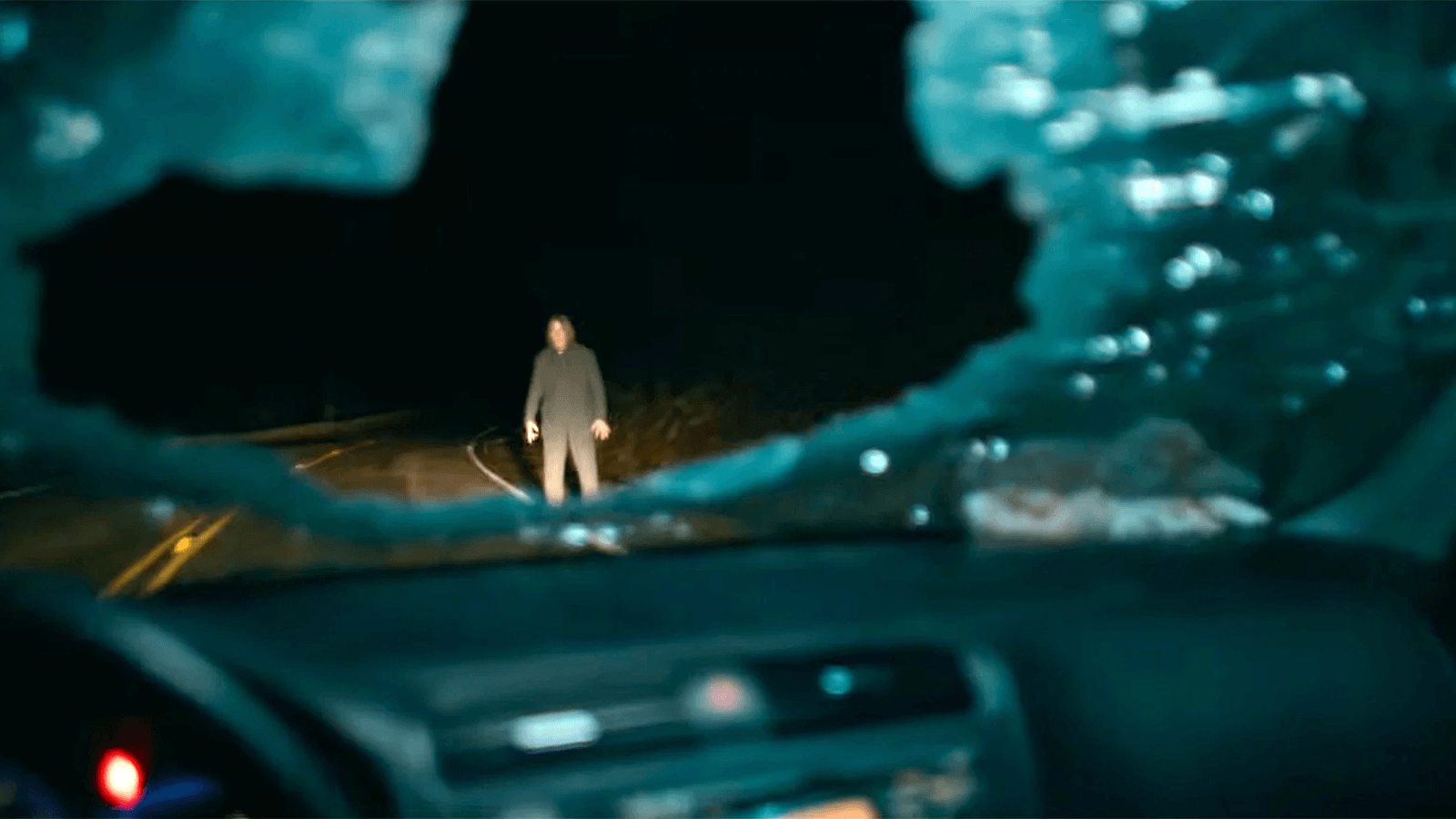
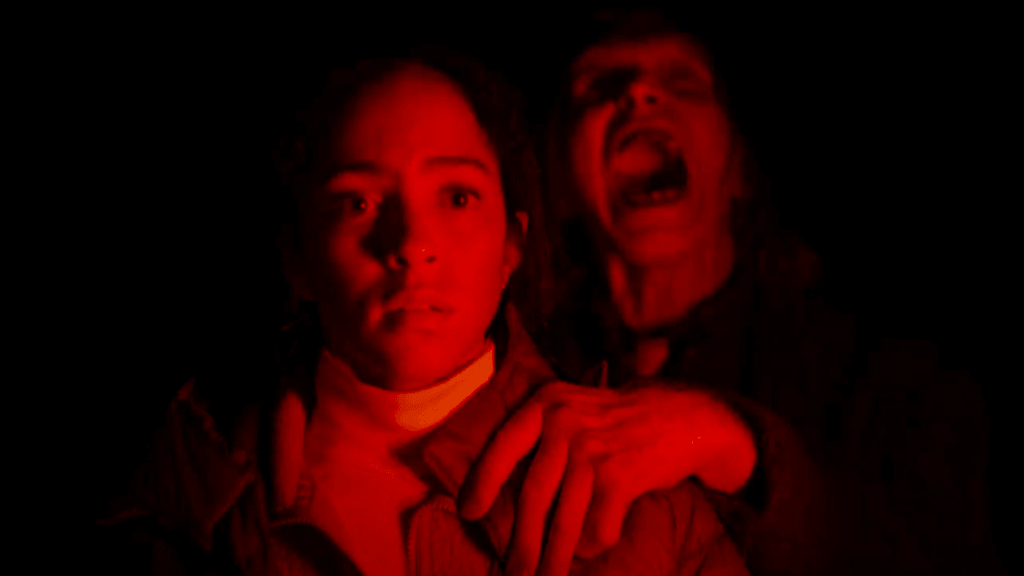
When they stop to help someone in a car accident, Maddie and Tyler unknowingly attract a demon that takes the form of an elderly priest. At first, the figure appears only to Maddie, who notices the crashed car has three diagonal scratches, as though the X-Men’s Wolverine dragged his claws against the exterior. Those same scratches appear on Maddie and Tyler’s van the next day. She learns what the marks mean after, conveniently enough, picking up a used book about American hobos, which describes the “hobo code” symbology: the three scratches mean “not safe here.” It’s a warning to other drivers to avoid any vehicle with these markings. Meanwhile, the ominous presence appears in flickering lights and rear-view mirrors, quickly disappearing when spotted. At least Tyler never treats Maddie like she’s imagining things. Soon, he sees the presence as well, and they must scramble to learn about what’s tormenting them and how to stop it.
They gather this crucial information from a wise road veteran, Diana (Melissa Leo), a character seemingly modeled after Frances McDormand’s role in Nomadland (2021). Diana explains the vague van life road rules and warns, “People don’t take trips. Trips take people.” In addition to the couple stockpiling Saint Christopher charms as they might crucifixes against a vampire, Diana recommends they find a mysterious Church of Saint Christopher somewhere in the desert. She offers to guide them, explaining there’s no way they’ll be able to read the hidden signs on their own. It’s a curious claim, given that the “signs” are just arrows scratched into surfaces. If they can’t follow an arrow, they shouldn’t be driving. The scenario leads to an underwhelming climax that offers few explanations and even fewer thrills, set to a soundtrack of road- and evil-themed songs from Iggy Pop’s “The Passenger” to Blues Saraceno’s “Evil Got a Hold on Me.”
It’s surprising that Passenger is so subpar. The movie’s director, Norwegian filmmaker André Øvredal, has made several decent horror movies since breaking out with his 2010 debut, Trollhunter. Solid genre efforts such as Scary Stories to Tell in the Dark (2019) and The Last Voyage of the Demeter (2023) demonstrate that he can do a great deal with a mid-level budget. Passenger feels like a step down compared to Øvredal’s other work, though not for his lack of trying. The spooky scenes are handled effectively, with Øvredal delivering a few jump scares and other creepy moments. He’s also a director who, working alongside cinematographer Federico Verardi, knows how to shoot darkness in a way that will still be intelligible on a movie screen dimmed by the theater manager to save on costs—an almost omnipresent problem these days. One scene set in a forest has Maddie and Tyler using a consumer movie projector to watch Roman Holiday (1953). They flash the screen image into the dark woods like a cinematic flashlight when they hear something moving. Neat scene.
However, Øvredal relies too heavily on familiar images from better horror movies to call his direction here admirable. He replicates iconic imagery from A Nightmare on Elm Street (1984), [Rec] (2007), and Lights Out (2016) in shameless homages. Even more disturbing is the theme in Passenger that, guided by its brand of Christian iconography and demonic cautionary tale, suggests people should just buy homes and start families. The lesson here is that alternative lifestyles on the road may leave travelers vulnerable to a “highwayman from hell.” People who resolve to settle down and conform—as Maddie and Tyler ultimately resolve to do—will be safe. But those who want to live a different life on the road risk facing evil from unknown people out there, and the only way to fight it is through faith in a Christian martyr and saint. This eye-rollingly conservative, xenophobic takeaway might’ve been overlooked had the writing and acting been better. But as with most movies, the problems with Passenger start with a lazy script and extend from there.
Thank You for Supporting Independent Film Criticism
If the work on DFR has added something meaningful to your love of movies, please consider supporting it.
Here are a few ways to show your support: make a one-time donation, join DFR’s Patreon for access to exclusive writing, or show your support in other ways.
Your contribution helps keep this site running independently. However you choose to support the site, please know that it’s appreciated.
Thank you for reading, and for making this work possible.
Brian Eggert | Critic, Founder
Deep Focus Review