Wet Paper Bag
By Brian Eggert |
Note: Adam Burke and Jud Nichols’ Wet Paper Bag will open at Minnesota’s Mann Plymouth Grand 15 and Mann Champlin 14 on May 28, 2026, followed by a June 2 release on Apple TV, Amazon, and Fandango at Home. Visit the official site for more details.
Wet Paper Bag is the movie equivalent of community theater or open-mic-night poetry. It’s trying with everything it’s got to achieve a particular mood and style, but it lacks many of the basic qualities that moviegoers expect to see. In the press materials, its directors, Adam Burke and Jud Nichols, admit to drawing inspiration from some popular antecedents: “If you loved Midsommar, Saltburn, or The White Lotus, this is your next watch,” their website declares. However, by making this comparison, they set unrealistic expectations. The cited examples have considerable budgets and talent in front of and behind the camera. Wet Paper Bag feels like a student film, with those involved setting out to replicate a successful template yet delivering only an amateurish pastiche. Its ideas are cribbed from superior sources, and the filmmakers have no fresh concepts or perspectives to distinguish their voice.
Sure enough, the filmmakers saturate this movie in familiar tropes: an idyllic destination at an isolated mental health spa; revelations of something unseemly beneath the outwardly normal surface; mind-altering psychedelics that facilitate a profound psychological awakening from past trauma; white-robed cultists with New Agey solutions to complex emotional problems. The list could go on. Such unoriginality doesn’t automatically result in a bad movie. But bad writing and unconvincing performances often do. For instance, many of the actors deliver their lines as though they’re reciting memorized dialogue. None of the performances feel genuine, and not a single moment in the movie feels spontaneous.
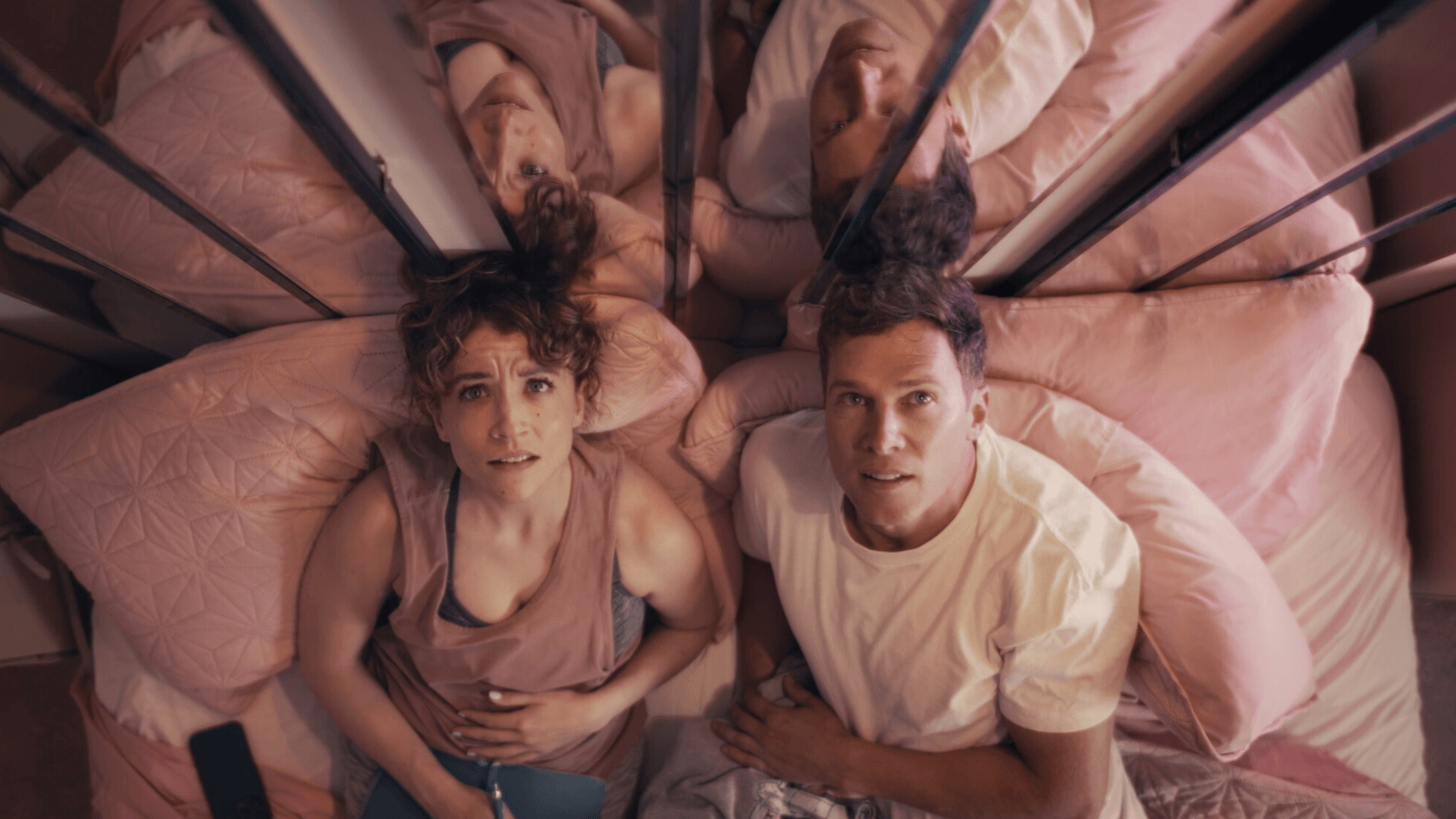
It doesn’t help that Burke’s screenplay is unbelievable from start to finish. The setup follows Michelle (Nicole Weber), a former journalist who hosts a podcast produced by her it’s-complicated boyfriend, Reilly (Burke). One day, after they record an episode, a stranger named Peter (Jarrod Crooks) shows up and, before leaving as abruptly as he arrives, delivers some news with the emotional tenor of a soap opera revelation: Michelle’s estranged sister Molly is missing. Michelle learns that Molly went to the Haberman Wellness Center and was never heard from again. Michelle and Reilly join Peter and his partner Sophie (Megan Mac) at the Wellness Center under the guise of guests, hoping to uncover what happened to Molly. However, the audience is given so little backstory about these couples that when the situation becomes tense, the viewer has little reason to care.
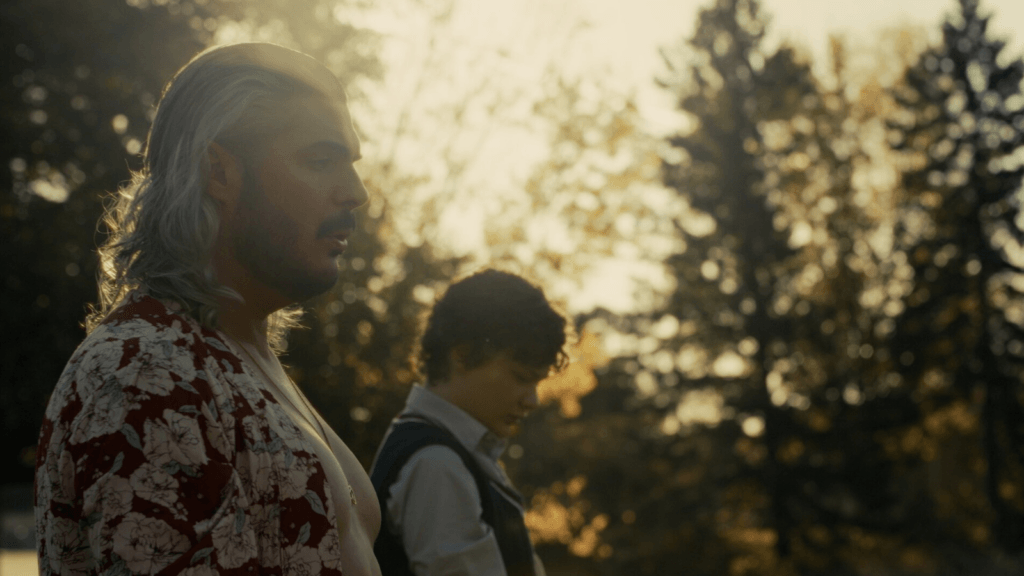
Almost immediately after their arrival, things get weird in a way that’s unclear whether it’s intentional or not. The resident Jim Jones, named Don (Mike Bredon), greets the two couples and never once gives off the vibes of a genuine healer. His approach is downright baffling, even by movie standards. Consider how Don greets Peter. “I, too, am a man and want to be respected,” Don says in a faux caveman voice. Then he whispers into Peter’s ear, “I see you, and I respect you.” But given his mocking tone a moment earlier, why should Peter believe him? It’s unclear what we’re supposed to glean from this, or whether Don is wise or a prick. His partner, Julia (Amber Rhodes), and his disturbed adopted son, Janus (Carter Monahan), who has a serious beef with rabbits, only accentuate the ridiculous and wrong responses to everything that happens.
Don calls himself a “nuclear pharmacist” who studies “the mind’s ability to physically change itself.” Instead of poison Kool-Aid, he offers visitors kombucha—a “holy treatment” of his design, containing MDMA and psilocybin. It stretches any logic or believability that people visiting a suspicious wellness center under false pretenses would imbibe a potentially spiked drink from a shady someone they think could be dangerous. But the screenplay demands otherwise. Later, Don gives both twosomes ketamine during couple’s therapy sessions that involve a polygraph machine. The visitors also agree to wear masquerade masks, take psychedelics in a pool, and vow that “what happens here, remains here.” It’s not exactly clear to me, not even by the end, what Don hopes to achieve (except maybe his dabbling in autoerotic asphyxiation to foster a new appreciation of life’s fragility). If the filmmakers meant to remark on the bogus nature of such healers, they didn’t stress that enough. If they meant the viewer to understand Don’s master plan, they weren’t successful.
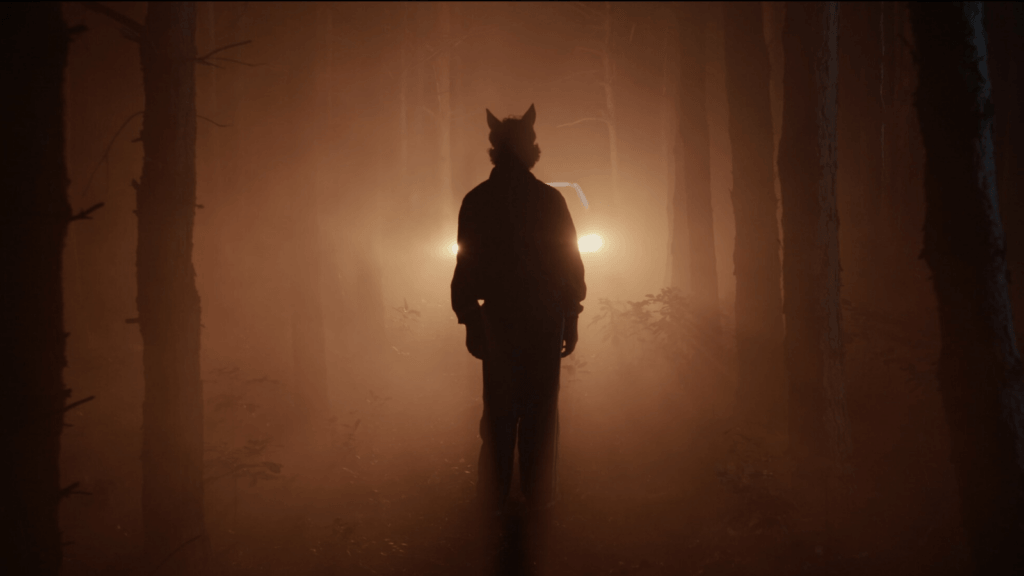
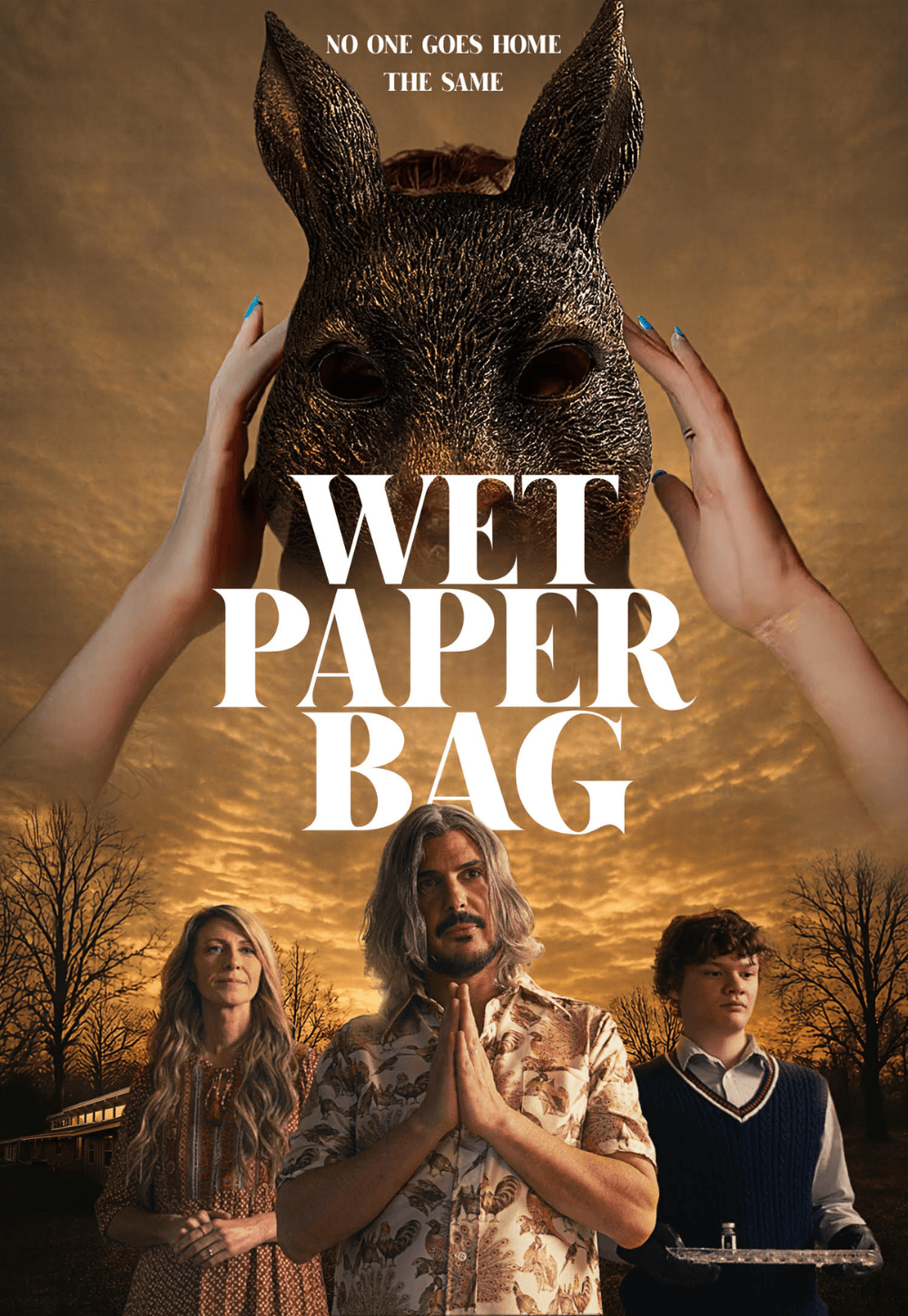
More effective is the technical side of Wet Paper Bag. Cinematographers Jarrod Crooks and Jacob Kelso at least make the production look professional and deliver a few memorable images with their digital lensing. A nighttime forest scene makes good use of a fog machine and car headlights to create an eerie silhouette. The directors also serve as editors, inserting creepy imagery with an almost subliminal effect, such as a figure in a rabbit mask that looks like a leftover prop from You’re Next (2011). The string music by Steven Gernes doesn’t so much add a vital layer as an ominous, ever-present background noise, and at times, he clearly borrows the breathy vocal notes from Midsommar (2019) to make the comparison complete.
At the very least, the Minnesota-made movie is timely. Our state’s House of Representatives recently approved a test program that would legalize psychedelic mushrooms in therapy cases. Coincidentally, I attended an event last week that debated the potential benefits of ketamine and psilocybin as they relate to mental health. Though the science has a long way to go, these therapies have helped people shift their perspectives, overcome addiction, and work through past traumas. Whether the filmmakers are skeptical of wellness culture and these sorts of therapies, one cannot say, except that their movie is about a predatory practitioner. From a viewer’s perspective, I only wish Wet Paper Bag had more fun with its concept and fleshed out its characters so they felt like real people.
Burke and Nichols come up short on the skill required to deliver on their movie’s self-serious tone. Although the directors pepper intentional humor here and there (including a random aside about boogers), Wet Paper Bag is destined to be camp in the same way that The Room (2003) was. Hopefully, Burke and Nichols don’t attempt to change their story after the fact and claim it was all meant ironically, as Tommy Wiseau did. Unfortunately, I must conclude that the movie is best suited to Minnesota festival crowds or the filmmakers’ family and friends, who will better appreciate the efforts of local filmmakers completing a homegrown movie. I’m sure Burke and Nichols learned many hard lessons from the experience. Aspiring filmmakers should treat the picture as an example of what not to do in their own productions.
Thank You for Supporting Independent Film Criticism
If the work on DFR has added something meaningful to your love of movies, please consider supporting it.
Here are a few ways to show your support: make a one-time donation, join DFR’s Patreon for access to exclusive writing, or show your support in other ways.
Your contribution helps keep this site running independently. However you choose to support the site, please know that it’s appreciated.
Thank you for reading, and for making this work possible.
Brian Eggert | Critic, Founder
Deep Focus Review