Zurich Film Festival 2026 – Dispatch 5
By David Hill | November 4, 2026
The 22nd Zurich Film Festival ran from September 24 to October 4. Check here for the full lineup. Some films mentioned below will be reviewed separately in full-length write-ups, but for now, here are some initial impressions. Also, check out Part 1, Part 2, Part 3, and Part 4.
The Debut
Gala Premieres
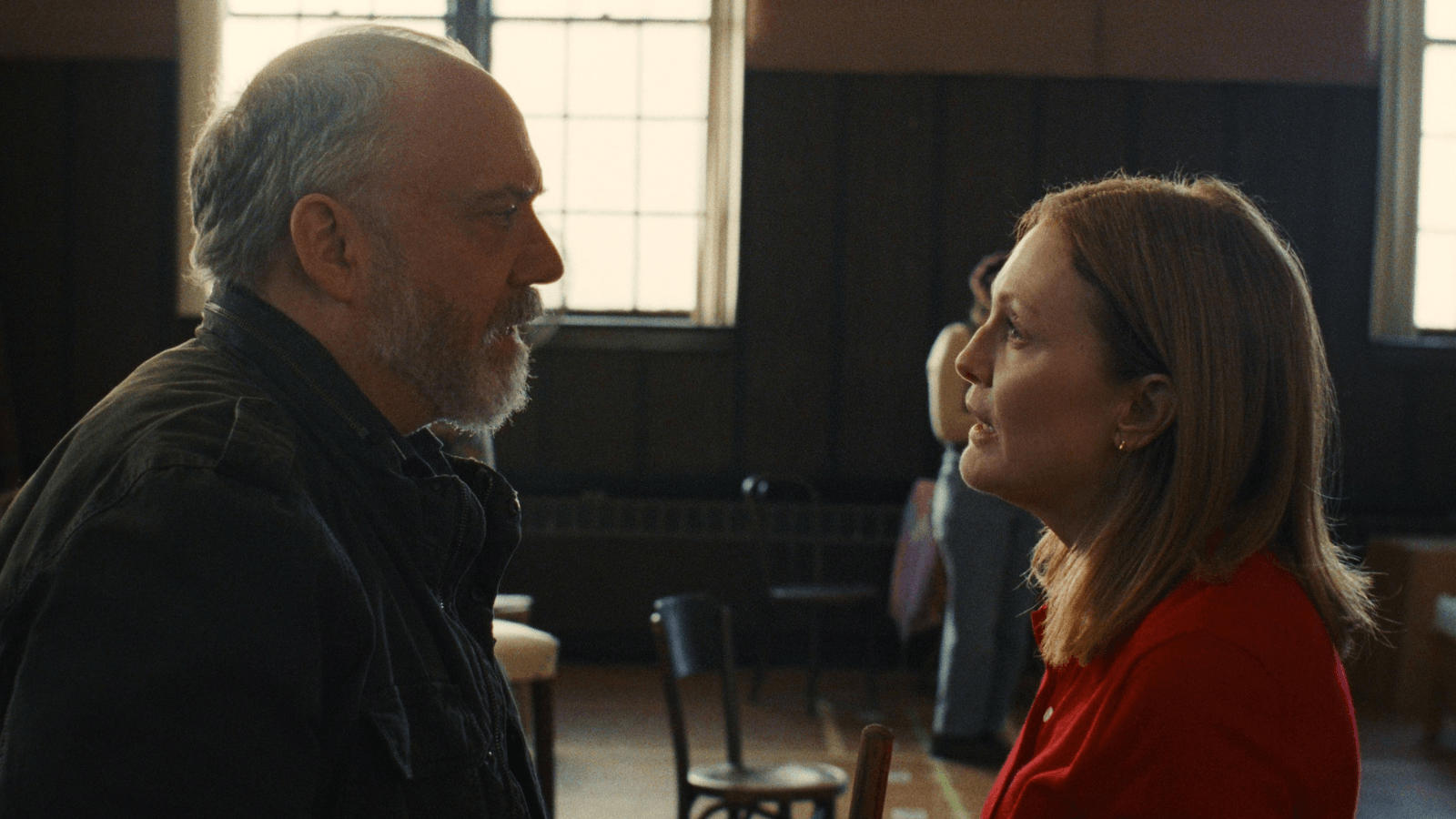
Jesse Eisenberg’s new film, The Debut, has already made waves with a standout scene that prompted mid-movie applause during its festival screenings at Telluride, Toronto, and New York. That scene also led to spontaneous applause at my screening in Zurich, and the audience I saw the film with seemed to fall head over heels for it. Unfortunately, I could not share the crowd’s enthusiasm—while The Debut has a lot going for it, its tonal inconsistencies and heightened nature prevented me from fully embracing it.
The film follows Mona (Julianne Moore), a suburban New Jersey housewife and wallflower who has spent most of the past 20 years catering to the needs of her husband (Patrick Fabian) and twin children (Jonah Diamand and Becca Suskauer)—without any of them acknowledging her as a person. With her children on the verge of graduating high school and moving out, Mona auditions for a part in a local community theater’s production of the musical Nosy Neighbors. Her audition is a disaster, but in a roundabout way, she still ends up getting the part. The musical’s director, Jerry (Paul Giamatti), challenges Mona to improve, but when this leads to her embracing Method acting, Jerry realizes he has unwittingly created a monster he cannot contain.
The Debut is Eisenberg’s follow-up to his excellent A Real Pain (2024). Beneath its funny and entertaining surface, that film portrayed, well, a real pain, which lent it unexpected emotional and thematic depth. Together with Kieran Culkin’s outstanding, Oscar-winning performance and Eisenberg’s masterful tonal balance between comedy and drama, this elevated A Real Pain far above your typical indie dramedy. With The Debut, Eisenberg once again combines comedy and drama, but his new film is less grounded in reality than its predecessor. Rather, Eisenberg adopts a heightened style that delves into the absurd and surreal. Additionally, while the characters never spontaneously burst into song and dance as they would in a traditional musical, the community theater setting allows Eisenberg to include musical elements as well.
In the universe of the film, Nosy Neighbors is a well-known musical that was written a few decades ago. In real life, however, it is a fictional musical with songs that Eisenberg himself wrote for The Debut, which is an impressive feat. The film’s song and dance numbers are a delight and rank among its best sequences. Less successful is Eisenberg’s balancing of comedic elements and more serious undertones. Mona’s lack of identity and subsequent self-discovery through community theater would seem to be fruitful dramatic material, but none of this ever lands with any real weight due to the film’s heightened nature and focus on comedy over emotional credibility.
Eisenberg employs various exaggerations to portray events as Mona perceives them—her co-actors’ niceties are dialed up to the point of being saccharine, and Jerry’s criticisms of her acting feel like angry, soul-crushing outbursts. While this approach fits the film’s community theater setting and is effective in putting the audience in Mona’s headspace, it fails to flesh out the world and characters around her. Jerry is the only character apart from Mona who has any real depth, with Mona’s family and most of the community theater troupe barely registering. Thankfully, both Moore and Giamatti deliver outstanding performances, and their excellent work helps paper over some of the cracks in the screenplay. Additionally, Eisenberg’s confident direction and the wild twists and turns he introduces keep the film consistently unpredictable and engaging.
As a result, The Debut offers a fun and crowd-pleasing experience in the moment, but it never achieves the emotional force or psychological depth of A Real Pain. Whether the film’s surface-level pleasures will be enough for viewers will largely depend on how well Eisenberg’s heightened style and humor work for them. Unfortunately, both only partially worked for me, and I left the film feeling underwhelmed despite its strengths. 2.5/4 Stars
Clarissa
Feature Film Competition
One of the great things about film festivals is that you discover and fall in love with movies that you might not have seen otherwise. Every year, there are one or two titles at ZFF that were not high on my most-anticipated list but end up being among my favorites of the festival and the entire year—Silent Friend in 2025, Good One and My Favorite Cake in 2024, and Green Border in 2023. This year, the exquisite and quietly profound Clarissa falls into that category. It is the sophomore feature from the Esiris, a Nigerian filmmaking duo comprising twin brothers Arie Esiri and Chuko Esiri, whose debut was 2020’s Eyimofe.
Clarissa is a modern reinterpretation of Virginia Woolf’s classic 1925 novel Mrs. Dalloway, which is set in post-First World War London. The Esiris—Chuko has sole writing credit, whereas he and Arie share directing and producing credits—change the setting to modern-day Nigeria. Their film follows the titular Clarissa, who we meet as a middle-aged society woman preparing a lavish party at her home in Lagos. The party will reunite her with old friends from her youth, which makes her reflect on their shared past, particularly a summer spent in her family’s vacation estate in Abraka during the 1990s. Brilliantly edited by Blair McClendon (whose credits include Aftersun, another lyrical film about time and memory), Clarissa frequently moves between the past and the present in a stream-of-consciousness style, reflecting the fluid and associative nature of thoughts and memories.
This editing style is somewhat disorienting at first, especially as the Esiris do not handhold the audience with devices like title cards to indicate a scene’s time period. Moreover, there is a large ensemble to keep track of, and the actors portraying the same characters at different ages do not always look particularly alike. In interviews, the Esiris have said that physical resemblance was not their main priority while casting the film. Rather, they focused on getting great actors who could capture the essence of their characters. This is a worthy trade-off, and they have certainly accomplished their goal. With casting director Nina Gold (who was one of the five nominees for the inaugural Best Casting Oscar for her work on Hamnet), the Esiris have put together a marvelous cast that includes both famous faces and relative newcomers.
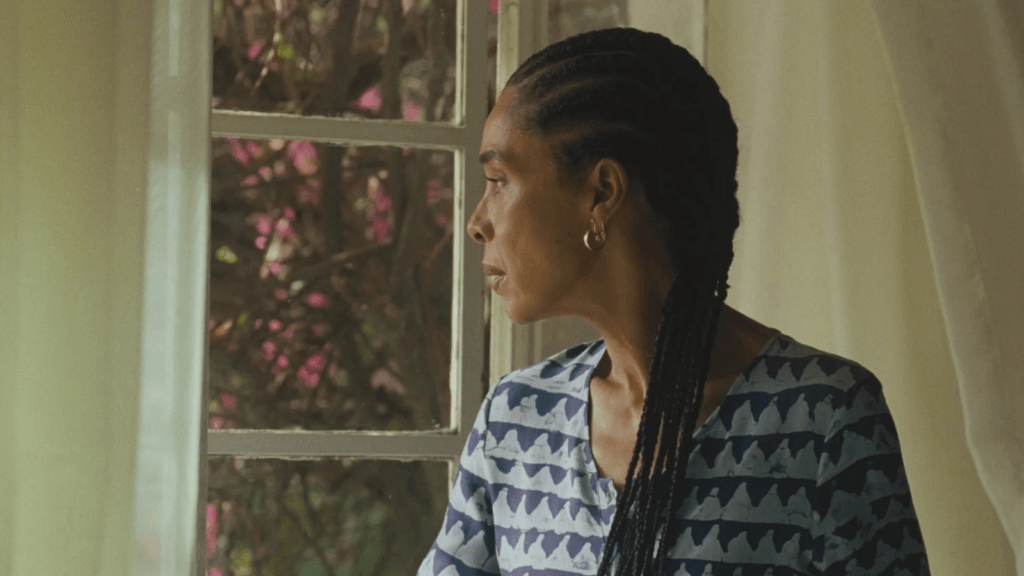
In the present, Clarissa is played by Sophie Okonedo (Hotel Rwanda, Janet Planet), who deftly conveys vulnerability and regret beneath a meticulously composed outward appearance. Meanwhile, India Amarteifio (Queen Charlotte) portrays her counterpart as a bright and curious young woman full of possibilities. Among the people in Clarissa’s orbit is a writer named Peter—in the flashbacks, he is an optimistic and romantic young man hopelessly in love with Clarissa (Toheeb Jimoh, whom viewers might recognize from the Apple TV series Ted Lasso). In the present-day scenes, however, he is a disillusioned and melancholic middle-aged man carrying the burden of unfulfilled hopes and dreams (David Oyelowo, who played Dr. Martin Luther King Jr. in Selma). Then there is Sally, whose younger version is brought to life by Ayo Edebiri (After the Hunt, The Bear) as an unconventional and free-spirited young woman who fascinates Clarissa. Both Sally (whose older version is played by Nikki Amuka-Bird) and Peter no longer have regular contact with Clarissa in the present—unlike Richard (singer-songwriter Ogranya/Jude Akuwudike) and Ugo (Kehinde Cardoso/Danny Sapani), who also spent the summer in Clarissa’s family’s vacation estate in Abraka when they were younger.
In addition to these characters, the film also follows Septimus (Fortune Nwafor), a traumatized working-class soldier in love with a Muslim seamstress named Aisha (Modesinuola Ogundiwin). It takes a while for the film to reveal Septimus’ connection to Clarissa, adding to the disorientation viewers might feel in its early stages. That said, Clarissa is by no means an exhausting or patience-requiring film. On the contrary, it offers a sensual viewing experience that makes it easy to get swept up right from the opening frames. This is in no small part due to Jonathan Bloom’s lush and sumptuous 35mm cinematography, which offers poetic and beautifully composed imagery that matches McClendon’s fluid editing. Together with Kelsey Lu’s dreamlike score and some excellent needle drops, the film’s visuals create a compelling and immersive mood that proves wholly absorbing from start to finish.
Furthermore, everything comes together perfectly by the end—not only narratively but also thematically. With admirable subtlety, Clarissa paints a rich portrait of Nigeria. As such, it explores questions of class, privilege, societal gender norms, and national identity. In the flashback scenes, the characters engage in fascinating discussions touching on, among other things, Nigeria’s colonial past, its former military dictatorship, the country’s future, and Chinua Achebe’s landmark 1958 novel Things Fall Apart. Additionally, the camera often cuts away from its main characters to reveal evocative scenes of everyday Nigerian life, which show that the privileged lives of Clarissa and her friends do not exist in a vacuum. The same applies to Septimus’ storyline, which proves vital to the film’s themes and also touches upon the Islamist terrorist organization Boko Haram. Moreover, the fact that Clarissa is a Nigerian adaptation of a British novel written while Nigeria was still a British colony adds yet another layer to its thematic richness.
Thankfully, the film’s commentary on Nigeria never undercuts its character drama, which proves wholly engaging both emotionally and thematically. Through Clarissa and her friends, the Esiris explore universal themes such as time, memory, lost opportunities, and the compromises we make in adulthood—perfectly summed up by Clarissa saying that we all put our great futures behind us and settle. Even people who do not particularly care for or pick up on the film’s commentary on Nigeria should relate to this aspect of the film, as well as its musings on love, regret, roads not taken, and constraints imposed by social conventions. Despite the Esiris’ restrained approach that leaves a lot of things unsaid, the film also packs a considerable emotional wallop. A big reason for this is the outstanding work of the entire ensemble, with every cast member nailing their role—particularly Okonedo, who delivers a towering and deeply moving performance as the present-day Clarissa.
With Clarissa, the Esiris have delivered a highly accomplished and exceptionally well-crafted film that ranks among the year’s best. It might take viewers some time to fully get on its unique wavelength, but once they do, they will be rewarded with an absorbing and sensual audiovisual experience that speaks to both the heart and the mind. After screenings at several prestigious film festivals including Cannes, Toronto, and New York, Clarissa deservedly received a joint-leading four Gotham Film Awards nominations on October 27—for Best Feature, Best Adapted Screenplay, Outstanding Lead Performance (Okonedo), and Breakthrough Performer (Amarteifio). The film will be distributed by Neon and is scheduled for a limited theatrical release in the United States on December 11. Hopefully, it will not be overlooked during the busy year-end period, as such a great film deserves to be seen by a large audience—and to receive further awards recognition. 4/4 Stars

Bunker
Gala Premieres
French playwright-turned-filmmaker Florian Zeller follows up his disappointing sophomore feature The Son with Bunker. While it marks a marginal improvement over his last film, he still falls way short of his excellent debut, The Father. His new work follows a Spanish star architect named Miguel (Javier Bardem) who lives in London with his wife Sofia (Penélope Cruz) and their two daughters. After winning a prestigious prize, Miguel is approached by a tech billionaire (Paul Dano) who wants him to design a luxury bunker as a private refuge in the event of a global catastrophe. Simultaneously, Miguel is involved in a boundary dispute with his working-class neighbor Toby (Stephen Graham) after the latter knocks a hole in their shared cement wall—Toby wants to install a window in the opening that would look directly onto Miguel’s property.
As Miguel contemplates the billionaire’s offer and deals with his neighbor, he becomes increasingly paranoid. This alienates his wife, who is strictly against him accepting the offer, and a marital conflict ensues that exposes deep-seated cracks in their relationship. All of this leads to Miguel shutting himself off from the world, and his own life slowly but surely starts to resemble a bunker. Zeller’s decision to have Sofia state this explicitly rather than letting it emerge organically from the material points to the film’s biggest flaw: Bunker is anything but subtle, and the script spells its themes out through on-the-nose dialogue that feels unnatural and made me roll my eyes more than once. One of the worst offenses in this regard is the character of Jeremy (Patrick Schwarzenegger), an American author whom Sofia—an editor for a publishing house—meets at work. Jeremy recently wrote a bestselling novel that he is now promoting in London. Conveniently, his book deals with similar themes to those of Bunker, and Jeremy’s main purpose is to serve as a mouthpiece for Zeller’s messaging.
This heavy-handed approach drains much of the film’s dramatic potential, leaving Bunker feeling airless and uncinematic—despite being Zeller’s first feature written originally for the screen and not based on one of his plays. This is a shame, especially as Bunker has strong elements and deals with interesting issues such as wealth disparity, isolation, marital discord, and gentrification. Billionaires commissioning luxury bunkers as private refuges in the event of a global catastrophe is not an invention by Zeller. Rather, it is something that is increasingly happening in real life due to the worrying social, environmental, and geopolitical developments of our time, to which many billionaires have themselves contributed. In one of the film’s best scenes, Dano’s character chillingly lays out the thinking behind this kind of doomsday prepping. Moreover, Alain Bainée’s impressive production design and Ben Smithard’s assured cinematography are worth highlighting—as are Bardem and Cruz’s great performances, even if they can only do so much with the script’s clunky dialogue.
Overall, Bunker can be viewed as an interesting failure. It does not lack ambition and presents issues that are worth thinking and talking about afterward. That said, the experience of watching the film is severely marred by Zeller’s approach, which makes it difficult to become emotionally invested. The filmmaker tries to spice things up by including comedic elements and dramatic third-act developments, but this only yields mixed results. The same can be said about Volker Bertelmann’s aggressive score, the bluntness of which often matches that of Zeller’s script. Nevertheless, Bunker does have a few strong scenes that had me genuinely invested—unfortunately, though, it was never long before another questionable line of dialogue or narrative choice pulled me out again. 2/4 Stars

David Hill is a lawyer from Switzerland. He has long had a passion for cinema, and he devotes most of his spare time to watching and researching films. His primary interest focuses on arthouse films, and he occasionally contributes to Deep Focus Review as a guest writer. Follow him on Letterboxd.
Like DFR? Support us.
This site exists because readers like you care about film. If DFR has enriched your experience with movies, I’d be grateful for your support. You have a few options:
• Join DFR’s Patreon community
• Make a one-time donation on PayPal
• Buy me a coffee
Whatever option you choose, it helps keep my work independent. And it means a lot to me.
Thank you for reading, and for making this work possible.
Brian Eggert | Critic, Founder
Deep Focus Review