Zurich Film Festival 2026 – Dispatch 4
By David Hill | October 28, 2026
The 22nd Zurich Film Festival ran from September 24 to October 4. Check here for the full lineup. Some films mentioned below will be reviewed separately in full-length write-ups, but for now, here are some initial impressions. Also, check out Part 1, Part 2, and Part 3.
Minotaur
Gala Premieres
Nine years after his last film, Loveless, Russian master Andrey Zvyagintsev finally returns with Minotaur. After releasing a feature every three or four years between 2003 and 2017, this is by far the longest audiences have ever waited for a new Zvyagintsev film. The large gap is due to a turbulent period in the filmmaker’s life that—not unlike his new film—involves both the personal and the political. In 2021, Zvyagintsev contracted a severe case of COVID-19, which led to a medically induced coma, lung damage, and paralysis. He was treated in Germany, spending almost a year in medical care and undergoing extensive physical rehabilitation to relearn how to walk and speak.
After Russia launched its full-scale invasion of Ukraine, Zvyagintsev chose to live permanently in European exile and did not return to his home country once he had recovered (he now lives in Paris with his family). This is not surprising given that his previous films were already critical of Russia and received pushback from its political elite—particularly Leviathan, which contains a scene where portraits of former Soviet leaders from Lenin to Gorbachev are used as rifle targets. While Russia has never been a haven of free speech, censorship and repression have become much worse in light of the full-scale invasion of Ukraine. For a real-time account of how quickly and drastically this development has unfolded, watch Julia Loktev’s harrowing 2024 documentary My Undesirable Friends: Part I — Last Air in Moscow.
While set in Russia, Minotaur marks Zvyagintsev’s first film made entirely outside his home country. It is a French, Latvian, and German co-production that was shot in Latvia between September and November 2025. This seems to have liberated Zvyagintsev, whose critique of Russia has never been this direct before. As a result, Minotaur is a bleak and urgent film that mercilessly exposes a corrupt country that seems to have lost all moral values in the face of the full-scale invasion of Ukraine. That said, Zvyagintsev’s new film is far from being overly didactic or polemical, and he expertly weaves his broader societal critique into an engaging domestic drama that is based on Claude Chabrol’s 1969 film The Unfaithful Wife—which also led to an American adaptation in 2002, namely Adrian Lyne’s erotic thriller Unfaithful.
Taking place in 2022, a few months after the beginning of Russia’s full-scale invasion of Ukraine, Minotaur follows a man named Gleb (Dmitriy Mazurov). He lives with his wife, Galina (Iris Lebedeva), and their teenage son in a provincial Russian town. Their home is a secluded glass mansion that recalls the rich family’s house in Bong Joon Ho’s Parasite—both visually and thematically as a symbol of class that isolates its privileged owners from the rest of the world. The title of Zvyagintsev’s previous film, Loveless, would be an apt description of Gleb’s family life: there is no genuine connection or warmth in the relationships he has with his wife and son, and Galina is clearly suffering from this—feeling imprisoned and suffocated, she can no longer take playing the role of the perfect wife and mother. One day, Gleb discovers that Galina is having an affair with a younger photographer named Anton (Yuriy Zavalnyouk), which leads him into a downward spiral.
Gleb has problems both at home and work. He is the CEO of a transport and logistics company, one of the provincial town’s largest employers. Already having to deal with several employees fleeing the country in the wake of Russia’s full-scale invasion of Ukraine, Gleb is told by the town’s mayor (Vladimir Friedman) to provide a list of 14 employees to be conscripted into the army—otherwise, the mayor will pick the conscripts himself to meet the town’s quota for Russia’s mobilization. This number is no coincidence: in Greek mythology, King Minos forced the people of Athens to sacrifice 14 young citizens to the Minotaur—a monstrous creature with the head of a bull and the body of a man living imprisoned in a labyrinth on Crete—in retribution for his son’s death.
The titular creature does not make a literal appearance and is never mentioned in the film, but it has rich symbolic meaning and lends itself to various interpretations. The most obvious is that the Minotaur is a symbol of Russia—a monstrous country sacrificing its citizens for a brutal and illegal war. The symbolism can also be applied to Gleb, however. As the audience witnesses during the film, he is capable of much cruelty and violence beneath his respectable exterior. Additionally, as Gleb navigates his problems at home and at work, he becomes increasingly entangled in a web created by the corrupt system around him and the bad choices he makes, echoing the labyrinth that imprisons the Minotaur. Finally, the Greek island of Crete—the seat of King Minos and the site of the Minotaur’s labyrinth—plays into the film’s ending, which adds yet another layer to the meaning of its title.
This deft use of symbolism is just one of many examples that show how well Minotaur is constructed. Co-written by Zvyagintsev and Simon Lyashenko, and edited by Zvyagintsev himself, the film takes its time establishing its setting and characters. After this patient build-up, however, things escalate considerably during the second half—the noose around Gleb’s neck tightening as he desperately attempts to restore control in his life. This allows Zvyagintsev to include thriller elements and undercurrents of dark humor, which help ensure that the film remains wholly engaging throughout its 140-minute runtime. That said, these elements never undercut the seriousness of the film’s themes, which include moral corruption, abuse of power, emotional emptiness, toxic masculinity, and accountability (or lack thereof).
Additionally, and perhaps most importantly, Minotaur highlights the connection between private cruelty and political violence. In this regard, it portrays how corruption and moral bankruptcy trickle down through corrupt systems and become normalized—across society and also at an individual level. Despite constant reminders appearing on screen, Russia’s war against Ukraine largely takes place in the background. Gleb tries to ignore it as best he can, and his focus lies in preserving his normal and comfortable life. However, the harder he tries to keep things as they are, the more destructive and appalling his actions get. As a result, Gleb becomes complicit in perpetuating the corrupt system responsible for the war and gets increasingly entangled in it. This deft interweaving of the personal and the political has earned Minotaur comparisons to Jonathan Glazer’s excellent The Zone of Interest, and the two films do indeed share similarities.
With Minotaur, Zvyagintsev is once again in complete control of his craft, and every element of the production supports his vision. Shot by his regular cinematographer Mikhail Krichman, the film’s visuals are austere and meticulously composed. Combined with an unsettling score by Evgueni and Sacha Galperine, they set an oppressive mood and convey a feeling of dread that gets under the audience’s skin—take the haunting final shot that is held for an uncomfortably long time to powerful effect. Additionally, Zvyagintsev continues to coax excellent performances from his cast. Mazurov gives Gleb real dimension and humanity, turning what could easily have been a one-note character into a complex figure that feels made of flesh and blood. The same applies to Lebedeva, who expertly conveys Galina’s psychological turmoil through her body language—making her emotions deeply felt by the audience without having to rely on expositional dialogue.
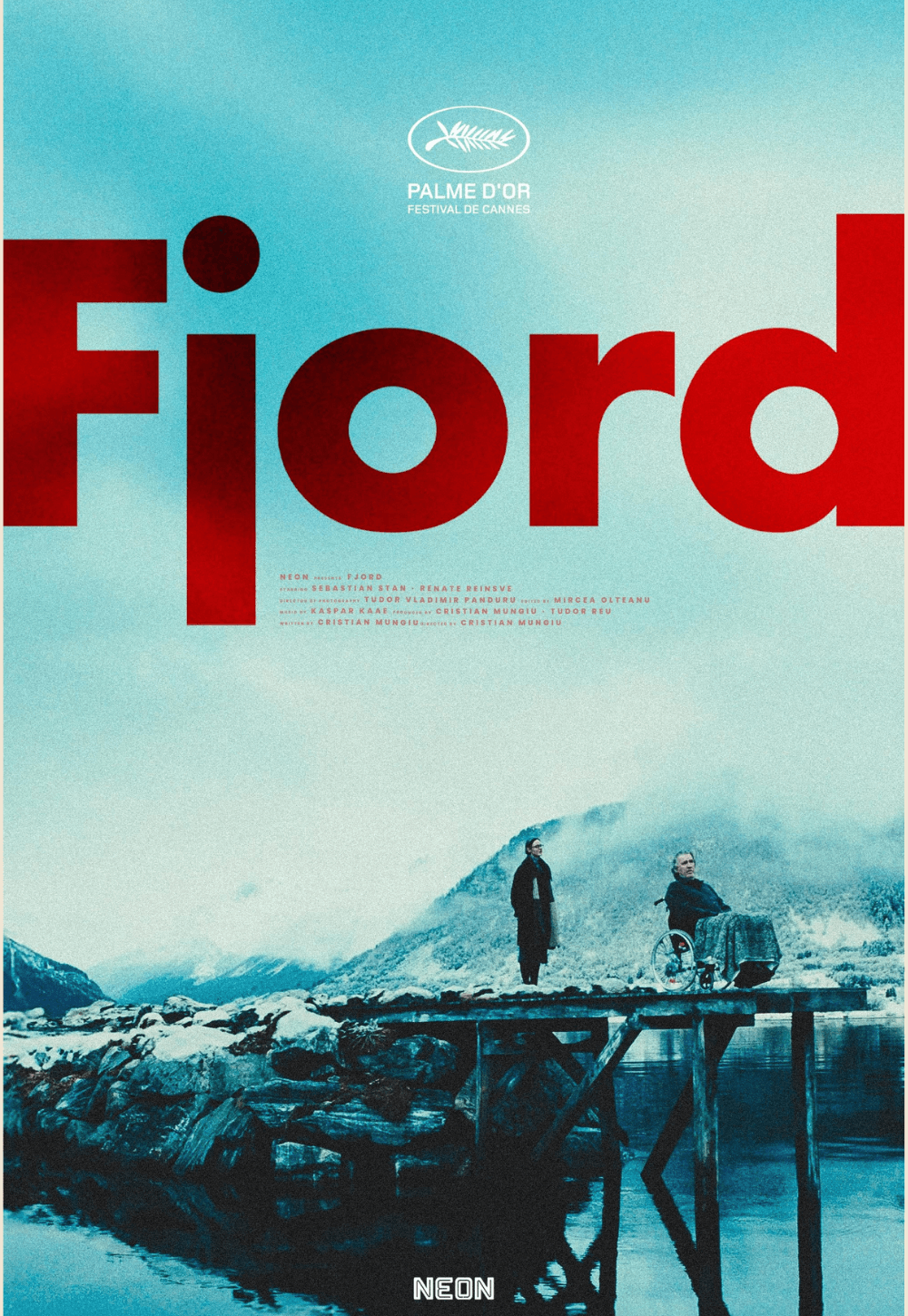
Minotaur premiered at the Cannes Film Festival earlier this year, where it won the Grand Prix—the festival’s second-most important prize after the Palme d’Or, which went to Cristian Mungiu’s Fjord. In the meantime, it has also been selected as France’s entry for the Best International Feature Film Oscar, and a third consecutive Academy Award nomination for a Zvyagintsev film—following those for Leviathan and Loveless—would be well deserved. Regardless of potential Oscar recognition, Minotaur proves that a nine-year gap since his last film, a near-death experience due to COVID-19, and a permanent move into exile have done nothing to diminish the filmmaker’s abilities. His new work feels like a natural progression of his career, while also reflecting the geopolitical upheavals involving Russia that have happened in recent years. It is a masterful film that offers a visceral cinematic experience and is sure to leave a lasting impact on its viewers. Hopefully, we will not have to wait another nine years for Zvyagintsev’s next feature. 4/4 Stars.

A Good Little Soldier
Gala Premieres
French filmmaker Stéphane Brizé follows up his romantic drama Out of Season—which I saw at the Zurich Film Festival in 2023 and really enjoyed—with A Good Little Soldier, a hard-hitting corporate drama that won the Best Screenplay Award at the Venice Film Festival. The titular good little soldier is Carla (Alba Rohrwacher), a middle-aged woman who has recently taken a new position as the Human Resources Manager of a major French insurance company. Brizé’s film follows her as she deals with various issues that will feel familiar to anyone who has ever worked in a corporate setting: an intimidating, volatile, and politically incorrect boss (Vincent Lindon in a scene-stealing performance as the company’s CEO, expertly playing the kind of character the audience loves to hate), an employer branding campaign whose content has little to do with the actual treatment of employees at the company, and a workplace conflict involving bullying and abuse.
A Good Little Soldier does not mark the first time Brizé has taken aim at modern capitalism. His labor trilogy already explored similar themes from the perspective of an unemployed blue-collar worker (The Measure of a Man, 2015), a militant trade union leader (At War, 2018), and a high-ranking white-collar corporate executive (Another World, 2021)—all played by Lindon (Titane, Both Sides of the Blade). That said, A Good Little Soldier is by no means a mere rehash of what Brizé has done before. Not only does it have a female protagonist, but it also includes satirical and darkly comedic elements that were absent from the strictly social-realist labor trilogy. Asked about these new elements, Brizé has stated in interviews that corporate cynicism has reached such staggering levels in recent years that comedy now results in a better reflection of reality.
Brizé certainly knows the world he is portraying. As a lawyer specializing in employment law who has worked in the legal department of an insurance company for more than four years, A Good Little Soldier hit uncomfortably close to home for me. There is not a single false note in the film’s depiction of a modern corporate workplace, and Brizé deftly exposes the hypocrisy and inhumanity inherent in capitalist structures. If all this sounds overly didactic, rest assured that is not the case—while the film’s messages come across loud and clear, Brizé’s razor-sharp humor makes them go down smoothly. The film provides several big laughs, with one of the comedic highlights being a so-called wellness session led by an overly enthusiastic “Happiness Manager” (Sharif Andoura, priceless). As a result, A Good Little Soldier is a funny and entertaining film despite the seriousness of its themes.
In addition to its broader systemic critique, A Good Little Soldier doubles as a character study with considerable emotional and psychological depth. Brought to life by another outstanding performance from Rohrwacher (La Chimera, Maria), Carla is a fascinating and complex protagonist, far from a run-of-the-mill corporate executive. She is an ambitious and conscientious employee who wants to please her superiors, but she also wants to be a good person and act ethically. As becomes clear in the course of the film, these two goals are incompatible in her position at the company. All the while, Rohrwacher expertly portrays Carla’s moral dilemmas and the pressure placed on her by both her superiors and herself. A Good Little Soldier also shows how the pressure and stress of a corporate job can rub off on one’s private life, with Carla’s relationship with her preteen son becoming increasingly strained.
Shot with a handheld camera in an observational, faux-documentary style that reminded me of the HBO series Succession, Brizé’s filmmaking is assured throughout. A Good Little Soldier only rarely leaves the offices of the insurance company, and most of the interactions Carla has with people outside of work—such as her son—are portrayed through video calls or video messages. This makes the film feel claustrophobic and underlines the isolating nature of Carla’s job, which further aligns the audience with her character. Additionally, A Good Little Soldier has an energetic and effective score by Bertrand Blessing, and there is a great use of Louis Armstrong’s song What a Wonderful World—both the original and the cover by The Ramones—that helps set the film’s satirical tone.
While A Good Little Soldier might not offer any groundbreaking new insights, it is highly effective as a satire of modern corporate work and as a complex, moving character study. I found it wholly absorbing from start to finish, and both its comedic and dramatic moments landed with equal force. Brizé is already a well-established figure in European cinema—A Good Little Soldier is his eleventh feature, and several of his recent films have premiered in competition at Cannes or Venice. Despite this, he has not yet achieved a major breakthrough in the US film market. For the sake of both Brizé and American audiences, here’s hoping that his excellent new film will finally change this. 3.5/4 Stars

David Hill is a lawyer from Switzerland. He has long had a passion for cinema, and he devotes most of his spare time to watching and researching films. His primary interest focuses on arthouse films, and he occasionally contributes to Deep Focus Review as a guest writer. Follow him on Letterboxd.
Like DFR? Support us.
This site exists because readers like you care about film. If DFR has enriched your experience with movies, I’d be grateful for your support. You have a few options:
• Join DFR’s Patreon community
• Make a one-time donation on PayPal
• Buy me a coffee
Whatever option you choose, it helps keep my work independent. And it means a lot to me.
Thank you for reading, and for making this work possible.
Brian Eggert | Critic, Founder
Deep Focus Review