Zurich Film Festival 2026 – Dispatch 2
By David Hill | October 11, 2026
The 22nd Zurich Film Festival ran from September 24 to October 4. Check here for the full lineup. Some films mentioned below will be reviewed separately in full-length write-ups, but for now, here are some initial impressions. Check out Part 1, Part 3, and Part 4.
I Play Rocky
Gala Premieres
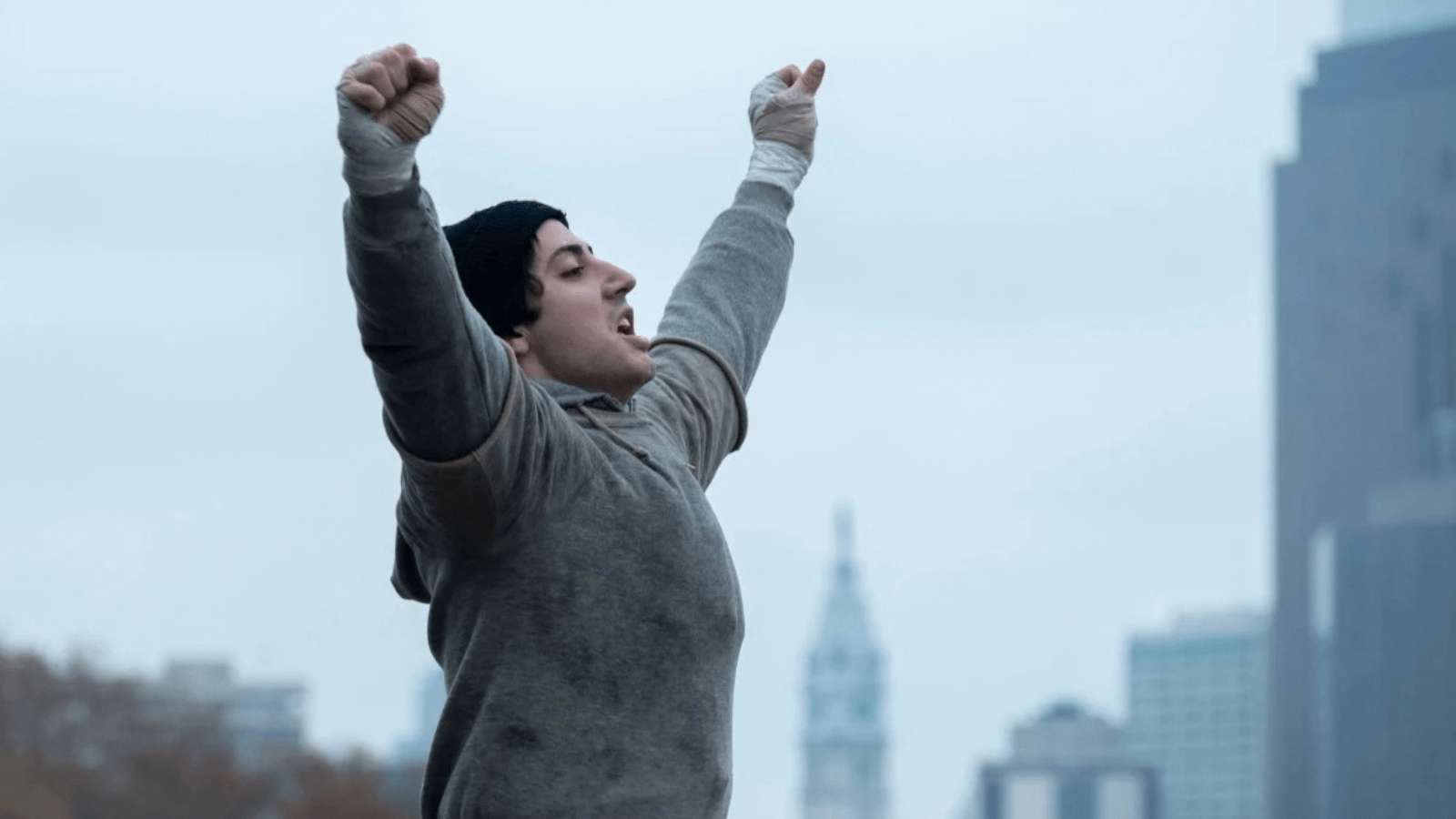
I Play Rocky, the new film from director Peter Farrelly (Green Book), tells the story of how Sylvester Stallone’s Rocky (1976) was made. It is a formulaic Hollywood crowd-pleaser that follows every beat you would expect from this kind of movie, especially if you are already familiar with Stallone’s biography or the production history of Rocky. As such, it features a large number of well-known anecdotes (as well as a few embellishments for dramatic effect), shameless nostalgia-baiting by recreating several scenes from the 1976 classic, and an underwritten female character whose sole purpose is to support the male lead (AnnaSophia Robb as Stallone’s first wife Sasha).
This generic approach with a strong focus on feel-good vibes has its limits, and I Play Rocky fails to generate much depth or personality. By way of example, the financial hardships Stallone experienced before Rocky was made are never truly felt. His titular insistence on playing the lead character, despite his dire financial situation and the studio offering him a hefty sum if a famous star were cast instead, is mostly played for laughs. It would, however, have offered the opportunity for a deeper exploration of what drove Stallone and the moral dilemma he faced given his responsibilities toward his family (his wife was pregnant at the time).
That said, the formula Farrelly uses also has its advantages, and there is a reason why it remains so popular. When it is well-executed, the result is often a highly entertaining and watchable film—which is exactly the case with I Play Rocky. Farrelly keeps things moving along at a fast clip and includes several funny moments. Some of the film’s biggest laughs come from a scene-stealing turn by Tracy Letts as a fictional studio executive who would feel right at home in the Apple TV comedy series The Studio. Meanwhile, relative newcomer Anthony Ippolito gives a strong lead performance, and his resemblance to a young Sylvester Stallone is uncanny.
As someone who generally dislikes this kind of movie and has never been the biggest fan of Rocky, I was actively trying to resist I Play Rocky. Nevertheless, it ultimately won me over despite its shortcomings. It is not high art, but Farrelly mostly succeeds in what he set out to do. The result is an entertaining film that should appeal to fans of Rocky above all, but also work for people who do not care about the 1976 classic. Whatever reservations I may have, I cannot deny that watching I Play Rocky with a packed and enthusiastic audience at the Kongresshaus—ZFF’s biggest venue, which has more than 1,500 seats—was a rousing and enjoyable experience. 3/4 Stars
Fatherland
Gala Premieres
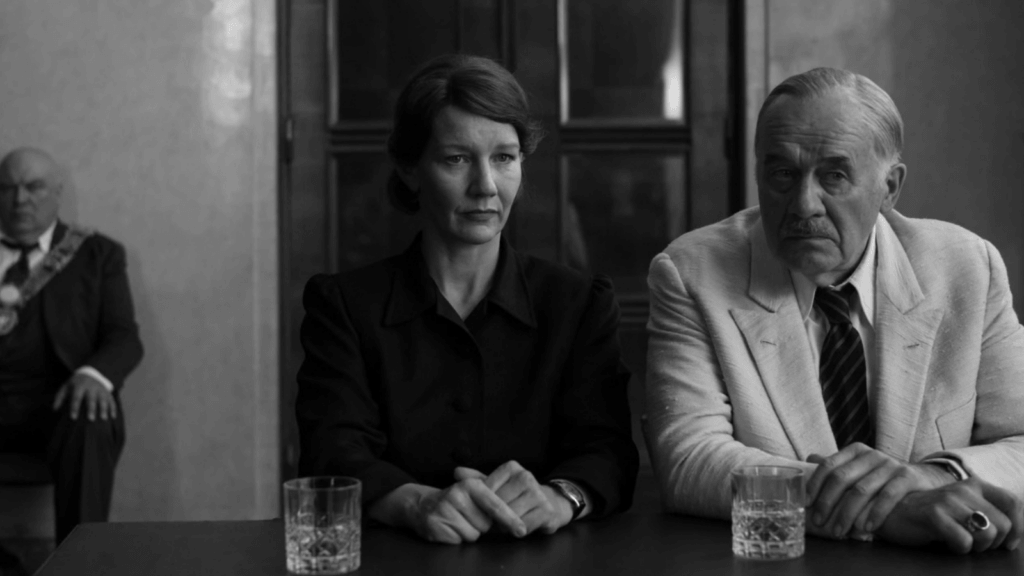
Fatherland is the new film by Polish filmmaker Paweł Pawlikowski. Thematically and stylistically, it feels of a piece with his two previous works, Ida (2013) and Cold War (2018). Once again shot in Academy ratio and black-and-white by cinematographer Łukasz Żal, the film follows famous German writer Thomas Mann (Hanns Zischler) on his trip to a divided Germany in 1949. Mann lived in the USA at the time after having left his home country when Adolf Hitler came to power.
The occasion of Mann’s trip is the 200th birthday of Johann Wolfgang von Goethe. As part of the celebrations, he is invited to Germany, where he meets various important people and gives speeches. After beginning his trip in Frankfurt in the West, Mann later travels to Weimar in the East, although he faces much criticism and even threats for his decision to do so. Accompanying him is his daughter Erika (Sandra Hüller, continuing her busy year after already starring in Project Hail Mary, Digger, and Rose). His disillusioned son Klaus (August Diehl), on the other hand, refuses to join the trip despite Erika asking him to do so. During Mann’s time in Germany, a family tragedy occurs that adds a deeply personal dimension to the political and intellectual high-wire act of his trip.
Pawlikowski’s main focus is not historical accuracy—in real life, Mann was accompanied to Germany by his wife Katia and not his daughter Erika, and the above-mentioned family tragedy occurred two months before Mann’s trip, rather than during it. The filmmaker is more interested in exploring the division of a country (mirrored by the division of Mann’s family), the meaning of home, the weight of guilt and historical trauma, as well as the (in)ability of artists and intellectuals to provide moral guidance in such politically fraught times. Despite Fatherland being fairly rooted in the time period it depicts (it even looks and feels like it could have been made in 1949), these are highly relevant themes for today—Germany is one of many countries currently experiencing strong societal division and the rise of a far-right party.
Despite a short runtime of 82 minutes, Pawlikowski manages to pack a lot of complexity and substance into Fatherland. Mann’s trip allows the filmmaker to depict the vast differences between the West and the East—or, as one character pointedly puts it in the film, between “Mickey Mouse and Stalin”—in a stark and thought-provoking manner. Moreover, the film’s various speeches and discussions prove intellectually stimulating. Fatherland also features striking and beautifully composed imagery thanks to Pawlikowski’s impressive formal control and Żal’s stunning cinematography, as well as great performances from the entire cast.
Given its many strengths, it is hard to find fault with Fatherland, but its austere formalism and overly intellectual nature result in a somewhat dry viewing experience that does not offer all that much narratively or emotionally. Like Ida and Cold War, it is a film that is easy to respect and admire, but difficult to love. Additionally, the similarities to Pawlikowski’s two previous films mean that the formal aspects no longer pack quite the same punch, regardless of how well-executed they are. Even so, Fatherland is a strong and worthwhile addition to Pawlikowski’s filmography that anyone who appreciates intellectual cinema and formal craftsmanship should watch. 3/4 Stars

David Hill is a lawyer from Switzerland. He has long had a passion for cinema, and he devotes most of his spare time to watching and researching films. His primary interest focuses on arthouse films, and he occasionally contributes to Deep Focus Review as a guest writer. Follow him on Letterboxd.
Like DFR? Support us.
This site exists because readers like you care about film. If DFR has enriched your experience with movies, I’d be grateful for your support. You have a few options:
• Join DFR’s Patreon community
• Make a one-time donation on PayPal
• Buy me a coffee
Whatever option you choose, it helps keep my work independent. And it means a lot to me.
Thank you for reading, and for making this work possible.
Brian Eggert | Critic, Founder
Deep Focus Review