Zurich Film Festival 2026 – Dispatch Part 1
By David Hill | October 3, 2026
The 22nd Zurich Film Festival runs from September 24 to October 4. Check here for the full lineup. Some films mentioned below will be reviewed separately in full-length write-ups, but for now, here are some initial impressions.
The Zurich Film Festival (ZFF) once again offers the opportunity to get an early look at some of the year’s buzziest films. In particular, the festival’s Gala Premieres section includes several highly anticipated titles, such as Club Kid, Fatherland, I Play Rocky, Minotaur, Possible Love, and Wicker. Additionally, an impressive array of high-profile guests will come to Zurich to present their new work, including Julianne Moore and Jesse Eisenberg (The Debut), Casey Affleck (Company), Danny Boyle (Ink), Willem Dafoe and Tom Hiddleston (Tenzing), Martin McDonagh (Wild Horse Nine), and Naomi Watts (The Housewife).
While the Gala Premieres and famous guests will likely get the most attention, the festival’s other sections also have plenty to offer. The Signatures section, for instance, presents auteur films, such as Javier Ambrossi and Javier Calvo’s La Bola Negra, Andrew Haigh’s A Long Winter, and Werner Herzog’s Bucking Fastard. There is also the new Hashtag #artificalintelligence section offering cinematic perspectives on AI that includes Alex Gibney’s hotly debated documentary Musk. Overall, this year’s ZFF lineup offers an intriguing mix that ranges from Hollywood blockbusters to arthouse and documentary films from around the world.
Below, you can find my impressions of some of the films I saw at this year’s ZFF, with more festival coverage to follow in the coming days and weeks.

Tenzing
Gala Premieres
Tenzing, the opening film of the 22nd Zurich Film Festival, tells the true story of the 1953 British Mount Everest expedition—the first confirmed ascent of the summit. It is the narrative feature debut of Australian filmmaker Jennifer Peedom, who previously made a name for herself with documentaries about people’s relationship with extreme landscapes (such as 2015’s Sherpa).
As the film’s title suggests, Tenzing is told from the perspective of Tenzing Norgay (Genden Phuntsok), a Nepalese-Indian mountaineer of Tibetan descent who played a vital role in the success of the 1953 expedition. This is refreshing, given that Norgay’s contribution and achievement have often been overlooked in the West, reflecting the broader marginalization of Sherpa climbers. Tenzing does not shy away from portraying how Norgay and other Sherpas were subjected to racism and discrimination from white crew members of the 1953 expedition, which was led by British Army officer John Hunt (Willem Dafoe) and included New Zealand mountaineer Edmund Hillary (Tom Hiddleston). That said, the film never probes these issues in a particularly deep manner, and all the conflicts that arise are ultimately resolved in a way that feels too easy.
As a result, the focus of Tenzing is firmly on the uplifting and inspirational aspects of the story, which results in the film feeling formulaic and somewhat shallow—as does Rebekka Karijord’s overly conventional, at times cloying score. Another issue is the pacing: the 1953 expedition is intercut with flashbacks to Norgay’s childhood and adolescence, which adds dimension to the film’s title character, but frequently saps its momentum. Therefore, Tenzing often feels like it’s running on low flame and never truly heats up. Thanks to striking location footage and immersive sound design, some of the climbing sequences are still compelling, however. This especially applies to the final ascent to the summit, and with a runtime of 128 minutes that feels unearned, it takes too long to get there.
Tenzing will hit Apple TV on October 16 and is worth a watch despite its flaws, especially for people looking for easily digestible entertainment or interested in the subject matter. However, the film’s overly formulaic nature and lack of depth will likely prevent it from having a lasting impact on viewers. 2.5/4 Stars

Possible Love
Gala Premieres
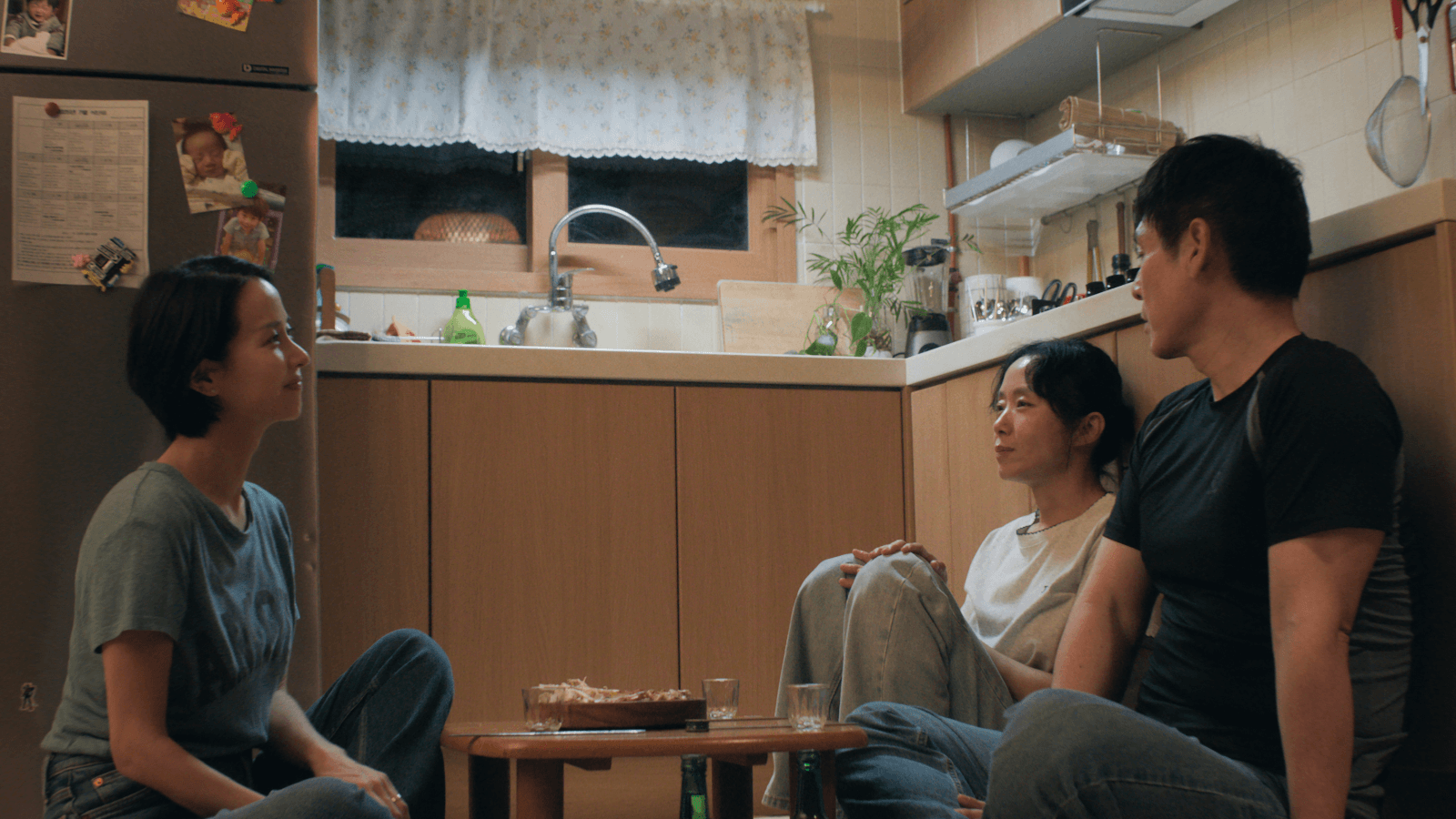
South Korean master Lee Chang-dong returns with Possible Love, the follow-up to his highly acclaimed Burning (2018). His previous film, based on a short story by Haruki Murakami, had included mystery and dreamlike elements not yet seen in his work, as well as a more formally striking visual language. Possible Love, on the other hand, feels more in line with his earlier social-realist films, such as Secret Sunshine and Peppermint Candy. This connection is reinforced by the film reuniting Lee with Jeon Do-yeon and Sul Kyung-gu, two actors who have already delivered outstanding performances for the director in the past. That said, Possible Love is funnier than the director’s previous films, without losing any of his signature seriousness.
Lee’s new film follows two couples with vastly different circumstances: On the one hand, there are blue-collar workers Mi-ok (Jeon, who had won the Best Actress Award at Cannes for her harrowing performance in Secret Sunshine) and Ho-seok (Sul, who starred in Lee’s Peppermint Candy and Oasis). They have a son, and Ho-seok is currently unemployed after having lost his job due to a mass layoff at the company he worked for—something he clearly suffers from psychologically, even though he tries to bottle it up. On the other hand, there are Ye-ji (Cho Yeo-jeong, who played the rich mother in Bong Joon Ho’s Parasite) and Sang-woo (Zo In-sung, who also appears in this year’s Hope by Na Hong-jin). They are a childless couple living in wealth and privilege thanks to Sang-woo’s seemingly unlimited financial resources after inheriting a large company.
Ye-ji is a documentary filmmaker with a social conscience who makes films about the lives of laid-off workers. After meeting Mi-ok and Ho-seok at a wake for one of the latter’s ex-colleagues who committed suicide after also losing his job due to the mass layoff, Ye-ji approaches them in the hopes of making them the subject of her next film. Despite Ho-seok’s reluctance, Mi-ok agrees to be filmed by Ye-ji, and the two couples’ lives become increasingly intertwined once the filming starts—bringing up buried feelings and longings, as well as the question of whether people coming from such different classes and backgrounds can ever truly be on an equal footing and have an authentic relationship with each other. In other words, as its title suggests, the film asks whether genuine love is possible under modern capitalism and its psychological effects.
As is apparent from this description, Possible Love deals—among other things—with social issues of class, especially the ever-increasing divide between the haves and the have-nots, which is particularly pronounced in South Korea. This might explain why Lee is already the third high-profile South Korean director tackling this issue in recent years after Bong Joon Ho’s Oscar-winning Parasite from 2019 and last year’s No Other Choice by Park Chan-wook. Thankfully, Possible Love is strong and distinctive enough to not feel derivative. While it might lack the excitement factor of the two aforementioned titles, Lee’s film is the densest of the bunch, and it has the greatest emotional, psychological, and thematic depth.
Speaking of the film’s depth, the documentary filmmaker character adds another layer to Possible Love that we have not seen yet in other recent films about class division or in Lee’s previous work. Ye-ji can be viewed as a stand-in for Lee, who is likewise a privileged filmmaker—he even served as South Korea’s Minister of Culture and Tourism from 2003 to 2004—depicting the suffering of other people in much less fortunate circumstances than his. Possible Love grapples with the ethics of Ye-ji’s and, by extension, Lee’s filmmaking. It asks whether their work is empathetic or exploitative, and whether filmmakers can genuinely understand and accurately represent their subjects under such circumstances.
Possible Love has had an unusually long and complicated development process. The initial idea for the film occurred to Lee more than ten years ago after a real-life incident at a South Korean company similar to the one depicted in the film. After writing the first draft of the screenplay, he shelved the project, as he was not sure he was the right person to tell a story about the struggles of blue-collar workers. Only when his co-writer Oh Jung-mi came up with the idea of including the documentary filmmaker character did Lee feel comfortable enough to proceed with the film. Additionally, he experienced difficulties financing the film until Netflix came aboard in May 2025. Watching the final product, one gets the sense that Lee has poured a lot of the feelings and moral dilemmas he experienced during the film’s development into the screenplay.
While writing the first script for what would eventually become Possible Love, Lee was offered the opportunity to take part in a project to reimagine all ten episodes of Krzysztof Kieślowski’s Dekalog as feature films. This has led to suggestions that Possible Love is a reimagining of Dekalog: Ten, the final episode of Kieślowski’s series that deals with the tenth commandment (“thou shalt not covet”). Despite a nod to Dekalog: Ten in the end credits, that is not the case, however, and Possible Love was conceived independently of Kieślowski’s work. Lee did incorporate the tenth commandment into his new film, though—explicitly by displaying it as an opening text, and implicitly by raising the question of whether it is possible to follow this commandment in a capitalist system where coveting what other people have seems to be a prerequisite.
As is always the case with Lee’s work, Possible Love offers a deeply probing exploration of its themes without providing easy answers. Both regarding its form and its content, every detail feels intentional and meticulously crafted. By way of example, Mi-ok recounts a story from her childhood when her mother, who worked at a car wash, chided her for using the car wash’s water hose. Mi-ok says that she did not understand her mother’s harsh reaction at the time. As an adult, however, she realized that her mother was not being cruel, but that her reaction was due to her fear that Mi-ok would end up similarly trapped in low-paid work. Much later in the film, when Mi-ok and her family visit Sang-woo’s luxurious vacation estate, Mi-ok sees her son watering the plants with the housekeeper’s water hose. Lee does not underline this moment, but the implications regarding the never-ending cycle of poverty are clear and powerful enough for attentive viewers.
Formally and visually, Possible Love is less striking than Burning, but no less assured. Kim Ji-yong’s cinematography is highly accomplished, using a distinct visual language for present-day scenes, documentary footage shot by Ye-ji, and intermittent flashbacks (which, among other things, show a still-employed Ho-seok being much happier and livelier, as well as the harrowing events surrounding the mass layoff). Jung Jae-il’s score is used sparingly, but effectively, and Kim Da-won’s editing ensures that the film remains absorbing throughout its 164-minute runtime. The performances are outstanding as well—Sul completely sells a late scene where Ho-seok finally breaks down after having internalized his pain for so long, resulting in one of the film’s most moving moments. Thanks to the performances, as well as Lee and Oh’s excellent screenplay, the human drama proves as compelling as the film’s themes, resulting in a film that wholly engages both the heart and the mind.
After premiering and winning the Silver Lion Grand Jury Prize at the Venice Film Festival, Possible Love will be released in select theaters on October 23 and hit Netflix worldwide on November 6. As a result, a lot of people will not get the chance to see Lee’s new film in a theater. This is a shame, especially as Possible Love is such a complex, layered work that rewards viewers’ attention. One can only hope that people watching it on Netflix will give it their full focus, which is nothing less than this masterful film deserves. Personally, I cannot wait to revisit it once it gets released, as one viewing is hardly sufficient to fully absorb everything it has to offer. 4/4 Stars

Wicker
Gala Premieres
Based on a 2008 short story by Ursula Wills-Jones, the new film by Alex Huston Fischer and Eleanor Wilson (Save Yourselves!) has an intriguing premise. Set in a medieval village, it follows an independent fisherwoman (Olivia Colman) mocked by the narrow-minded villagers due to her fishy smell and unmarried status. In reaction to this, she sarcastically commissions a wicker husband from the local basket weaver (Peter Dinklage). Lo and behold, the latter actually produces a living man made of wicker (Alexander Skarsgård) who is head over heels in love with the fisherwoman.
The wicker man’s striking appearance is an impressive feat of design, prosthetics and make-up. The effects used to bring this character to life are mostly practical, with digital enhancements only being used as a minor finishing touch. Once the wicker man enters the film, the fisherwoman does indeed marry him—first as a joke, but when he turns out to be a loving and gentle companion, a charming romance develops between the two. They also have wild and frequent sex, and the respective scenes provide some of the film’s biggest laughs (at least if you are not distracted by the thought of how physically painful sex with a partner made of wicker would be in real life).
Through the marriage between the fisherwoman and the wicker man, Wicker explores love, relationships, and trust in a way that is surprisingly earnest given the film’s absurd concept. Moreover, the villagers’ reactions to the marriage allow the film to make some sharp and darkly comic observations on societal conventions and gender roles. The villagers are made up of several colorful side characters, with the tailor’s wife (Elizabeth Debicki) leaving the strongest impression and emerging as a foil to the fisherwoman. In line with the villagers’ patriarchal culture and obsession with status and conformity, the film’s characters do not have names and are called by their occupation—or, in the case of married women, by their husbands’ occupation.
Wicker is a smart and entertaining film, but it begins to run out of steam toward the end as it becomes apparent that its concept is too thin to fully sustain a feature-length runtime. Additionally, not all of the comedic moments land, and the internal logic tends to be unconvincing—even if you buy into the basket weaver being able to produce a living man made of wicker, this raises several follow-up questions that the film fails to address in a satisfying manner. That said, these flaws are easy to overlook given the film’s strengths, which include strong performances and Lol Crawley’s cinematography, as well as having its heart in the right place. 3/4 Stars

David Hill is a lawyer from Switzerland. He has long had a passion for cinema, and he devotes most of his spare time to watching and researching films. His primary interest focuses on arthouse films, and he occasionally contributes to Deep Focus Review as a guest writer.
Thank You for Supporting Independent Film Criticism
If the work on DFR has added something meaningful to your love of movies, please consider supporting it.
Here are a few ways to show your support: make a one-time donation, join DFR’s Patreon for access to exclusive writing, or show your support in other ways.
Your contribution helps keep this site running independently. However you choose to support the site, please know that it’s appreciated.
Thank you for reading, and for making this work possible.
Brian Eggert | Critic, Founder
Deep Focus Review