Patreon Exclusive
Paper Tiger
By Brian Eggert |
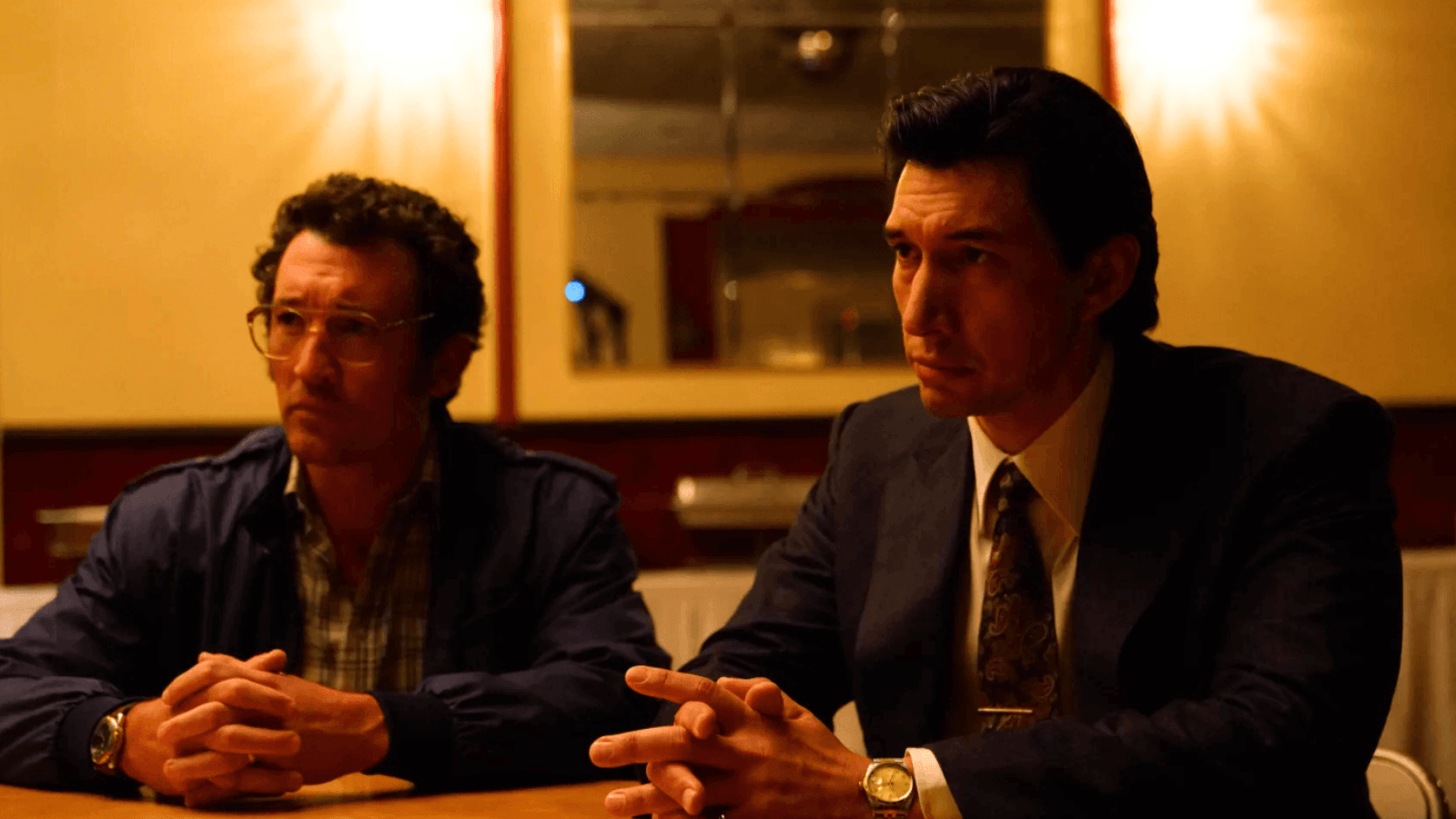
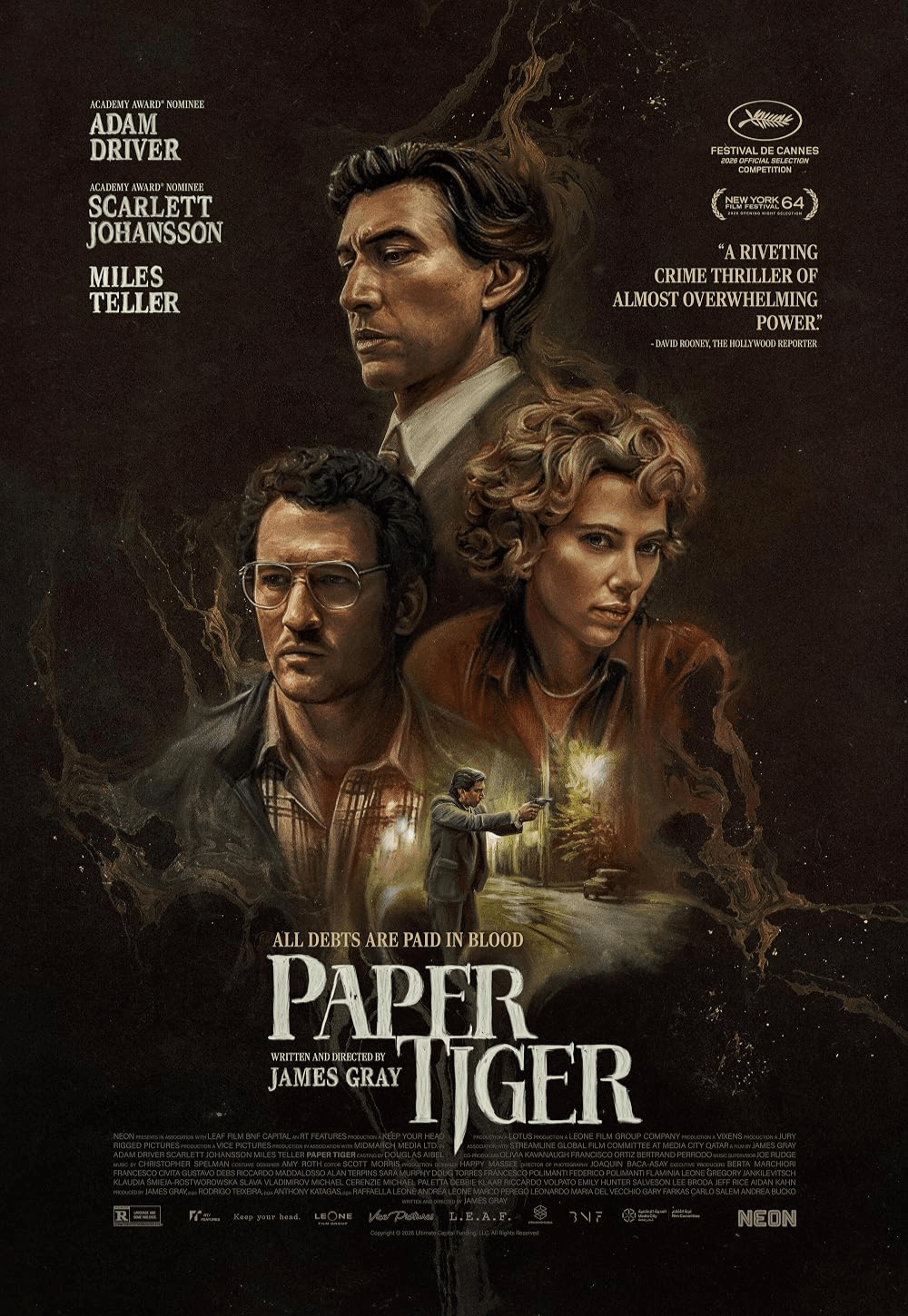
“This was a bad night,” Irwin Pearl tells his shaken sons. Played by Miles Teller, Irwin, from one perspective, has everything a middle-class family is supposed to have in 1986: a loving wife, Hester (Scarlett Johansson); two sons, the nearly eighteen-year-old Scott (Gavin Goudey) and Ben (Roman Engel), who’s a few years younger; a nice house in Queens’ Fresh Meadows neighborhood, where Irwin runs his small environmental engineering business. Prosperous by some standards, Irwin could be doing better in Reagan’s America. His brother, Gary (Adam Driver), a former NYPD cop turned thriving security expert, pitches launching a consulting business together, starting with a prospective oil cleanup gig for a Russian operation on Brooklyn’s Gowanus Canal. After a preliminary meeting, the overzealous Irwin takes his sons along for a “nighttime risk assessment” of the site, against Hester’s wishes. Trying to be helpful, he warns the Russian workers, seen loading barrels of oil onto a truck, that their equipment is too close to power lines. Someone could get injured. Irwin soon learns the Russians are ruthless gangsters, and he’s the one who could get hurt, or worse. They rough him up and torment his sons, then take his ID, less as a warning than a promise: we know where you live.
A carefully observed story about pretenses and bottomless dread, Paper Tiger takes its title from a phrase Gary uses to describe the Russian mob boss, suggesting he has no bite. Gary wears expensive suits and drives a flashy Mercedes. The Pearls say he “has more money than God,” and fittingly, he’s given to extravagant gestures. On the night he pitches Irwin, Gary brings his brother’s family a catered dinner from Peter Luger Steak House. Gary’s success is so pronounced it makes Irwin’s family think they’re have-nots. Scott complains, “Why do we always have to buy crappy stuff and live crappy?” Indeed, the boys worship their uncle, who plays piano, still carries a small revolver in an ankle holster (which the boys think is cool), and feels protected by an invisible shield from his time as a cop. After the Russians threaten Irwin, Gary vows to resolve the matter. “I’m NYPD,” he assures his brother. “They’re not gonna touch me.” Irwin knows this, yet that’s not his concern: “But they can touch me.” And Irwin has good reason to be worried. The title, as it turns out, also refers to Gary.
Paper Tiger was intended as a sequel to Gray’s last film, Armageddon Time (2022), one of the filmmaker’s best to date that, like much of his work, has a touch of autobiography. Gray, who sets most of his films in distinctive New York neighborhoods, tells the story of a Fresh Meadows family similar to the Pearls in Armageddon Time. The father is a contractor named Irving, the mother is a homemaker named Esther, and they have two sons. It’s a less pulpy story that follows the youngest son’s friendship with a Black student and his later admission to a private school, where the major donors are the Trumps. The boy’s grandfather, played by a terrific Anthony Hopkins, warns him about such intolerant elitists. “Fuck ’em,” he says, declaring the film’s punkish sociopolitical stance. While setting up Paper Tiger, Gray couldn’t align the schedules for his lead performers from Armageddon Time, Jeremy Strong and Anne Hathaway, so he loosely renamed the characters and recast the roles. This was for the best, as Teller and Johansson bring a groundedness that Strong and Hathaway might have played with more theatricality.
The full review is currently exclusive to Patreon subscribers. To read it, you can purchase individual access or join Deep Focus Review’s Patron community.
Patrons also receive:
• Early access to reviews and essays in The Definitives
• DFR Newsletter every Monday
• Streaming recommendations every Friday
• Polls to pick the movies reviewed on Deep Focus Review and Patreon
• Access to the open AMA and DFR Community
Like DFR? Support us.
This site exists because readers like you care about film. If DFR has enriched your experience with movies, I’d be grateful for your support. You have a few options:
• Join DFR’s Patreon community
• Make a one-time donation on PayPal
• Buy me a coffee
Whatever option you choose, it helps keep my work independent. And it means a lot to me.
Thank you for reading, and for making this work possible.
Brian Eggert | Critic, Founder
Deep Focus Review