The Uprising
By Brian Eggert |
Same shit, different century. In Paul Greengrass’ The Uprising, the common people, tired of suffering from overtaxation and oppression by their autocratic monarch, who acts either according to the advice of his scheming oligarchs or his own maddened whims, decide to band together and show their government who has the power. Familiar as this may sound, the film is not about today’s America or Russia, though the contemporary relevance and why Greengrass chose to tell this story remain clear enough. Rather, it’s about the Peasants’ Revolt of 1381. With half the population lost to the Black Death and expenses from the Hundred Years’ War with France mounting, England was suffering. The throne responded by lowering laborers’ wages and raising taxes, and the unsustainable conditions lasted until thousands of people organized and took their grievances to the teenage King Richard II. Students of history know the revolt doesn’t go as planned, but Greengrass doesn’t leave contemporary viewers without hope. His film captures the spirit of an adage, attributed to everyone from John Basil Barnhill to Alan Moore: When people fear their government, it’s tyranny; when a government fears the people, it’s liberty.
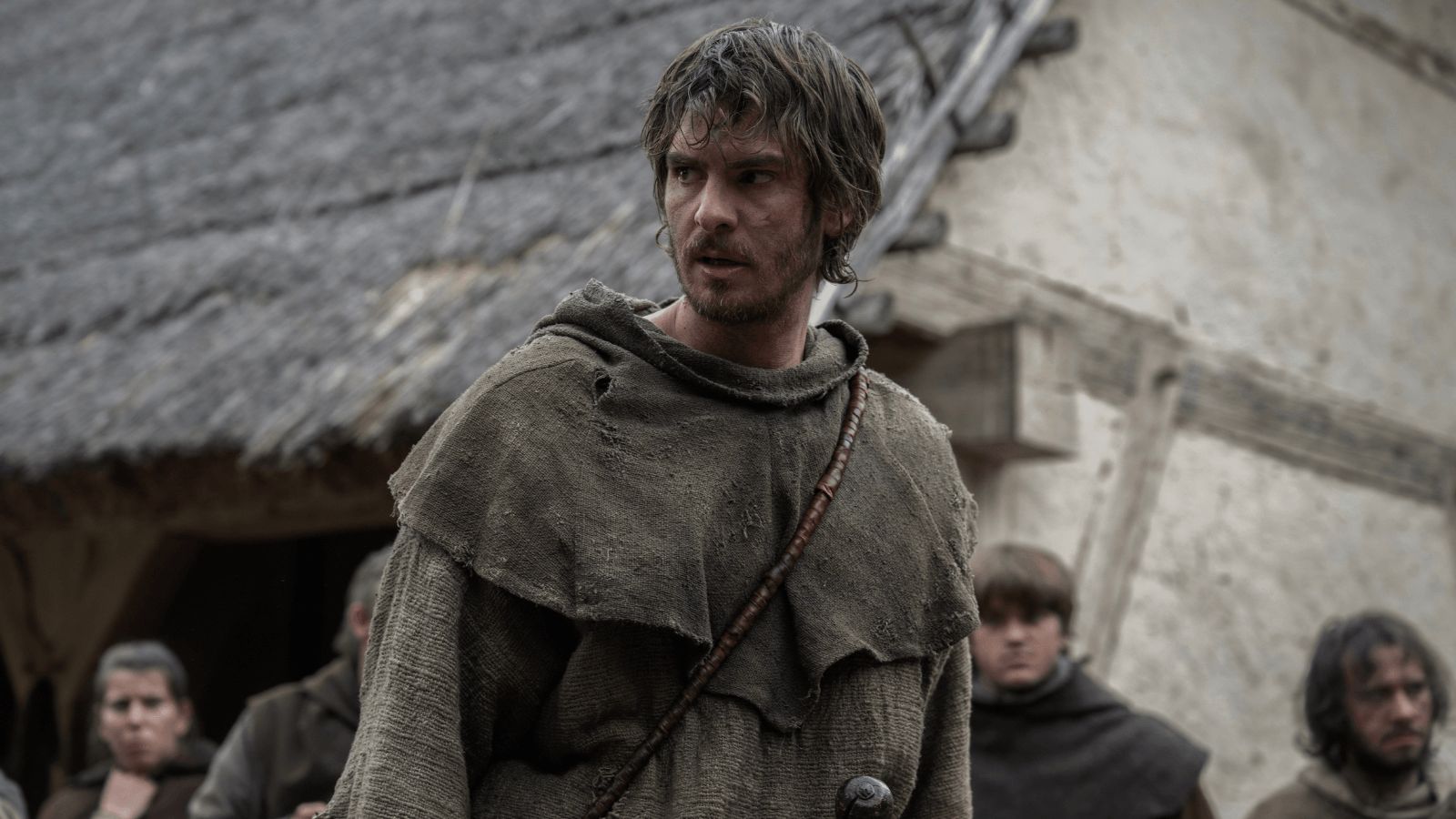
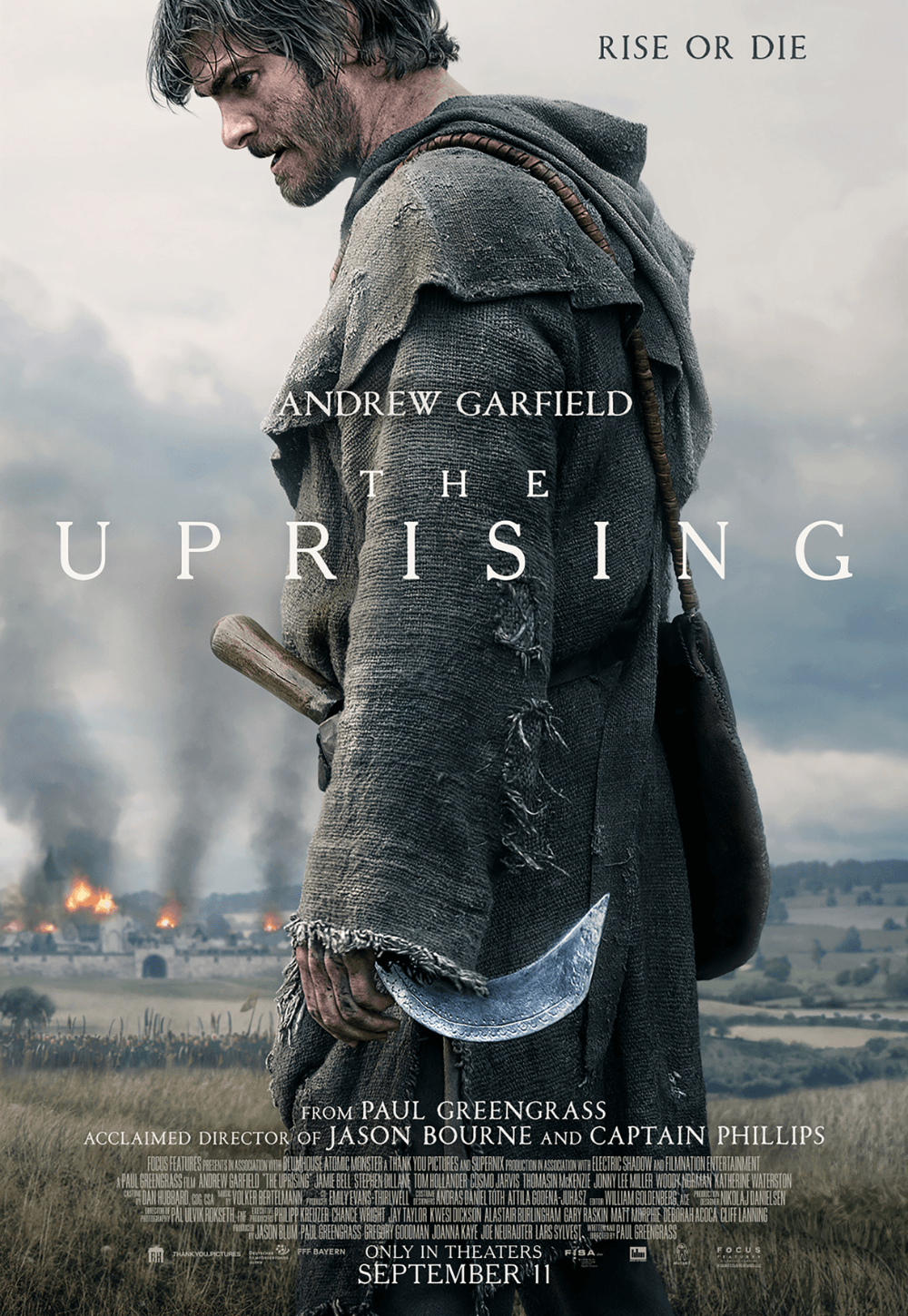
Although history books report that Wat Tyler led the rebellion, Greengrass has other ideas. He centers his fictionalized version on a farmer played by Andrew Garfield, who goes by Ploughman, an occupational surname. Stricken with grief, he lost a wife and two children to the plague and now struggles to farm an impossible marshland. When a local official refuses to release grain unless he pays a “death tax” for his family, which he cannot pay, Ploughman looks around and sees only inequality and injustice. In an unthinkable turn, soldiers begin checking women to determine if they’re “of age,” and therefore taxable. Ploughman snaps, bellowing, “We’ve given you enough!” All at once, he fights back and quickly finds himself at the center of an organized rebellion, joined by actual historical figures: the priest John Ball (Jamie Bell), who’s deemed a heretic by some; Ball’s follower Alyce (Thomasin McKenzie), who has experienced the church’s corruption first-hand; and former soldier Wat Tyler (Cosmo Jarvis), who history shows led the revolt.
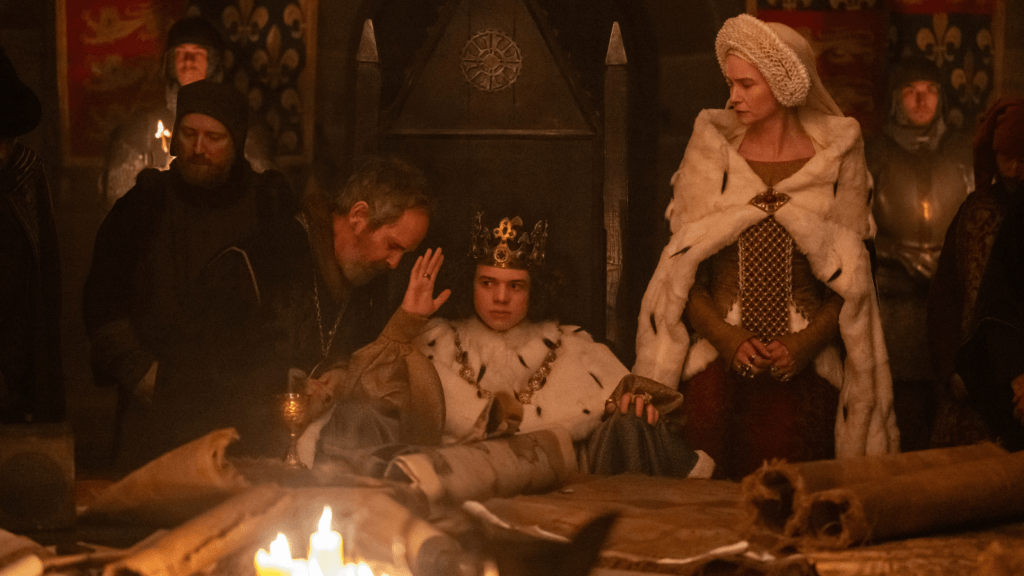
Scenes with the fearful Richard II, played by Woody Norman from C’mon C’mon (2021), reveal a familiar, unreliable leader, easily swayed by wealthy, self-interested supporters in his ear. It’s impossible to watch the scheming treasurer Robert Hales (Tom Hollander) and the decidedly unholy Archbishop Simon Sudbury (Stephen Dillane) without thinking of today’s billionaires (Musk, Ellison, Bezos, Zuckerberg, et al.) bootlicking political leaders for more power, fewer taxes, and financial rewards. There’s also London’s seething Mayor William Walworth (Jonny Lee Miller), who controls the local militias but refuses to lend them to the crown without payment and a seat on the King’s council. Richard II has yet to prove himself as a leader, haunted by debilitating nightmares and encouraged by his moral mother (Katherine Waterston). But by the time the uprising reaches London, the novice King learns how to become a politician—how to deceive and strategize. At first he seems feckless; before long, he has a crazed glint in his eyes, like Joffrey Baratheon. It’s a scary reality, given that many of his people believe his presence is a “miracle” and that God appointed him, especially because the King holds a distracting carrot in his right hand and a dagger in his left, behind his back.
Garfield exudes humanity and feeling in an otherwise simple role that doesn’t require an elaborate backstory or multidimensional facets. Ploughman isn’t a soldier, and besides the painful memory of his family, his life is about farming. So when he acts, he commits himself fully to the cause. Backed by the sturdy Tyler and fervent Ball, Ploughman leads his fellow peasants—whom Hales calls “deplorables”—to erase local debt records and demand sovereignty. Out for blood, Ball also wants the King’s councilmembers executed for their crimes. Multiple commoner armies from Essex and Kent coordinate to arrive in London on the Feast of Corpus Christi, believing that “all will be well once wealth is removed,” and the King consecrates their demands in a charter. But their plan veers in another direction, leading to a chaotic riot in London, where even Ploughman and Tyler agree things have gotten out of control. Garfield’s persona remains a source of moral clarity and certainty, and Ploughman never loses himself to unchecked rage. The Uprising reminds us that angry mobs can drive change, but they also have a dangerous life of their own. Motivated by their grief and pain, the people promise, “There will be no peace until we are healed.”
Greengrass doesn’t conform to the Ridley Scott mode of historical epics, apart from Volker Bertelmann’s rousing score. The English director of United 93 (2006) and Captain Phillips (2013) remains committed to his usual form, with the illusion of really-there footage captured by cinematographer Pål Ulvik Rokseth’s handheld cameras. The modernish visuals convey how revolutions are messy and bloody. Peasants kill armored soldiers with pitchforks, axes, and scythes. Fittingly, Ploughman’s weapon of choice is a sickle, a symbol of agriculture and unity across many cultures. Filmed largely in Munich fields, the production also shot in real medieval churches with centuries of wear. It’s easy to wonder how different these buildings might have looked 650 years ago, but no matter. Greengrass’ intense aesthetic isn’t designed to be beautiful, as shown in his embrace of a muddy, earth-toned palette, lit by overcast skies, moonlight, or candlelight. And despite a few too many anachronistic digital shots that zoom over battlefields and the riots in London, the filmmaking feels aligned with the director’s sensibilities and the raw, live-wire energy of dissent. Greengrass’ sustained tone of heightened tension may register as exhausting, even monotonous to some, but I suspect that’s an intentional choice to convey the unyielding immediacy of revolution.
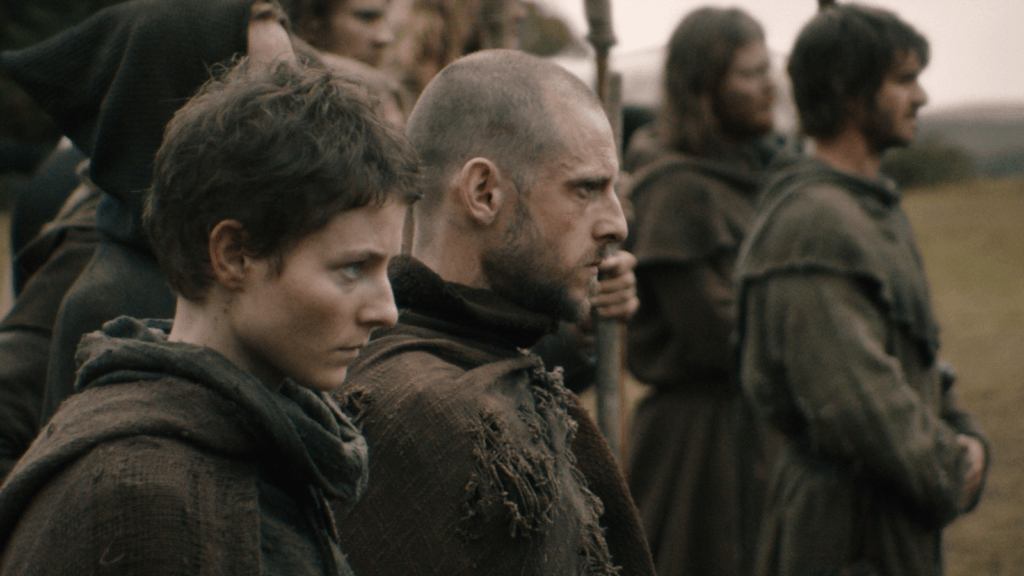
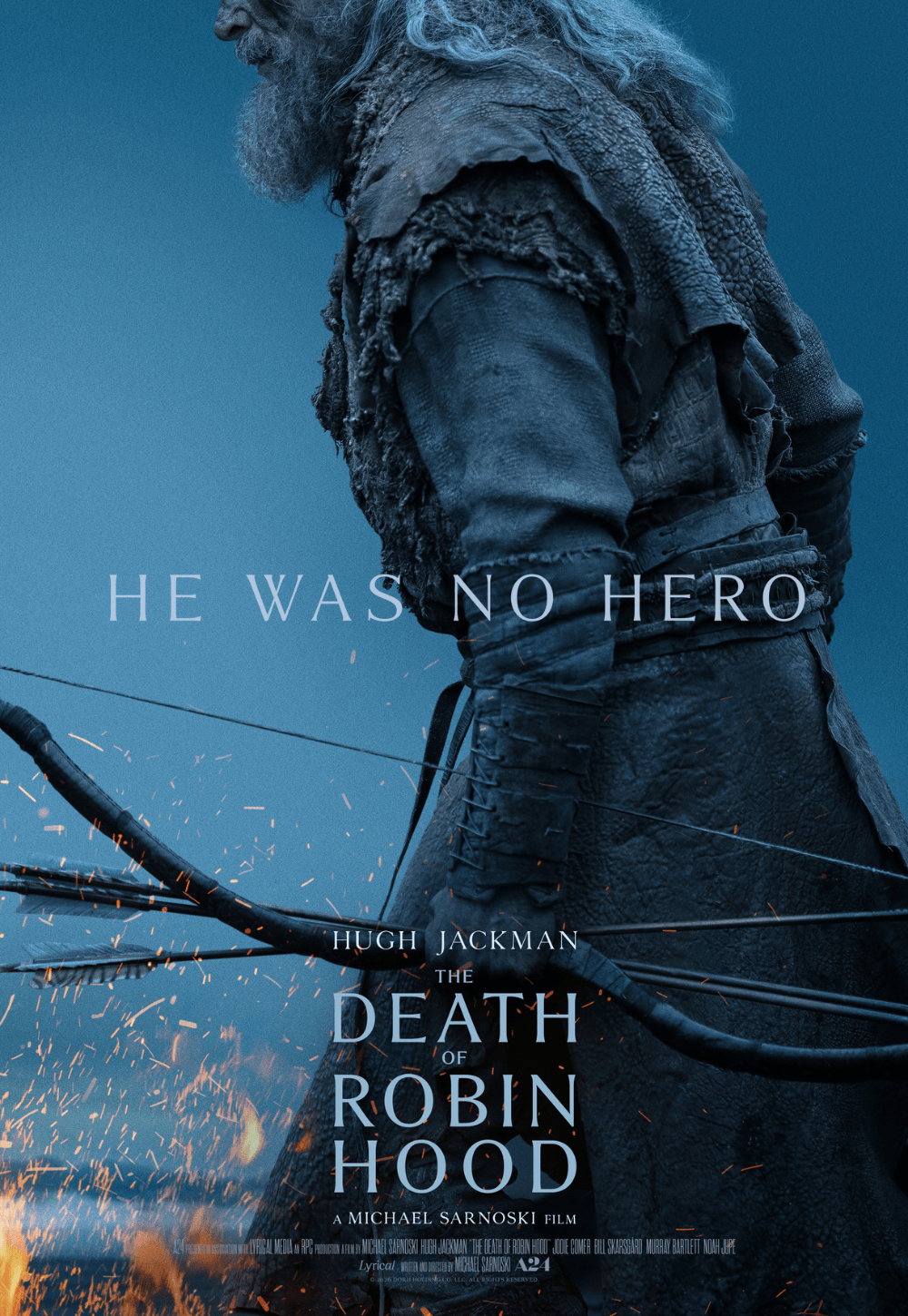
Some of The Uprising’s promotional material has spoiled the secret that Greengrass has blended history and legend, using the Peasants’ Revolt as a Robin Hood origin story. In doing so, Greengrass ends his film on a hopeful note, reframing what would otherwise be a downer chapter of history—the King eventually ends serfdom, but only after crushing the rebellion and leaving hundreds dead. The film is the second this year to deconstruct the Robin Hood legend, following Michael Sarnoski’s unfairly overlooked The Death of Robin Hood, which features Hugh Jackman as a ruthless, Dillinger-esque criminal whom the people turn into a hero. Here, Greengrass suggests that the folk hero emerged from a famous chapter of historical oppression and resolved to steal from the rich and give to the poor, while those in power fear him. To be sure, Ploughman comes face-to-face with Richard II in a later scene, declaring that the people should self-govern. “No kings,” he says through his teeth, in an unmistakable evocation of anti-Trump rallies. It’s a potent message for today, if unsubtle. But these aren’t exactly subtle times in which we live.
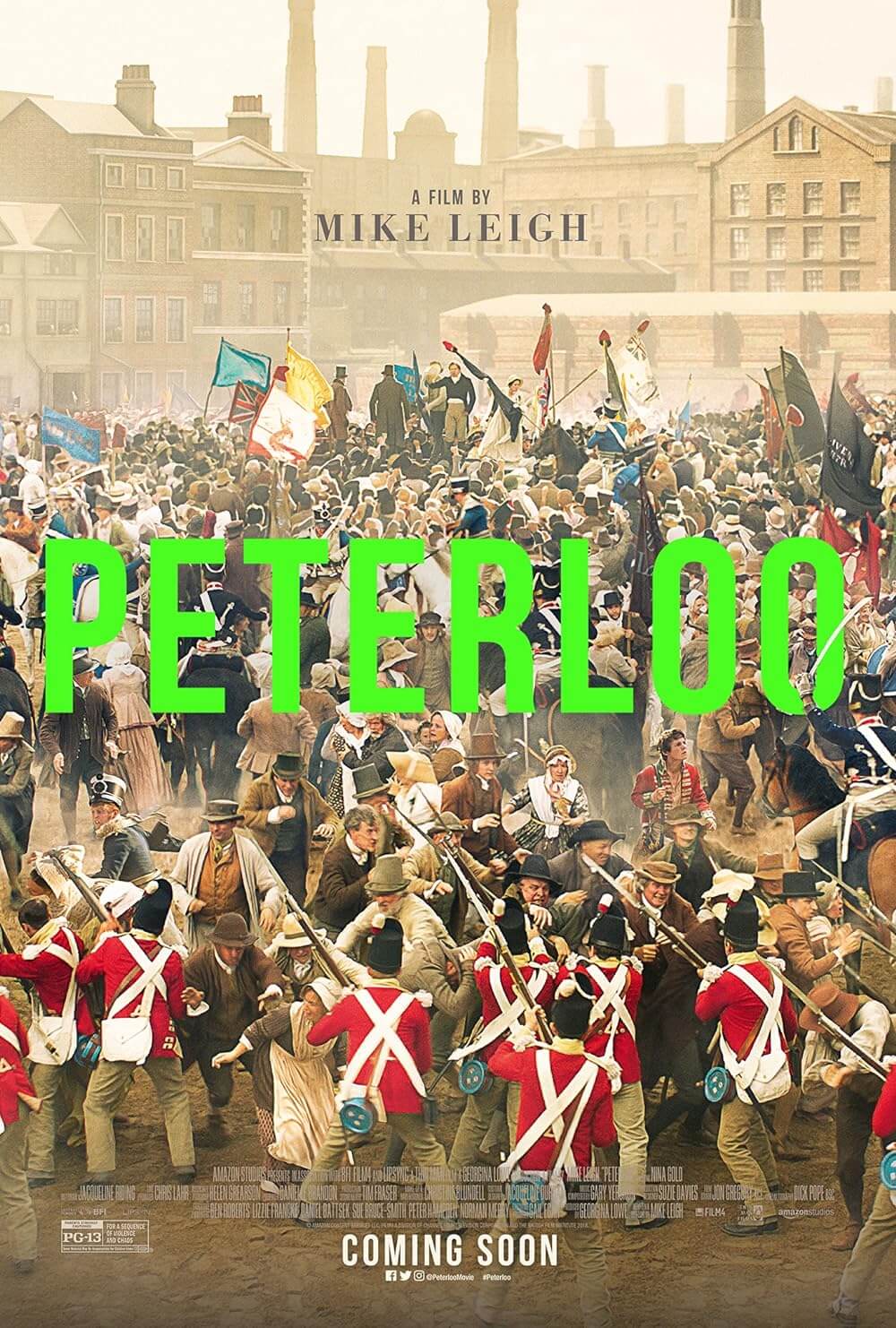
Needless to say, The Uprising is a stirring story, teeming with anger and modern-day parallels, both underlined by a director who’s no stranger to political filmmaking. For a certain segment of the audience outraged by the daily injustices that have become omnipresent in the United States and other countries, the story will feel like a gut-punch, perhaps even a hopeful reminder that people hold the power, not their governments. With relentless momentum and overwhelming pathos, Greengrass delivers a portrait of medieval England that shows a desperate, drab populace fed up with inequality and economic exploitation by those at the top. Much like Mike Leigh’s Peterloo (2019), another account of England’s government suppressing the voice of its people, The Uprising shows history’s circular patterns—how we’ve been here before, and we’ll probably be here again. If it’s not a galvanizing call to action, it’s a historical reminder that governments and politicians don’t like to give up their power. They would sooner watch their citizens struggle, starve, and die, unless people take action and vote for change.
Like DFR? Support us.
This site exists because readers like you care about film. If DFR has enriched your experience with movies, I’d be grateful for your support. You have a few options:
• Join DFR’s Patreon community
• Make a one-time donation on PayPal
• Buy me a coffee
Whatever option you choose, it helps keep my work independent. And it means a lot to me.
Thank you for reading, and for making this work possible.
Brian Eggert | Critic, Founder
Deep Focus Review