The Definitives
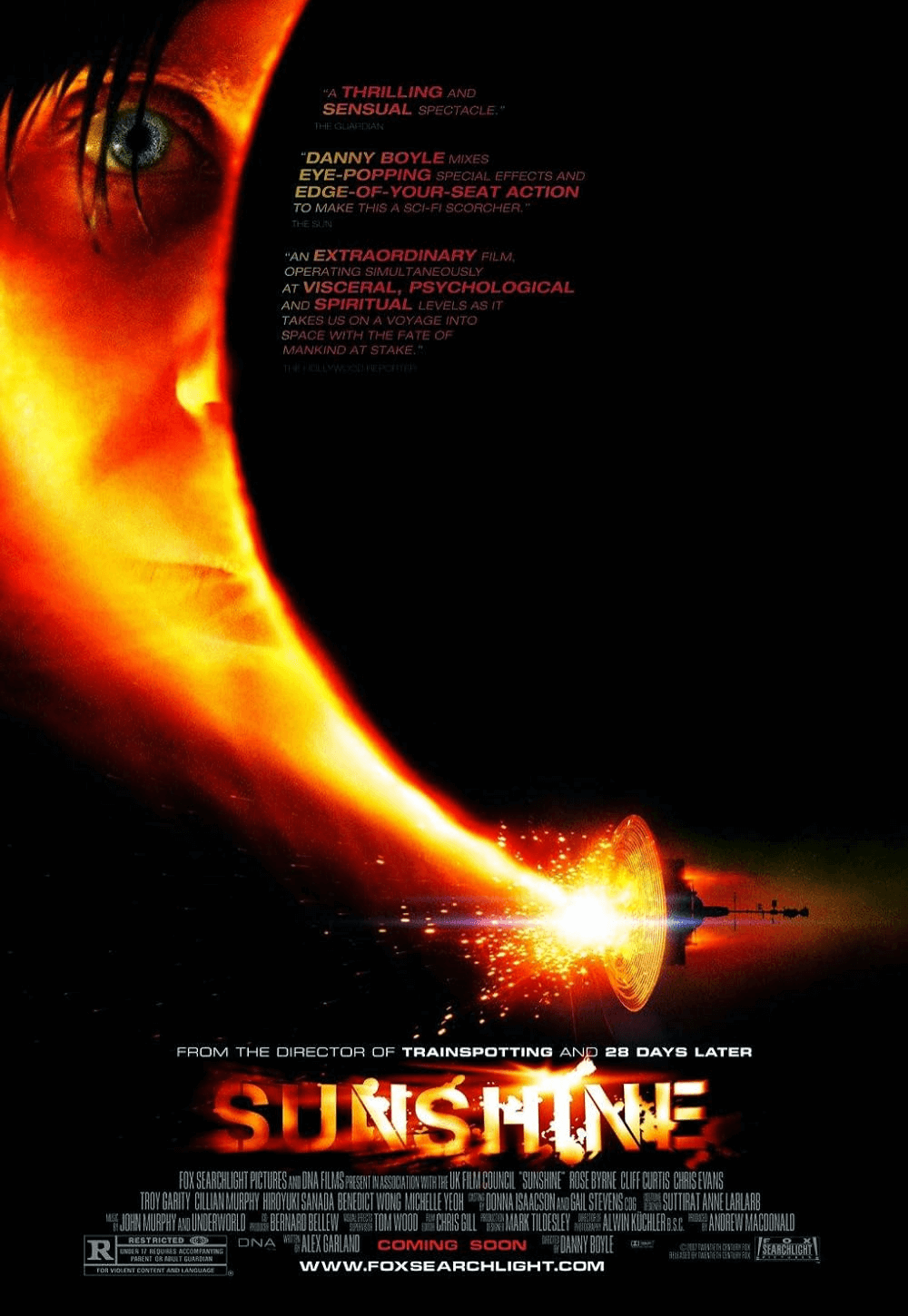
Sunshine (2007)
Essay by Brian Eggert |
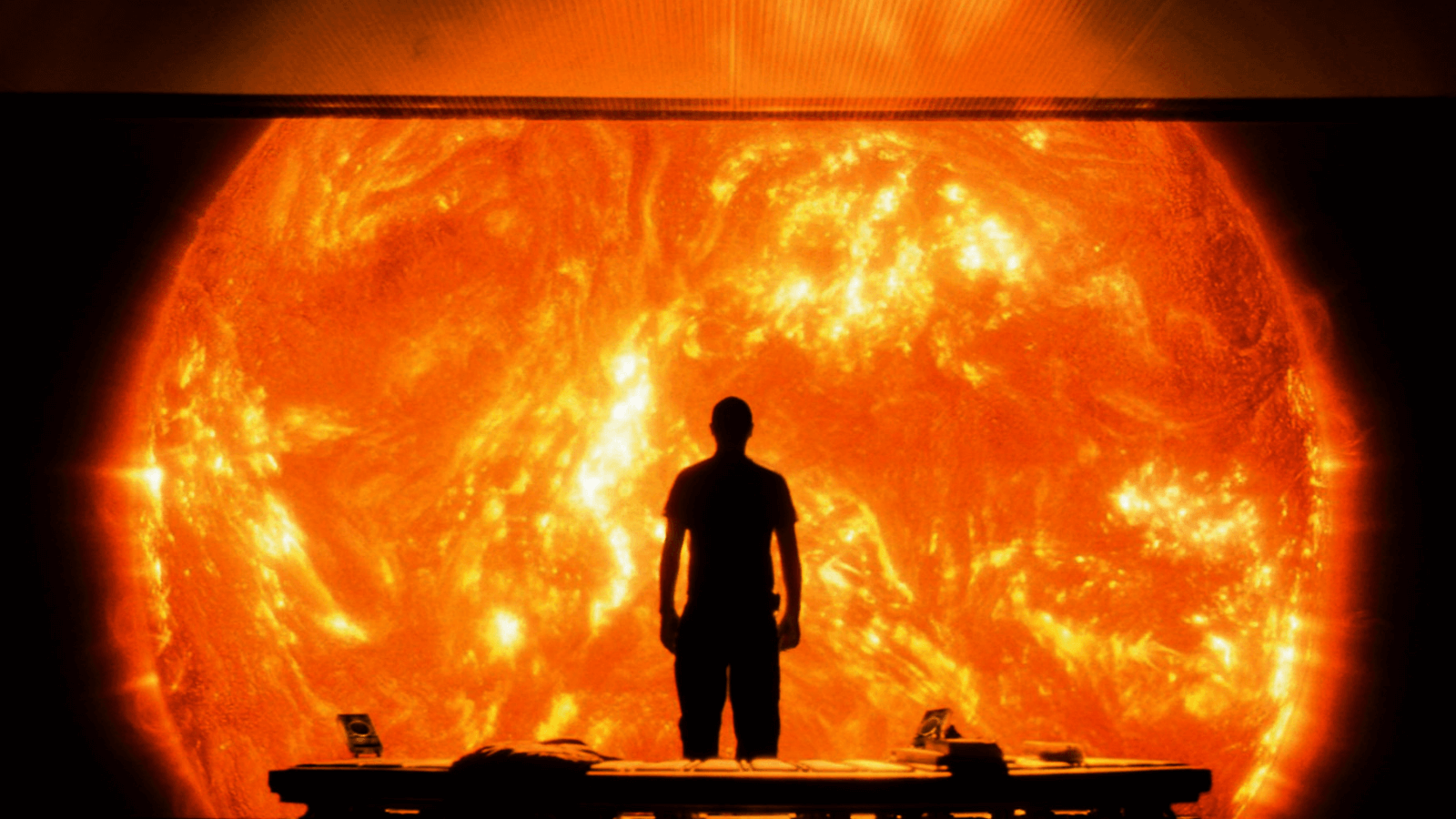
Danny Boyle’s Sunshine is about a stellar mission to save our dying star. Among the eight-person crew, Cliff Curtis plays a psychologist named Searle, who is mesmerized by the Sun. Darkness, he explains, is an absence—a void. But light envelops you. On a spaceship called Icarus II, Searle stands in an observation room that filters out the Sun’s deadly rays through a massive tinted window. At a mere 2% of the Sun’s intensity, it’s bright and stunning. The ship’s computer warns that a meager 4% of the Sun’s intensity at this range would kill him. However, 3.1% is merely blinding, and the computer recommends only 30 seconds at that exposure to avoid serious injury. Searle needs to see it. He protects his eyes with sunglasses, and the sudden burst almost knocks him off his feet. Throughout the film, Searle returns to the observation room, and his skin gradually darkens, peels, and blisters into severe sunburns. It’s as though, at this proximity, unexplainable forces in the light draw him closer and engulf him. Later in the 2007 film, another character will emerge who has been wholly seduced by the Sun’s power. He has devoted himself to achieving a rapture-like transcendence through the Sun’s embrace, which he believes will bring him closer to God.
Written by Alex Garland, who collaborated with Boyle before on The Beach (2000) and 28 Days Later (2002), Sunshine bears the writer’s authorial obsession: characters who uncover the deus ex machina. Not the literary meaning of a convenient plot device; rather, a conceptual entity that defies both science and metaphysical understanding to arrive at something sublime. Garland would later explore these ideas in his own directorial efforts, including Ex Machina (2015), Annihilation (2018), Men (2022), and the television miniseries DEVS (2020). At the center of Sunshine is a debate between its director and screenwriter. A devout atheist, Garland sees humanity as its own worst enemy, tampering with the potential powers of Nature and science without respect or responsibility. Boyle’s films often find hope in desperate situations, sometimes through religion (see Millions, 2004), sometimes by fate (Slumdog Millionaire, 2007), and sometimes by human drive (127 Hours, 2010). Garland believes that science is extraordinary enough and should replace the need for a god. Boyle, an agnostic, has a more whimsical, spiritual, and optimistic outlook.
The full 3,500-word essay is currently posted on Patreon. To read it, you can access the full piece individually. Or you can also join Deep Focus Review’s Patron community, where you’ll first receive exclusive access to this essay and many other reviews and blogs published on Patreon.
Patrons also get access to:
• Exclusive weekly blog posts
• Streaming recommendations every Friday
• Polls to pick the movies reviewed on Deep Focus Review and Patreon
• Access to the open AMA and DFR Community
Thank You for Supporting Independent Film Criticism
If the work on DFR has added something meaningful to your love of movies, please consider supporting it.
Here are a few ways to show your support: make a one-time donation, join DFR’s Patreon for access to exclusive writing, or show your support in other ways.
Your contribution helps keep this site running independently. However you choose to support the site, please know that it’s appreciated.
Thank you for reading, and for making this work possible.
Brian Eggert | Critic, Founder
Deep Focus Review