Silent Friend
By Brian Eggert |
Note: Ildikó Enyedi’s Silent Friend was screened as part of the 45th Minneapolis St. Paul International Film Festival and originally reviewed on April 15, 2026. Visit the festival’s site here. The distributor 1-2 Special will release the film on May 8, 2026.
Before making Silent Friend, Hungarian filmmaker Ildikó Enyedi seems to have read The Hidden Life of Trees, Peter Wohlleben’s 2015 book about the intricate, unseen social relationships that comprise what he calls the “wood wide web.” The author uncovers how trees send chemical and electrical signals through their secret network, warning one another about pests and other threats. They share resources, with healthier “mother” trees using their connections like a nervous system to assist their offspring, pumping nutrients to them to keep the wood wide web thriving. Wohlleben also explores how trees sleep and even remember hard times, such as droughts, allowing them to prepare for future problems. The tree community relies on its members growing naturally, so if trees are displaced, say, by humans planting them as part of urban forest management, they will not form a thriving culture that communicates as it should. They will be lonely, disconnected. Walking through the woods, Wohlleben suggests you can observe a functional society. Walking through a suburban neighborhood where trees line the streets, it’s like walking through a prison.
Enyedi’s film takes a similar approach to trees and plant life. Her enigmatic triptych spans three timelines over more than a hundred years, with the only constant being the titular Ginkgo biloba tree planted in 1832 on the campus of a German university. In each story, a character tries to rethink what we know about plants, often to the confusion and skepticism of their respective scientific communities. To be sure, Wohlleben’s ideas have been criticized by some for anthropomorphizing plants, imbuing them with the characteristics of families and friendship. But his approach confronts the difficulty human beings have in seeing how life without observable behaviors could be analogous to their own. Trees communicate too slowly, too internally, for us to notice and understand with the naked eye. And yet, as one character in the film states in a lecture: Science is about asking questions and using metaphors to understand the world around us. And there’s a long history of dendrologists and botanists using human terminology to describe how plants function.
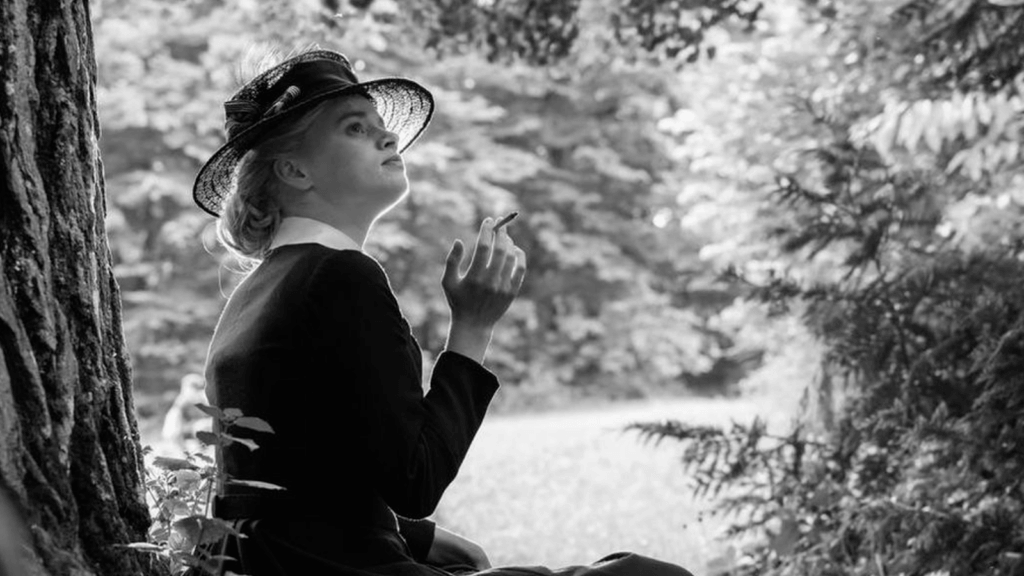
Consider the earliest storyline, set in 1908. Grete (Luna Wedler) is a promising student who interviews for admission to the university’s science department, sitting before a panel of stuffy patriarchs. She selects a seemingly random topic among many: the Swedish botanist Carl Linnaeus, who developed a system of plant classification using Latin terms. Linnaeus established a still-in-use series of sexual metaphors to understand how certain plants procreate with their stamens, the equivalent of male reproductive organs, and their female counterparts, known as pistils. For instance, Monandria means “one man,” or one stamen, while Polyandria means “many men.” One of Grete’s cruel interviewers (Rainer Bock) has arranged for her to select this topic, if only so he can attempt to embarrass her with questions of an allusive sexual undercurrent. Grete hardly blushes, cuts through the panel’s sexist traps in their interview, and earns her place as the first woman at the university.
Chronologically speaking, the next storyline takes place in the 1970s. At the same university, Hannes (Enzo Brumm) is a dreamer who doesn’t relate to many of his fellow countercultural students. Having grown up on a farm, Hannes claims not to be interested in plants anymore and seeks more intellectual pursuits. However, he draws the attention of his housemate, Gundula (Marlene Burow), with whom he develops an intimacy over time. She eventually goes on a trip with some friends, leaving Hannes to continue her experiments on a geranium perched on her windowsill. He has strict instructions not to spend too much time with the flower, as his presence may affect the results—she has electrodes attached to the plant that feed into a kymograph that records the plant’s reactions on paper. Hannes finds that sudden bursts of noise prompt a reaction on the chart recorder. He resolves to try his own experiments and discovers the geranium has become aware of him, even anticipating his presence from several yards away.
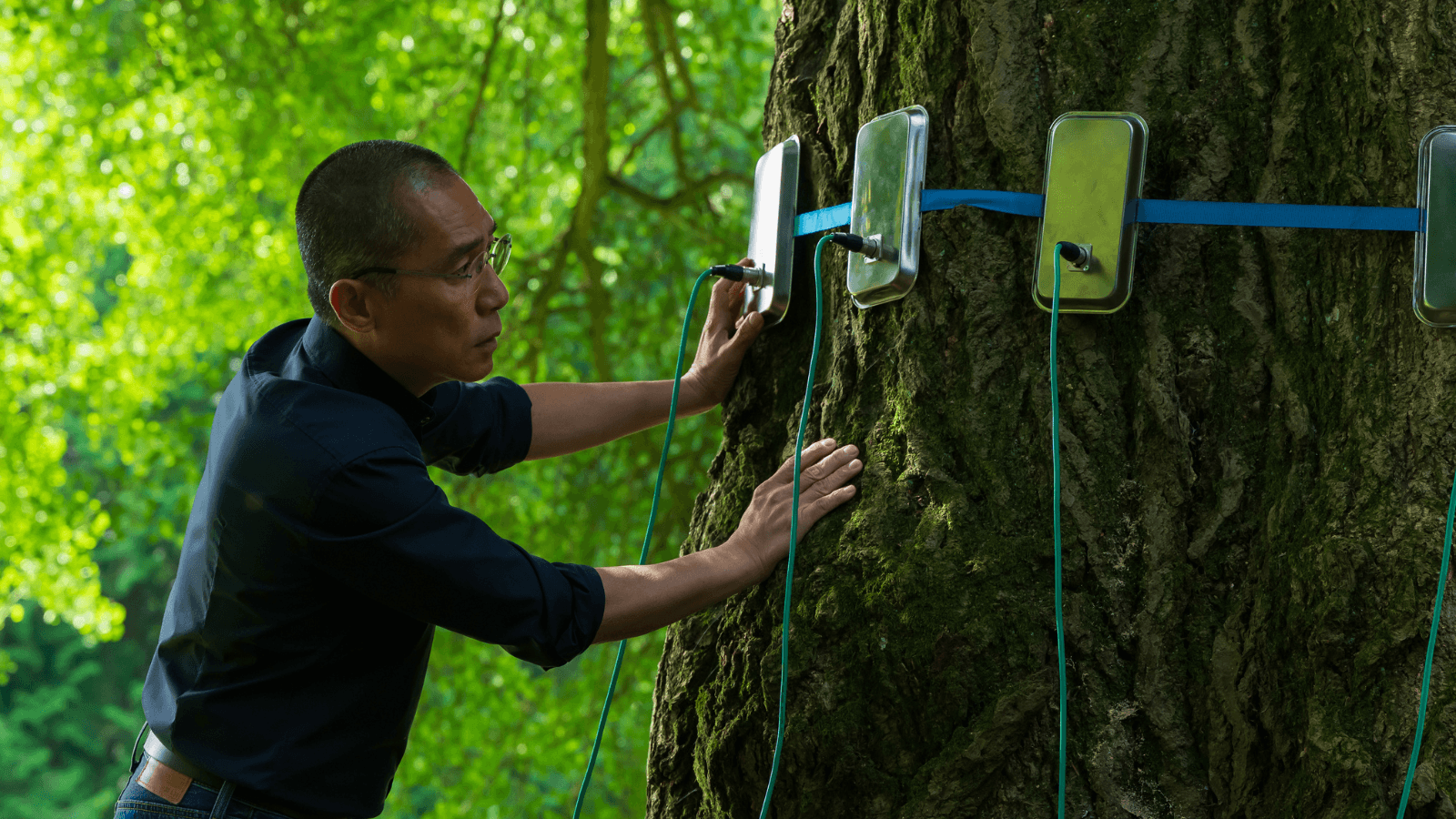
The contemporary scenes unfold during the COVID-19 lockdown. A visiting neuroscientist from Hong Kong, Dr. Tony Wong (Tony Leung Chui-wai), charts how children’s brainwaves exhibit an openness that seems to take in everything around them. By contrast, adult brainwaves often narrow to focus on one point. The pandemic halts his research on humans, and he soon becomes one of two people left on campus—the other being the nosy site manager, Anton (Sylvester Groth), who watches Wong with equal parts curiosity and suspicion. After weeks of virtual solitude on campus, Wong connects with a scientist online, Alice Sauvage (Léa Seydoux), who specializes in understanding plant behavior. They become friends and collaborators over video, and he resolves to combine their work by comparing human brainwaves with those of the centuries-old Ginkgo tree on campus, much to Anton’s confusion. Separated by a language barrier, the caretaker conspicuously watches from a distance, trying to understand Wong’s experiments and behavior in the name of science.

Silent Friend hopes to find the common link between humanity and trees, and, for that, it’s absolutely unique and inspired in its execution. Some will undoubtedly call the film boring for its intentional pacing and lack of a traditional plot, whereas others will see the experience as meditative, even profound. Of course, Enyedi is also concerned with how human beings communicate. Her three storylines each explore the complexity of human interactions, illustrating that if humans have intricate ways of communicating—language in all its direct and indirect meanings, body movements, unconscious micro-gestures—then plants surely have a way of communicating beyond our surface-level perception. Hannes uncovers that Gundula’s geranium can form bonds, and he begins to think of the flower like a loved one, setting aside his social life with humans to savor his role in a community of plants. Dr. Wong takes Alice’s advice and compares the Ginkgo tree’s waves during rainfall to his own brainwaves on the mescaline in peyote, and he finds they’re similar. Enyedi sees both plants and humans as equal participants in a global ecosystem, and she underscores this by listing several on-screen plants in the end credits.
Silent Friend is about how we choose to view the world and how our own social vision limits our understanding of the lifeforms around us. Grete, for example, finds herself in need of a place to stay after her host family kicks her out (after being out all night with a group of bohemian feminists, dancing in the forest in white sheets and bare feet). In a subplot reminiscent of Jan Troell’s Everlasting Moments (2009), she finds room and board in exchange for working as an assistant to a lonely local portrait photographer (Martin Wuttke), whose understanding of how light can reshape a subject serves as a metaphor for how Grete can see the world from a range of perspectives. One cannot help but wonder if Enyedi based the character on Grete Stern, the avant-garde artist whose surrealist imagery challenged the notion that photography was a snapshot of reality. In any case, Grete finds that photographs of plants and her body taken from strange angles change our understanding of them, depending on the lighting. Enyedi’s film thrives on making these sorts of conceptual connections.
None of the three stories unfolds traditionally. Enyedi and editor Károly Szalai freely cut between them, sometimes offering nothing more than a momentary glimpse of a character from one story before leaping over to the next. The film’s rather impressionistic, three-tiered structure recalls Bertrand Bonello’s The Beast (2024), in that Enyedi and cinematographer Gergely Pálos present each story thread in distinct visual terms. The modern-era scenes appear in crisp digital lensing, the 1970s scenes in a desaturated and grainy 16mm presentation, and the earliest chapter in textured 35mm monochrome. Production designer Imola Láng also establishes a flawless look and feel for the settings in each period, so that the viewer never questions their time or place. Despite these aesthetic switches, the score by Gábor Keresztes and Kristóf Kelemen supplies the aural texture of a quiet, existential head trip that connects them.
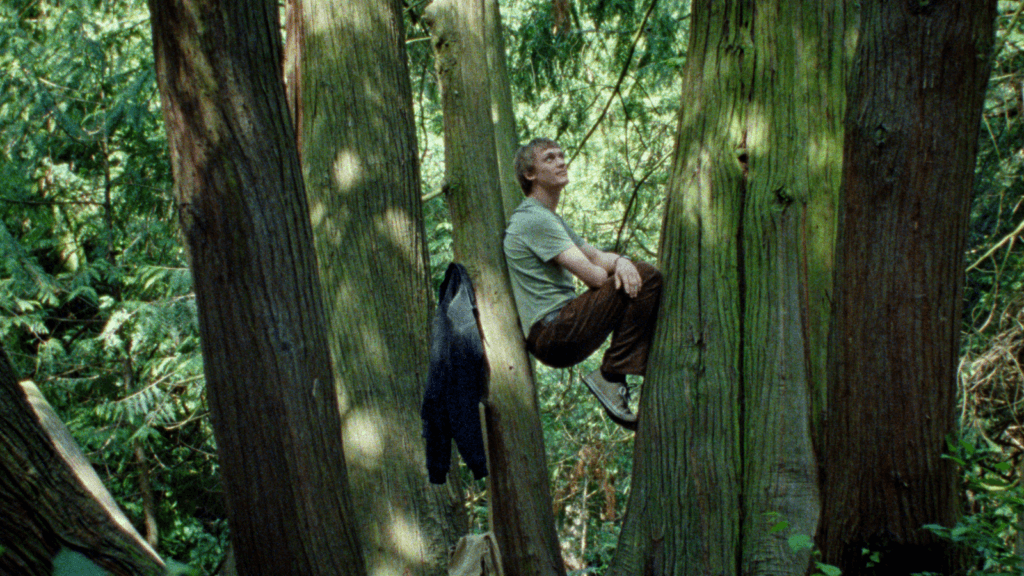
Enyedi is hardly a prolific filmmaker, though most of her films have left a mark on critics and audiences alike. Her debut film, My Twentieth Century (1989), earned the Caméra d’Or for best first feature at the Cannes Film Festival. Another, On Body and Soul, took home the Golden Bear from the Berlin Film Festival in 2017. She has made only eight films in thirty-plus years. Silent Friend debuted last year at the Venice Film Festival, where it won several awards, including the FIPRESCI Prize, and has since gathered even more recognition on the festival circuit. However, it’s hardly the sort of film that will appeal to general moviegoers looking for an escape. Silent Friend is meditative and ponderous, but it isn’t the stereotypical arthouse fare; it’s more experimental than that. Even so, Enyedi employs several moments of deadpan humor and a near-constant undercurrent of sexual tension, adding a sense of anticipation to each human encounter. As Linnaeus’ formative metaphor teaches us, sex informs how humans and plants alike communicate. This is not to suggest Enyedi’s film is sexual in a conventional way, only that human attraction helps each of the stories’ main characters understand their research subjects a little better.
Silent Friend is a sublime experience, composed of incredibly beautiful imagery and thought-provoking ideas that will linger long after its two-and-a-half-hour runtime. Most films tell a story. Enyedi presents a new way of looking at the world we inhabit, drawing on psychedelic imagery of brainwave patterns juxtaposed with contemplative shots of trees and close-up footage of seedlings growing, the imagery at once strangely erotic and yet also repulsive. It’s as bold and inventive as other time-spanning films that have humanity’s role in its environment on the mind. In his assessment on this site, correspondent David Hill rightly compared the experience to Stanley Kubrick’s 2001: A Space Odyssey (1968) for its sheer transcendent quality. Ryusuke Hamaguchi’s Evil Does Not Exist (2024) and the aforementioned The Beast also belong in the conversation for the way they present human beings as bit players in a story that we hardly seem to understand. But comparisons only do this one-of-a-kind experience a disservice. Silent Friend is unlike any other film before—a mesmeric work of cinematic poetry and easily among the best and most original films in recent memory.
Thank You for Supporting Independent Film Criticism
If the work on DFR has added something meaningful to your love of movies, please consider supporting it.
Here are a few ways to show your support: make a one-time donation, join DFR’s Patreon for access to exclusive writing, or show your support in other ways.
Your contribution helps keep this site running independently. However you choose to support the site, please know that it’s appreciated.
Thank you for reading, and for making this work possible.
Brian Eggert | Critic, Founder
Deep Focus Review