Supergirl
By Brian Eggert |
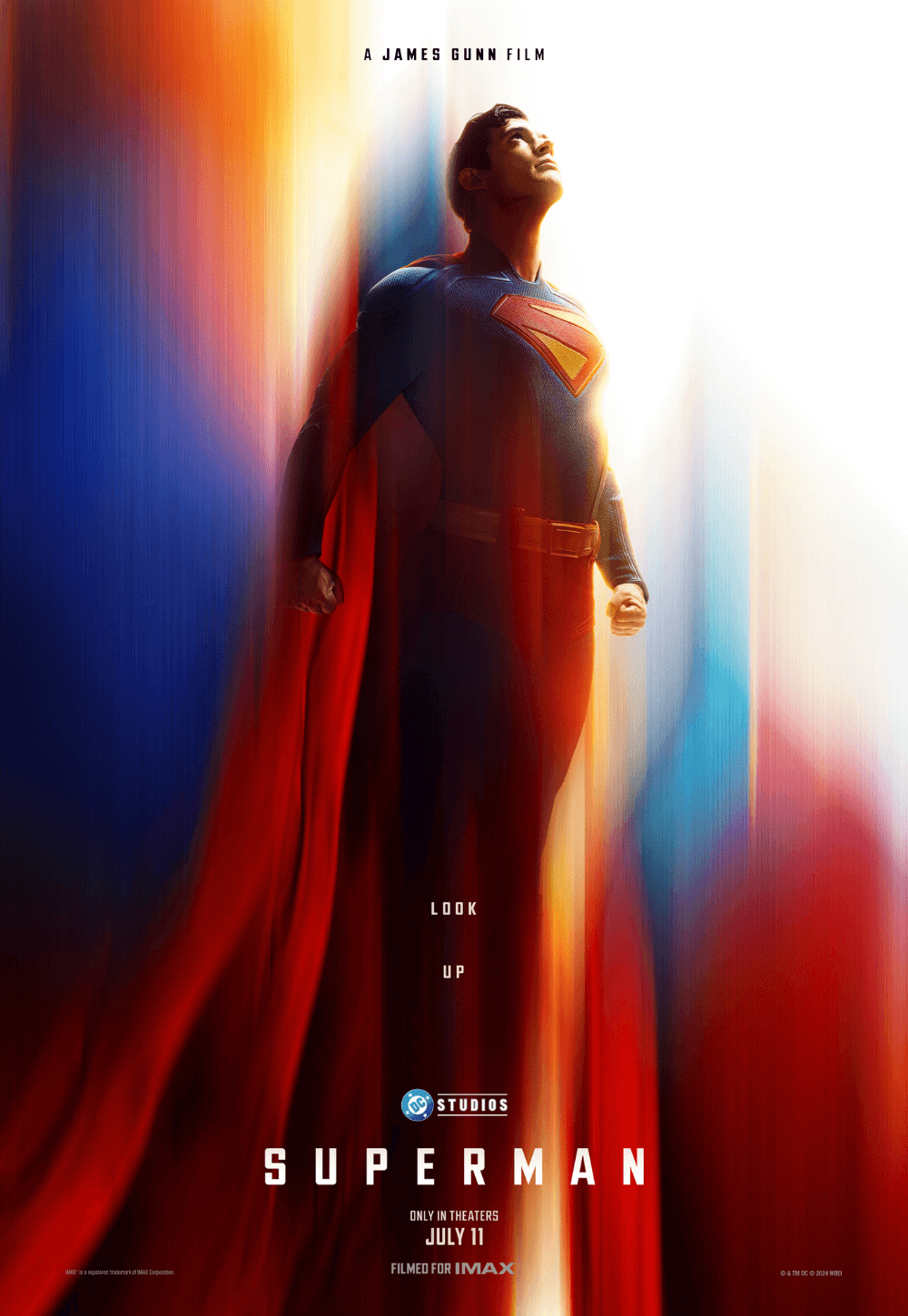
After franchise overseers James Gunn and Peter Safran rebooted DC at Warner Bros. last year, the second feature under their watch, Supergirl, arrives full of possibility. Gunn’s Superman offered a generous blend of humor and heart, capturing the hero’s optimism in a cynical world ruled by fearful politicians, tech oligarchs, and social media monkeys. It was idiosyncratic and moving, as most Gunn features are. By contrast, Supergirl, directed by Craig Gillespie, feels like the kind of movie that, afterward, prompts viewers to start talking about superhero fatigue. I won’t go so far as to say that I’m over superhero fare or even that I’m generally tired of seeing them, especially when Gunn is hard at work on a Superman sequel, called Man of Tomorrow. However, I’m exhausted by Hollywood’s “good enough” policy of spending hundreds of millions on a feature that’s not great, not bad—it’s just fine. There’s plenty to enjoy about Supergirl; there’s a lot that doesn’t work, too. What makes Gunn’s movies so special is that his voice can be heard through the oppressive din of intellectual property and corporate oversight. The same cannot be said about Gillespie’s work here, which is only distinguished by his penchant for needle drops.
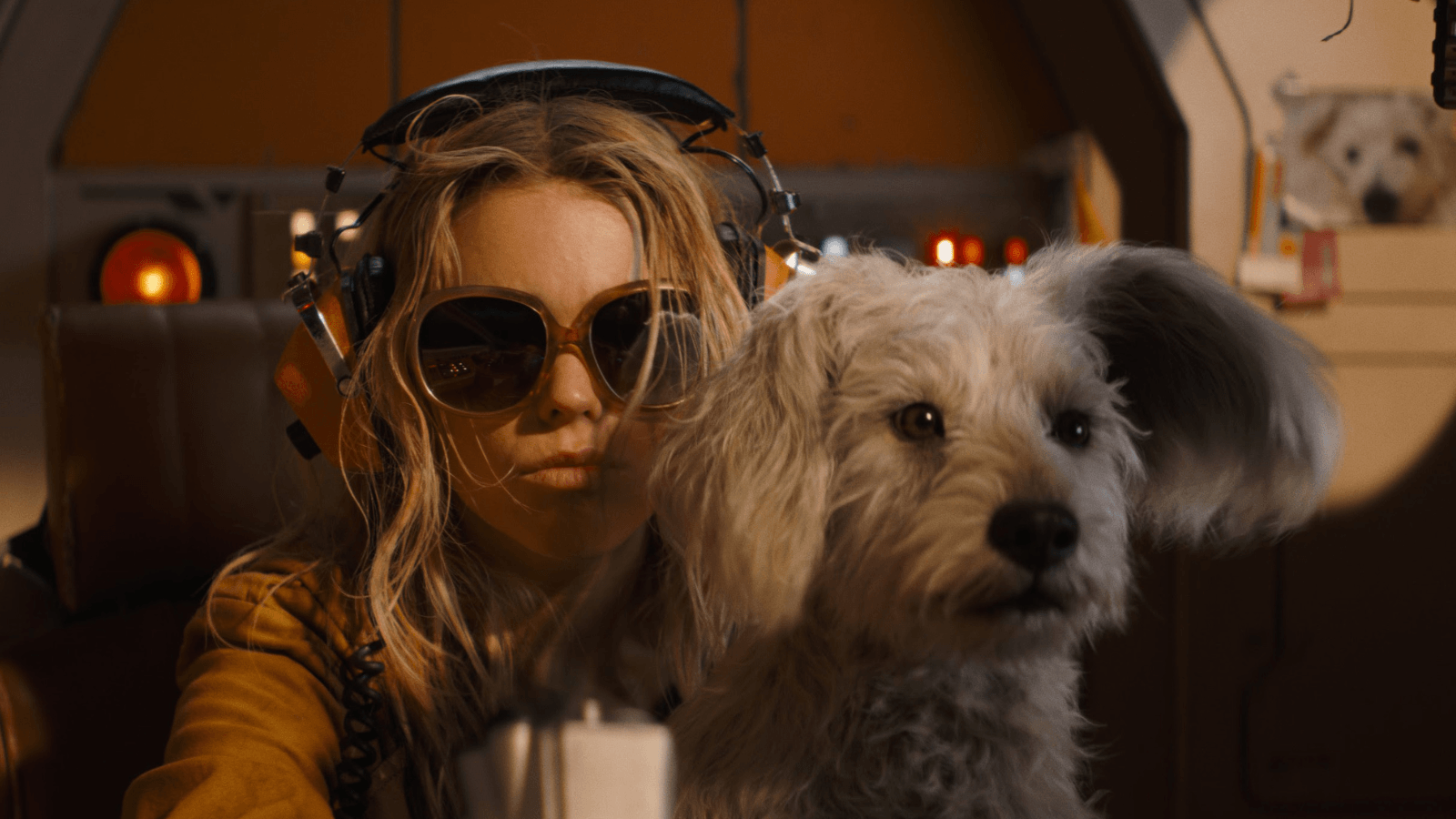
To be sure, Gillespie loves needle drops so much that he opens Supergirl with one. The first shot is of a record player—set in a spaceship, slovenly decorated with empty cans and doused in dog urine. Kara Zor-El, played by Milly Alcock from HBO’s ongoing House of the Dragon, has been using the ship to pub-crawl around the universe. Our hero’s adorable CGI pooch, Krypto, nudges the stylus down for the first of many songs on the soundtrack. Of course, Gunn uses copious tunes in his films, too (see the Guardians of the Galaxy trilogy), but he harmonizes each selection with an emotional beat in the story. Gillespie conspicuously relies on pop or rock music to create emotion and to punctuate, underline, and italicize it. This strategy has been his thing since he riffed on Martin Scorsese’s Goodfellas (1990) in two other films about rebellious women: I, Tonya (2017) and Cruella (2021). Except that Scorsese uses music to support the narrative and energy of his work, not generate it. Supergirl suffers from Gillespie’s overreliance on this tactic, with selections ranging from Halsey to Eagles of Death Metal (and Antônio Carlos Jobim’s “The Girl from Ipanema,” confusingly heard in a remote cantina on a random planet).
Written by Ana Nogueira, Supergirl draws from Tom King’s eight-issue comic series Supergirl: Woman of Tomorrow, blending a conventional superhero movie with an interest in space bounty hunters reminiscent of Disney+ series The Mandalorian (2019-present). There’s also an origin story woven into the proceedings. So, the movie is a lot, yet it also feels slight. Perhaps that’s because the conflict never really takes hold. Early on, a group of space pirates called the Brigands, led by Krem of the Yellow Hills (Matthias Schoenaerts), kills an entire family, sparing only the youngest girl, Ruthye (Eve Ridley). Afterward, she sets out to hire a mercenary to avenge them. Ruthye checks the local bar and finds Kara, who initially declines: “Not my monkeys, not my circus.” Only after Krem darts Krypto with poison that will kill him in three days without an antidote, which Krem keeps on his person, does Kara begrudgingly agree to help the girl because of their shared interests. Space adventures ensue, interrupted periodically by Kara’s memories of her origins.
Thematically, the movie grapples with grief responses. Ruthye reacts to her family’s murder with anger and a thirst for revenge. At the same time, Kara has been reeling since her father (David Krumholz) sent her and Krypto to Earth following Krypton’s destruction—this several years after her family survived on a preserved chunk of their former planet. Feeling isolated, Kara visits various solar systems with red suns, which mute her superpowers and allow her to get drunk and forget her troubles. But over time, she risks exposing herself to danger if she can’t recharge under a yellow sun. Inevitably, her self-destructive behavior catches up with her. Neither of these grief-centric storylines results in a genuinely moving emotional journey; rather, the theme feels like it’s being employed because grief has become trendy lately, even overused, despite its universal relatability.
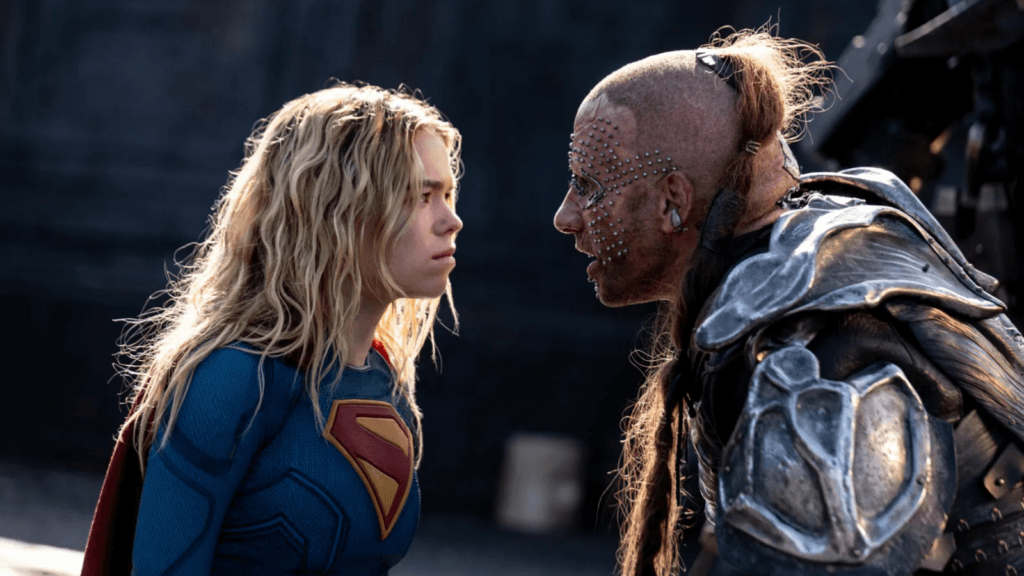
Most superhero movies are only as good as their villain. Supergirl suffers from a lackluster one. Although the notion that Krem and his metal-strewn manosphere cronies have been kidnapping adolescent girls to birth new additions to their all-male society is chilling, Krem is a nonentity. This Andrew Tate wannabe swaggers and seems to enjoy food, but his personality is reduced to a cliché baddie. Moreover, I didn’t believe for a second that the filmmakers would allow Krypto to perish, making the familiar John Wick-esque stakes feel neutered (with apologies to Krypto for the imagery). Schoenaerts, a skilled actor, is wasted in the part, and the anonymous ensemble of Brigands hardly registers. More effective is Jason Momoa, who appears in a few inspired scenes as the unstoppable bounty hunter Lobo. This is a role Momoa was born to play. Though he gives ostensibly the same performance as the Snyderverse’s Aquaman, Momoa’s attitude better fits this cigar-chomping, motorbike-riding badass from Czarnia.
As the titular character, Alcock does what she can with what she’s been given, which is about as much as Helen Slater had in 1984’s Supergirl. Nogueira’s script doesn’t give her much to do, aside from fighting bad guys and delivering some sarcastic lines. A climactic, emotional breakthrough scene between Kara and Ruthye never resonates how it should, despite establishing that the former has a darker edge than her cousin, Kal-El (David Corenswet makes a few brief appearances). There’s certainly an appeal to having a roguish woman who arm-wrestles and drinks too much as a hero, but something about Kara never clicks. Perhaps, unlike her open-hearted cousin, she spends too much of the movie’s 108-minute runtime with her guard up, and by the time we get to know her, it’s too little, too late. The same is true of Ruthye, who never becomes more complicated than her one-note motivation. This is less the fault of Alcock, Ridley, or Gillespie than the script, which doesn’t innovate enough on King’s source material.
After the heights of Superman, Gillespie’s movie is a disappointing misstep and leaves almost no impression whatsoever. It’s a production teeming with ugly and occasionally cheap-looking VFX, where Supergirl and Ruthye often appear in green-screen worlds that consist of grassy fields and rocky terrain—the sort of backdrops that could’ve easily been captured on location. Instead, Supergirl often looks like digital sludge, occasionally offset by the appearance of practical alien characters at a neat spaceport. Cinematographer Rob Hardy, whose work with Alex Garland and Christopher McQuarrie has been stunning, is saddled with an oppressive CGI flatness that renders the movie’s look forgettable. It’s all made worse because Alcock is a compelling performer and clearly fits the role. The writer and director fail to deliver the goods, leaving Supergirl, yet again, with an underwhelming adaptation from page to screen.

Thank You for Supporting Independent Film Criticism
If the work on DFR has added something meaningful to your love of movies, please consider supporting it.
Here are a few ways to show your support: make a one-time donation, join DFR’s Patreon for access to exclusive writing, or show your support in other ways.
Your contribution helps keep this site running independently. However you choose to support the site, please know that it’s appreciated.
Thank you for reading, and for making this work possible.
Brian Eggert | Critic, Founder
Deep Focus Review