Onslaught
By Brian Eggert |
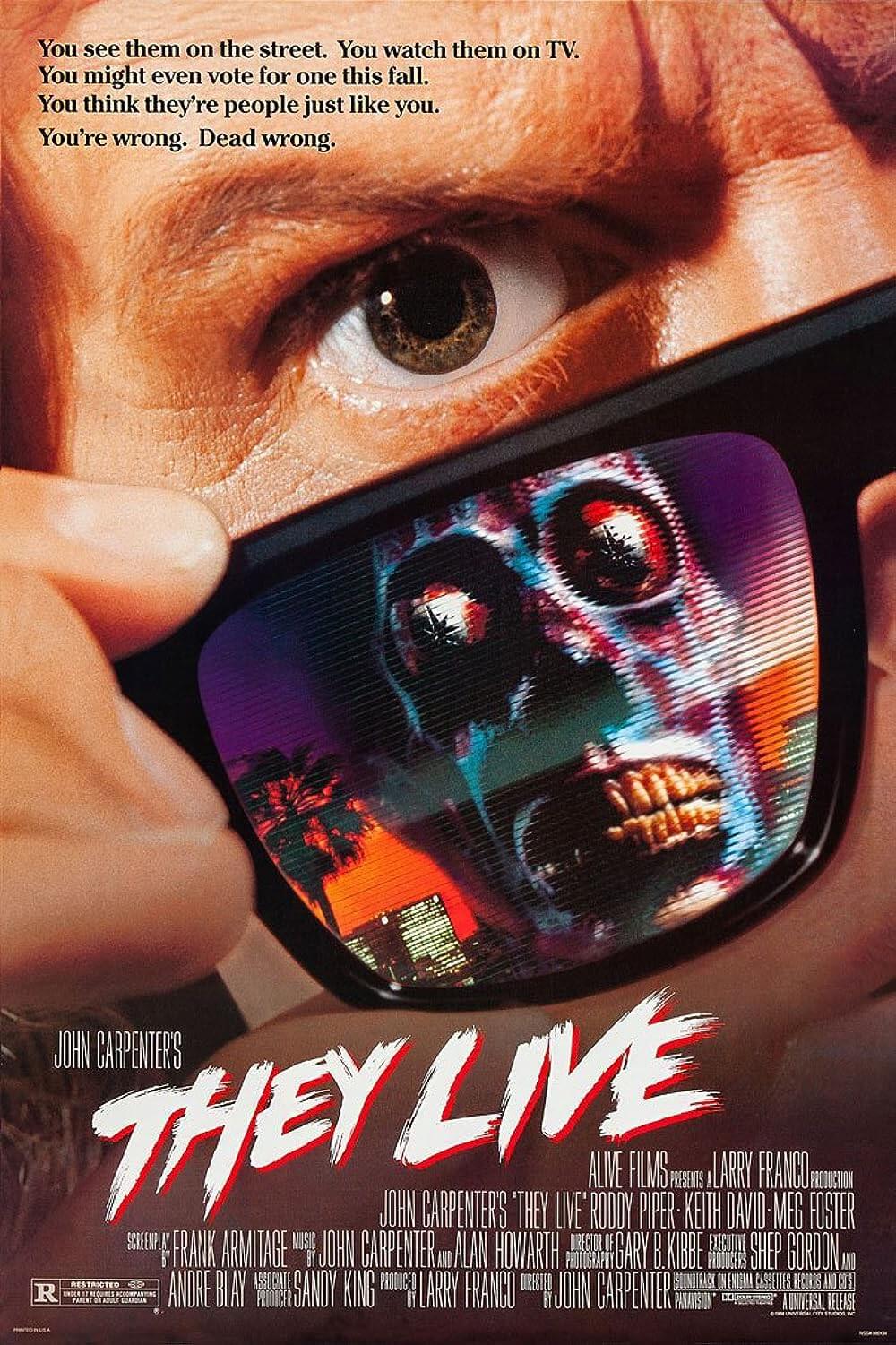
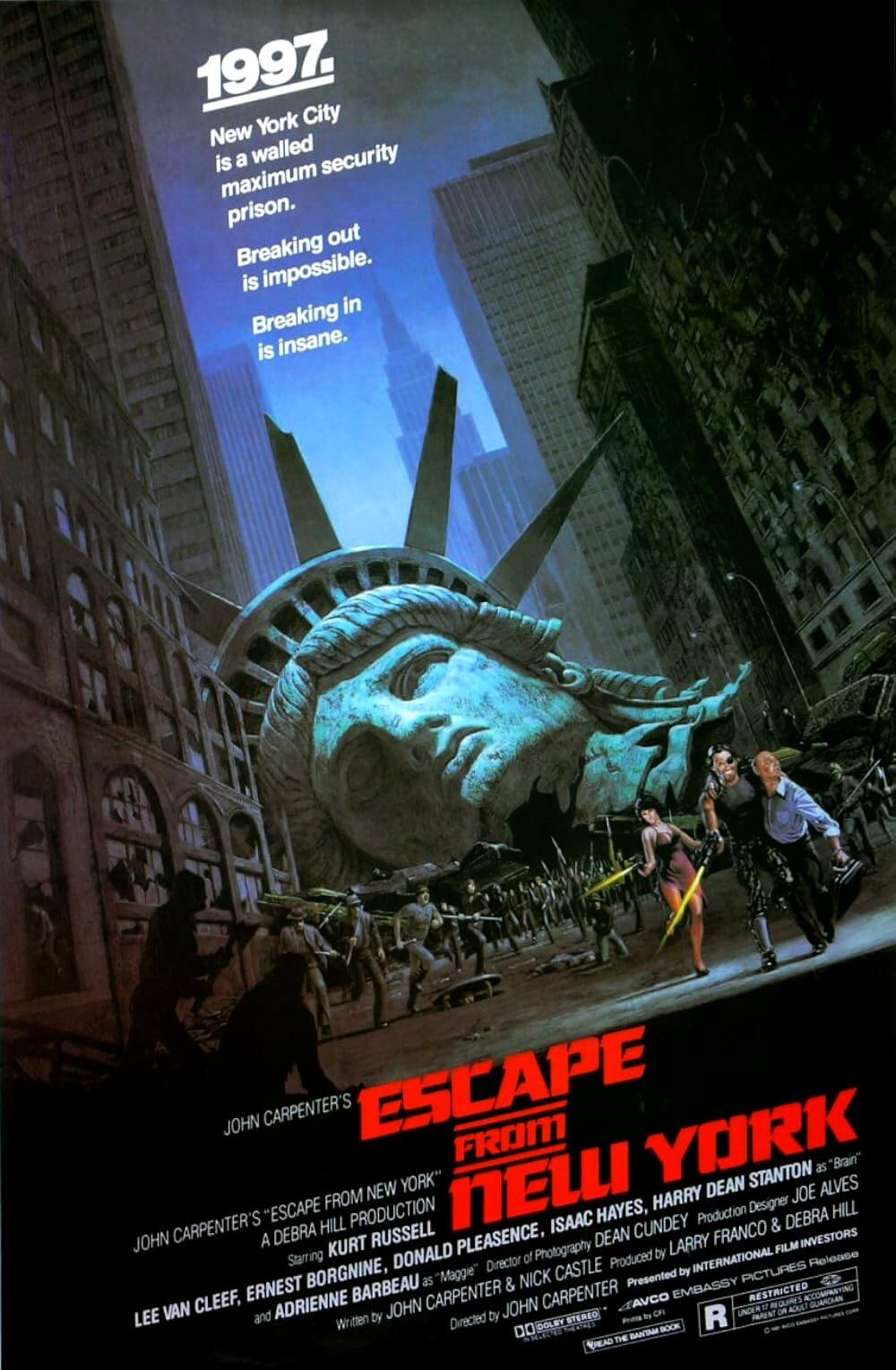
Onslaught is Adam Wingard’s lean and mean ode to John Carpenter. I’ll try to resist spending this entire review noting how every other scene and plot element feels inspired by a different Carpenter classic; how the opening titles appear in Carpenter’s usual font, an homage tactic Neil Marshall and Johannes Roberts have used to similar effect before; how Matt Pusti’s score adopts a synth sound evoking Carpenter and Alan Howarth’s music for Prince of Darkness (1987) and They Live (1988); how the movie’s deadly supersoldiers look like the ghost lepers from The Fog (1980); how the setup recalls Carpenter’s take on Rio Bravo (1959) in his sophomore feature, Assault on Precinct 13 (1976), where the outgunned survivors hole up against a deadly incursion; and how the film’s rugged antihero becomes an unstoppable badass with an eye patch, recalling Snake Plissken from Escape from New York (1981) and Escape from L.A. (1996). But I won’t dwell on these details. Merely pointing out what cult movie fanatics already know gets us nowhere. Instead, consider what Wingard sees in Carpenter that resonates at this moment in his career.
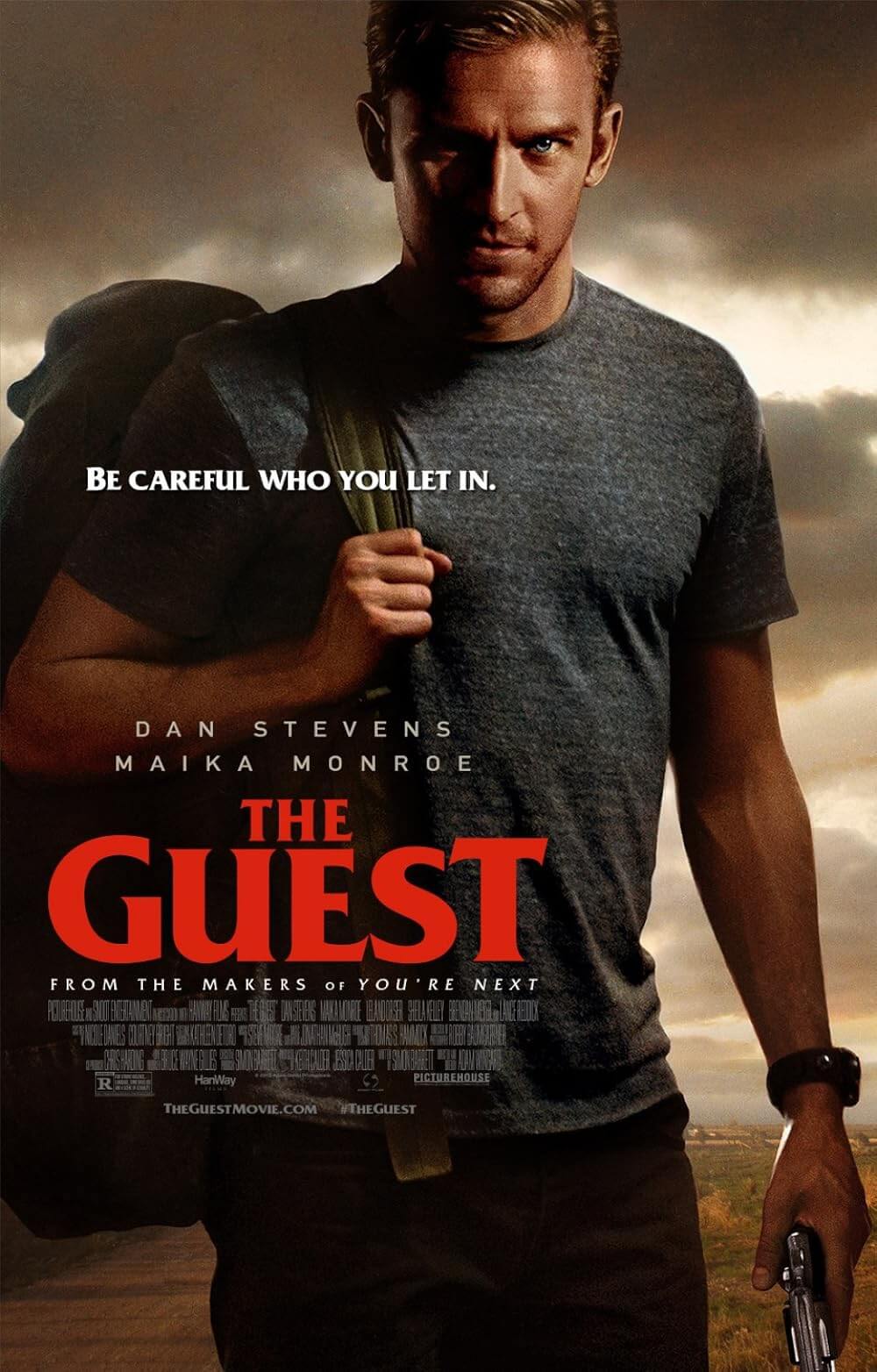
Though he first emerged during the independent boom of the early 2000s alongside contemporaries such as Joe Swanberg and Amy Seimetz, Wingard has become more commercial in recent years. He went from cheap but inventive horror features in the mumblegore subgenre, which cost around $75,000, to indie titles such as You’re Next (2011) and The Guest (2014)—million-dollar festival darlings that became commercial hits. Then, he sacrificed creative control for more homogenized Hollywood fare, such as the 2016 sequel Blair Witch or Netflix’s anime adaptation of Death Note (2018), where his influence extended only as far as these franchises’ limitations. This culminated in the last few years, when Wingard oversaw two Godzilla/King Kong movies in 2021 and 2024, commanding budgets upwards of $150 million for major Warner Bros. productions.
After Wingard spent almost a decade in the land of IP, Onslaught, distributed by A24, is a refreshing and relatively original return for the director, who conceived the story with his longtime writing partner Simon Barrett. Indeed, watching the movie, one can sense that, free from his mainstream shackles, Wingard had some things to get out of his system after his Hollywood sojourn. This recalls a similar period in Carpenter’s career in the mid-1980s. After his masterpiece, The Thing (1982), bombed at the box office, Carpenter made several commercially friendly productions: an adaptation of a best-selling Stephen King novel, Christine (1983); the Oscar-nominated Starman (1985); and the fun but underperforming Big Trouble in Little China (1986). Carpenter’s experience with Hollywood projects left him disillusioned with major studios. He resolved to return to low-budget productions that would grant him more control over the finished product. The resulting films, Prince of Darkness and They Live, were angry films that lashed out at failing belief systems (religion, science, capitalism, Americanism). And Wingard approaches his latest from a similar mindset.
Onslaught slaps the viewer in the face with its opening credits montage, which contains an array of historical footage detailing the United States’ continual involvement in wars, if only to build a lucrative military-industrial complex at any cost—whether it means secretly importing Nazi scientists to develop weapons for the postwar Operation Paperclip or testing how to alter human behavior with MKUltra. The glitchy and frenzied collage remarks on how the ever-mounting militarism in America breeds fascism, capping the point with an image of the Nazi Imperial Eagle turning into the Great Eagle of the United States. Wingard’s only misstep is when one of his movie’s German scientists, who’s partly responsible for developing its unstoppable supersoldiers, claims that most American soldiers won’t shoot US civilians because they have scruples. This is why they’ve created invulnerable soldiers without a conscience. But the assumption that American authorities won’t open fire on citizens proves grossly inaccurate, given, you know, most of the country’s history up to and including this moment.
False premise aside, the movie introduces Dr. Hans Kammler (Dan Stevens), an albino scientist with one dead eye who dons a white cape and, behind closed doors, happily licks the shoe of his dom lover, Hanna (Rebecca Hall), to bask in her “good boy” praise. When not in a sub-routine, Dr. Kammler works for a private defense firm in a former government lab, developing a triad of hulking soldiers whose nicknames (Cry-Baby, Cockroach, and the Butcher) don’t really factor into their behavior. But no matter. As Kammler explains to an evaluator (Michael Biehn), they feel no pain, they can tighten their muscles hard enough to stop bullets, and their glowing eyes mean “Zay can see betta in zee dark.” And, as Dr. Kammler’s lab soon discovers in a bloody turn of events, they won’t stop until everyone’s dead. With his dying breath, Kammler bellows his Strangelove-esque final words (“It is done!”) before his creations head into the New Mexico desert to wreak havoc.
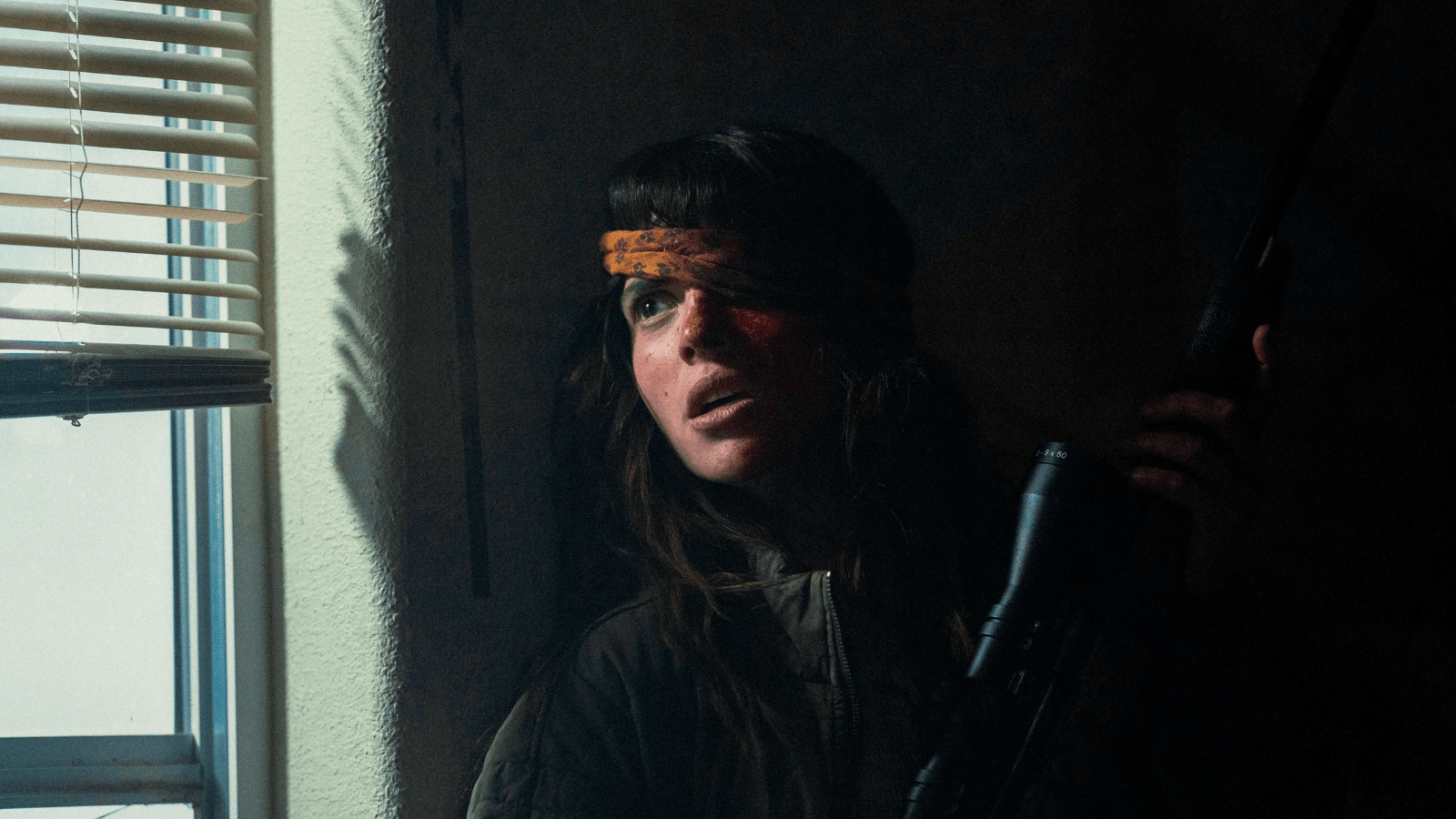
Enter Celeste (Adria Arjona), an elite veteran with PTSD and a gun fetish. Celeste has given up soldiering to manage the dilapidated Windy Oasis trailer park, populated by a few familiar faces (Reginald VelJohnson and Eric Wareheim among them). Celeste still practices shooting, but her nerves often conjure memories of her traumatic experiences, requiring her to regain focus by jabbing a ring into the flesh of her forearm. When her ex-husband (Jacob Scipio) unexpectedly drops off their young daughter, Daisy (Blake Kennedy), Celeste feels frustrated and overwhelmed. But taking care of her precocious kid becomes her top priority when the trio of reprogrammed killers starts slaying her neighbors. Celeste goes into warrior mode and unleashes hell right back at them. Meanwhile, in an underdeveloped and anticlimactic subplot, an oddball government operative, Cyrus (Drew Starkey), follows the trail of bodies to clean up the aftermath. He’s introduced in a random sequence inside a sex club, where he took MDMA before receiving his call to duty—a wrinkle that’s never played to its full comic potential. It’s a scene laden with leather, nipples, and a hint of labia, and it feels tacked on if only so Wingard can ensure a hard-R rating and state his movie’s rebellious intent in the face of sanitized filmmaking.

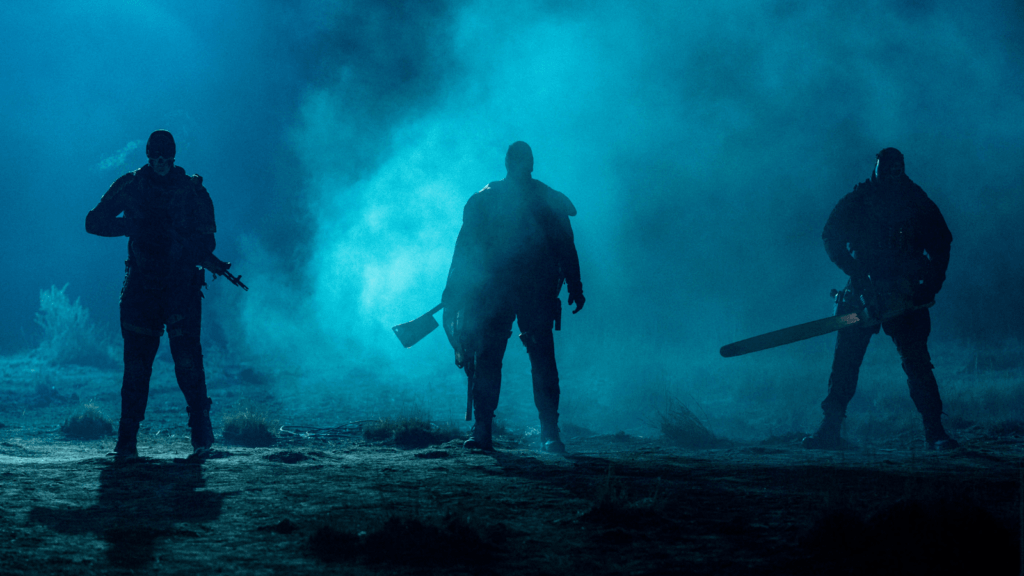
There’s plenty about Onslaught that works well because of Wingard’s knack for staging violence and chaos. The supersoldiers, for instance, might be stand-ins for slashers such as Leatherface and Jason Voorhees, albeit through a militarized lens. These generally scary, faceless brutes attack with a long-bladed chainsaw, a meat cleaver, and big-ass guns. They often appear as relentless silhouettes and make quick work of the opposition, bursting through walls and windows with jump-scare energy. And while Celeste fights them, she occasionally loses herself in black-and-white flashbacks to her military service, building to an overly convenient full-circle reveal that doesn’t quite land the way it should. What Celeste lacks in dimension, Arjona makes up for in screen presence. However, the filmmakers seem to have realized this during post-production and tried to fix the character by giving her closure with clunky ADR lines in her final scenes—the CGI badly adjusting her mouth so it looks like she spoke dialogue she didn’t.
Onslaught reminds us that exploitation is more than sensationalism and deviancy for entertainment value. It often has something to say, and it says it with a B-movie grammar that’s bloody, escapist, and sleazy. But all of that reinforces Wingard and Barrett’s ideas about the government’s abuse of American citizens to fuel a much broader capitalistic initiative, while never losing touch with how the genre trappings make these ideas palatable for a certain segment of the moviegoing public. That said, the movie is far from the director’s best. It feels too rooted in nostalgia and Carpenter homage to distinguish itself from You’re Next and The Guest—both of which are also about the consequences of private defense contractors and military experiments. But I’d rather watch Wingard make a dozen zany, provocative, yet derivative tributes to Carpenter like this one than even one more of his hollow studio pictures that never feel like “an Adam Wingard film.” Onslaught’s deficiencies may leave the story’s cohesion and characters wanting, but it always feels like a film made by a passionate filmmaker, not a corporate committee. That has to be something worth seeing.
Like DFR? Support us.
This site exists because readers like you care about film. If DFR has enriched your experience with movies, I’d be grateful for your support. You have a few options:
• Join DFR’s Patreon community
• Make a one-time donation on PayPal
• Buy me a coffee
Whatever option you choose, it helps keep my work independent. And it means a lot to me.
Thank you for reading, and for making this work possible.
Brian Eggert | Critic, Founder
Deep Focus Review