Shelter
By Brian Eggert |
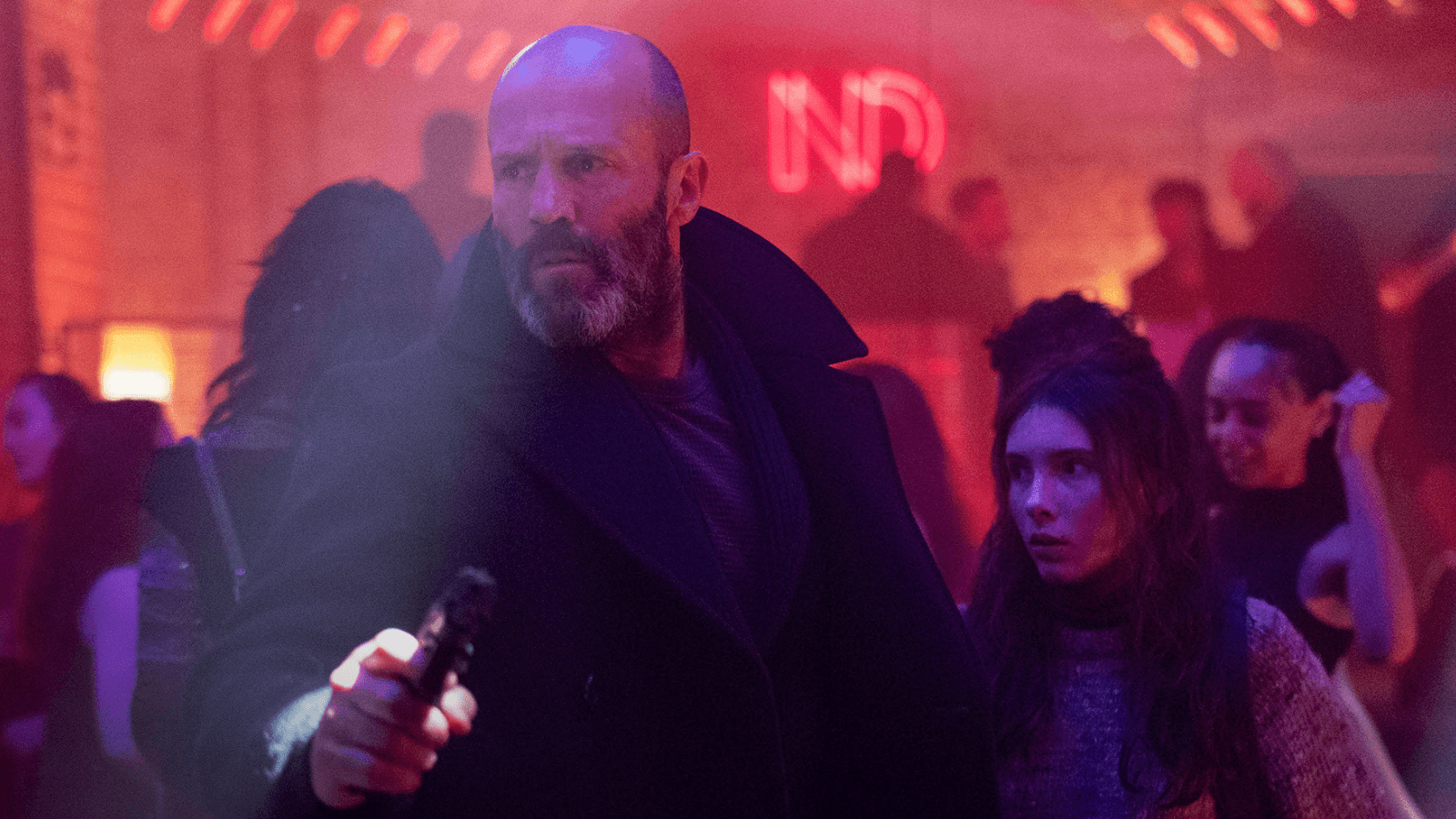
Shelter is a paint-by-numbers action movie starring Jason Statham. The filmmakers filled in the predefined outlines with the prescribed colors, zealously conforming to the rote genre schematic. The outcome is just the latest in a long series of reproductions that contain no creative variation or originality, and watching it requires not even a moment of acclimation or adjustment to the filmmakers’ choices. Take the opening, where the camera approaches an obscure Scottish isle from the sea. How many times have we seen this same shot of a helicopter (or drone) approaching the shore over a body of water? One choice after another registers as generic, following a trite template that recalls Léon: The Professional (1994), The Bourne Identity (2002), John Wick (2014), and many more. There’s even a dog to avenge and a child to protect—standard devices demonstrating that our seemingly emotionless killing-machine hero has a heart of gold. The overfamiliarity of these tropes might not be an issue if the material had distinguished itself in some way, but that’s not the case.
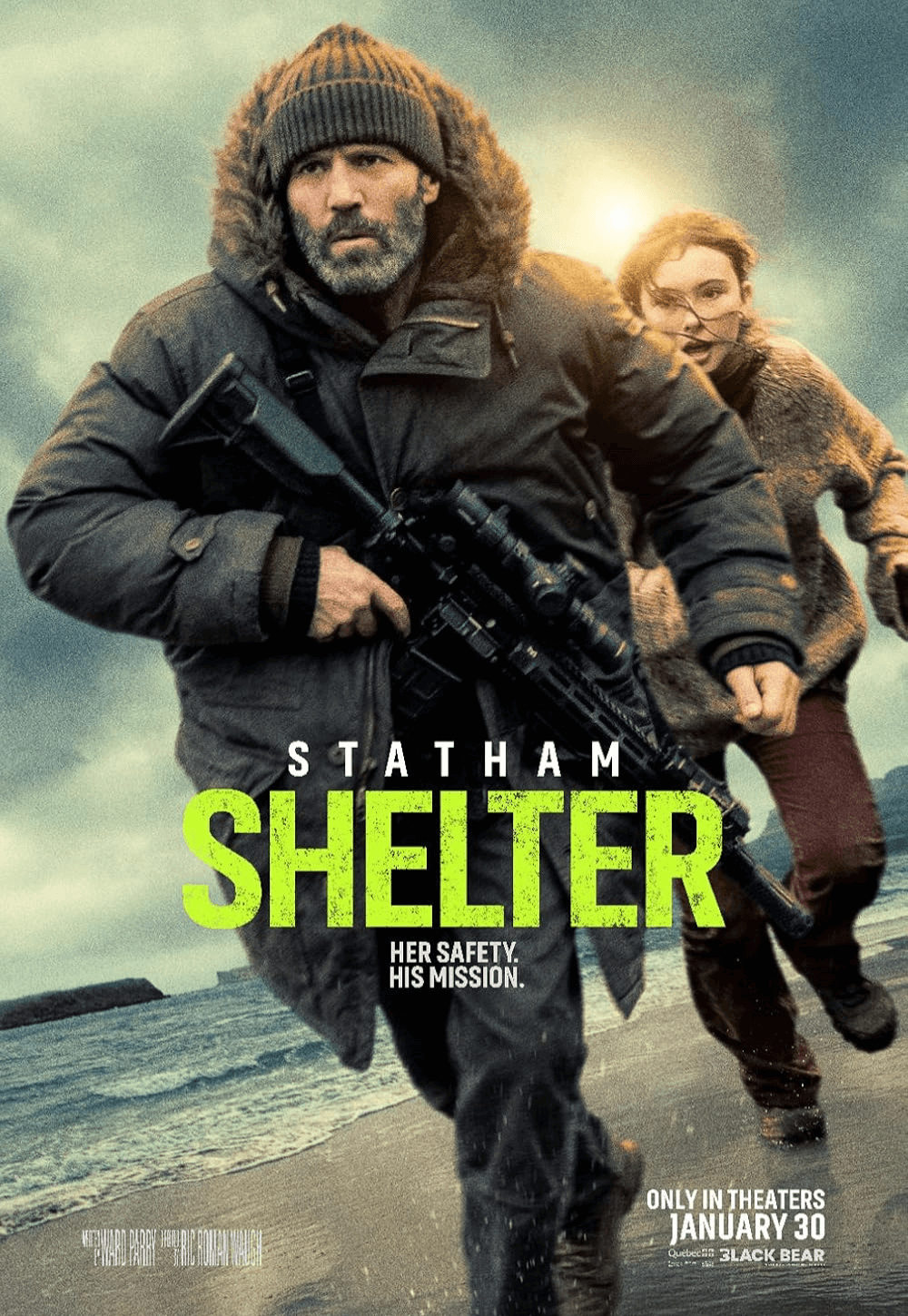
In Shelter, Statham plays Mason, a reclusive loner who lives off-grid on an island with an inoperative lighthouse. He spent the last decade in solitude, playing chess, drinking alcohol, sketching, and not naming his cute dog. Every few days, he receives supplies delivered by a parentless teen girl, Jesse (Bodhi Rae Breathnach), whose uncle watches from a fishing boat as she rows a dinghy to shore and drops off the crate of provisions. When a storm leaves her uncle dead and Jesse nearly drowned, Mason rescues her. They form a quick father-daughter bond. But when Mason must visit the mainland for medical supplies to treat Jesse’s injuries, a vast surveillance network flags him. It won’t surprise you to learn that Mason is a former elite spy for MI6, part of a clandestine outfit called Black Kite. His former handler (Bill Nighy, behind George Smiley glasses), who has gone rogue, sends a squad of soldiers to apprehend him. Mason makes short work of them. He then resolves to get Jesse to a safe place where the people after him cannot hurt her.
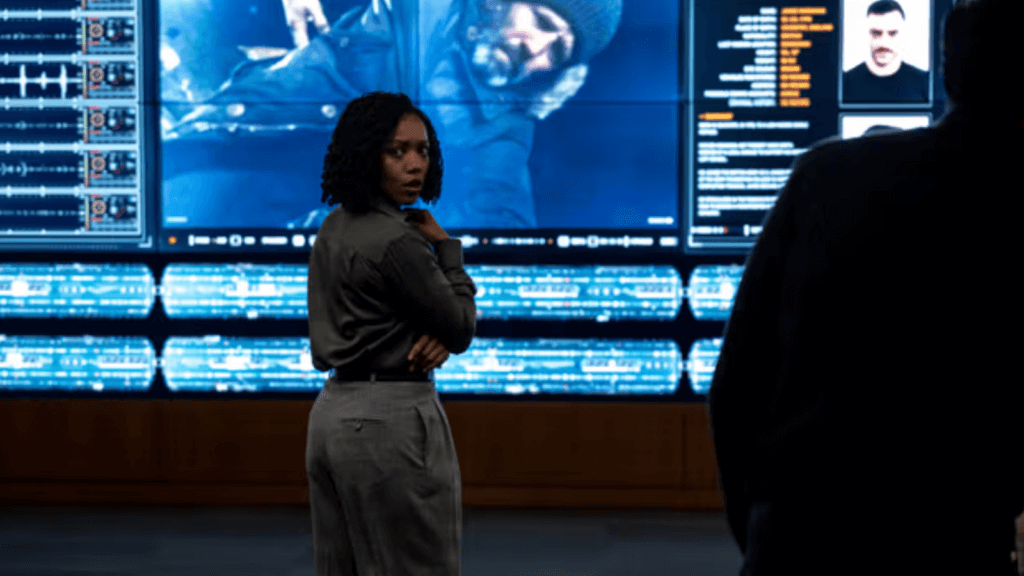
Statham has played the lone hero protecting an innocent before in the Transporter series and Safe (2012), among others. As Mason, he fights off local police and a deadly assassin (stuntman Bryan Vigier), while trying to evade T.H.E.A.—an invasive MI6 surveillance system that taps into every camera, recording device, and online profile. If Mason passes in front of any camera, his pursuers will know. His former colleague (Daniel Mays) invented the software but agrees to help Mason and Jesse avoid its prying eyes. On the periphery, in a thankless and underdeveloped role, Naomi Ackie plays an MI6 administrator who uncovers Mason’s noble backstory and tries to expose the corruption within her agency. Ackie plays a role similar to those of Chris Cooper, Joan Allen, and David Strathairn in the Bourne franchise, where she does little more than stand in a room full of monitors and data analysts, demanding intel on this or that.
Screenwriter Ward Parry has no surprises in store for us, relying instead on clichés and banal dialogue. We know Nighy’s character is dangerous because Harriet Walter appears for a single scene as the Prime Minister to tell him, “You’re probably the best spymaster this country ever produced.” When others talk about Mason, they call him “a precision instrument” but decry his belief in “humanity over blind obedience” as a “cancer on all that we stand for”—descriptors that tell us he’s the good guy fighting a corrupt system. Mason’s dialogue is just as stale, though limited. He makes no speeches nor opens up to Jesse. The ever-scowling Statham delivers curt, monosyllabic lines without a note of humor. Still, he’s a sensitive soldier. In the underdeveloped relationship between him and Jesse, the girl cries, “I have to save you!” He replies, “You saved me already.” The movie never earns this cheeseball moment.
While the flavorless writing does this unexceptionally titled actioner no favors, the direction by Ric Roman Waugh doesn’t help much either. However, it’s not an incompetent or messy execution; it’s just that there’s not one sequence or performance that stands out. Waugh, who has helmed several Gerard Butler flicks—including Greenland (2020) and its sequel, which hit theaters a few weeks ago—reliably delivers coherent but unexceptional shootouts and hand-to-hand combat. Early on, a Home Alone setup has Mason catch soldiers by surprise with booby traps, floodlights, a stealthy knife, and a big hook. A car chase through farm country has some energy, but Waugh can only do so much with cars on flat dirt roads. Cinematographer Martin Ahlgren’s overreliance on sweeping drone shots and wobbly handheld cameras follows today’s action-movie playbook without ever offering anything new.
Shelter isn’t aggressively bad. But it’s not very good, either. The whole thing’s temperature lingers well below the boiling point, never quite bubbling or even getting heated enough to generate interest. It’s the sort of movie that might keep your attention for the duration, after which you’ll completely forget it exists. Statham has made worse action movies and much better ones. Shelter feels more like his forgettable and joyless Mechanic movies or A Working Man (2025) than something aware of its own absurdity, such as The Beekeeper (2024), or something genuinely thrilling, such as Wrath of Man (2021). Humorless and too dependent on forced emotional scenes that the movie doesn’t justify with well-developed characters, it’s a passable effort that might provide some shrug-worthy escapism on a weekend afternoon or late-night watch.
Thank You for Supporting Independent Film Criticism
If the work on DFR has added something meaningful to your love of movies, please consider supporting it.
Here are a few ways to show your support: make a one-time donation, join DFR’s Patreon for access to exclusive writing, or show your support in other ways.
Your contribution helps keep this site running independently. However you choose to support the site, please know that it’s appreciated.
Thank you for reading, and for making this work possible.
Brian Eggert | Critic, Founder
Deep Focus Review