Paralyzed by Hope: The Maria Bamford Story
By Brian Eggert |
Note: Paralyzed by Hope: The Maria Bamford Story was screened as part of the 45th Minneapolis St. Paul International Film Festival. For the full lineup of films available between April 8-19, check out the schedule here.
If you’ve seen Maria Bamford’s stand-up or her two-season show on Netflix, Lady Dynamite, you know she’s not just another comic. For about thirty years, Bamford’s distinct stage presence has kept her résumé flush with specials and voice work on several animated projects. What sustains the comedian’s reputation, however, is that her material fosters ongoing discussion and openness about mental health—not only her own experiences but also those of her family. She has coped with OCD, depression, and suicidal ideation for much of her life. “Weakness is the brand!” she declares with a self-deprecating pride in her hour-long special for Netflix in 2020. Judd Apatow and Neil Berkeley’s documentary, Paralyzed by Hope: The Maria Bamford Story, considers how Bamford’s life shaped her incomparable comedy, which stands among this writer’s favorites. When asked who her influences might be, the various talking heads in the movie (Patton Oswalt, Stephen Colbert, and many others) can’t name one obvious antecedent. She’s a true original.
It’s fitting that her film should open the Minneapolis St. Paul International Film Festival, despite premiering at Sundance earlier in the year and not being an international release. Bamford was born in Duluth, Minnesota, in 1970, and much of her comedy pokes fun at her characteristically Midwestern family. Her late mother and father remain regular impersonations in her repertoire, along with the memorable “Diane” voice—the well-to-do elitist with a self-satisfied, passive-aggressive streak only a Minnesotan could master. She admits that each voice—including her regular squeaky, almost childlike voice—is a way of hiding behind an identity. You never quite know who she’ll be next. Neither does she, maybe. She has been managing her mental health with medications. Among them is a mood stabilizer that leaves her with a visible tremor. She has been hospitalized a few times for nervous breakdowns. And yet, somehow, she makes her experiences hilarious, relatable, and completely unlike anything you’ve ever seen. Most comics disguise their anxiety with on-stage confidence, but not Bamford. Conan O’Brien describes her as a lobster without a shell, who visibly feels everything that happens to her.
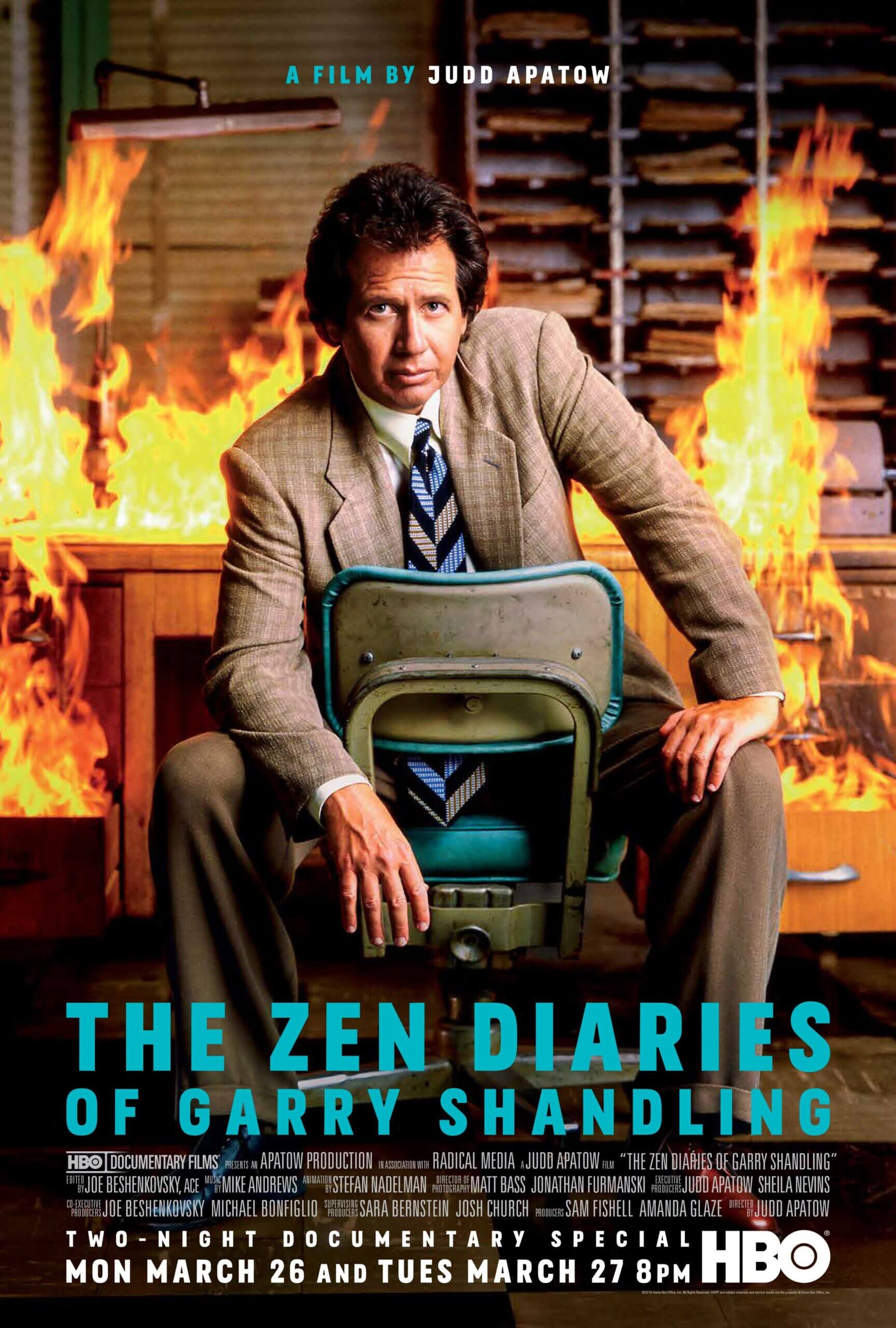
When Apatow and Berkeley first showed up at Bamford’s house three years ago to shoot the doc, the former producer came with $500 in cash for the day. Bamford wasn’t sure how she would feel about having her story told. They might not “click.” But she wanted to get paid for the day regardless. Fortunately, they did click. With the film, Apatow adds Bamford to his growing list of comic subjects, among them docs about greats such as Garry Shandling, George Carlin, and Mel Brooks. The super-producer has spent much of his career focused on giving comedians platforms that would turn them into stars. He directed Steve Carell in his breakthrough on The 40-Year-Old Virgin (2005), catapulted Seth Rogen to stardom in Knocked Up (2007), and turned Amy Schumer into a movie star with Trainwreck (2015). Over the years, he has tried to convince Bamford to make a movie. But months of prep and long shooting days are too much for her. She prefers a modest career without the kind of pressure that comes with a major motion picture.
So instead, Apatow produced this documentary, serving as the off-camera voice speaking with Bamford’s fellow comedians and family members, and no doubt using his clout to speak with seldom-interviewed subjects such as Ted Sarandos, the Netflix CEO, who says Lady Dynamite is the favorite show he’s greenlit at the streamer. Arranged in a somewhat chronological structure marked by chapters, the nearly two-hour film begins with a smattering of clips from her stand-up over the years and a look at her childhood in Duluth. It snakes through Bamford’s dark thoughts as a child, such as writing her own obituary in 1982, and her early experiences with therapy. Soon, she found an outlet on the stage. We see clips from her first recorded appearance as a comic in 1994, playing a routine called “Sex and Violins” (she has played the violin since age 3) at Bryant Lake Bowl. After busking on the streets of Minneapolis, she moved to California to launch a stand-up career, though her colleagues saw her as more of a performance artist.
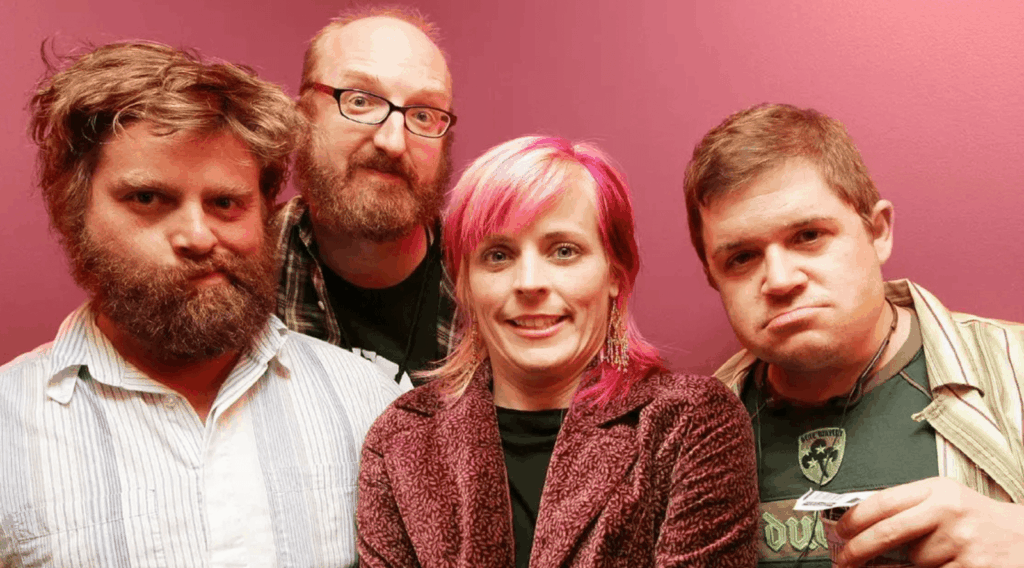
After a few years of making a name for herself in comedy, she joined alt-comedy names such as Oswalt, Brian Posehn, and Zach Galifianakis on the Netflix stand-up doc The Comedians of Comedy (2005). That’s when she started to gain popularity for her idiosyncratic act. Bamford started a YouTube show and even served as a short-lived spokesperson as a manic Target shopper. However, much of her comedy is rooted in autobiographical stories, often shaped by her childhood and need for parental approval. With her mother—who once told Maria’s therapist that her other daughter, Sarah, was her favorite—it’s no wonder why. This is not to say Bamford is resentful; she experienced considerable anxiety and emotional scarring from her childhood, but she also had love and support. What’s apparent is that for all of the traumatic stories she tells and unflattering impersonations she has involving her family, she never feels so bad that she scrapes them off. In later moments captured by the filmmakers, it’s clear she loves her parents and sister, and she holds no grudges.
While Paralyzed by Hope considers Bamford’s career and her family’s role in her material, the doc also focuses on the here and now, offering a glimpse into her everyday life with partner Scott Marvel Cassidy. They got married in 2015 and nine years later, released a graphic novel called Hogbook and Lazer Eyes, named after their usernames from the dating app where they met. A section of the film shows their Altadena home being spared in the 2025 wildfires. However, it omits that they began divorce proceedings not long after the fires, which Bamford disclosed in the post-show Q&A. This is particularly heartbreaking, since so much of Lady Dynamite involves these two finding each other. Even so, her story in the film is not their story. Without Scott, Bamford continues her stand-up comedy behind bedazzled glasses and goofy t-shirts. One story about Bamford today leaves other comedians speechless: She will pay a friend or a stranger from social media $100 in cash for a meeting, where she hones her act in an intimate one-on-one. Fitting, since she once performed a Netflix comedy special in her living room for an audience of two: her parents.
If you haven’t followed her work, Paralyzed by Hope is an excellent introduction for those unfamiliar. And if you have, it’s no less engaging, funny, and heartfelt. When the film opened MSPIFF45, Bamford appeared alongside her sister and Berkeley. She has clearly adopted a kind of Zen attitude about her mental illness and how that affects her professional life. She cannot handle certain jobs and sometimes receives feedback about her erratic behavior when her limits are tested. But instead of feeling something like shame over it, she resolves, “How is it my fault? They hired me.” Maybe because she’s such an open book and so actively shares her life in her work, it’s easy to feel like you know Bamford or that she’s a friend. That’s part of what makes keeping up with her career so rewarding. After decades of consistent output, she remains on the verge of becoming a superstar, but she doesn’t want that sort of fame. She’s content to create and make people laugh with a level of exposure that feels comfortable to her. Yet for those of us who have followed her for years and love what she does, she’s every bit the superstar that she doesn’t have the energy to become.

Thank You for Supporting Independent Film Criticism
If the work on DFR has added something meaningful to your love of movies, please consider supporting it.
Here are a few ways to show your support: make a one-time donation, join DFR’s Patreon for access to exclusive writing, or show your support in other ways.
Your contribution helps keep this site running independently. However you choose to support the site, please know that it’s appreciated.
Thank you for reading, and for making this work possible.
Brian Eggert | Critic, Founder
Deep Focus Review