Ha-Chan, Shake Your Booty!
By Brian Eggert |
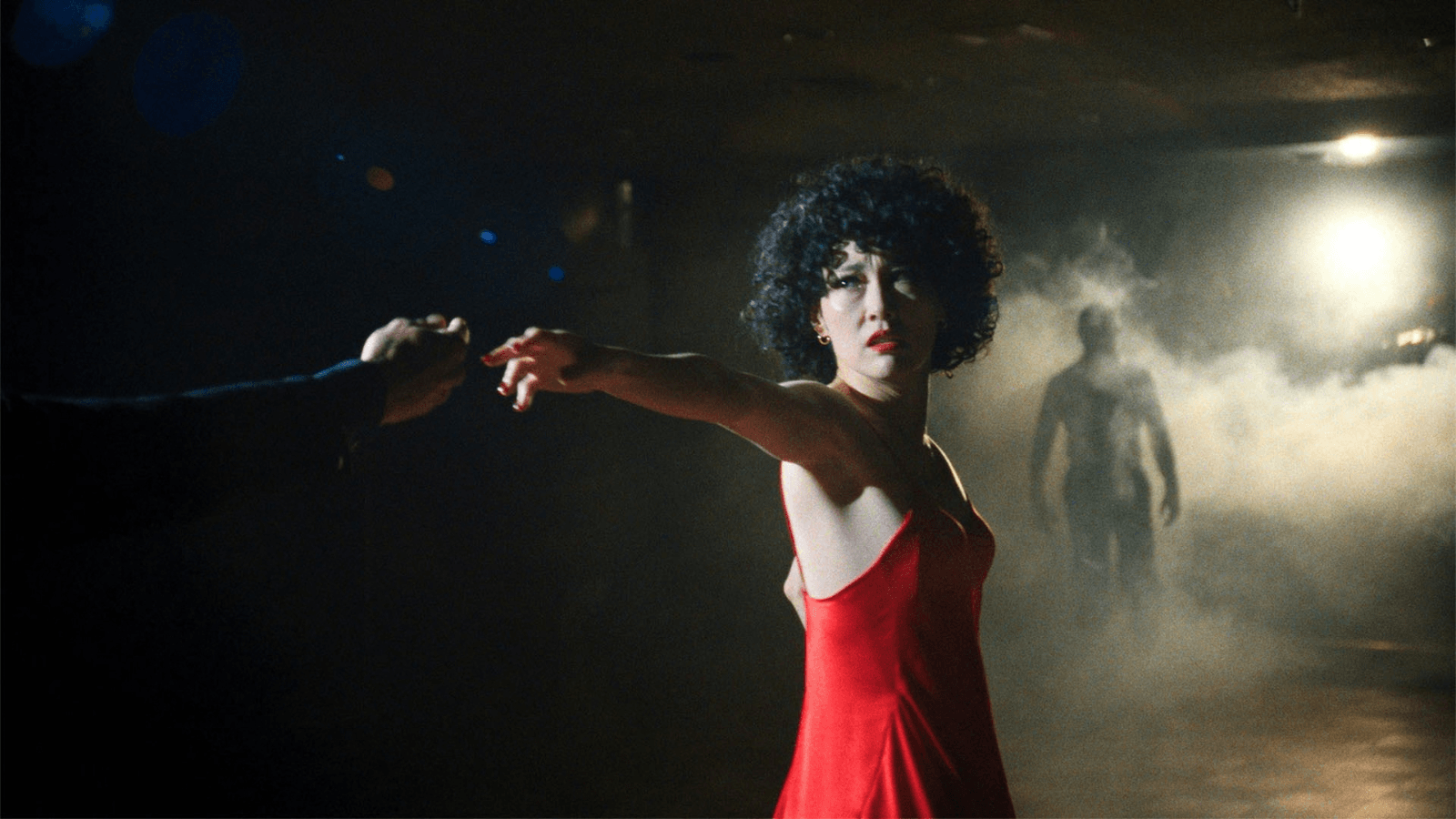
Ballroom dancing, grief, avian spirits, and movie musical sequences make for an unlikely, effervescent combo in director Josef Kubota Wladyka’s Ha-chan, Shake Your Booty!, a bubbly movie with a surprisingly tender touch. The title may seem almost campy, except Wladyka and co-writer Nicholas Huynh tell a moving story about a middle-aged woman realizing how messy life can get. But as her kooky cousin tells her, “Messy can be good.” Rinko Kikuchi gives one of her most substantive performances since Kumiko, the Treasure Hunter (2014), playing Haru, a married dance enthusiast with a curly puff of hair and a throwback sense of style. She and her husband, Luis (Alejandro Edda), compete in Tokyo Dance Classic competitions. When he dies suddenly, her world falls apart, making her prone to all manner of ill-advised behavior that’s treated with a delightfully light touch and nimble tonality.
The subject matter might seem unexpected from Wladyka, whose two previous features, Manos Sucias (2014) and Catch the Fair One (2021), were both severe thrillers without a hint of playfulness. The American-born director, with a Polish father and Japanese mother, was drawn to the subject based on his mother’s passion for ballroom dancing. He even made Haru’s family name the same as his mother’s—Kubota. One also gets the sense that his family probably enjoys Masayuki Suo’s Shall We Dance? (1996), with its notes of melancholy and joy, enough for the director to pay homage to it. Yet, Wladyka’s approach has the same impromptu, unpolished quality as Emilia Pérez (2024), where the production doesn’t look like a glimmering MGM musical number. Instead, its periodic flights of fancy seem to spill out of Haru’s imagination, which has the same passionate and endearingly unrefined quality as Kikuchi’s dancing.
Kikuchi is excellent in the role, which requires a considerable emotional range. Haru’s initial devastation over Luis’ death, and his family’s insistence on burying him in his home country of Mexico, not Japan, leave her isolated and wrecked for about nine months. The choice may have also made Luis a restless spirit. Alone, Haru asks the house, “Are you here, mi amor?” A lamp flickers, and a chubby, six-foot black raven appears, looking like a team mascot. This is Luis’ afterlife getup, and he watches Haru as she tries to move on. Her sister, Yuki (Yoh Yoshida), and their sassy cougar cousin, Hiromi (YOU), convince Haru to sign up for a Latin dancing class instructed by Fedir (Alberto Guerra), a former Dancing with the Stars contestant. She’s instantly enamored and, upon learning he’s married but in an open relationship (uncommon in Japan), she asks him for a private rumba lesson. Then dinner, followed by a hookup.
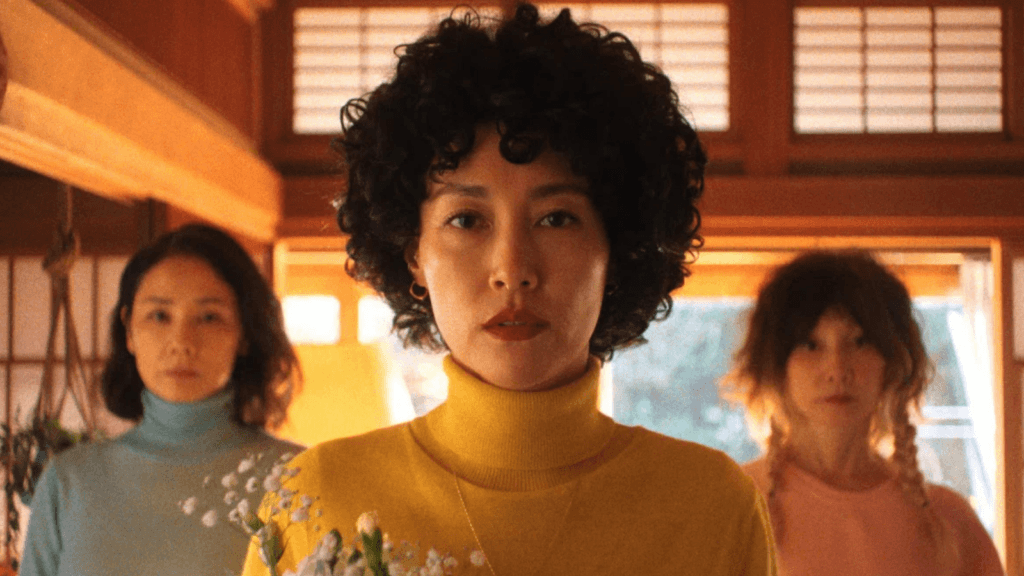
Broken into chapters, each announced with flashy English and Japanese titles that are read aloud in goofy voices, the film features rich colors and elegant compositions by cinematographer Daniel Satinoff. One charming sequence finds Fedir defending Haru from some rowdy, drunken businessmen, leading to a cover of “Be My Baby” over a fantasy dance sequence in the style of West Side Story. Later, Haru takes Fedir to a Japanese stage performance of Dirty Dancing—a favorite of hers, given on the framed movie poster in her home—and she soon joins in the dancing. These sequences exist only for Haru, whose mind is jumbled by her husband’s passing and her rebound affection for Fedir. She also dreams in cinematic terms, placing herself between Luis and Fedir in a scene out of Y tu mamá también (2001). Her emotional whiplash prompts some mortifying behavior at a Halloween party, where she dons Day of the Dead makeup and meets Fedir’s wife.
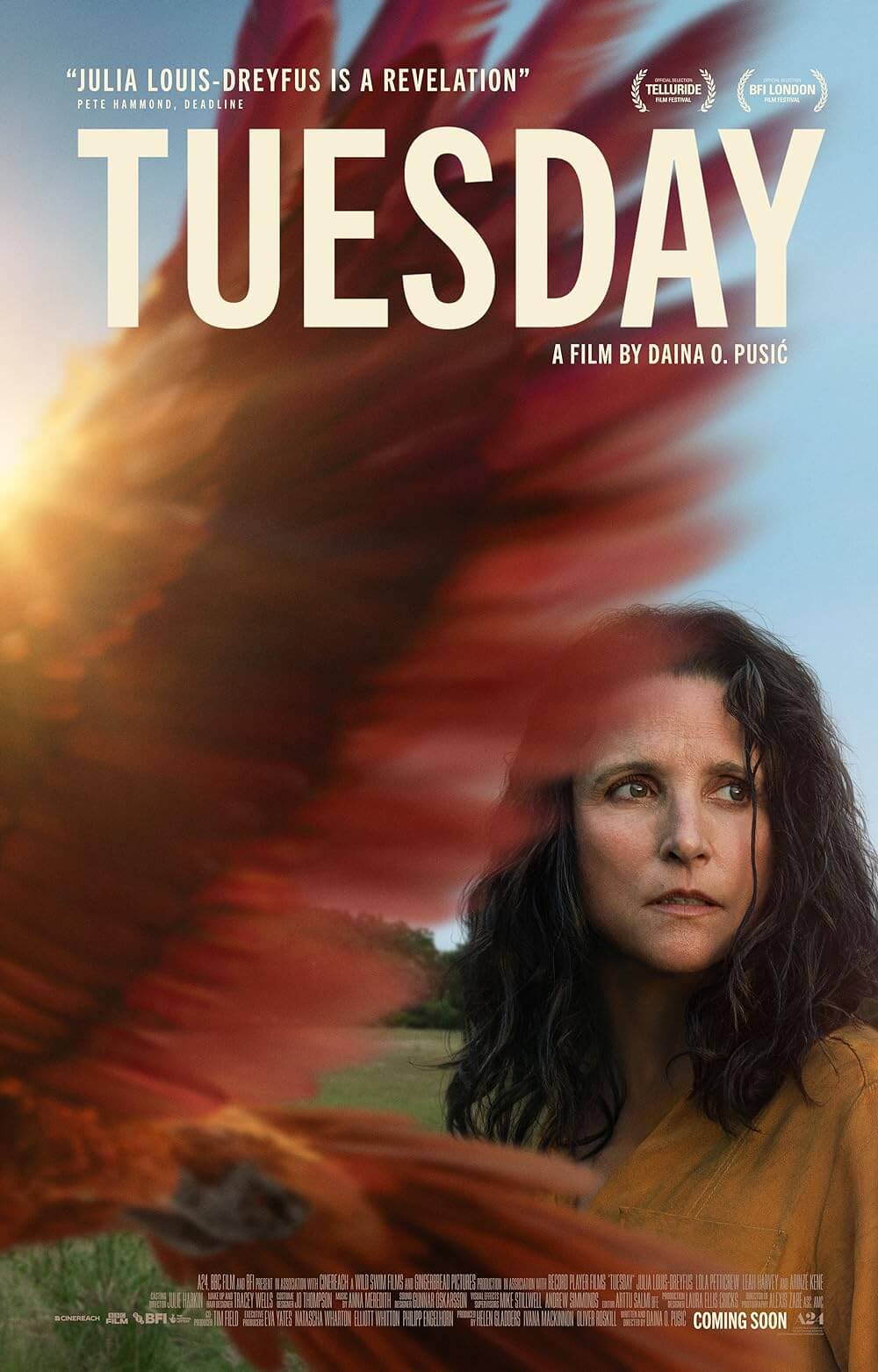
Ha-chan, Shake Your Booty! sometimes veers into farcical sitcom territory, particularly in the third act, when Haru hides under a bed and listens to Fedir make love to his wife. Just as things reach peak silliness, they also become more figurative. Inside the raven mascot is Luis, whose winged presence and death-centric symbolism reminded me of the macaw from Tuesday (2024). In Japanese culture, the raven Yatagarasu symbolizes divine intervention, guiding people along their fated path. It’s unclear if Haru has dreamt up Luis in the raven suit, or if he’s really back from the dead to help (however, more than once, we see the birdman when Haru does not, suggesting he’s really there). Regardless, it’s a touching movie about moving on and finding joy where you can, when you can, without worrying about whether your actions will be seen as messy.
Thank You for Supporting Independent Film Criticism
If the work on DFR has added something meaningful to your love of movies, please consider supporting it.
Here are a few ways to show your support: make a one-time donation, join DFR’s Patreon for access to exclusive writing, or show your support in other ways.
Your contribution helps keep this site running independently. However you choose to support the site, please know that it’s appreciated.
Thank you for reading, and for making this work possible.
Brian Eggert | Critic, Founder
Deep Focus Review