Possible Love
By Brian Eggert |
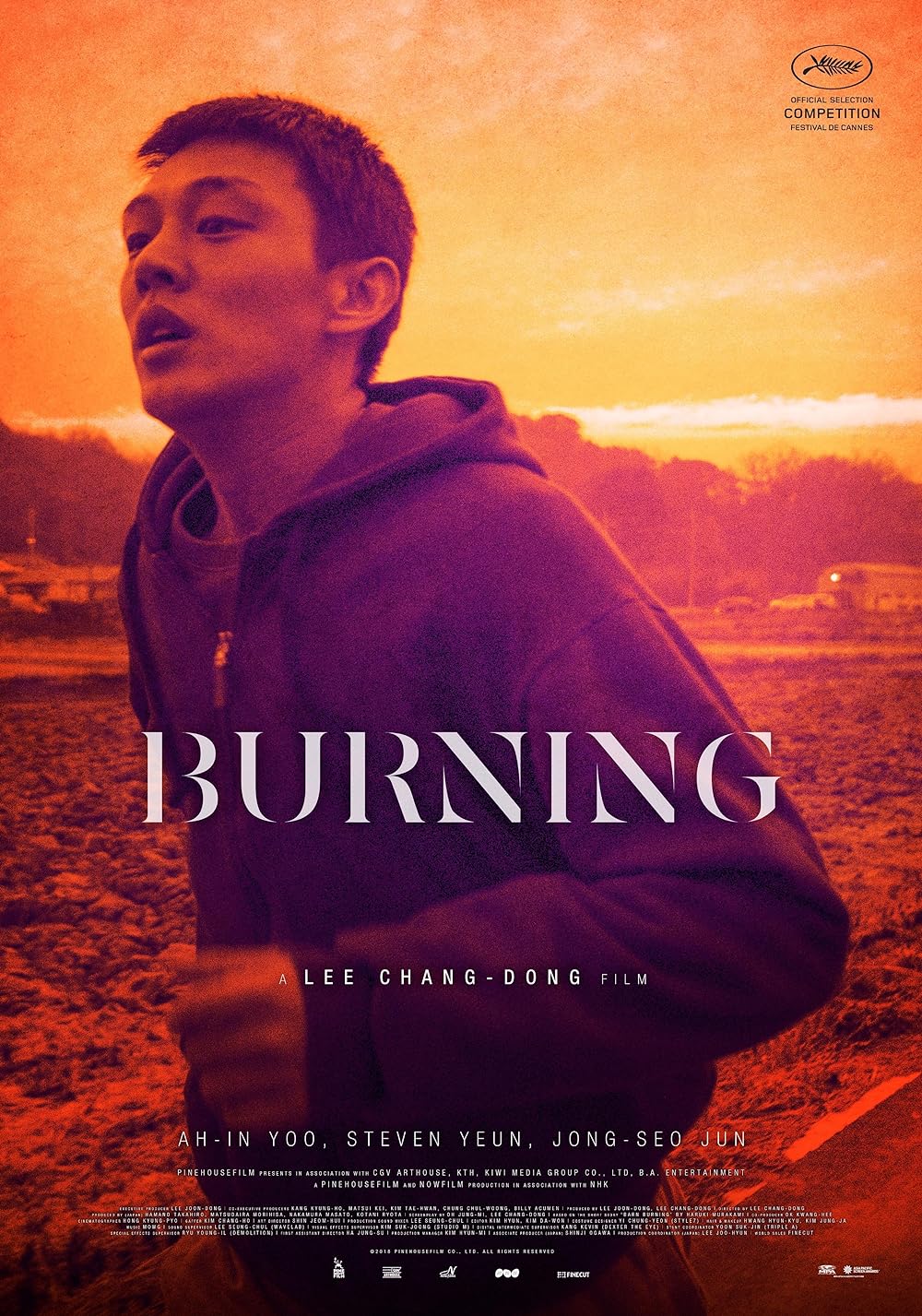
“I want to cry, just cry.” It’s an early line in Possible Love, but it could come from any of Lee Chang-dong’s wounded characters. The South Korean director’s work often centers on broken people who have experienced something devastating, with the story revolving around how they process what happened and how it continues to shape their lives in ways that only become clear upon reflection. Lee often withholds the origin point until the perfect poetic moment in his aching narratives, as in Peppermint Candy (1999), when a businessman steps in front of an oncoming train in the first scene, only for the film to journey into his past to assemble details leading to this tragedy, linking his final act to key chapters in his life. The widow in Secret Sunshine (2007) reels from losing her husband in a car accident, and an additional loss compounds her grief, sending her down a committed path to find existential comfort when none is likely. And in Possible Love, an unemployed man’s humiliation and despair cause him to bottle up his shame and anger, until they’re released, perhaps by the wrong person.
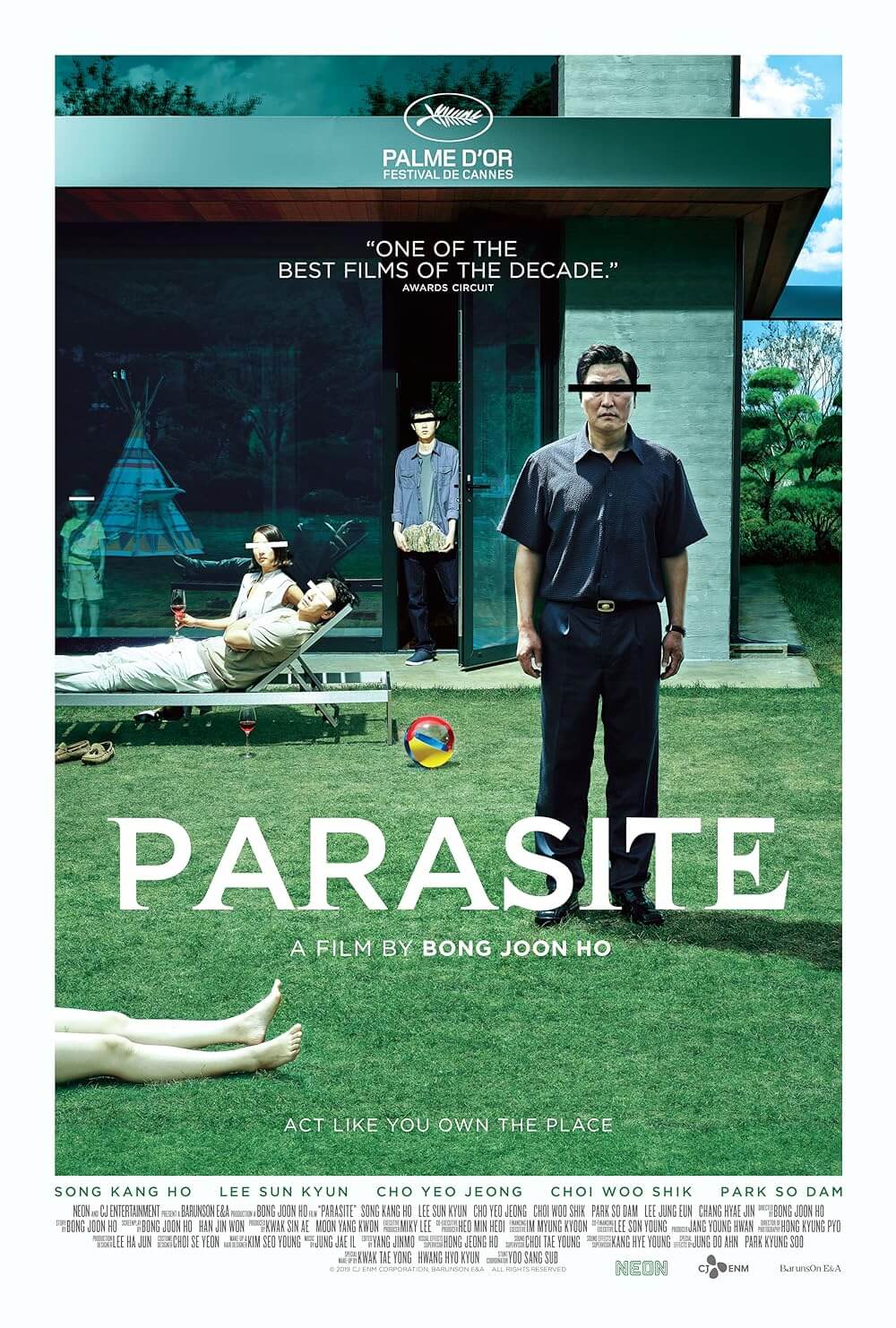
Symbolically, it’s fitting that Lee’s latest is another of his long-incubating projects—his first since the enigmatic thriller Burning, released eight years ago—given that so many of his films grapple with emotions that gestate over time until they’re suddenly irrepressible. The seed of his initial idea sprang from an infamous labor dispute from 2009, when SsangYong Motor Company laid off over 2,500 workers, nearly half of its staff, prompting a thousand union members to occupy a factory in protest. The standoff lasted over two months before the government intervened, launching a violent crackdown with riot police, tear gas, beatings, and arrests. Many of the workers were blocked from similar jobs and saddled with criminal charges or lawsuits. Those left unemployed experienced pervasive psychological strain, resulting in multiple suicides from stress and public embarrassment. This put a spotlight on Korea’s stark divisions of labor and class, a theme at the center of the country’s popular cinema, from Bong Joon-ho’s Snowpiercer (2014), Parasite (2019), and Mickey 17 (2025) to Park Chan-wook’s No Other Choice (2025).
However, Lee’s momentum stalled over doubts about how (and whether) he should tell the story, which he pictured starring the leads of Peppermint Candy and Secret Sunshine, Sul Kyung-gu and Jeon Do-yeon, respectively. Around this time, he also considered a remake of Krzysztof Kieślowski’s Dekalog: Nine (1989, aka A Short Film About Jealousy). The two projects soon merged in his mind, with Lee and co-writer Oh Jung-mi weaving aspects of the labor story into another featuring two couples flirting with romantic disaster. Lee captures these concerns with a balance of existential searching and observational realism, introducing a documentary director determined to bring the “underworld” of invisible workers into the light. To that end, Possible Love is many things at once: an exposé of Korean unions failing their members, a portrait of romantic unions that oscillate between good times and bad, and a look at the ethics of filming real-life subjects. But rather than a film Frankensteined together from disparate pieces into an unsightly whole, it’s a measured, thoughtful, novelistic undertaking of social insight and human intricacy.
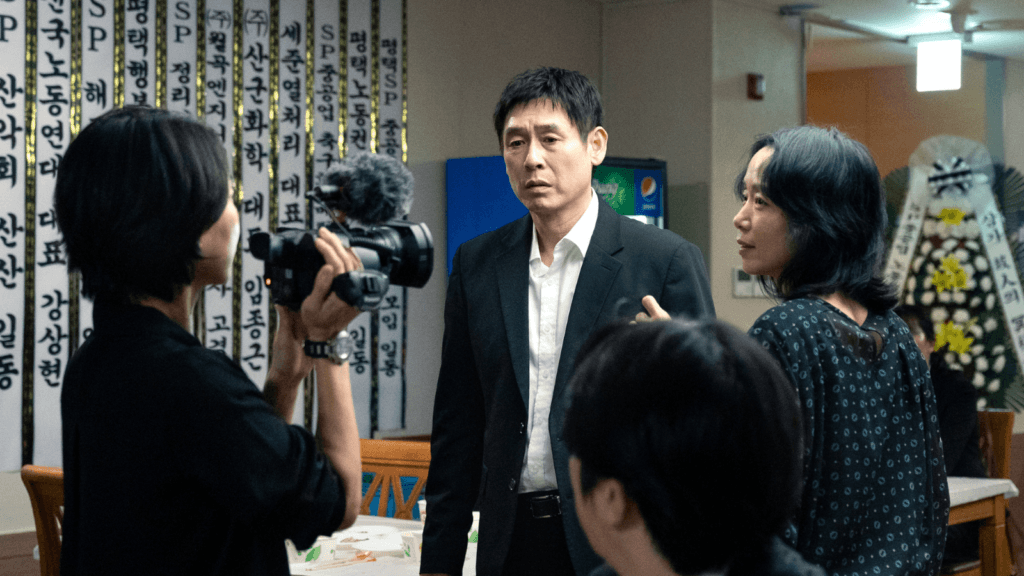
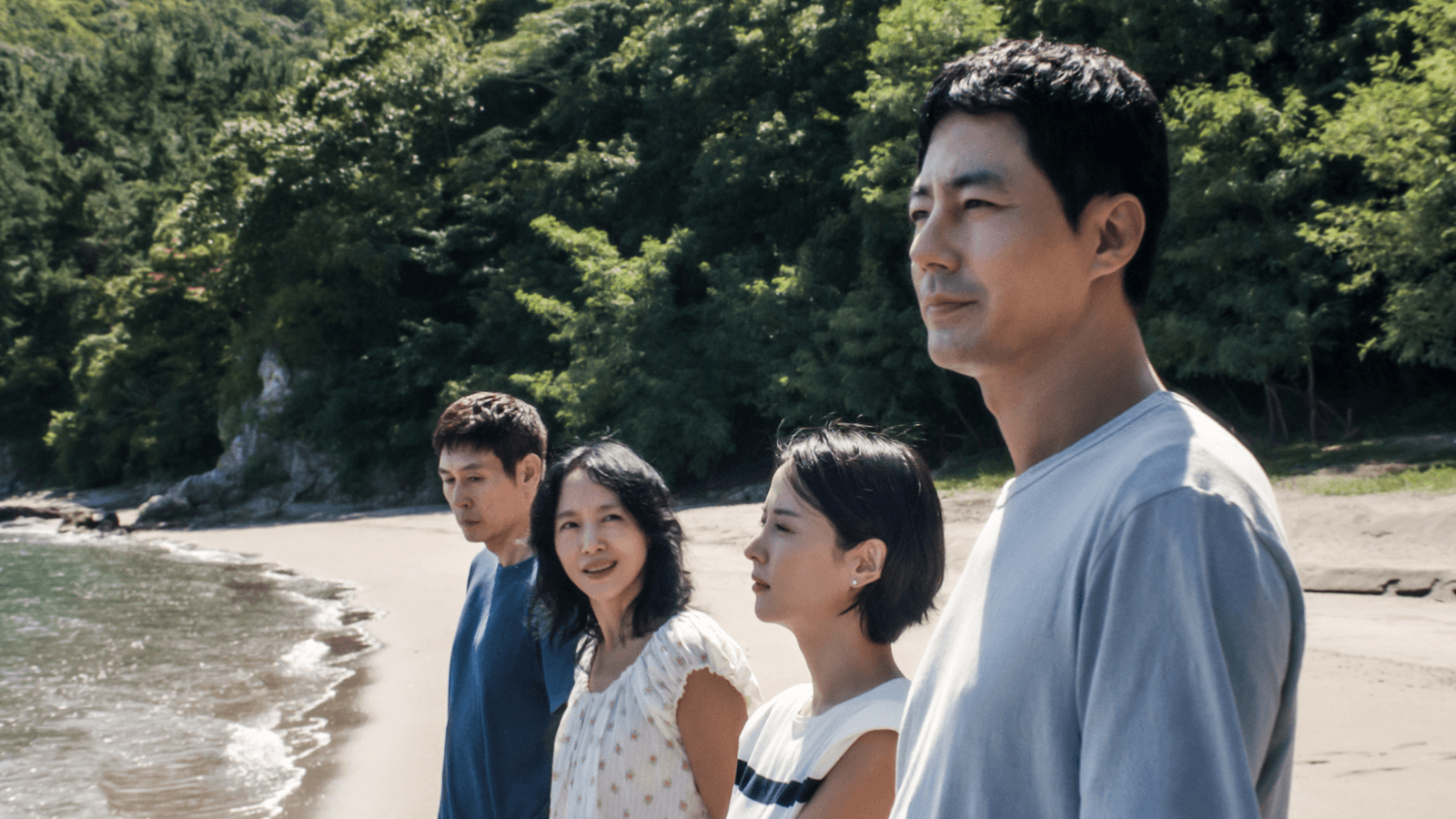
Set two years after a manufacturer named SP Heavy Industries laid off forty percent of its employees, the film centers on Choi Ho-seok (Sul), a welder who remains unemployed and deflated. His more optimistic wife, Mi-ok (Jeon), works at a medical face-mask factory. When the film opens, they arrive at a funeral for one of Ho-seok’s former coworkers who took his own life. The grief at the gathering stems from both the individual loss and the broader fear that everyone who was discharged is doomed. People still at the company are called “the living,” and those laid off are called “the dead.” Ho-seok has been lost since the incident, though he refuses to talk to anyone about his feelings; he drinks instead—so much so that Mi-ok has asked him not to drink in public because he becomes embarrassing. At the reception, a documentarian, Lee Ye-ji (Cho Yeo-jeong), stands near a wall and observes with her camera. Ho-seok chides her for turning their pain into entertainment. Nevertheless, Ye-ji soon befriends Mi-ok, knowing that the couple could be the centerpiece of her film, called The Vanishing Laborers.
At first, Ye-ji convinces only Mi-ok to speak about what happened to her husband. Their casual conversations unexpectedly become material for the doc when Mi-ok talks about her husband’s ruinous job loss, or tells a story about how, as a child, she tried to create a rainbow with a hose. She recounts how her mother took the hose away, thinking her daughter was doing menial labor by washing the family car. This incident may have planted Mi-ok’s enduring desire to belong to the upper class, as shown by her quick friendship with Ye-ji (it doesn’t take long before they’re playfully calling each other “bitch”). She admires Ye-ji’s apparent financial security and remains intrigued by her lifestyle, even asking her how much her things cost. But Ye-ji’s wealth derives mostly from Sang-woo (Zo In-sung), her handsome private equity investor husband, who won’t finance her independent film (“Independent of capital,” he quips). Noticing Mi-ok’s fascination with money, Ye-ji exploits their friendship in sly ways. She takes her camera to Mi-ok’s mask factory and shoots a hilarious, conflict-free unionization, seemingly to encourage Mi-ok to convince her husband to give an interview. Ye-ji misses (or doesn’t care) that Mi-ok’s fixation on luxury items and desire to be on camera spring from her strained finances and fractured marriage.
With Possible Love unfurling over nearly three hours, Lee meditates on class disparities. Just as Mi-ok thinks about price tags, Ye-ji is oblivious to them, wearing her expensive couture around her unemployed doc subjects. Later, Ye-ji and Sang-woo invite the couple to their summer house for a shared vacation, ignoring how their advantages may make their guests uncomfortable or envious. Still, Ye-ji’s camera seems to give Ho-seok the distance he needs to open up—although he agrees to her suggestion of group therapy, he attends but cannot bring himself to speak. Only when they’re alone, with the camera, does he recount his experience at the protest and subsequent crackdown. His union ultimately abandoned him and, in doing so, exposed its false solidarity. In exchange, Ho-seok earned a 19-day prison sentence and an inability to sleep without alcohol. For protesting, he was labeled a “communist.” He wants to know: Are workers communists for wanting fair treatment and not putting the needs of their employer over their own? When he finally puts these thoughts into words, he has a panic attack, and it’s wonderfully performed by Sul. In a roundabout way, Ho-seok refusal to speak to his wife about these buried feelings is revealing. He loves her so much that to confess his bottomless loss of dignity to her would hurt that much more.
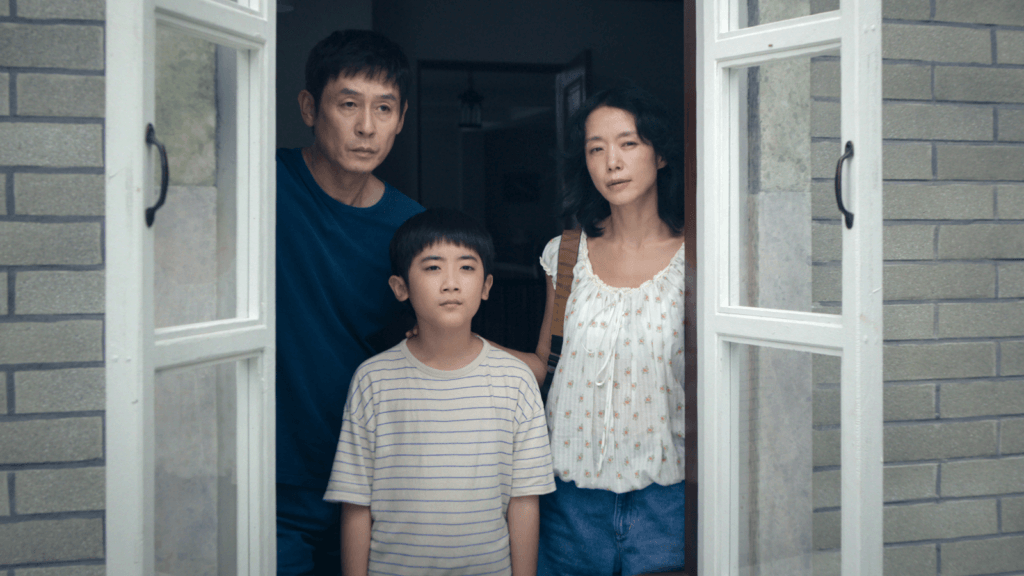
Lee’s filmmaking throughout is exquisite yet unassuming, with cinematographer Kim Ji-yong quietly observing loaded character interactions like a curious spectator, without ever calling attention to the camera’s presence. Lee might have included scenes from the documentary, showing us Ye-ji’s interviews with other laid-off workers. Instead, we watch at a remove as one executive casually admits the layoffs at SP Heavy were designed to spark buyer interest. More distinctive is the subtle structuring by Lee and editor Kim Da-won, who occasionally employ flashbacks to detail Mi-ok’s first encounter with Ho-seok as teenagers. It’s unclear whether Lee intends these moments as lyrical backstory or as something conceived in Ye-ji’s mind’s eye, perhaps envisioning, as a filmmaker, how a dramatic reenactment might look. Regardless, these moments prove vital, as the ambiguity and mystery around what the characters allude to earlier in the film come crashing through in moving dialogue and flashbacks later on.
The title’s implications finally emerge in the excruciatingly restrained flirtations during the final third of Possible Love, as the two couples get drunk, dance, and drop their inhibitions. Then there’s the scene at their private beach, where Sang-woo admits to skinny-dipping occasionally for a sense of freedom. Mi-ok can relate, and she later joins him in a complex exchange of dalliances and coquetry—like a matador evading a bull—that disrupts the couples’ getaway. Though Mi-ok admires Sang-woo and Ye-ji’s outwardly easygoing marriage and fortunate lifestyle, it proves to be an illusion, if not a projection. Lee reveals the reality during an aggressive sex scene after the Chois return home, one that might seem fitting for Cho’s similarly affluent and submissive wife character in Parasite. To be sure, Possible Love is about how, when you’re immersed in a relationship, it can be difficult to appreciate what you have, good or bad, compared to others. None of the four sees beyond their immediate needs and desires.
Only Mi-ok and Ho-seok’s 10-year-old son Cheol (Jung Seol) observes them from an outsider’s perspective, though he’s oblivious to the tangled romantic and class dynamics at play. The boy, an inward sort uninterested in sports or martial arts, avoids Ye-ji’s camera, hiding inside a cupboard from its prying lens at one point. At the vacation house, Cheol spends his time with the groundskeeper, Min-sik (Kang Chang-gwon)—Sang-woo’s childhood friend, who was the gardener’s son before taking over the role himself. Long ago, Sang-woo trained his servant-friend to come running at the sound of a whistle to play. Cheol takes that whistle—a subversive act, intended or not—and it still makes Min-sik rush over to play. He can even hear it from miles away. As we watch the intimacies and exploitations between the two couples, which risk getting out of control, we can see the reality that they miss: For Sang-woo, Mi-ok is another possible acquisition, just as Ye-ji sees Ho-seok as the lynchpin of her doc first, her friend second. It’s not until late in the film that Lee reveals the disturbing connection between Choi’s layoff and Sang-woo’s business deal that unfolds in the background.
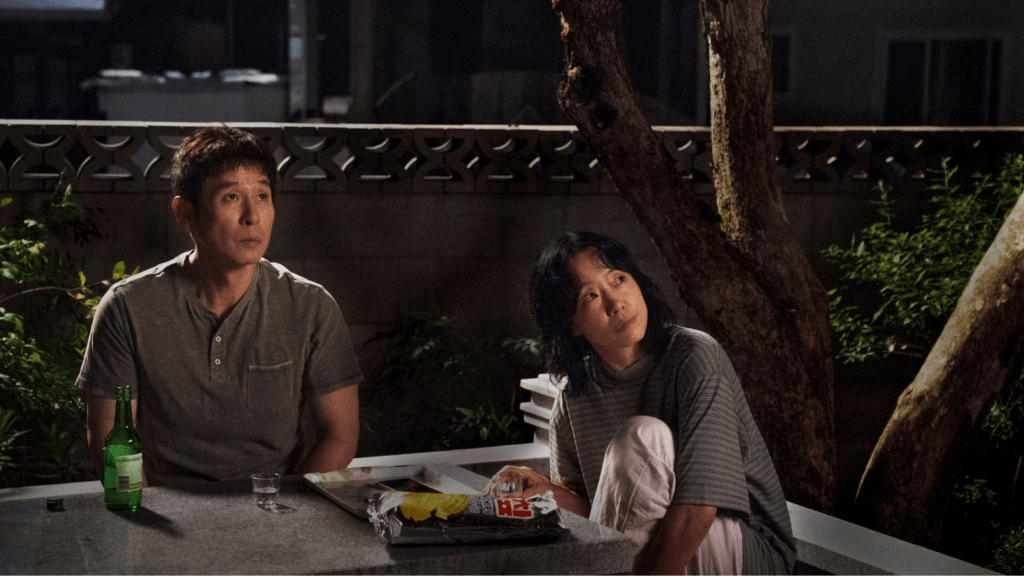
The more Lee reveals about Ye-ji and Sang-woo, the less dimensional they become. By contrast, Jeon and Sul give their characters layers of humor and intimacy beneath their current predicament. Maybe it’s that the performers have both acted for Lee, or that they’ve worked together before, once in Park Heung-sik’s romantic comedy I Wish I Had a Wife (2001), then again in Lee Jong-un’s grief-stricken drama Birthday (2019). Either way, they inhabit characters who have been together for decades and who don’t always need to vocalize their feelings (and as someone who has been with the same partner for a quarter-century, I can relate). By the final scenes, they can reset after nearly losing themselves with another couple. They return home—which Mi-ok now feels is cheap and smelly compared to the summer house they just left—and slip back into their default mode: eating junk food meant for Cheol and drinking soju together under the moonlight. “Drinking without you,” Ho-seok observes, “it’s so bitter.” A fleeting fantasy can’t replace that kind of innate need for someone, they both realize.
Possible Love will debut on Netflix in the United States, after giving audiences a short window to see Lee’s drama on the cinema screen. However, I was fortunate enough to catch a theatrical screening, and for all of its focus on people over spectacle, the film rushed over me like a crashing wave on a nude body. The tender writing and reserved formal execution leave us to ask questions about Ho-seok’s initially unexplained, erratic behavior, and Mi-ok’s growing concern. The film is about a low point in their lives, causing them to wonder whether they did something wrong or were too happy before Ho-seok’s layoff—and, if so, whether this was justice. Sometimes, at our lowest, we make unhealthy comparisons and question our happiness; class divisions only exacerbate the difference. But Lee includes a moment that transcends these divisions: Cheol and Min-sik play with a hose and create a rainbow, the very thing Mi-ok was prevented from doing as a child. In this, Cheol and his friend transcend their differences in age and class. Like sunlight and suspended water droplets creating a spectrum of color, they merge into a symbol of how we’d all be better off seeking harmony instead of looking for reasons to envy, resent, or exploit each other. It’s a gentle, sophisticated note in a brilliant film by a director who respects his audience enough to let them interpret his meaning, and whose eight-year road to this masterpiece is wholly justified.
Like DFR? Support us.
This site exists because readers like you care about film. If DFR has enriched your experience with movies, I’d be grateful for your support. You have a few options:
• Join DFR’s Patreon community
• Make a one-time donation on PayPal
• Buy me a coffee
Whatever option you choose, it helps keep my work independent. And it means a lot to me.
Thank you for reading, and for making this work possible.
Brian Eggert | Critic, Founder
Deep Focus Review