La bola negra
By Brian Eggert |
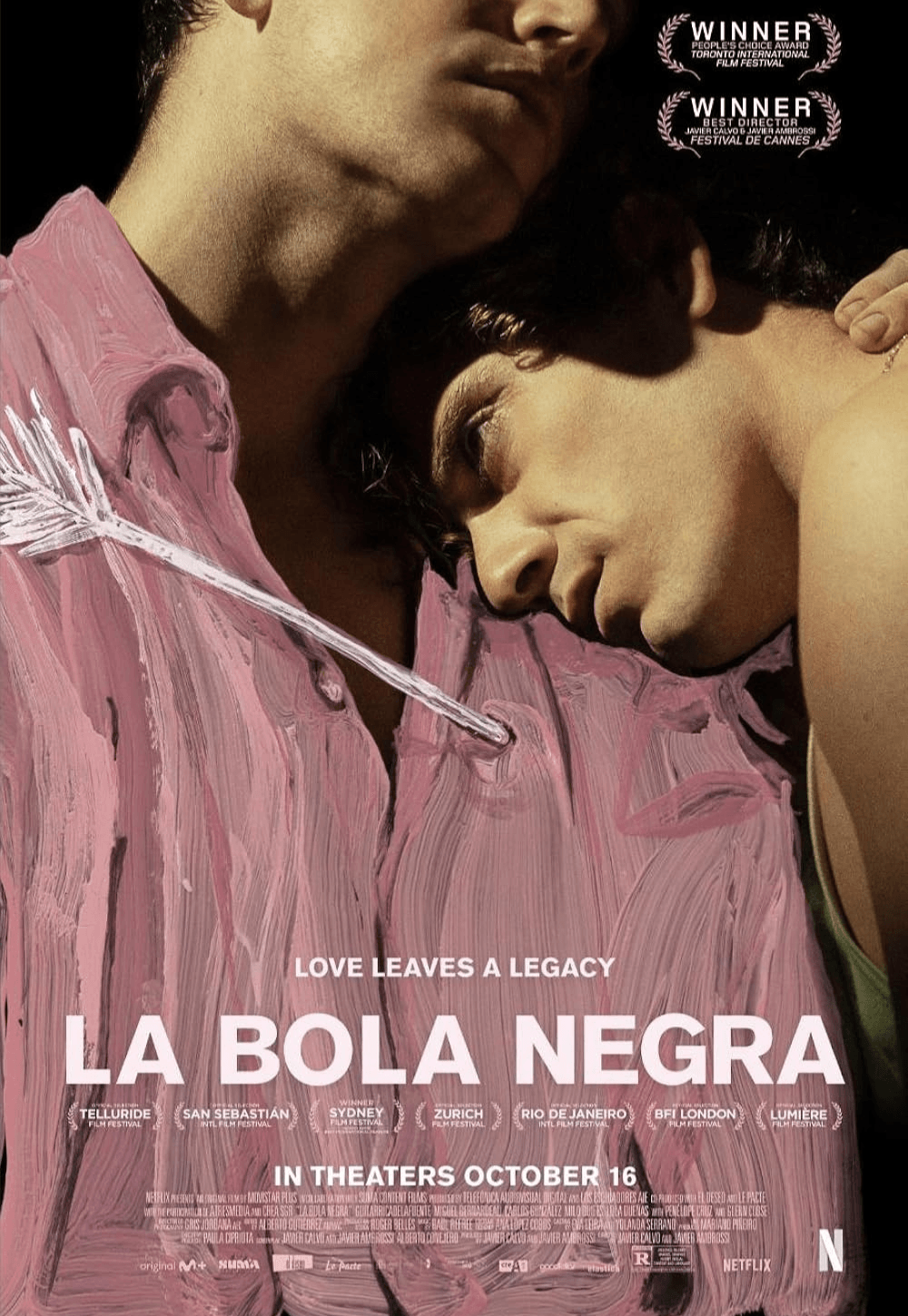
The term “blackballed” refers to a centuries-old procedure often used at private, male-dominated clubs to vote on new candidates. When considering a prospect, members would anonymously submit either a white ball to accept the applicant or a black ball to deny him entry into their fold. To be blackballed meant rejection by high society, and with it came reputational dishonor. La bola negra (The Black Ball) is about how being a queer person in Spain over the last century meant immediate exclusion, including persecution, either through a literal vote or figuratively through sociopolitical ostracization. With their film spanning three distinct, tumultuous periods in Spain’s past, co-directors Javier Calvo and Javier Ambrossi employ a triptych structure to capture how gay men often had to choose whether to live their lives to the fullest and risk being targeted, or suppress their natural desires to appease the disapproving status quo. Brimming with rapturous style and ambition, the film is an impressively mounted and tenderly dramatized epic rooted in history and reflection, albeit without much subtlety over its lengthy runtime.
The filmmakers owe much to Spanish master Pedro Almodóvar, whose El Deseo was among the many production companies backing this sweeping project. Calvo and Ambrossi would be the first to admit it, I’m sure, given at least one diegetic reference to the auteur in La bola negra. Like Almodóvar’s work, particularly his recent output, their effort is novelistic, leaping back through time and charting the past’s links to the present. It’s melodramatic and aesthetically rich, concerned with the return of the repressed in Spain. Known in their homeland as Los Javis, the creative pair and former couple released their first film, the broad musical comedy Holy Camp! (2017), before earning widespread acclaim for their series Veneno (2020), currently on HBO Max. Although I’m not familiar with most of their credits, by all accounts their second feature is far more grandiose than anything they’ve worked on before. They co-wrote the screenplay with Alberto Conejero, adapting his 2015 stage play, La piedra oscura, a fictionalized origin story for Federico García Lorca’s unfinished 1936 manuscript, La bola negra, which he barely started before his murder during the Spanish Civil War.
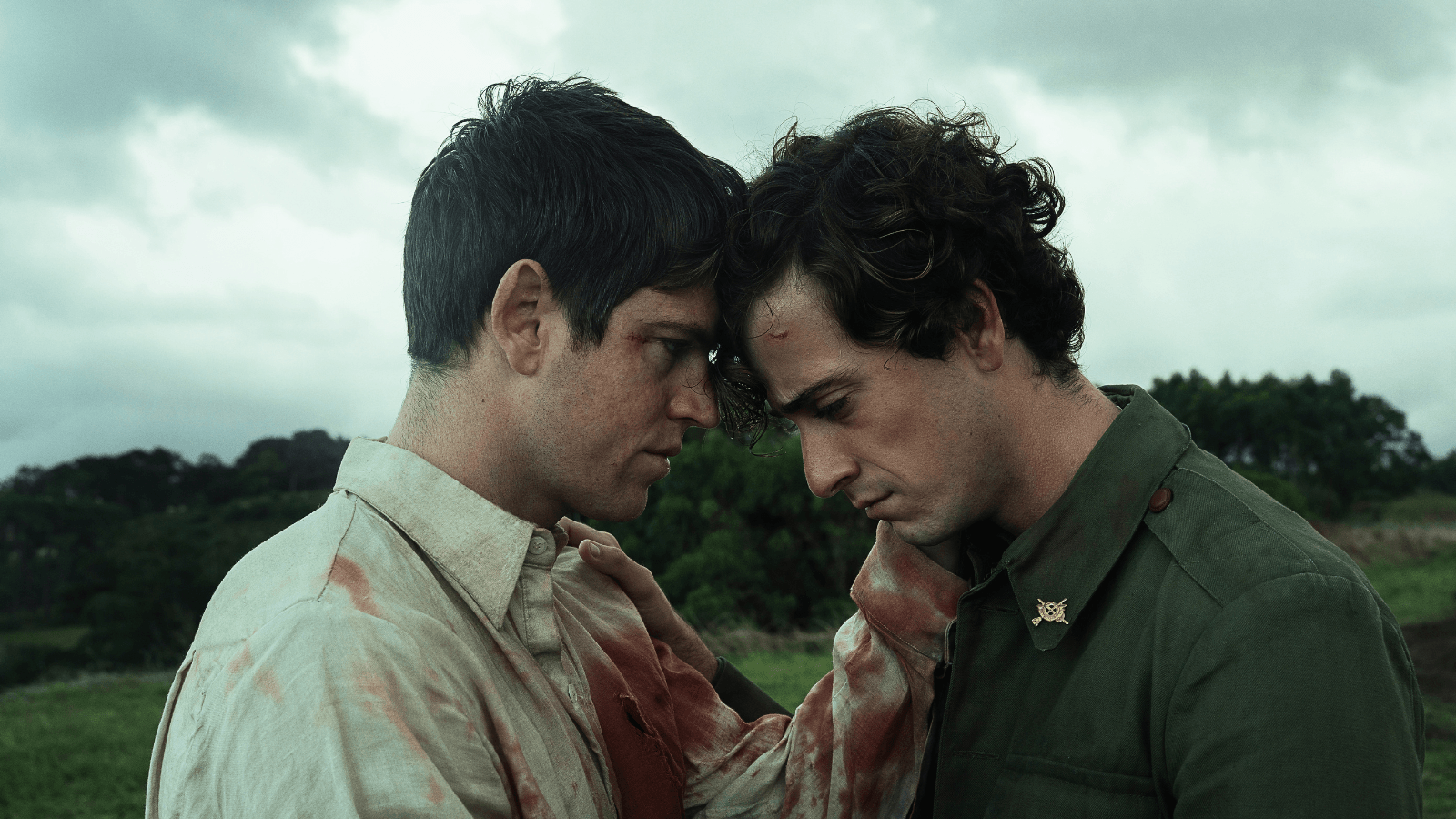
The film opens in 1937 on Sebastián (singer Guitarricadelafuente, in his acting debut), who lives in a remote village dominated by fascist Nationalists. When Italian allies bomb his village by mistake, he narrowly escapes, only to be forced into the Nationalist army and ordered to guard Rafael Rodríguez Rapún (Miguel Bernardeau), an injured prisoner with sensitive information. His brief time with Rafael fills him with emotional confusion and has prolonged consequences over his queer awakening. The second storyline takes place five years later, following Carlos (Milo Quifes), who’s blackballed from a local casino because of rumors about his sexuality. After hearing the news, his father tells him, “I’m not going to intrude on your heart, but outside of these doors, you have to be what you were meant to be.” Carlos considers applying again and debates whether he should deny his feelings or conform to fit in. Finally, in 2017, a gay historian named Alberto (Carlos González) researches music by trans performers from the 1920s, before the government targeted the queer community. He receives a call that his estranged grandfather has died, and he sets out to uncover his family’s long-kept secrets.

Unfolding over two hours and forty minutes, La bola negra is a maximalist procession of visual and aural stimulation. The directors’ cinematographer Gris Jordana shoots on both 16mm and 35mm celluloid, alternating between color and occasional monochrome flashbacks, with a 1.85:1 aspect ratio and rounded corners of the frame—as though we’re watching forgotten archival footage found in storage. It’s shot in such a classical mode at times that, at first glance, the result might be mistaken for a standard period drama. But its subject matter gives way to postmodern flourishes and ironies (watch as Calvo and Ambrossi subversively charge up fascist male-bonding rituals with homoeroticism). Raül Refree’s complex score evokes the political and personal intricacies of each storyline, shifting with anachronistic sounds and jazz-like improvisations that overlap from one scene to the next, echoing the film’s varied tones. It could be accused of having multiple personalities; it took me about 45 minutes to get into its crosscutting rhythms. Even after it hits an engaging stride during the middle, the final half-hour or so risks losing steam during the lengthy falling action and surreal finale involving talking snow. Touches like this register as too self-conscious and convinced of their own emotional profundity when they don’t land as intended.
Still, the filmmakers deliver one memorable scene after another that should be seen on the big screen (a life sentence on Netflix will follow the short theatrical window granted by the streamer): there’s the heartbreaking moment where Sebastián plays his trumpet in a restroom; the volatile arguments between Alberto and his mother (Lola Dueñas, excellent); the scopic shots of the Sierra Nevadas. The most dazzling sequence takes place at a cabaret, featuring a cupletista performer, Nené Romero (Penélope Cruz), the resident Sally Bowles. Nené sings risqué songs from Spain’s more liberated times—a period that, like Weimar-era Berlin, more openly accepted queerness and transgender identities. “Transvestism is the fantasy of the possible,” Nené tells her audience of mostly soldiers, who are more concerned with how she looks than what she’s saying. “War is just the opposite,” she adds with defiance. Sebastián is naturally drawn to Nené, who seems to recognize he’s gay before he does. Yet his ability to pass as a Nationalist and survive the Civil War secures his longstanding reputation, and seals Rafael’s tragic end.
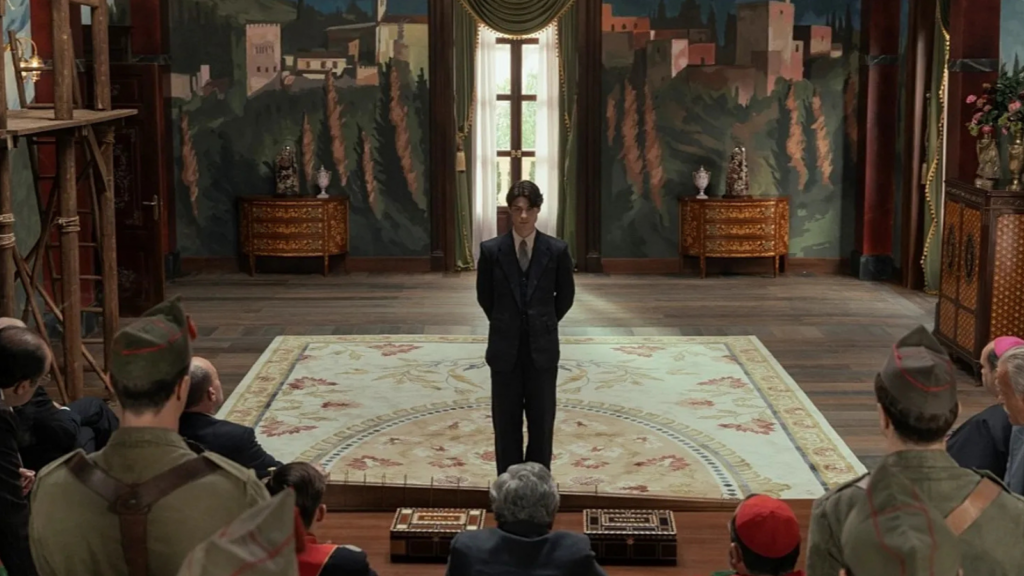
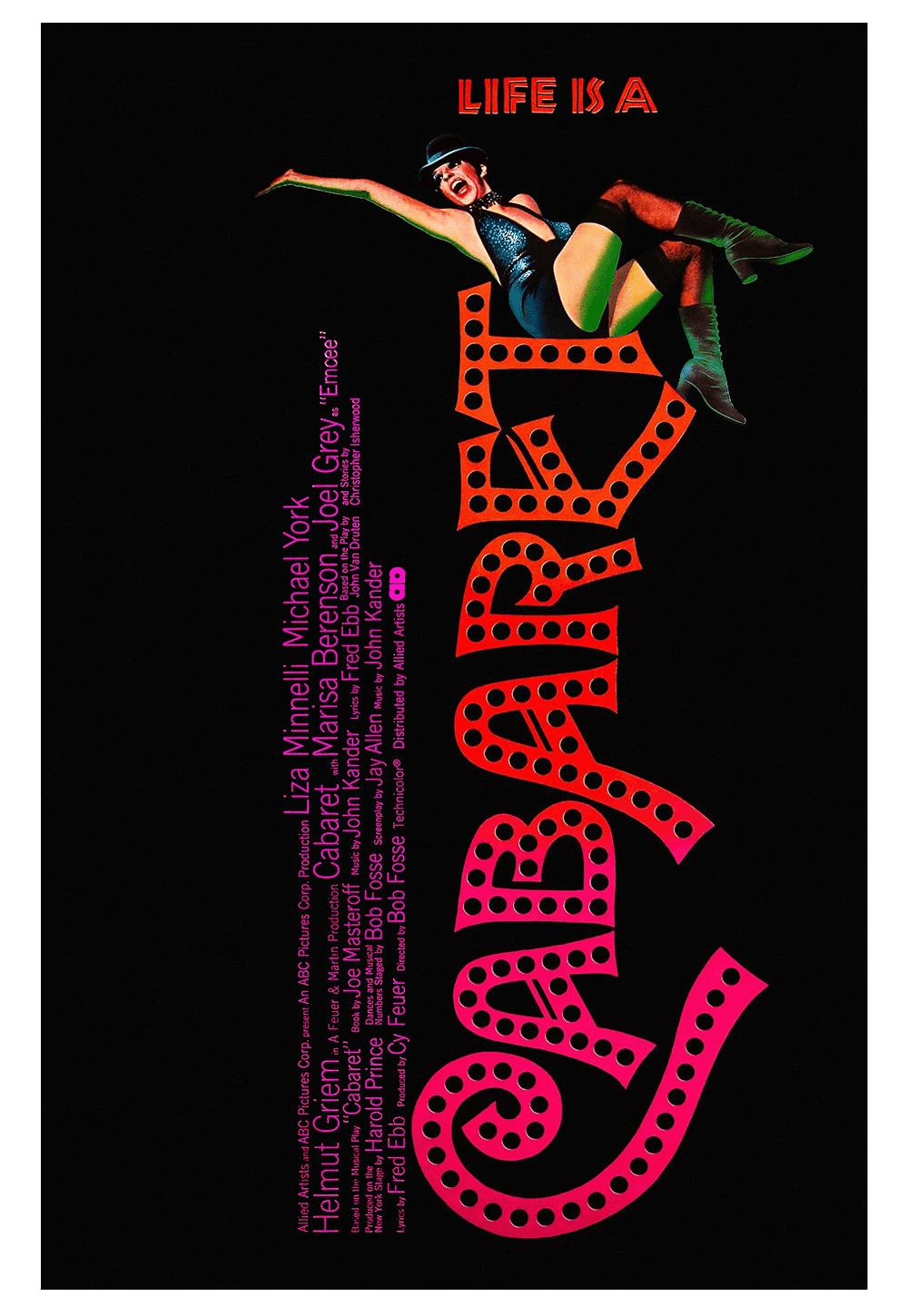
Later in the film, Glenn Close appears as a scholar who remarks that, because so much of Spanish history is dominated by fascism, uncovering heartfelt letters or journals remains impossible. People seldom committed their feelings to paper to avoid persecution. She helps Alberto process his discovery about his family. “You inherited something, and you don’t know what to do with it,” she observes. “You are indeed a Spaniard.” The idea reinforces the importance of digging up buried history and facing its traumas so that we can prevent horrible things from happening again—a theme Almodóvar explored in All About My Mother (1999), Volver (2006), and Parallel Mothers (2023). And like Almodóvar’s cinema, Calvo and Ambrossi’s film acknowledges that queer identities aren’t some new phenomenon, but neither is the prejudice toward them. One can fault neither their message nor their bravura formal execution; however, their handling of the unsubtle dialogue and pronounced themes dampens the intended visual and emotional splendor. It’s as though they want to pay homage to Lorca while also portraying the sobering era in which he lived—a similar dynamic found in Cabaret (1972), for instance. Except, the mixture here is off, and the disparate influences never achieve the same harmony.
Indeed, La bola negra often overstates its ambition: to tell stories about queer characters who hide their longing, both in volatile times of war or recuperative times of peace. With any luck, the directors say through their characters, this decades-spanning drama (and others like it) will help young people find the courage to stop hiding and come out—it’s a question of living or dying, expression or repression. It’s a powerful message, though I found the drama and aesthetics clear enough without the unambiguous dialogue articulating every theme and lesson. Calvo and Ambrossi’s approach sometimes results in an appealing, open-hearted earnestness, captured by the generally terrific performances; other times, it feels incapable of not stating what should be interpreted. Its delineative treatment never challenges us, suggesting all current and historical issues raised have been suitably unearthed, addressed, and resolved. For a story that deals with so much lingering trauma, La bola negra gets too caught up in its own rhapsodic method to adequately grapple with its sobering subject matter. It’s rare to see an epic of this scope and beauty, which makes its lack of delicacy all the more frustrating, though never enough to entirely ruin its spectacle or neutralize its emotions.
Like DFR? Support us.
This site exists because readers like you care about film. If DFR has enriched your experience with movies, I’d be grateful for your support. You have a few options:
• Join DFR’s Patreon community
• Make a one-time donation on PayPal
• Buy me a coffee
Whatever option you choose, it helps keep my work independent. And it means a lot to me.
Thank you for reading, and for making this work possible.
Brian Eggert | Critic, Founder
Deep Focus Review