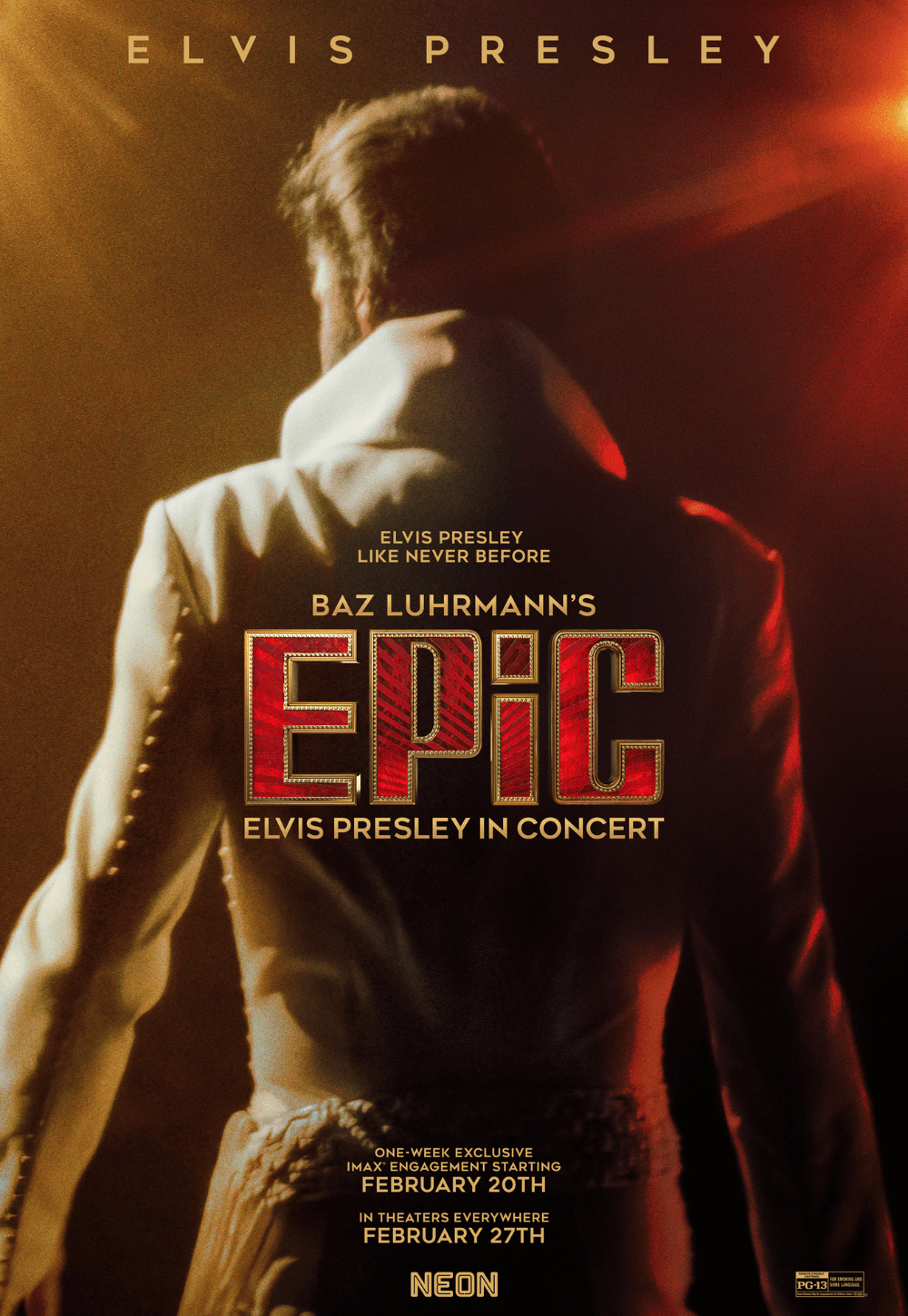
EPiC: Elvis Presley in Concert
By Brian Eggert |
(Note: Baz Luhrmann’s EPiC: Elvis Presley in Concert will be in theaters for a one-week exclusive IMAX® engagement starting February 20, 2026. It will expand to theaters everywhere on February 27.)
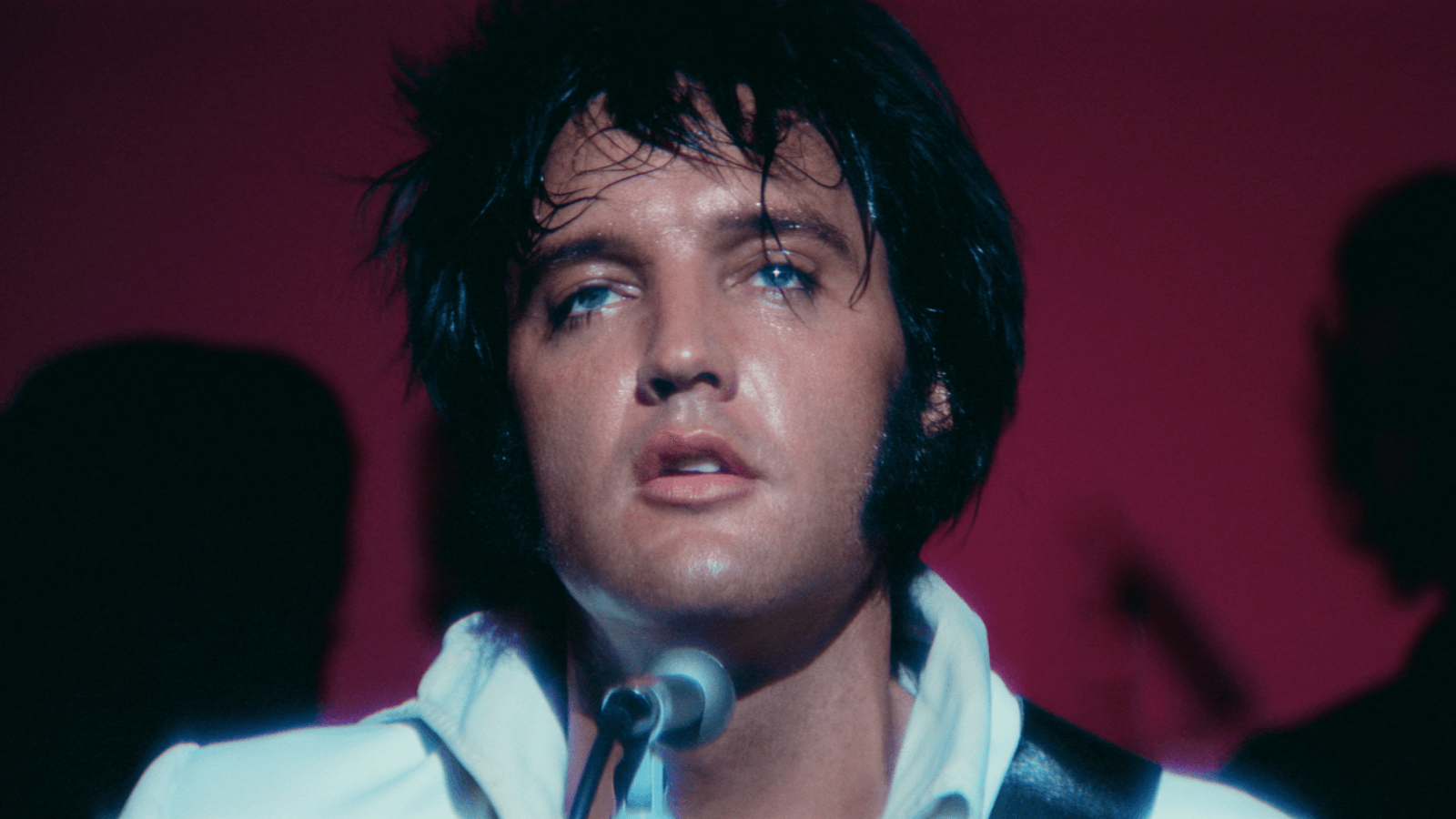
Four years after Baz Luhrmann’s glitzy 2022 biopic, Elvis, the Australian helmer revisits the subject with a documentary about the King of Rock and Roll’s Las Vegas residence. Between 1969 and 1976, Elvis Presley played to sold-out crowds at the International Hotel, sometimes two or three shows a day. EPiC: Elvis Presley in Concert captures the energy and personal investment the musician brought to this run, as though Luhrmann seeks to counter the widespread impression that his Vegas shows marked the beginning of the end. Besides playing many of the same songs night after night, Elvis became a bloated and flashy reflection of his surroundings, worn down by his strained lifestyle and sustained with drugs. The year after his residency ended, he died at the age of 42. More than just a concert movie, Luhrmann’s doc comes from a place of deep admiration and fandom, which means he ignores many of the harder truths about his subject while making (another) statement about the performer’s complexity. Nevertheless, he presents quite a spectacle with beautifully restored footage and Elvis’ unquestionable showmanship.
While watching EPiC, I kept thinking about Luhrmann’s other Elvis film, how they complement each other and, in some ways, diverge in their understanding of Elvis. Curiously, the drama starring Austin Butler presented the Vegas contract as though he was “caught in a trap” by Tom Hanks’ ridiculous Colonel Tom Parker, yet in the doc, Luhrmann shows another side: the King claims the nightly variations of the same songs inspire him to improvise, and that, along with the attention he so loves, he thrives on the challenge of keeping it interesting. Of course, that’s what the performer says to reporters and the camera following him around. Perhaps his claim is just good publicity and self-promotion. After all, Elvis also tells one interviewer that he hopes to travel the world and perform in other countries. He never did; Parker saw to that. But ironically, because of Luhrmann’s earlier film, certain aspects of the doc and the star’s statements remain suspect.
After a splashy opening accented by Luhrmann’s odd affinity for garish CGI kaleidoscope imagery—seen in Moulin Rouge! (2001), Elvis, and The Great Gatsby (2013)—the doc sets the stage. Elvis rehearses with his band, practicing more than a hundred songs so they can keep each night fresh with his signature blend of country, gospel, and R&B favorites (and several Beatles covers). Luhrmann and editor Jonathan Redmond intercut some background into these early scenes, providing a brief biographical timeline of Elvis’ life to this point. It starts with his emergence and distinctive dancing, which gained the public’s attention in the 1950s. Dismissing the sexual overtones of his gyrations, he argues that his dancing is a necessary impulse: “We’re getting rid of something in our system, and no one knows what it is.” Some even believed he represented a negative influence, corrupting the minds of youngsters and contributing to juvenile delinquency. Then the doc touches on his stint as a movie actor before he was drafted, and after his military service, on his return to Hollywood for a series of banal pictures.
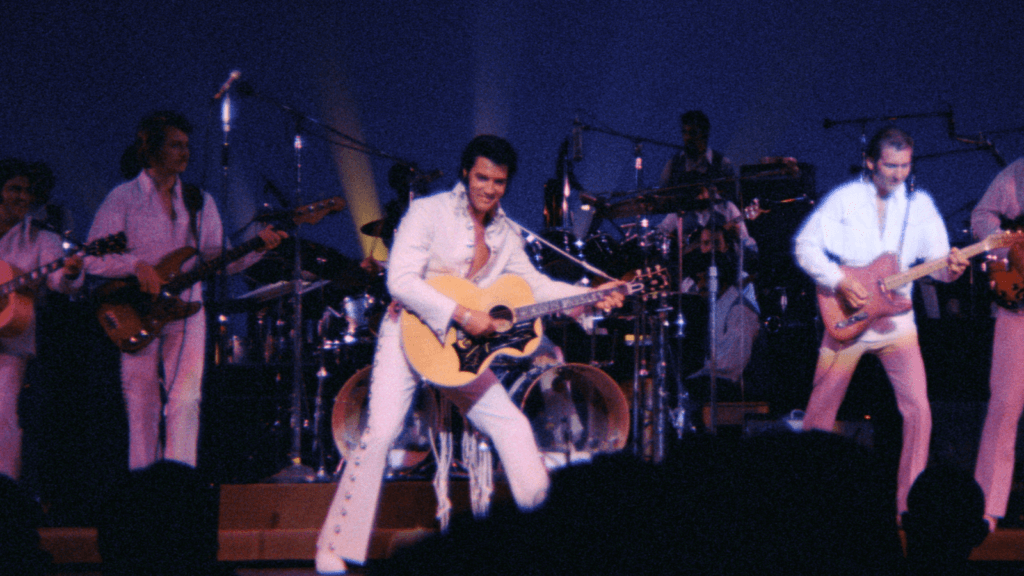
EPiC features candid footage, archival interviews, and clips from early performances interspersed throughout the Vegas footage. The show opens with “Thus Spake Zarathustra”—just one year after its iconic use in Stanley Kubrick’s 2001: A Space Odyssey (1968)—for a Vegas crowd sprinkled with familiar faces (Cary Grant, Sophia Loren, Sammy Davis Jr.). Elvis performs in the foreground, and his band often appears in silhouette behind him. This staging gives way to odd moments when his lead guitarist plays an energetic solo, while the star attraction remains under a brighter spotlight, accompanying the soloist with an air-guitar routine. They perform overproduced, faster-tempoed versions of songs such as “Hound Dog,” accented by the Vegas sound Elvis helped typify. With sweat pouring down his face and chest, he often stops to catch his breath. Between songs, his schtick consists of bad jokes and good-ole-boy humor. He tells stories, throws out a reference to Captain Kirk, and remarks about the women’s undergarments thrown onstage. At one point, he puts a bra on his head and begins to sing. In these moments, Elvis’ behavior brought to mind not Butler’s performance but Nicolas Cage’s “Tiny Elvis” sketch from Saturday Night Live in the 1990s.
Fans of Elvis will probably eat this stuff up, and for good reason. The footage looks incredible and crisp, particularly on the big screen. And while the performance alone will probably be enough for most, I admired Luhrmann’s strategy of connecting certain songs to aspects of Elvis’ life. When he sings “Burning Love,” Luhrmann highlights Elvis’ hefty stage, replete with golden sunglasses, wrestling belt, garish jewelry, and a rounded cape—the very image of excess. An increasingly icky montage of Elvis kissing random women on the lips against “Little Sister” made me a little queasy, especially when Luhrmann attempts to establish Elvis’ seemingly perfect, tragic love with Priscilla against his performance of “Always on My Mind” (though Sofia Coppola’s 2023 feature, Priscilla, tells a much different story). For a segment on Parker, who sold Elvis and his image but cut him out of merchandising, Luhrmann plays Elvis singing, “You’re the Devil in Disguise.” And “In the Ghetto” seems to show the star’s debated social consciousness.
Thoughtful, structural editing turns each song in EPiC into a statement about the man and his life, in ways that don’t always align with either Luhrmann’s earlier film or Elvis’ biographers. Still, it’s easy to get swept up in the undeniable power of the stage performances, even when Elvis undercuts their effect with his flat attempts at humor. There’s something oddly endearing yet embarrassing about how much Elvis loves the attention of his audience (not to mention their kisses), and how he keeps pushing himself because he loves to perform. However, the Vegas phase of Elvis’ career looks and sounds gaudy next to some of the earlier recordings shown in the doc, but that’s a matter of personal taste. Luhrmann’s final statement on the performer seems best articulated by “Can’t Help Falling in Love” more than the random poem at the end by Bono—an awkward coda, to be sure. Thankfully, EPiC feels far removed from the homogenized documentary format, with its director offering a fresh alternative that deserves to be seen on IMAX screens, courtesy of Neon.
Thank You for Supporting Independent Film Criticism
If the work on DFR has added something meaningful to your love of movies, please consider supporting it.
Here are a few ways to show your support: make a one-time donation, join DFR’s Patreon for access to exclusive writing, or show your support in other ways.
Your contribution helps keep this site running independently. However you choose to support the site, please know that it’s appreciated.
Thank you for reading, and for making this work possible.
Brian Eggert | Critic, Founder
Deep Focus Review