Resident Evil
By Brian Eggert |
Zach Cregger’s Resident Evil is bloody brilliant. It’s gooily great and slimily spectacular, filled with fleshy sacks that expand and pop to reveal something horrible but also wonderfully gross inside. After over 20 years of mostly lousy movies based on the Capcom video game series, there’s finally a film that does the material justice. Resident Evil isn’t just exceptional for a movie based on a video game—a medium whose source material Hollywood has struggled to translate with any intelligence or formal bravura. This is a remarkably well-made film, period. Cregger embraces the game’s survival-horror origins, with ammo in short supply and something unthinkable lurking around every corner, waiting in the dark to get its tendrils around you. But the result isn’t another case of a skilled director assigned to an intellectual property only to lose control amid a committee of producers and executives, each of whom has imperatives that, when combined, turn the film into flavorless studio product. Cregger’s script and technical execution here feel like a natural extension of his earlier work, barbed with the same blend of shocks and riotous humor that makes him one of the most exciting genre filmmakers working today.
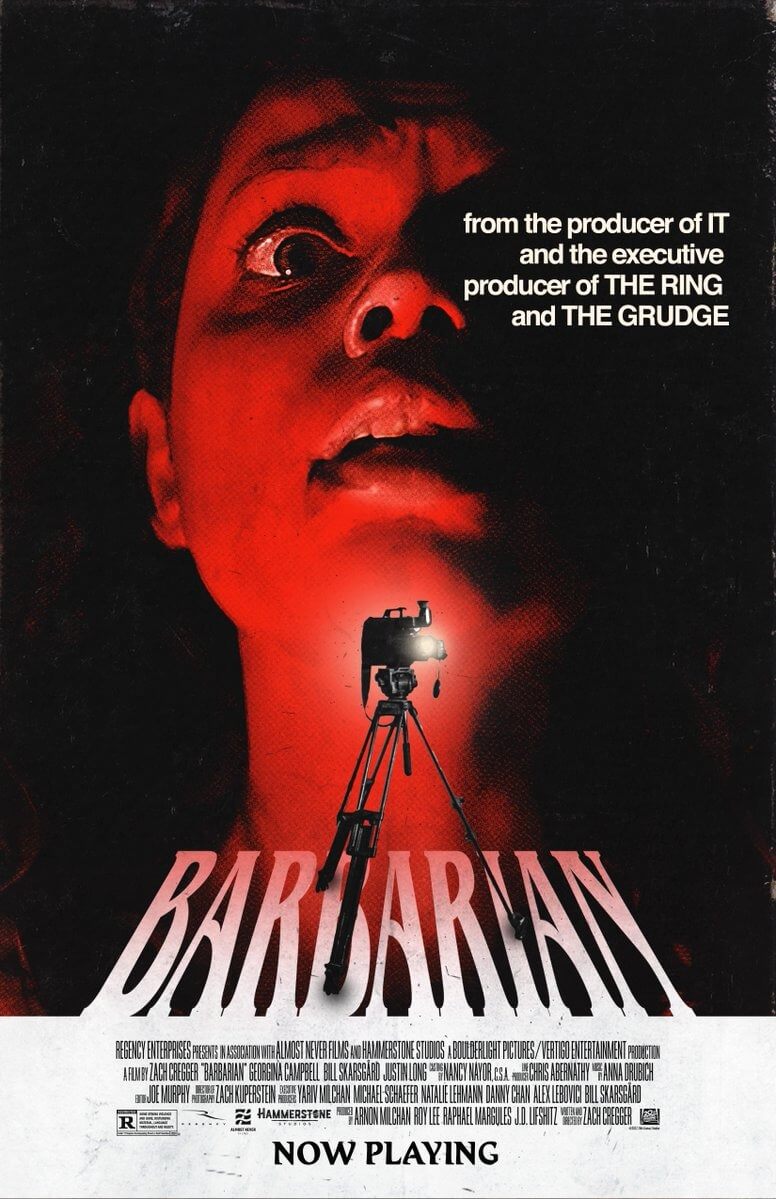
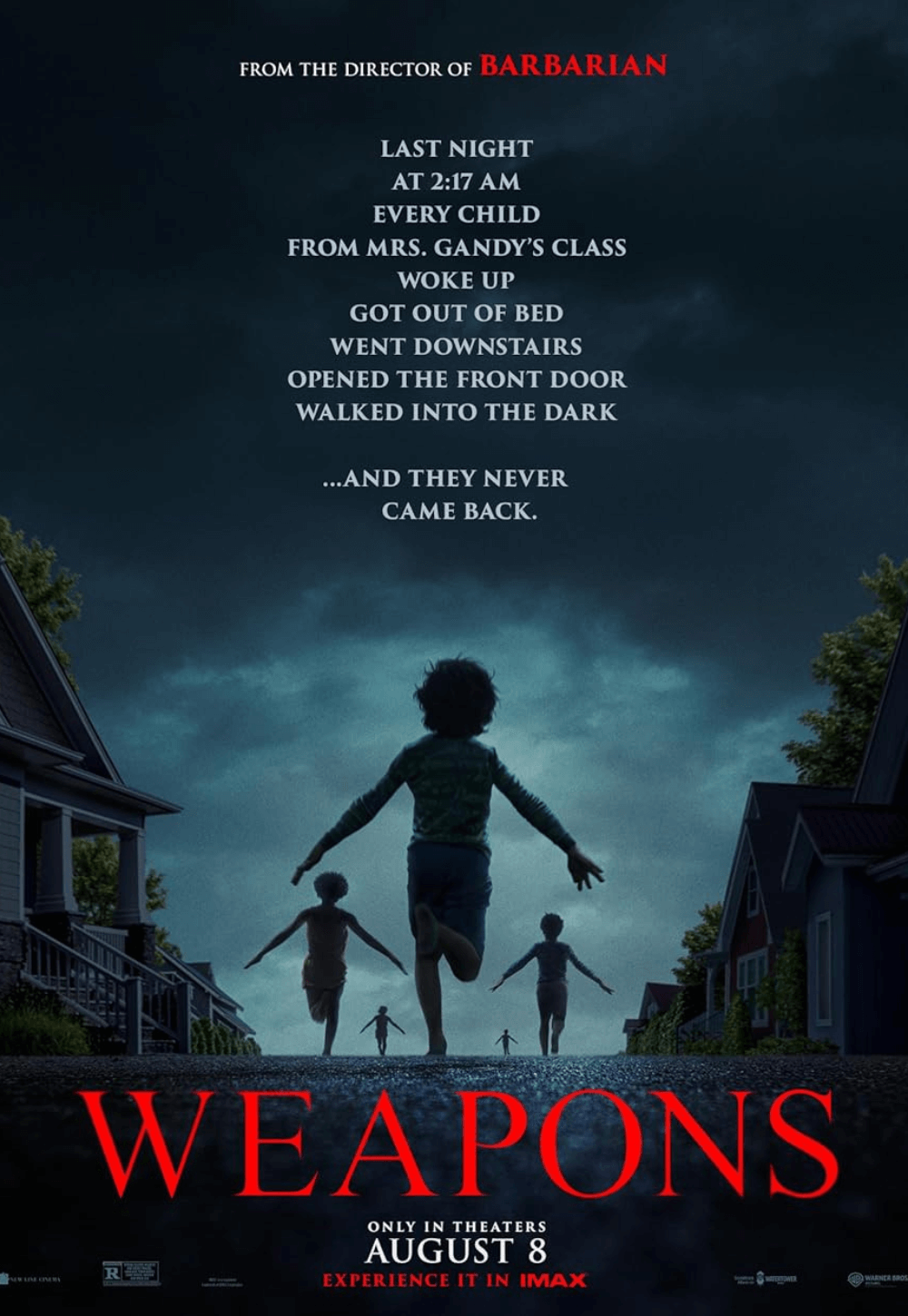
After establishing his horror cred with two impressive, original features, Barbarian (2022) and Weapons (2025), the former Whitest Kids U’ Know comedy troupe member takes on the gaming franchise that just won’t die. Once zombie legend George A. Romero’s proposed version fell through in the late 1990s, director Paul W.S. Anderson took over and released the first adaptation, a watchable flick released in 2002. Anderson produced the next five astonishingly bad but financially successful sequels—each starring Milla Jovovich, with the last three helmed again by Anderson. That particular strain of mind-numbing action nonsense concluded in 2017. British B-movie ace Johannes Roberts took over in 2021, delivering the reboot Resident Evil: Welcome to Raccoon City, which, compared to the earlier ones, seemed not so bad. Still, its profits fell short of what Constantin Film’s producers expected. Next came Netflix’s forgettable TV series from 2022. And the less said about the animated movies, the better. Then, the producers planned yet another reboot.
Enter Cregger, who agreed to direct his first franchise picture with his highest budget yet ($80 million), and probably his biggest payday too. He earned it, after spending $38 million on Weapons, which went on to net $270 million and an Oscar for Amy Madigan’s memorably creepy Aunt Gladys. Doubtless, making two commercial and critical hits from original ideas earned him some creative freedom from Resident Evil’s producers, who don’t seem to have insisted on stifling fealty to the brand. Fans won’t see characters such as Leon Kennedy, Chris and Claire Redfield, Jill Valentine, or Albert Wesker. But Cregger’s screenplay, co-written with Shay Hatten, captures the high-tension strain of the early games, where a lone character on assignment goes searching for something only to see the unthinkable moving in the shadows. Even better, he imbues this mood with his own brand of suspense, humor, and situational immersion that, much like the tone in his previous films, unfolds with an engrossing and exhausting degree of unease.
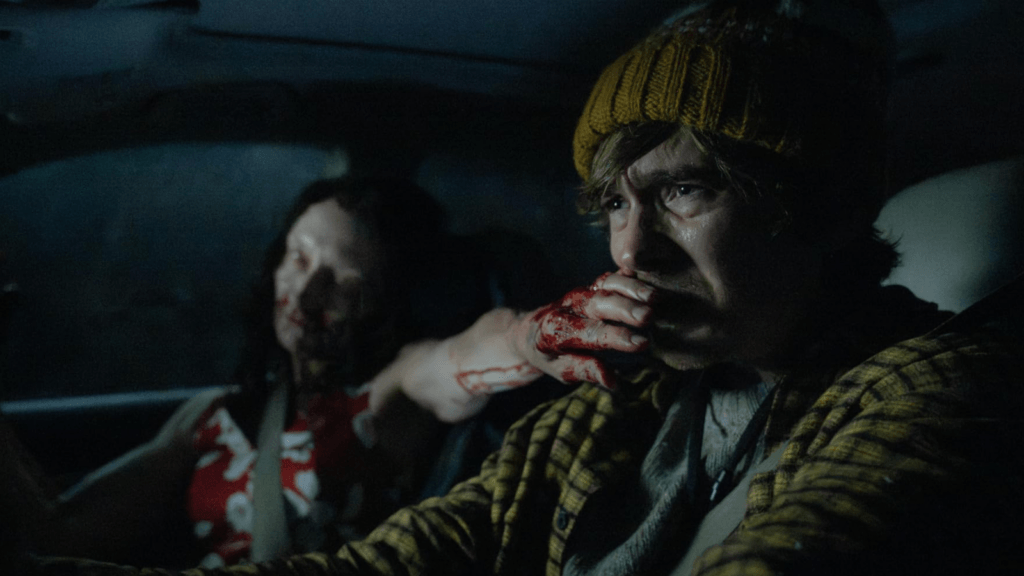
The film follows Bryan (Austin Abrams), a medical courier who transports donated organs between hospitals. And it trails him, with cinematographer Dariusz Wolski’s Steadicam maneuvers fluidly tracking Bryan’s initial movement through a busy hospital to make a delivery. It sticks with him for the remaining 90 minutes, an immersive technique that bonds us to the character visually and emotionally while also supplying the cinematic equivalent of a third-person game. This isn’t to suggest that Resident Evil ever tries to replicate the gaming experience, like when Doom (2005) went into an absurd first-person shooter mode. But the camera almost always stays with Bryan, and if he’s not onscreen, the scene is presented from his subjectivity. We’re along with him for the ride, which takes him on a late-night journey up a mountain during a blizzard to Raccoon City, where he’s supposed to deliver a time-sensitive medical parcel, its contents unknown.
Despite the double pay for the last-minute job, it’s inconvenient for Bryan, whose girlfriend is pregnant and wants his input on whether she should keep the baby. After losing his cell reception with her from the storm, he hits a woman with his car on the icy road. This is the first of several jolts he endures, and Abrams plays them with an underlying shock that emerges in his character’s amusing disbelief about the reality of his situation. Much like those scenes in Barbarian where a character encounters a succession of problems, each one building toward a horrifying reveal, Cregger immerses the viewer in Bryan’s situation. The pattern has a maddening, late-night surreality that recalls Martin Scorsese’s After Hours (1985) or Josh and Benny Safdie’s Uncut Gems (2019). Although his overriding mission remains the delivery, the film is structured around a series of small obstacles, each of which seems all-consuming in the moment. Bryan navigates getting pulled over, leaping over an electrified fence, finding shotgun shells, and evading the car accident victim, who soon becomes a feral zombie. All the while, the music by Ryan and Hays Holladay, who composed the score for Weapons as well, is a steady synth sound behind the action, at times recalling John Carpenter and Alan Howarth’s iconic scores—but not so much that it sounds like pure homage, as the music in Adam Wingard’s Onslaught did.
The practical problems Bryan must solve never go away, and that’s part of what’s so engrossing about Resident Evil. He’s not Jovovich’s unstoppable badass Alice, who can somehow survive hordes of monsters while never smudging her L’Oréal-perfect makeup. Instead, Bryan is thwarted by simple realities. In another movie, the hero would effortlessly drive a truck through a padlocked fence and make a smooth and victorious getaway. Here, the padlock holds, leaving the truck ruined and the fence intact, while Bryan is defeated and forced to proceed on foot. Everything goes wrong for Bryan, and Cregger seems to delight in tormenting this likable, at times slapstick character, who, even amid the horrifying sight of a tentacle-faced dog, manages to process each new impediment with a believable amount of terror and levity. Some part of him remains in denial about what he sees, telling himself “I didn’t see that” after two dead bodies merge into a floppy, rolling mass of Cronenbergian appendages that follow him for the film’s duration.
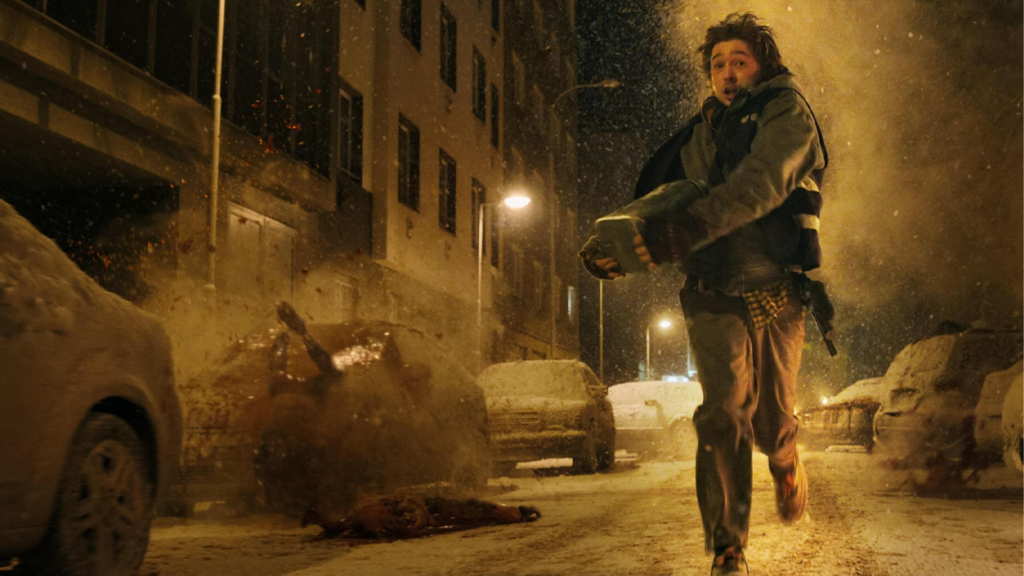
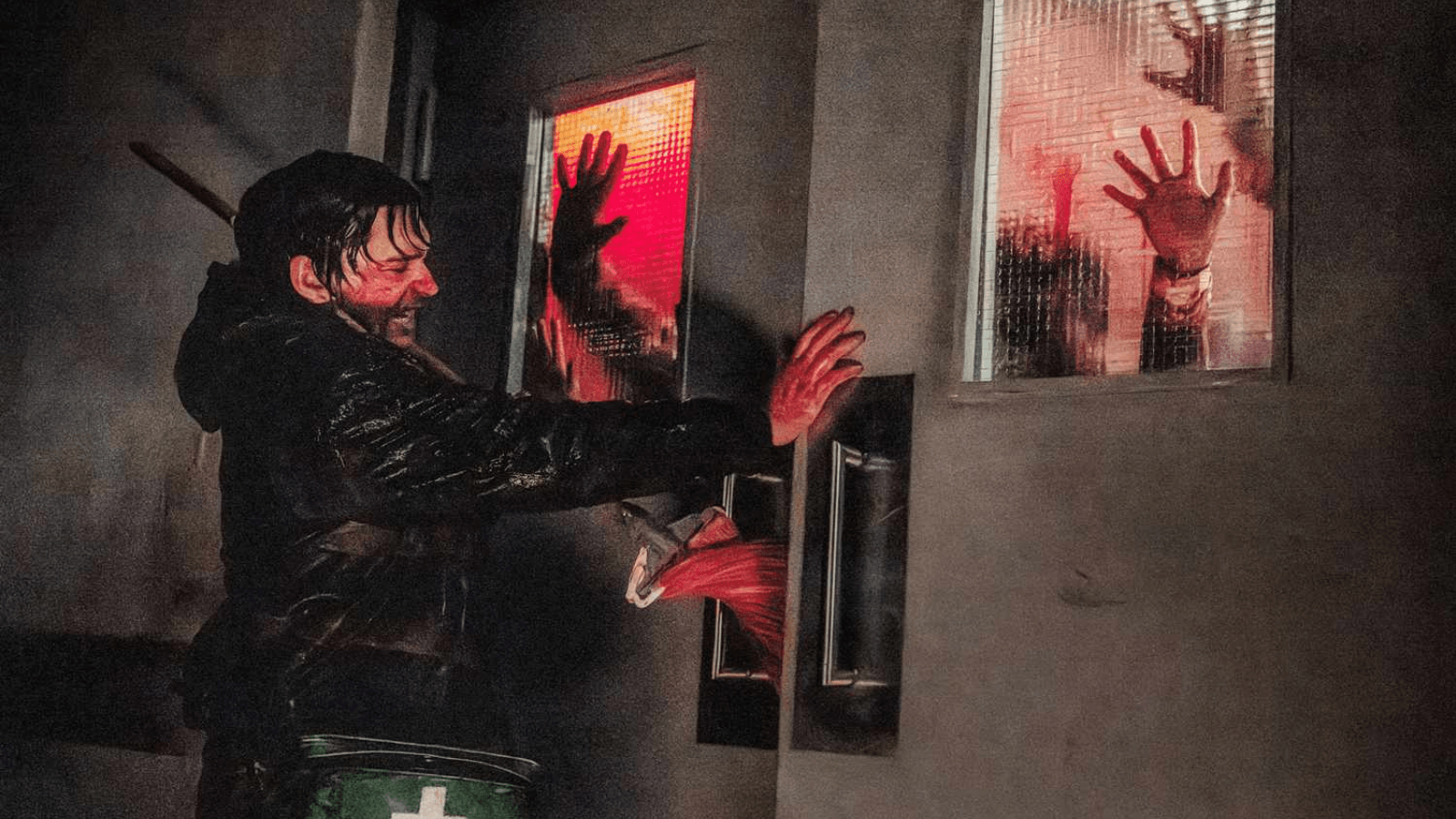
Bryan’s long journey to the devastated Raccoon City takes him through dark tunnels and sewers inhabited by fucked-up creatures that have mutated in all manner of disturbing ways. Cregger’s imaginative abominations go beyond mere zombies, extending to unseen things that use the detached lower half of a body like a lure. Some of them belch from rat-infested indigestion; others vomit acid. Exceptional VFX throughout make those gobs of nasty gore look convincing, and even when they don’t, the filmmaking and storytelling are so assured that it hardly matters. Later, Bryan passes through the most disgusting maternity ward ever. However gross Resident Evil gets—and it gets very, very gross—Cregger balances the yuck with guffaws, much like in Barbarian, underlining how comedy and horror often operate on the same timing, with a setup and a punchline. Among the funniest threads is Bryan figuring out how to use a gun. He learned everything he knows about guns from video games. But reality is something else, and Bryan proves hilariously inept at hitting his targets.
With Bryan central to the story, other minor characters come and go, but Cregger stays with him. Once Bryan discovers what he’s carrying from an Umbrella Corporation employee (Paul Walter Hauser), he finds out the package needs to arrive on the top floor of Raccoon City’s hospital, where he becomes a shoeless, hapless variant of John McClane. There, the exhilarating, breathless finale recalls the opening Shanghai sequence from Indiana Jones and the Temple of Doom (1984), where our hero tries to find a kicked-around antidote amid chaos. Abrams, whose role in Weapons was among the most memorable in that ensemble, proves charismatic and sympathetic in his doomed role, almost conjuring tears at one point and inspiring a burst of joy with a late-film declaration (“Yeah! Video games!”). From moment one, Cregger treats Bryan like Sam Raimi treats Bruce Campbell’s iconic hero Ash from the Evil Dead franchise. Bryan is the victim of his writer-director—a practical joker with an apocalyptic sense of humor.
If there’s any social significance to Resident Evil, it’s a vague critique of careless government-funded laboratory conditions that result in widespread disasters. But mostly, Cregger has delivered a wildly entertaining ride and easily the best game-to-film adaptation to date. That’s not a high bar, of course, given the countless inane features based on Super Mario Bros., Sonic the Hedgehog, and Mortal Kombat games. If Resident Evil is somewhat overfamiliar after its many onscreen iterations, the writer-director reanimates the material, making what can only be called “Zach Cregger’s Resident Evil” with a procession of laughs and gasps. With his third horror feature, Cregger shows that even a video game can be made into an absorbing film, guiding his audience through a procession of frightening situations with depraved glee. It’s viscerally charged, dementedly playful, masterfully orchestrated, and a whole lot of fun.
Thank You for Supporting Independent Film Criticism
If the work on DFR has added something meaningful to your love of movies, please consider supporting it.
Here are a few ways to show your support: make a one-time donation, join DFR’s Patreon for access to exclusive writing, or show your support in other ways.
Your contribution helps keep this site running independently. However you choose to support the site, please know that it’s appreciated.
Thank you for reading, and for making this work possible.
Brian Eggert | Critic, Founder
Deep Focus Review