MSPIFF 2026 – Dispatch 1
By Brian Eggert | April 10, 2026
The films below were screened at the 45th Minneapolis St. Paul International Film Festival (MSPIFF45), which runs from April 8-19. Check here for the full lineup and check back for additional dispatches and full-length reviews of MSPIFF releases.
Erupcja
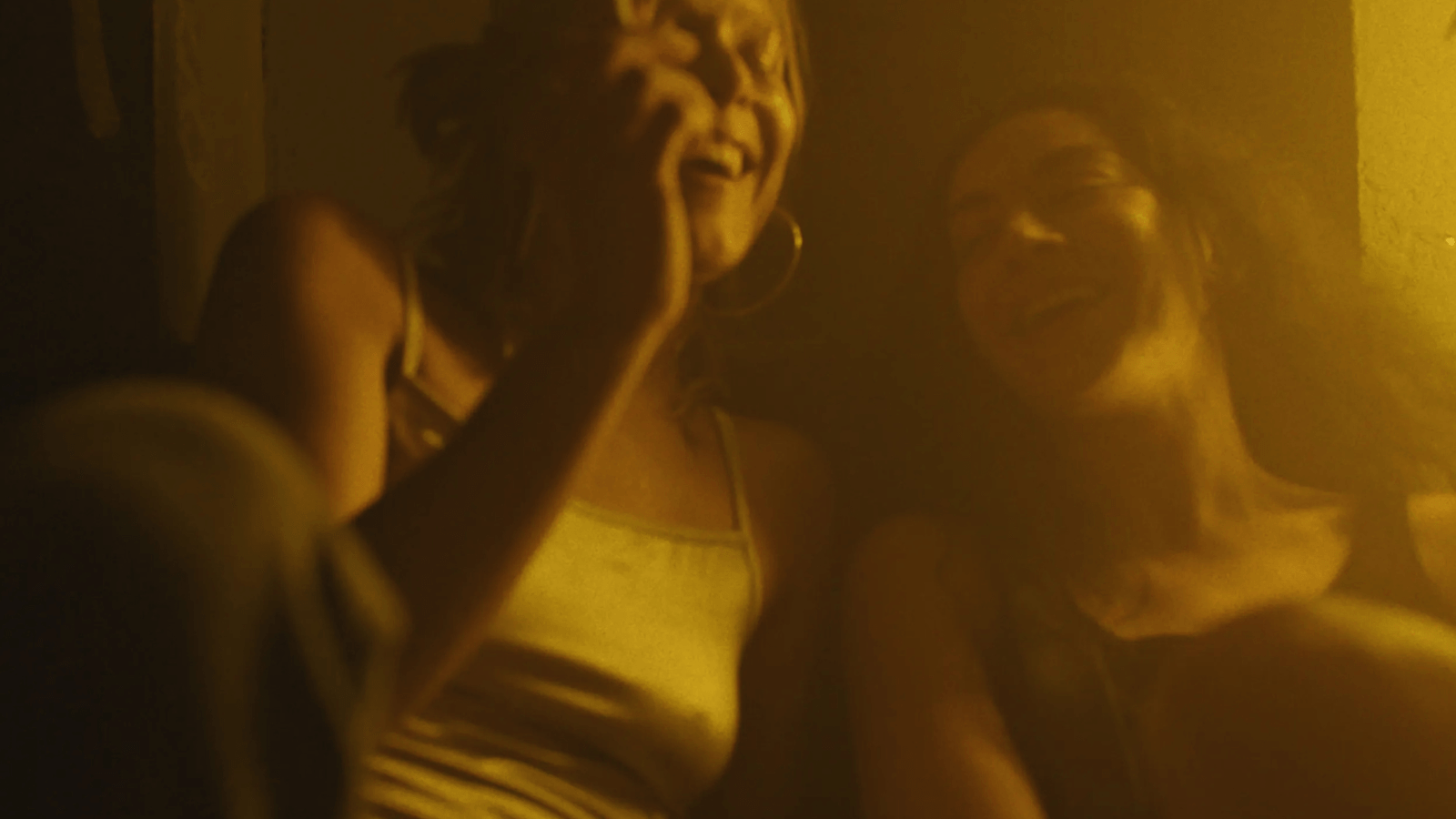
With its Warsaw setting, French New Wave-inspired aesthetic, and techno-pulse reminiscent of a Danny Boyle film, Erupcja (Eruption) plays like a modern arthouse pastiche from Eastern Europe. But it was made by Pete Ohs, an Ohio-born American filmmaker known for music videos and a few features. Although his past work (such as Jethica, 2023) has felt slight, Ohs demonstrates command of a particular form that relies on location shooting, unpolished performances, and a minimal number of dramatic scenes. It’s a manufactured style that recalls the early work of Jean-Luc Godard and François Truffaut, as well as American independents from the 1990s. Despite being little more than an effective imitation of established techniques, it will probably receive more attention than it might have had Charli XCX not starred.
Accentuated with Jacek Zubiel’s expository, Polish-language narration throughout, Erupcja follows a British woman, Bethany (Charli XCX), who travels with her boyfriend Rob (Will Madden) for a romantic getaway. Rob plans to propose, and she knows it. But Bethany has chosen Warsaw for their vacation—perhaps unconsciously, perhaps not—because she spent some time there years ago with her former lover, Nel (Lena Góra), a flower shop owner. And as we soon learn, Bethany and Nel have a strange relationship rooted in serendipity and coincidence.
Rob is nice enough, albeit a clueless, clingy sort. He has no idea that his would-be fiancée isn’t interested in the elaborate sightseeing and restaurant itinerary he has planned. She’s driven by spontaneity, and after a year of living together, you would think he’d know that. Nel has a version of Rob in Maja (Maja Michnacka), a friend who shows up with pastries just as Nel sits on a step, smoking a cigarette and thinking about pastries. Nel also has Ula (Agata Trzebuchowska), who has been hurt by Nel’s selfishness in the past. But none of these people have the same primal connection as Bethany and Nel do. Each time they meet, a volcano erupts somewhere in the world. They think the universe is trying to tell them something. But as someone points out to them: “Volcanoes kill people.”
Breaking the “show, don’t tell” rule, Ohs, who wrote the film with his cast, conveys most of this information via expository narration. The characters stroll through various Warsaw locations, so the film feels like a travelogue at times, with the narrator remarking on their interior lives and backstories. Onscreen, their behavior proves mostly surface-level. This adds a layer of grounded poetry, along with the solid-color transitional screens that recall the output of mid-twentieth-century originals. Góra gives a convincing performance, outclassing her wooden costars, Madden and Charli XCX. Still, at 72 minutes, it’s barely a feature. That also means Erupcja never lingers beyond the familiar novelty of its execution, pleasant though it may be. Rating: 3 out of 4 Stars
Eagles of the Republic
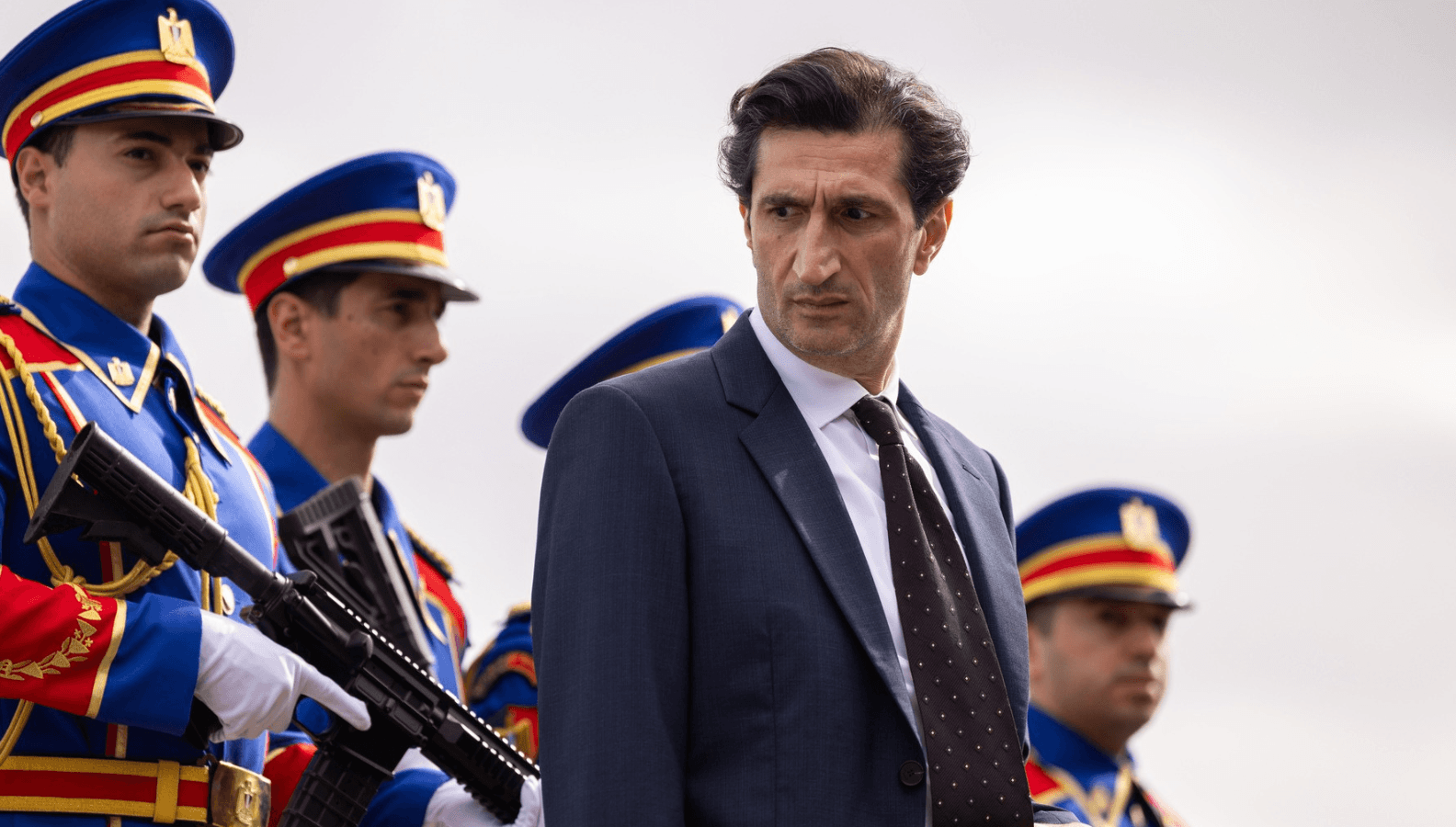
Writer-director Tarik Saleh has made several films about political corruption and intrigue in Egypt, and his latest meets at the intersection of entertainment and politics. Eagles of the Republic tells the story of superstar actor George Fahmy, wonderfully played by Saleh regular Fares Fares. Widely known as the “Pharaoh of the Screen,” Fahmy lives an indulgent life, despite his many personal failings. Separated from his wife, Fahmy struggles to maintain a healthy relationship with his teenage son, Ramy (Suhaib Nashwan), and his young mistress, Donya (Lyna Khoudri). And this only accentuates his perceived licentiousness to the devout Muslim regime running the country. So, when he’s asked to play President Abdel Fattah el-Sisi in a state-backed movie, Fahmy quickly realizes that his fame means little to a ruthless political party.
Although Fahmy’s celebrity has provided him with relative freedom in the past, the state begins an extremist crackdown on the entertainment industry. The censors demand that he reshoot the ending of his latest film to align with Muslim values. Then he meets Dr. Mansour Rula (Amr Waked), an official from El-Sisi’s office, who coerces him into playing the president in a picture about his military career. Fahmy initially balks at the idea, stating that he’s too tall and looks nothing like the real thing. That hardly matters to his agent, who warns him, “Principles are as bad as AIDS.” Of course, Fahmy only has principles concerning his work; in all other matters, he avoids anything resembling good judgment—such as bedding the girlfriend (Cherien Dabis) of Egypt’s minister of defense (Tamim Heikal), despite knowing that the government is watching his every move.
There’s a sly, dark humor running beneath the film, which isn’t above making a Viagra joke or using the film-within-the-film for laughs. Whatever chuckles Saleh sprinkles through the first half become increasingly intense and deadly as the pressure intensifies, with religious leaders pressuring Fahmy to get back together with his wife, noting that divorce is forbidden. When the state makes Fahmy their poster boy, he digs himself in deeper when he asks for favors, such as helping to free a neighbor boy who was arrested for his politics or asking them to remove an actress friend from the state blacklist. And then there’s the chilling moment when they present him with a contract to sign, including a suicide note in his handwriting that he’s also to sign, just in case he should disappear. Sure enough, people close to him begin to vanish. Somehow, Fahmy still sees himself as impervious.
Saleh confronts the idea that art can be apolitical, as some filmmakers have recently argued. But such claims are either naive or deceptive. Although cinema provides an escape, there’s always a political underpinning, even if it’s unconscious. Ideology is inescapable and inherently political, and every film contains a worldview of some kind. Eagles of the Republic is a handsomely made production in which Saleh demonstrates his knack for suspense and humor—particularly in the behind-the-scenes filmmaking sequences. And while the film never quite reaches the heights of the paranoid political thrillers of the 1960s and 1970s, Saleh leaves plenty of room for the viewer to question how films are shaped by ideology. This message drives the film and feels achingly relevant in the US right now. Rating: 3 out of 4 Stars
Mārama
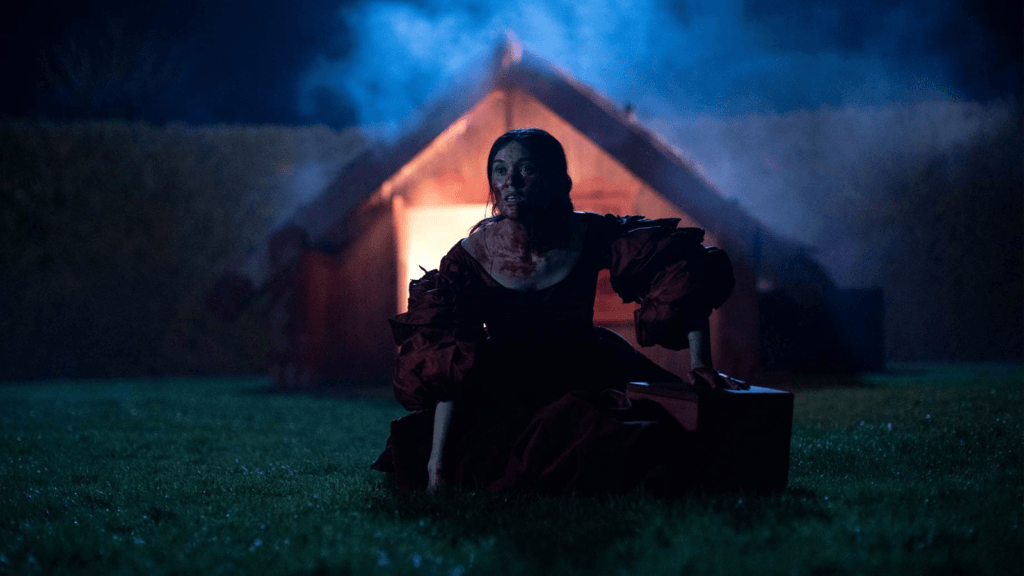
Taratoa Stappard makes his feature directorial debut with a Gothic horror tale set in the world of nineteenth-century colonizers. Ariana Osborne plays a Māori woman named Mary, who travels over two months by sea from New Zealand to Yorkshire, England, after receiving a letter from a man claiming to have information on her lineage. When she arrives, she learns the letter’s writer has died from smallpox. His brother, Nathaniel (Toby Stephens), offers her a job in the meantime. He claims to “know” her people and invites her to stay and be a governess to his granddaughter, Anne (Evelyn Towersey), a part-Māori girl. But soon Mary begins to understand the degree to which Nathaniel has manipulated the situation, and how he really feels toward her people. It’s a stirring tale about cultural appropriation and, eventually, social justice through revenge.
Stappard imbues the brooding, slow-burning premise with the usual trappings of Gothic horror. Cinematographer Gin Loane creates familiar yet bold imagery, such as the moon peering out from behind gray tufts of cloud above Nathaniel’s dark manor. Many of the interiors adopt a rich color scheme and chiaroscuro lighting straight out of a Caravaggio painting. The intense score by Karl Sölve Steven and Rob Thorne alternates between reverberating wind instruments and piercing strings, mimicking the familiar sounds of movies such as Hereditary (2017) and Longlegs (2024). The overall aesthetic recalls films from Rebecca (1940) to Crimson Peak (2015), with Stappard reflecting his story’s inner conflict with stylistic contrasts—the pensive tone accompanied by bold flourishes.
Mārama is the sort of movie where the protagonist looks into the mirror and her reflection screams back at her. Upon Mary’s arrival, she’s stricken with nightmares and mental projections. When she touches someone’s hand, she jolts from a sudden vision, like Christopher Walken in The Dead Zone (1983). She sees momentary images of her sister and bloody body parts. More disturbing is how Nathaniel has put a ritual Māori meeting house (wharenui) in his garden and arranges a grotesque costume party that seems to celebrate the colonization of New Zealand’s indigenous people. Osborne gives a passionate, twisting-inside performance as Mary; however, her character lacks much depth beyond the obvious indignation.
At 82 minutes without credits, Mārama doesn’t take the requisite time to build the protagonist into a three-dimensional character. Stappard seems more interested in—or at least gives more screentime to—detailing the crimes of colonists than the main character’s uncovering of them. The vile behaviors of Europeans seem to take precedence over Mary’s outrage over how her culture has been conquered, co-opted, and made to look ridiculous. That’s unfortunate for Osborne, who clearly gives an impassioned performance. As it is, Mārama ends just as the movie begins to amp up the drama, leaving the overall picture feeling slight. Regardless, Stappard’s obvious talent behind the camera offers hope that his next project will feature a more intricate script. Rating: 2.5 out of 4 Stars
Thank You for Supporting Independent Film Criticism
If the work on DFR has added something meaningful to your love of movies, please consider supporting it.
Here are a few ways to show your support: make a one-time donation, join DFR’s Patreon for access to exclusive writing, or show your support in other ways.
Your contribution helps keep this site running independently. However you choose to support the site, please know that it’s appreciated.
Thank you for reading, and for making this work possible.
Brian Eggert | Critic, Founder
Deep Focus Review