Normal
By Brian Eggert |
Note: Before it arrives in theaters on April 17, 2026, Normal will play at the 45th Minneapolis St. Paul International Film Festival. For the full lineup of films available between April 8-19, check out the schedule here.
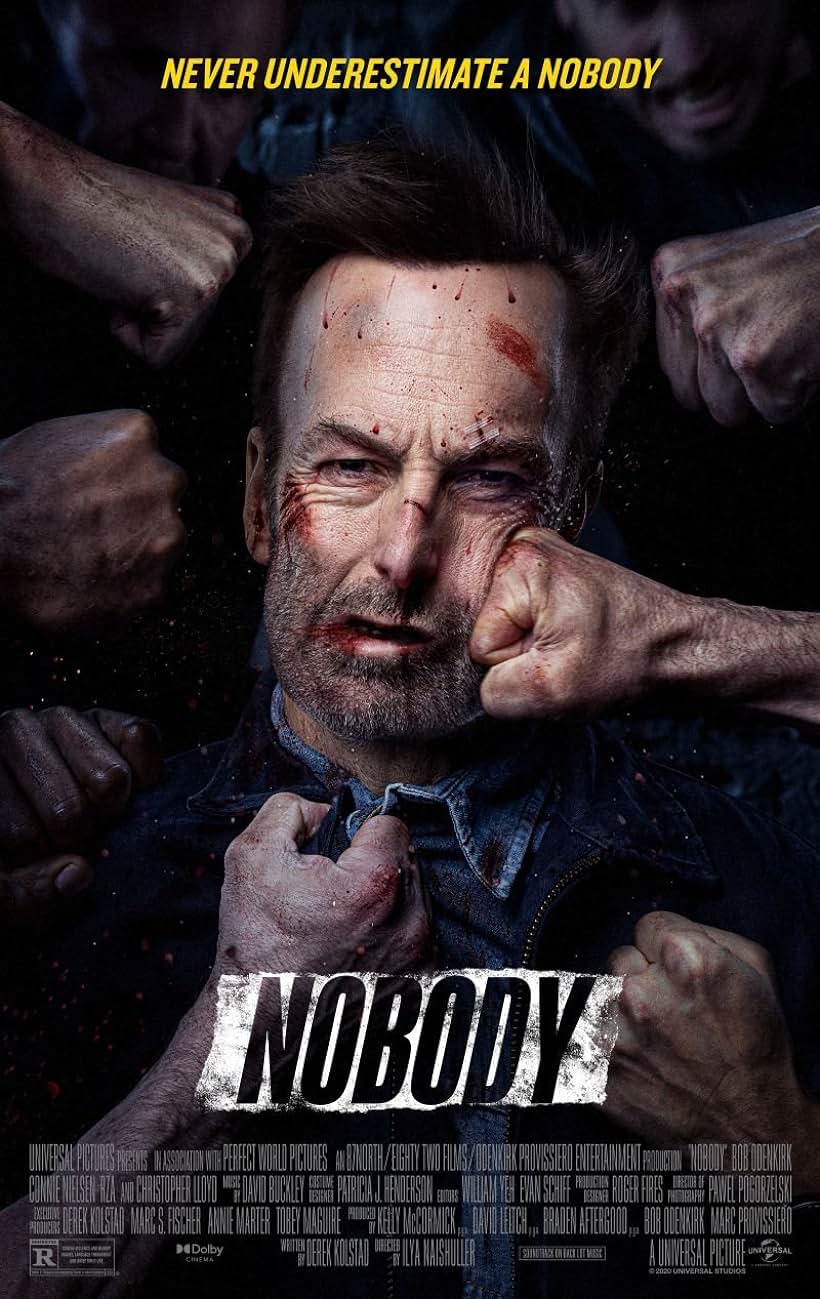
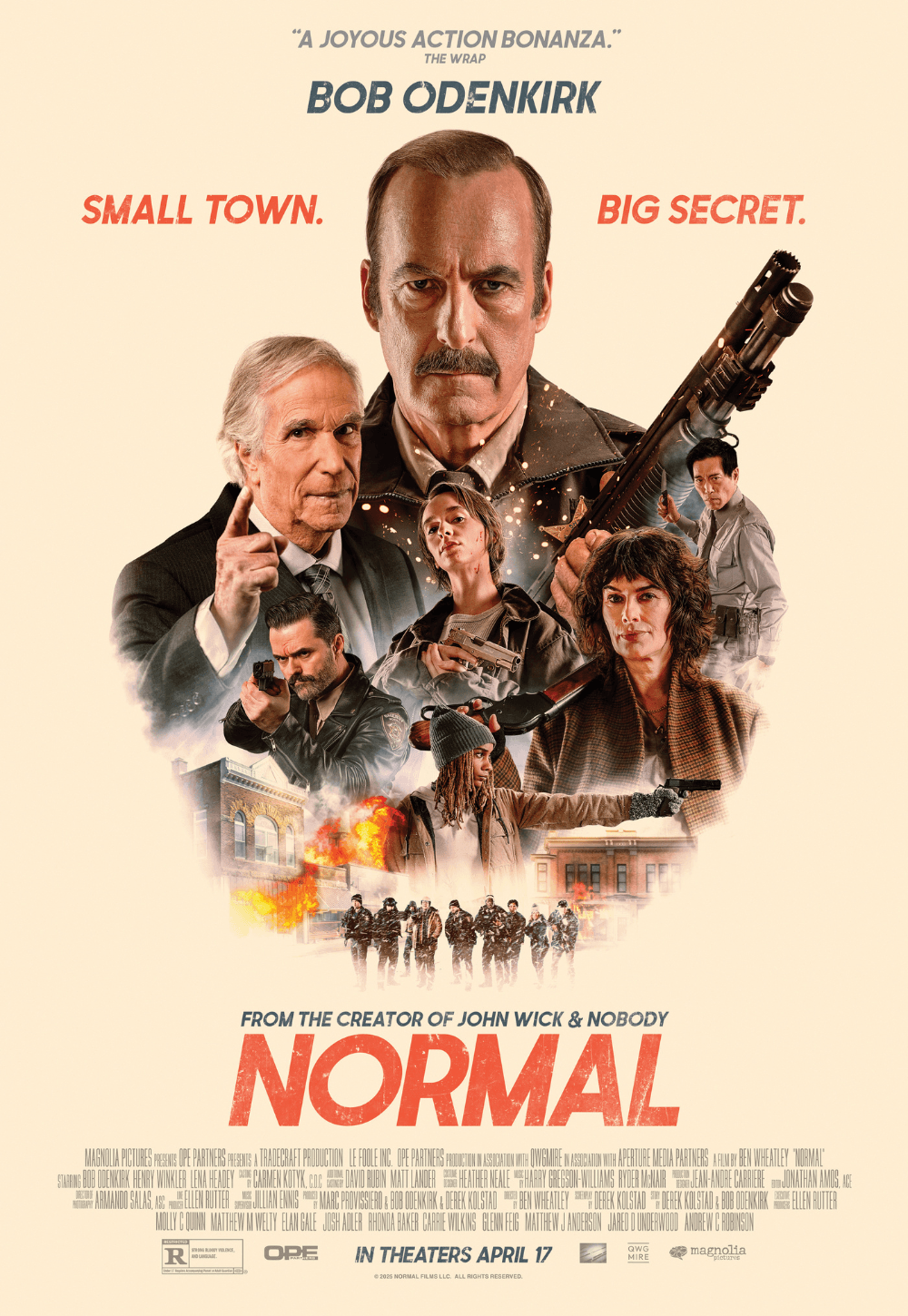
Bob Odenkirk continues his late-career transformation into an action hero with Normal, an idea the Mr. Show (1995-1998) and Better Call Saul (2015-2022) star conceived with John Wick creator Derek Kolstad. After working together on Nobody (2021) and Nobody 2 (2025), Odenkirk and Kolstad explore another seemingly mild-mannered everyman who, when pushed, turns into an unstoppable badass. Unlike his retired-assassin-turned-family-man in the Nobody movies, Odenkirk plays Ulysses, an unexceptional but level-headed interim sheriff who travels to various American towns, filling in when the local sheriff is indisposed. Assigned to the titular small Minnesota town and carrying a head full of regrets, Sheriff Ulysses uncovers a disturbing secret in the snowy burg. What ensues is a shoot-em-up bloodbath with a sharp sense of humor, directed with gleeful yet cohesive energy by Ben Wheatley.
When Sheriff Ulysses drives down Normal’s main drag in the early scenes, the sights reminded me of the many towns and oddities on backroads heading northward from the Twin Cities. Towns like Floodwood, with its large wooden catfish statue, or the giant mosquito sculpture in Effie, where the local greasy spoon has a sign in the window: “Dine in Air Conditioned Comfort.” Another eatery, a few miles away in Deer River, goes by the name Cannibal Junction. I ate there once, but I made sure it was during the day and ordered a chicken sandwich, not a “hamburger.” Many of the towns up there look like they haven’t changed much since the 1950s or earlier, aside from some wear and tear. That’s how Normal looks. Apart from the bank and the Sheriff’s Office, the place is vintage. There’s even an old-fashioned malt shop with a soda jerk in a paper hat behind the counter.
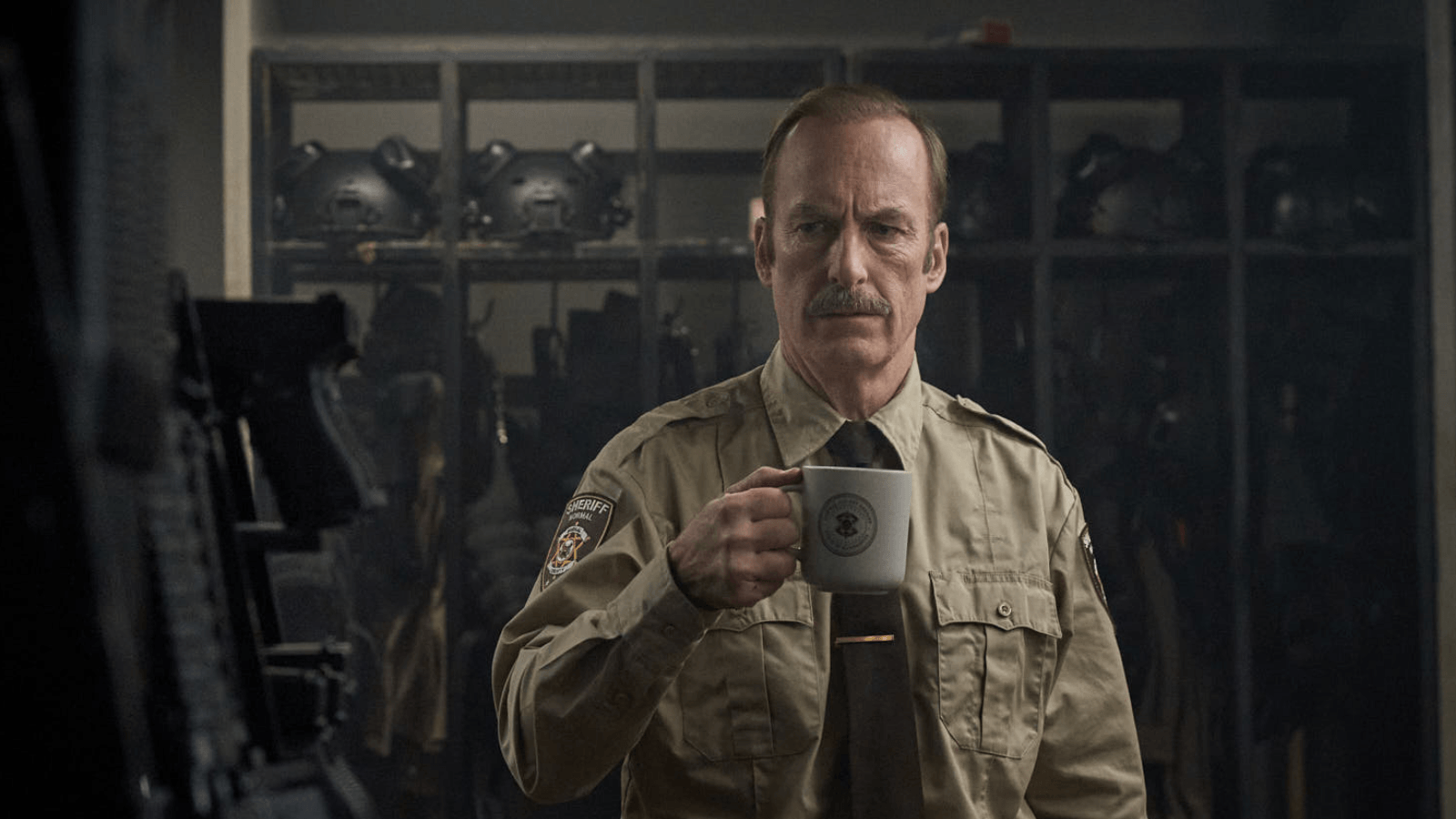
The people of Normal, well, they’re what we call Minnesota Nice. Most people think that refers to our cheery disposition. But when you’re from here, it means that we disguise our real feelings with a smile. The townsfolk in Normal have something else to hide besides their feelings. Sheriff Ulysses raises an eyebrow about the police station’s armory, with its inventory of C4 and assault rifles, and he can’t help but notice how generally well-armed Normal’s residents are. When he learns how the previous sheriff died, the story seems strange but reasonable enough—words that could also describe Mayor Kibner (Henry Winkler). But it’s when he and two deputies respond to a bank robbery, and instead of arresting the robbers, his deputies shoot at him, that Ulysses understands the situation. He’s basically John Wayne in Rio Bravo (1958), defending a few folks from a town teeming with bad guys.
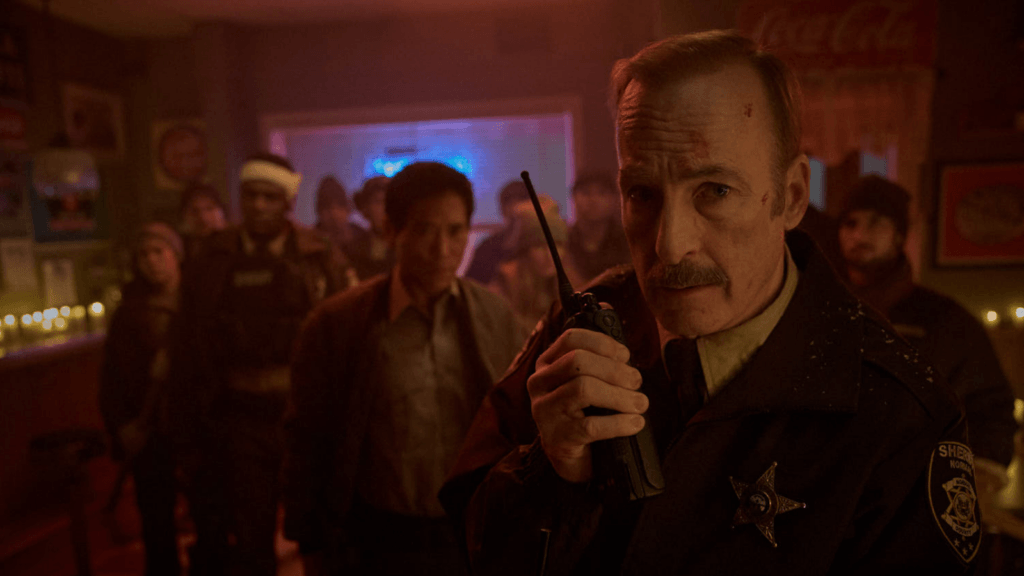
The first scene in Normal reveals that, for one reason or another, the Yakuza have been using the modest town to hide millions in gold and cash in the local bank to support their criminal enterprise. In exchange for keeping their secret and protecting their loot, the Japanese gangsters have rewarded the locals with a prosperous life. And when someone has a crisis of conscience, Mayor Kibner and his gun-toting community take action to preserve their livelihood. Acknowledging that “times are hard,” they’ve all sacrificed their morals for financial prosperity. Somewhere in here is a vague commentary on how, in America, selling your soul is the only way to get rich. When we look at the behaviors of the 1%, it’s difficult to argue.
Anyway, if you’ve seen the Nobody movies, you can expect the same blend of over-the-top violence and deadpan humor. Although it lacks the novelty of the first Nobody, it overcomes the monotony of Nobody 2 with stronger character work. The difference is that Odenkirk isn’t an elite killer this time; he’s the modern version of a Western lawman with the laid-back belief that “calm cleans messy.” Odenkirk is fantastic as Ulysses, who steadily negotiates every situation. He’s supported by a sturdy supporting cast, including Lena Headey’s rugged barkeep and Billy MacLellan’s dopey deputy. Shooting locations in Manitoba stand in for Minnesota, and production designer Jean-André Carrière crafts some amusing interiors that might register as stereotypical Minnesotan, except most of the choices look accurate. Although, some of the snow scenes look quite unconvincing (the production no doubt used fake snow to make the more complex action sequences easier to shoot).
Wheatley’s track record as a genre-hopping director has been uneven. His best work remains in the horror genre, with folkish tales such as Kill List (2011), A Field in England (2013), and In the Earth (2021). His actionized fare, from Free Fire (2015) to Meg 2: The Trench (2023), has been less consistent. However, Normal benefits from Wheatley’s visual clarity and groundedness, with cinematographer Armando Salas and editor Jonathan Amos delivering kinetic action with an unfussy style. Wheatley also spares no gore, with exploding bodies, countless headshots, and other horrific sights to punctuate the shootouts. But the best parts of Normal involve Odenkirk’s first impressions of this Minnesota town, where his affable screen presence gives purpose to the exciting frenzy that ensues. Even if the setup feels like Nobody 3, it’s nonetheless carried out with skill, charm, and thrills that distinguish it.
Thank You for Supporting Independent Film Criticism
If the work on DFR has added something meaningful to your love of movies, please consider supporting it.
Here are a few ways to show your support: make a one-time donation, join DFR’s Patreon for access to exclusive writing, or show your support in other ways.
Your contribution helps keep this site running independently. However you choose to support the site, please know that it’s appreciated.
Thank you for reading, and for making this work possible.
Brian Eggert | Critic, Founder
Deep Focus Review