Reader's Choice
Deathtrap
By Brian Eggert |
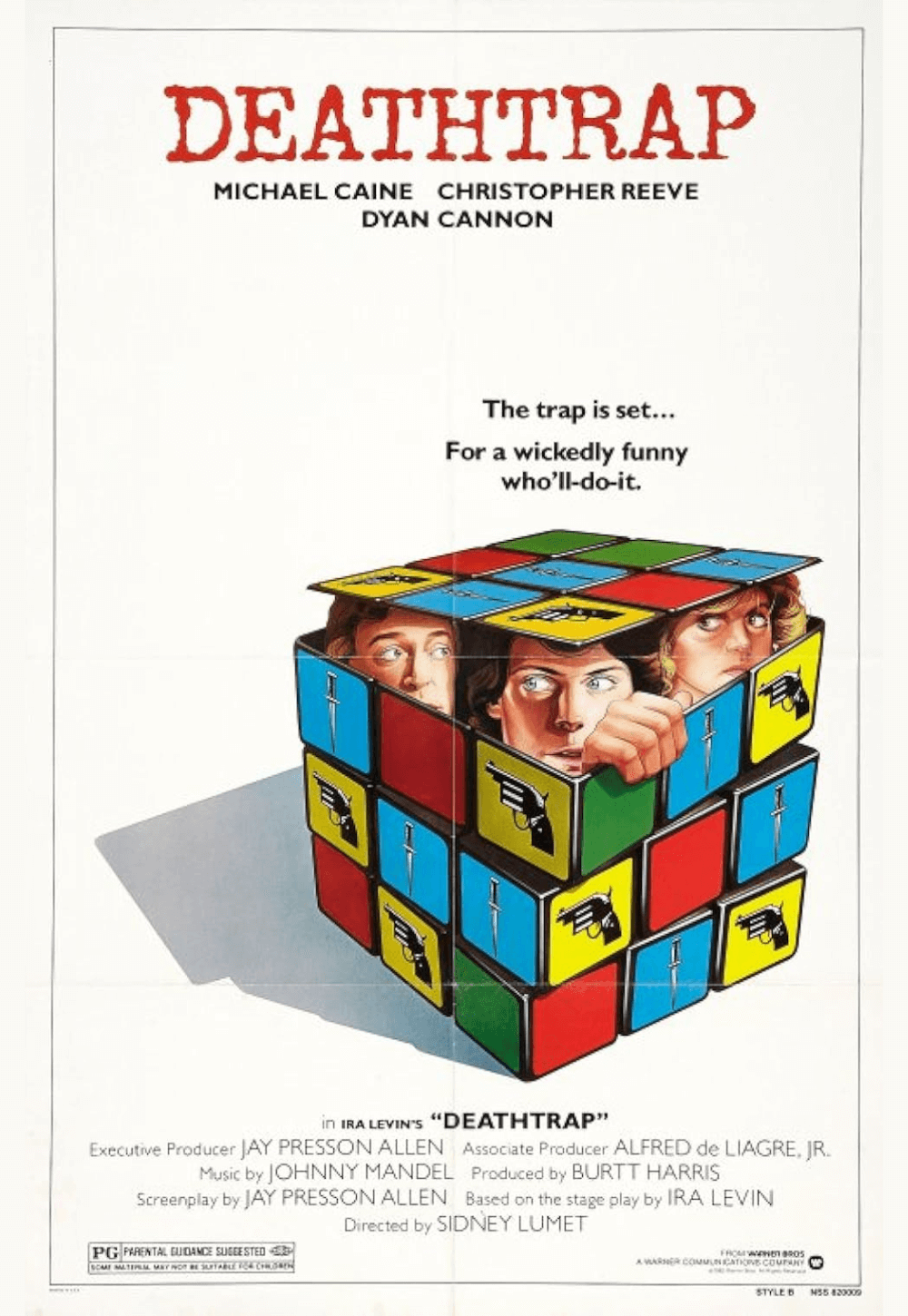
Sidney Lumet’s film Deathtrap plays a cunning game. From one perspective, the 1982 feature redeploys the era’s thriller tropes, offering a twisty cat-and-mouse scenario in which two duplicitous professional and romantic rivals circle each other in a single location, culminating in an inevitable murder or two. From another perspective, Lumet embraces playwright Ira Levin’s postmodern spin on such fare with a subversive undercurrent. In the former case, the film presents its bisexual characters as criminal types capable of murder and backstabbing, reinforcing discriminatory biases and representational norms of the time. However, the latter interpretation grants Deathtrap enough intelligence to recognize those negative stereotypes and blame not the individuals but the social conditions that force them into the closet. Consider the poster: The characters played by Michael Caine, Christopher Reeve, and Dyan Cannon are depicted inside a Rubik’s Cube, with panels marked with guns and knives. They peek out as if society has stashed them there, awaiting the promise of what the poster calls a “who’ll-do-it.” But like most aspects of Deathtrap, the threat is both literal and cleverly metatextual.
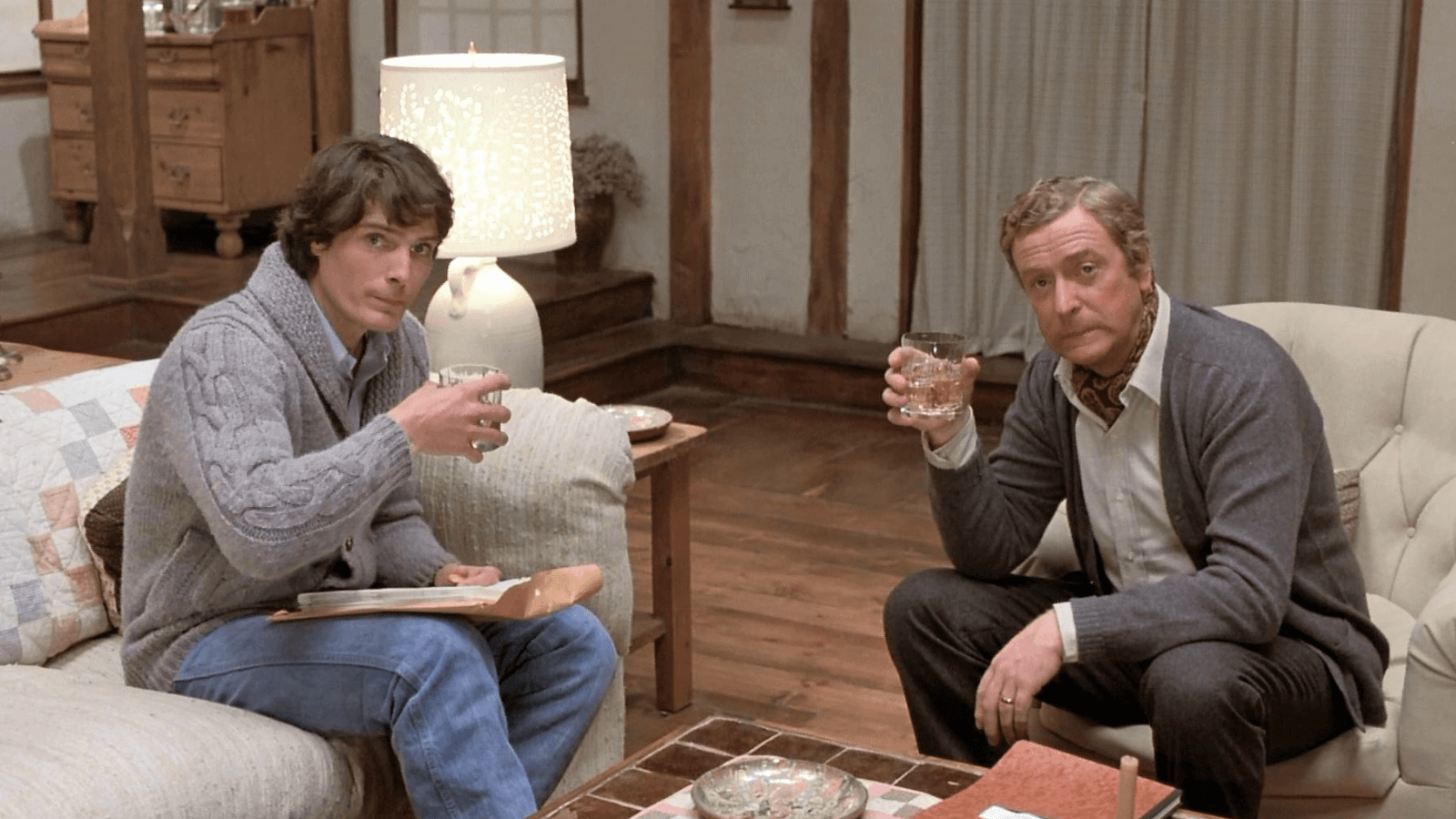
The story follows Sidney Bruhl (Michael Caine), a famous playwright of comic thrillers whose latest production has flopped. Fretting over his financial and creative situation to his nervous wife, Myra (Dyan Cannon), Sidney considers murdering a younger man who attended his writing seminar. Clifford Anderson (Christopher Reeve) has written a “flawless” play called Deathtrap, and Sidney believes it will be a blockbuster. He plans to kill Cliff to steal Deathtrap and pass it off as his own work. Myra, who has anxiety and heart problems, doesn’t think Sidney is serious at first. Soon, she realizes he intends to go through with it and, despite feeling excited by the prospect, proposes that Sidney and Cliff collaborate on the play instead. Nevertheless, Sidney strangles Cliff and, with Myra’s help, buries the body in their vegetable garden. Afterward, Myra is shaken and believes their marriage won’t survive this crime. Just then, Cliff bursts through their bedroom window, beats Sidney, and chases Myra, who dies suddenly of a heart attack. This was, of course, the plan all along—plotted by Sidney and Cliff, who reveal they are secret lovers with a kiss.
After this first-act twist, Lumet’s film unfolds with no end of duplicitous motivations and visiting characters who stir up suspicion and paranoia. While Sidney and Cliff settle into a quiet and secret life—living in Myra’s Dutch-style house in Montauk, complete with a working windmill and cozy wood interiors, lovingly articulated by production designer Tony Walton—they present themselves as employer and assistant. But Cliff, who increasingly reveals himself to be a sociopath, wants to turn their real-life murder story into a hit play. His manuscript for Deathtrap was merely a false prop, but now he wants to write it for real, using Myra’s murder as the inspiration. Sidney refuses and is willing to kill to keep their secrets, using his prop weapons from his plays—a display in his office that no doubt inspired the home of the mystery writer in Rian Johnson’s Knives Out (2019). The tension between them is heightened by Sidney’s lawyer (Henry Jones) and their nosy neighbor, a famous crime-solving psychic named Helga ten Dorp (Irene Worth). Early on, she senses something off about Cliff and predicts the murders. She plays a larger role later.
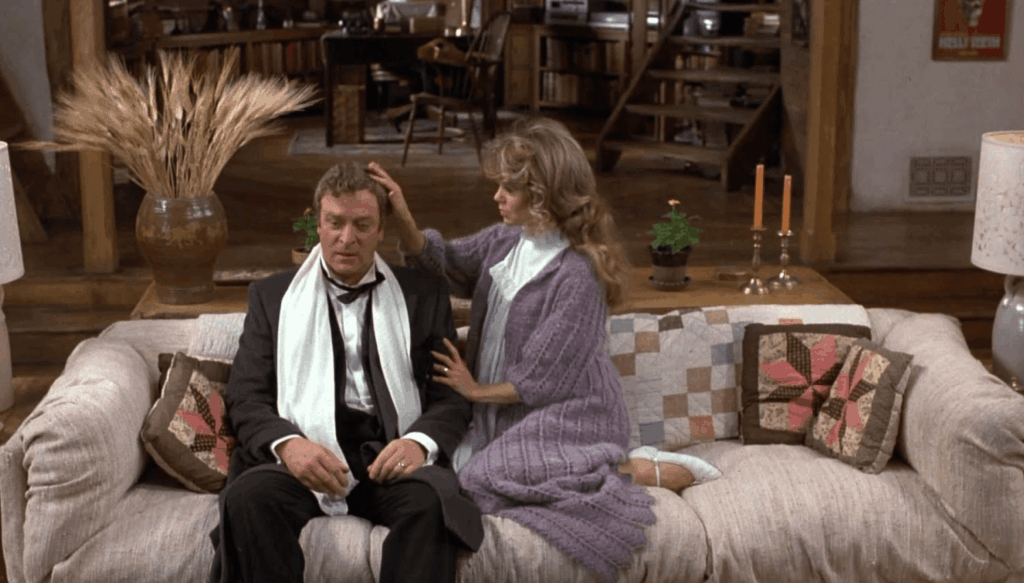
Deathtrap is the kind of movie where half the pleasure is watching the talented cast do wonders with their roles. Every character at once inhabits a cliché and a subversion of that cliché. Take Cannon, whose over-the-top hysterics might be grating if not for her insidious admission that she became excited by the murder. Caine is intense as Sidney, an unstable figure whose rage comes through in several abrasive shouting scenes. However, his unfurled lips are countered by his calm eyes, which convey a calculating mind. Watch the scene when he calls 9-1-1 to report Myra’s death; he delivers the panicked call with genuine tears, but his face returns to icy flatness the moment he hangs up the receiver. And yet Cliff is called the sociopath. Reeve is terrific as Cliff, even if he occasionally veers into stereotypical gay mannerisms. Slender and articulate, the Cornell and Juilliard-trained actor reminds us that he could do much more than his role in Warner Bros.’s Superman franchise. He sports a charming but maniacal grin later in the film, when Sidney realizes his lover is an unrepentant murderer. By contrast, Worth’s kooky character, with her goofy outfits and shoddy German accent, can sometimes feel like a playwright’s device, but she imbues the role with amusing energy.
Levin’s play debuted in 1978 and ran for over 1,800 performances on Broadway, followed by revivals that continue to this day, earning its record as the longest-running play of its kind. Deathtrap has been described as a comic thriller and, in some circles, as a queer thriller, owing to its two central characters, Sidney and Cliff. If it seems like a boilerplate stage thriller on the surface, it gradually unfolds into a self-aware queer text by exploring the line between reality and performative theatricality. For many who identified with the queer community at the time, this marked an apt metaphor for a closeted lifestyle—acting straight through a heteronormative performance while maintaining a secret but real life. Levin’s play contains no kiss, but many stage adaptations added this moment, which harmed its box-office take in the less tolerant 1980s. Lumet’s film received a similar response. In his book Murder Most Queer, Jordan Schildcrout shares an account of attending a 1982 screening of Deathtrap where, just as Caine and Reeve’s characters lock lips, a woman in the audience shouted, “No, Superman, don’t do it!”
Schildcrout argues that Deathtrap emerged from the gay rights movement, following the Stonewall Riots of 1969. He suggests that the play and subsequent film, much like the riots, were a reaction to society’s compartmentalization of queer identities. Together, the riots and content of Levin’s play suggest that to be contained in the closet is a dangerous state, resulting in rebellion, protest, or, in the case of Deathtrap, murder. Schildcrout uses this rationalization to shield Levin’s story from accusations that it reinforces common negative portrayals of queer characters in cinema as deranged, mentally unstable, or villainous. Characters like this appeared in movies such as Alfred Hitchcock’s Rope (1948); Brian De Palma’s Dressed to Kill (1980), also starring Caine; William Friedkin’s Cruising (1980); and Jonathan Demme’s The Silence of the Lambs (1991). But Schildcrout believes that Deathtrap offers “a productive and provocative site for exploring our perceptions of queerness” by “locating the source of the villainy not in the queer characters’ sexual orientation, but in the closet that defines them.”
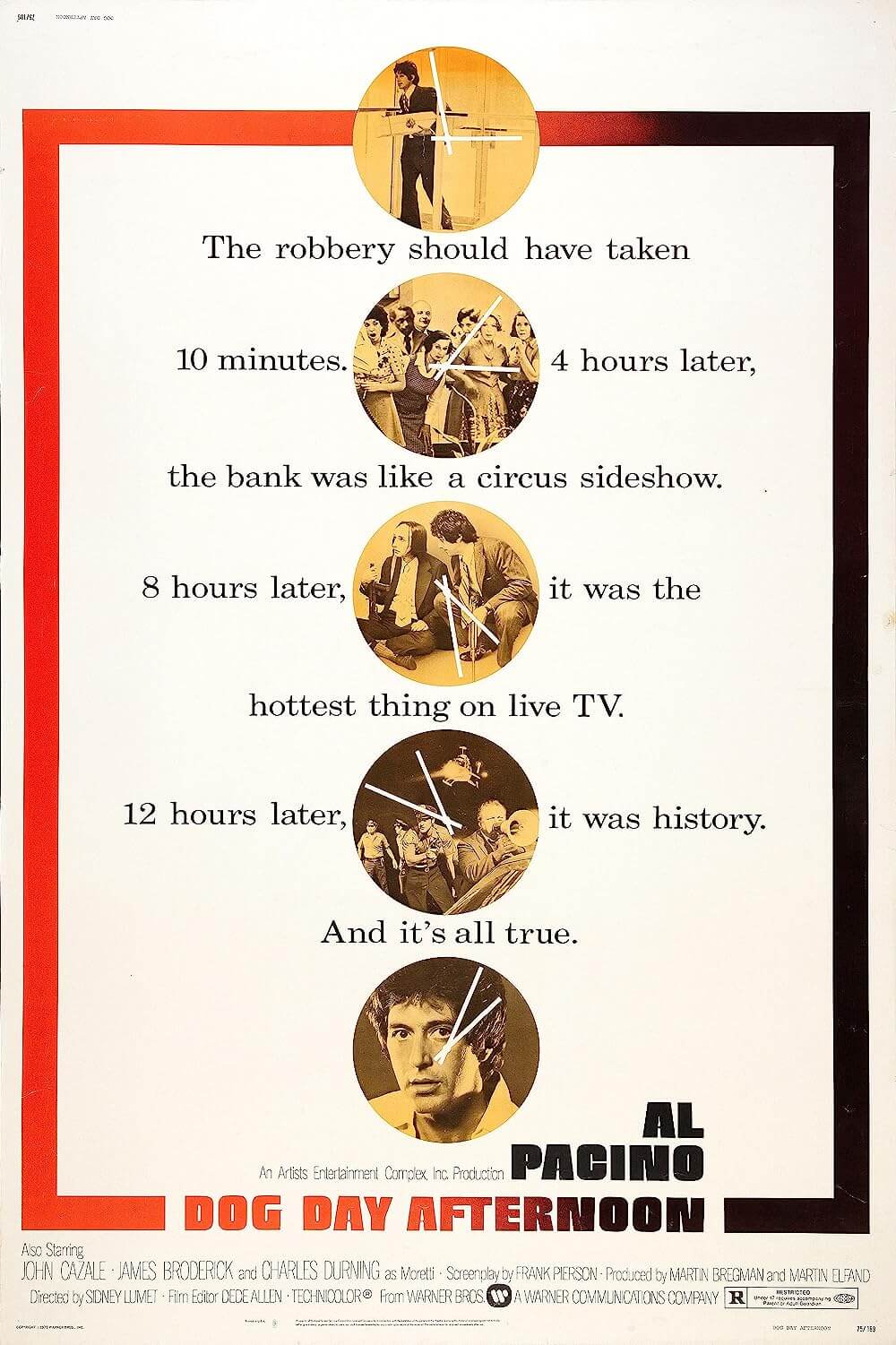
Schildcrout also notes that the characters in Deathtrap were more confronting and threatening to audiences at the time because Sidney and Clifford are not gay—they are bisexual. He describes non-binary sexuality as the most “mistrusted” because of a perceived lack of “loyalty,” and therefore, writers often used bisexual characters to present villainous behavior. A famous example appears in Basic Instinct (1992), where several persons of interest in a murder case—played by Sharon Stone, Jeanne Tripplehorn, and Leilani Sarelle—remain suspects because they shift freely between male and female lovers, defying binary standards and raising eyebrows among the white cisgender policemen investigating the crime. However, Lumet also directed one of the rare mid-twentieth-century examples of an empathetic, accepting portrayal of bisexual characters in Dog Day Afternoon (1975). Although one of the characters is a bank robber played by Al Pacino, he isn’t defined by his bisexuality; he is, first and foremost, a sympathetic human being.
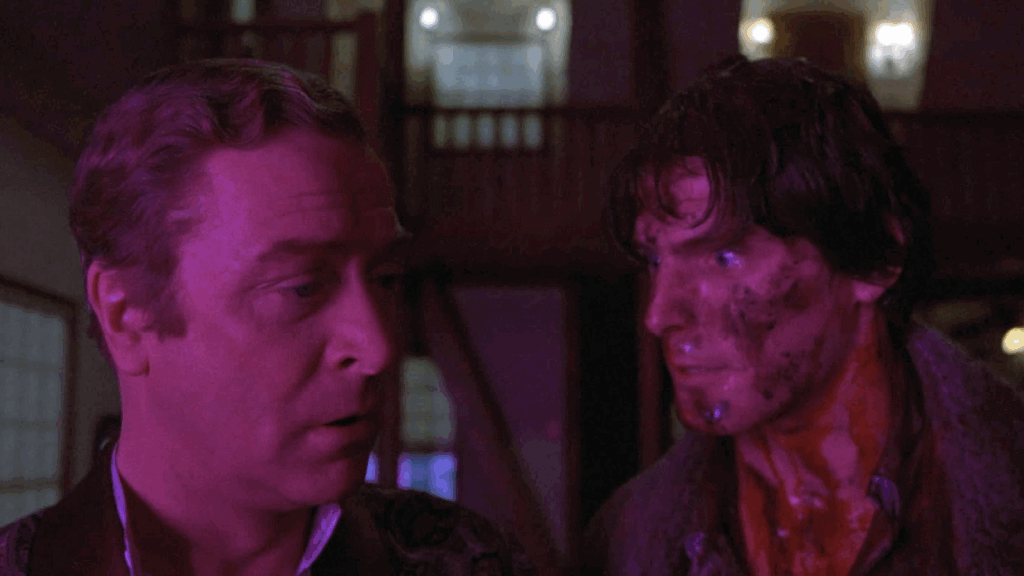
In its twisting narrative, single location, and few speaking roles, Deathtrap often earns comparisons to Sleuth, Anthony Shaffer’s Tony Award-winning play from 1970. Joseph L. Mankiewicz made the 1972 screen version of Sleuth, starring Caine and Laurence Olivier. Shaffer’s play is sometimes read as a queer text, following a famous crime author who invites his wife’s hairdresser-lover over for a game of revenge. However, the subtext hints at an attraction between the two, with their double-crosses and attacks functioning as a kind of foreplay to an unrealized coitus. But Deathtrap’s portrait of queerness has more in common with Kenneth Branagh’s 2007 remake of Sleuth, featuring Caine and Jude Law, which was thoroughly revised by Harold Pinter to include a more textual underpinning of attraction between the two male leads. Also similar to Sleuth, Deathtrap is about two men in conflict over a woman, placing her in danger because of their secret—a familiar theme for Levin. For example, his storylines for Rosemary’s Baby and The Stepford Wives both involve women who are put in danger by their husbands’ respective associations with secret organizations: Satanists in the former and misogynistic robot enthusiasts in the latter.
Deathtrap remains so refreshing because it never overstates its queer-coded themes of societal closeting; they’re at once readable but recessive to the engrossing machinations of a whodunit. Watching the film, Lumet’s crafty aesthetic presentation and excellent direction of his cast draw our attention. Unlike many stage-to-screen adaptations, it doesn’t feel like filmed theater, regardless of the limited locations. There are just enough moments outside—at a Broadway theater, a New York bar, a train station, etc.—to bring some variety to the scenes. But inside the central location of the house, cinematographer Andrzej Bartkowiak, who also shot Prince of the City (1981), The Verdict (1982), and several other films for Lumet, keeps the frame active and ever-moving in long, immersive takes that fluidly shift from close-ups to master shots in the same movement. Johnny Mandel’s fantastic score, accented with a playful harpsichord, also keeps the tone agile and fast-paced.
What remains remarkable about Deathtrap more than 40 years later is how Levin and Lumet were deconstructing the stage thriller genre. When Cliff describes the thunder and lightning in a tense scene as “corny but effective” flourishes added by God, it acknowledges the customary trappings of this material and embraces them with knowing humor. Even after so many years, filmmakers such as Rian Johnson and his Benoit Blanc series continue to follow in Deathtrap’s footsteps by turning the genre inside out. Lumet’s film remains ahead of its time and is deceptively complex in suggesting that the murders might never have happened had society been more accepting of Sidney and Cliff’s relationship. But this queer context is merely a point of thematic interest in what continues to register as an entertaining, sharply directed, and vibrantly acted stage-to-screen adaptation, which both embraces the play’s origins yet also feels cinematic.
(Note: This review was commissioned by Dustin and posted on Patreon on May 17, 2025. Thanks for your suggestion and long-time support!)
Bibliography:
Russo, Vito. The Celluloid Closet: Homosexuality in the Movies. Harper & Row, 1981.
Schildcrout, Jordan. “The Closet Is a Deathtrap: Bisexuality, Duplicity, and the Dangers of the Closet in the Postmodern Thriller.” Theatre Journal, vol. 63, no. 1, 2011, pp. 43–59. JSTOR, http://www.jstor.org/stable/41307504. Accessed 7 May 2025.
—. Murder Most Queer: The Homicidal Homosexual in the American Theater. University of Michigan Press, 2014.
Thank You for Supporting Independent Film Criticism
If the work on DFR has added something meaningful to your love of movies, please consider supporting it.
Here are a few ways to show your support: make a one-time donation, join DFR’s Patreon for access to exclusive writing, or show your support in other ways.
Your contribution helps keep this site running independently. However you choose to support the site, please know that it’s appreciated.
Thank you for reading, and for making this work possible.
Brian Eggert | Critic, Founder
Deep Focus Review