Silent Night, Deadly Night
By Brian Eggert |
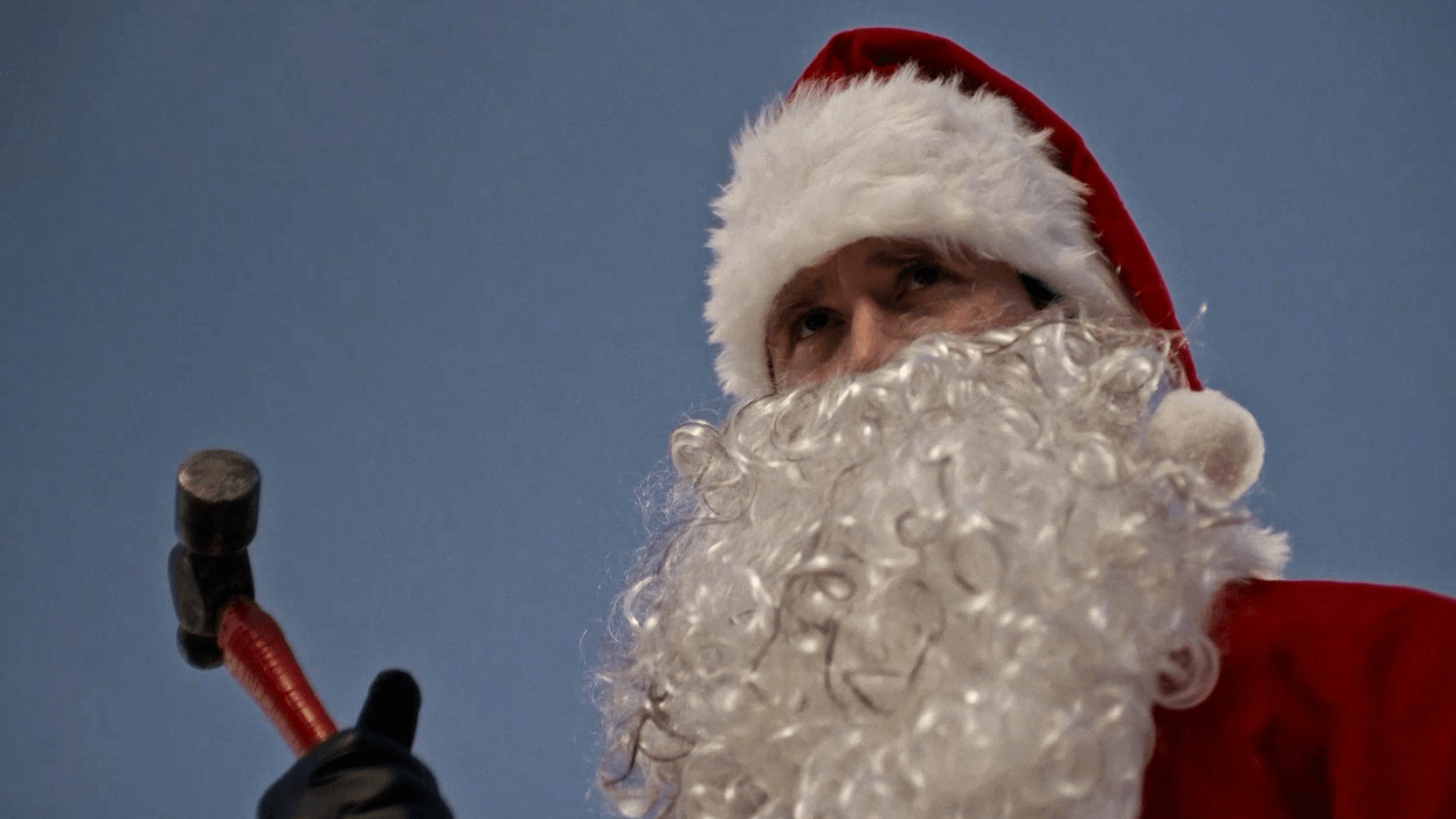
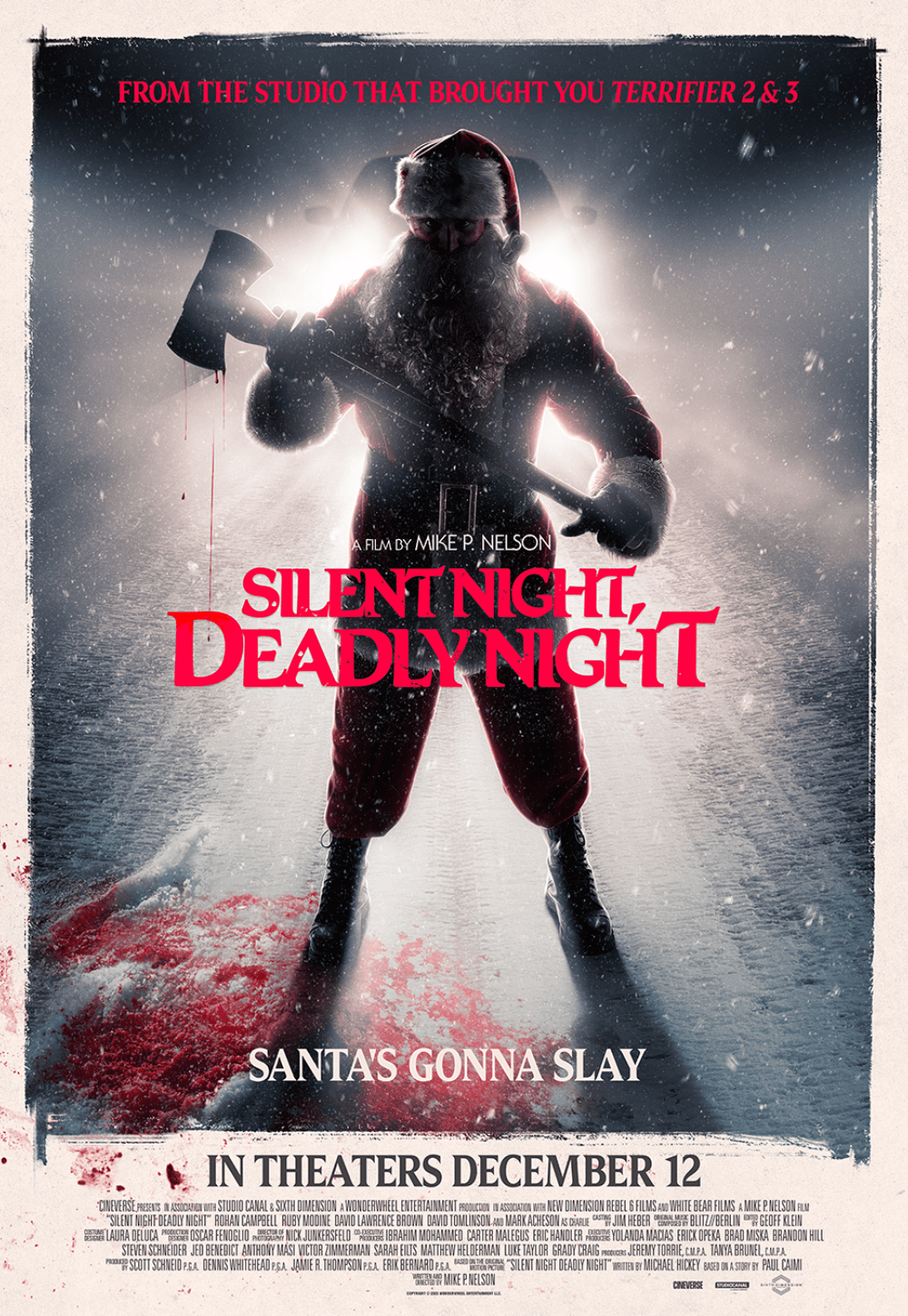
Last year, Cineverse unleashed the Christmas-themed horror flick Terrifier 3 in theaters. A bloated, mean-spirited downer, it was too bogged down by the franchise’s convoluted mythology to deliver a worthwhile holiday horror movie. That’s not the case with the company’s Silent Night, Deadly Night, a remake of the 1984 cult favorite of the same name. Written and directed by Mike P. Nelson, whose innovative take on the Wrong Turn franchise in 2021 was an inspired surprise, the new version avoids many of the original’s seedier elements, replacing them with a fun, gory bauble. Filled with holiday cheer and yuletide glee, along with a serious body count, Nelson’s version rethinks the schlocky series that spawned four sequels and a loose remake in 2012. No longer is this just a nasty story about a killer who claims his victims while dressed in Santa Claus garb; now it’s a riff on Showtime’s Dexter.
Rohan Campbell, perhaps best known for his role in Halloween Ends (2022), stars as Billy Chapman. Fueled by the childhood trauma of seeing his parents slaughtered by a maniac in a Santa costume, Billy, now in his twenties, becomes an axe-wielding headcase triggered by the holidays. But unlike earlier iterations, Billy’s not so bad; he curbs his murderous impulses with the help of Charlie (Mark Acheson), a voice in his head. Charlie recalls Dexter Morgan’s “Dark Passenger” and represents not only Billy’s desire to kill, but also provides a moral center. Rather than chopping up just anyone willy-nilly, Charlie helps Billy identify “naughty” candidates for disposal. And like Dexter, Billy keeps blood trophies—albeit by dabbing his victims’ blood on a custom Advent calendar. Each day in December, Billy must claim a life; otherwise, he may lose control and begin to kill indiscriminately.
Nelson’s innovations may not be wholly original, but they add some intrigue and even humor to the slasher setup. For instance, Billy hears Charlie in his head, but he hasn’t quite figured out how to respond without speaking out loud. This leads to some hilarious moments in which Billy looks nutso to third parties, seemingly muttering to himself while talking to Charlie. Just as in Halloween Ends, Campbell walks the line between chilling and sympathetic, but mostly the latter. He has an earnest, even innocent face that sometimes reveals a creepy, insidious smile. And then there’s Charlie—some sort of entity whose origins are never explained, complete with an extrasensory ability to warn Billy when danger is near. “I’m getting that feeling again,” Charlie says, acting as a kind of Spidey Sense. Charlie can also see the evil others commit, enabling Billy to target deplorable people. So here’s a slasher movie where the killer is an antihero, and we root for him because he takes out people who have it coming.
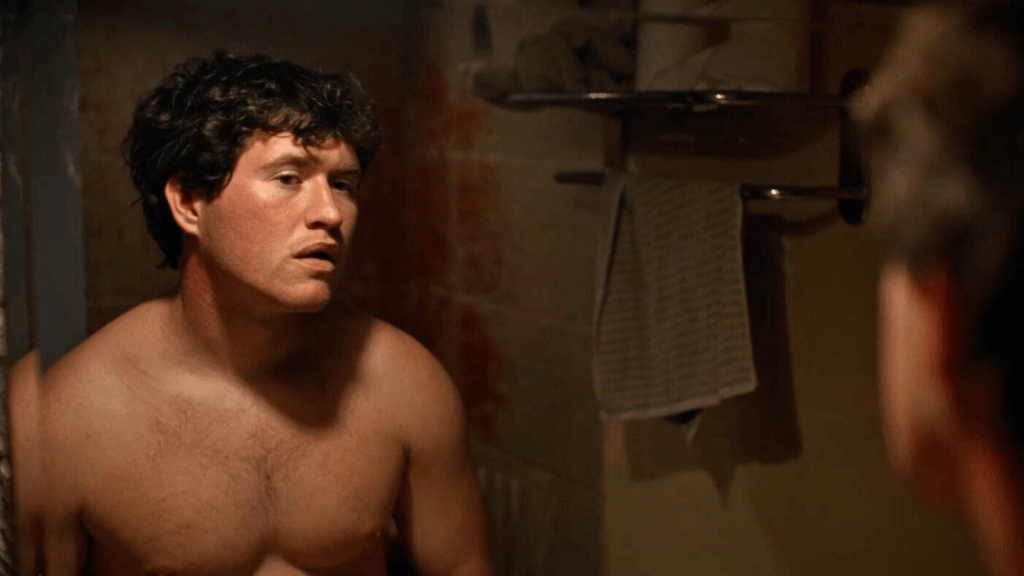
A Minnesota native, Nelson sets the story in Hackett, MN, a small town chosen for its name. “Hack-it,” says Charlie. “I like the sound of that.” Although this outsider arrives by bus, he’s welcomed to town by the locals, some genuinely nice, others “Minnesota nice” (greeting him with a false smile and forced politeness). Almost immediately, Billy notices Pam (Ruby Modine, daughter of Matthew), who works at the local holiday knick-knack store, Ida’s Trinket Tree, alongside her father (David Lawrence Brown). From the outset, it’s apparent that Billy and Pam will be great together. Besides their mutual attraction, she has an “explosive personality disorder” that causes her to lose her temper and act out, often violently. Who better to understand Billy’s darker impulses? And what’s more, it’s refreshing to see a woman in a slasher movie who’s not a flawless Final Girl or a screaming victim. Pam has issues, and they make for an unpredictable character.
As the story unfolds, Billy must continue to satiate his bloodlust while targeting some very bad people in Hackett, among them Pam’s abusive ex-boyfriend, Max (David Tomlinson), who’s a local cop. Also on Billy’s Naughty List is a kidnapper dubbed the Snatcher, who keeps victims drugged and submerged in a terrifying basement ball pit. And best of all, Billy stumbles onto a faction of neo-Nazis who are “dreaming of a white power Christmas.” Charlie warns him that taking on a whole group could be dangerous. But for Billy, getting to kill fascists is worth the risk. “I have principles,” he reasons. To be sure, horror movies sometimes have an entrenched morality, portraying victims as casualties of an oppressive ideology or the violent core of humanity. In Rosemary’s Baby (1968), a woman loses her bodily autonomy when her husband sells her unborn child to a band of Satanists, reflecting the terrifying world where women’s right to choose has been subject to the patriarchy. In The Last House on the Left (1972), Wes Craven sought to shake audiences out of their apathy toward the televised violence of the Vietnam War with a cinematic shock to the system, portraying not only the rape and murder of a teenage girl but the bloody retribution her parents take on the perpetrators. And how many slashers have ostensibly punished teens for having premarital sex?
Nelson isn’t subtle about his commentary on who the real bad people are, but he doesn’t have to be. This is a movie about a killer Santa, after all. The technical execution follows suit, with a capable but unimpressive low-budget digital aesthetic that sometimes looks like a direct-to-streaming affair. There’s also copious amounts of practical viscera: decapitations, dismemberments, and caved-in skulls—they all look refreshingly gross. Nelson and editor Geoff Klein also interrupt the story with memories, dreams, and flashbacks playing in Billy’s head, including a killer montage of his past victims. He’s been doing the Advent thing for years now, which means his body count is probably over 100. Overall, it’s a sturdy production, confidently handled by Nelson, that boasts a worthwhile entry in the usually uninspired holiday horror subgenre. Compared to Jack Frost (1996), Krampus (2015), and many others, Silent Night, Deadly Night manages to be thrilling, scary, and a little goofy. It’s sure to become a rewatched Christmastime classic for horror-obsessed households.
Thank You for Supporting Independent Film Criticism
If the work on DFR has added something meaningful to your love of movies, please consider supporting it.
Here are a few ways to show your support: make a one-time donation, join DFR’s Patreon for access to exclusive writing, or show your support in other ways.
Your contribution helps keep this site running independently. However you choose to support the site, please know that it’s appreciated.
Thank you for reading, and for making this work possible.
Brian Eggert | Critic, Founder
Deep Focus Review