Sheep in the Box
By Brian Eggert |
The title of Hirokazu Kore-Eda’s new film, Sheep in the Box, refers to a scene from Antoine de Saint-Exupéry’s classic book, The Little Prince. A downed pilot in the Sahara Desert is confronted by a small boy, who asks him to draw a sheep. The pilot’s initial sketch is unconvincing, so he resolves to draw a box and tells the boy the sheep is inside. The boy is thrilled because the picture forces him to use his imagination, to look beyond the surface and consider the possibilities. Kore-Eda uses this concept for a story set in the not-too-distant future, about a couple who try replacing their dead child with an identical robot. Although the film closely follows the first act of Steven Spielberg’s A.I. Artificial Intelligence (2001), Kore-Eda draws out timely themes about what distinguishes humanity from AI. But even as he underscores the defining traits of subjective memory and imagination among human beings, he considers whether there’s something worth nurturing and then setting free in AI. With so much heated debate about what humanity will lose by integrating AI into our lives, Sheep in the Box resolves to be almost naively optimistic and sentimental, if also unsure, about the prospect.
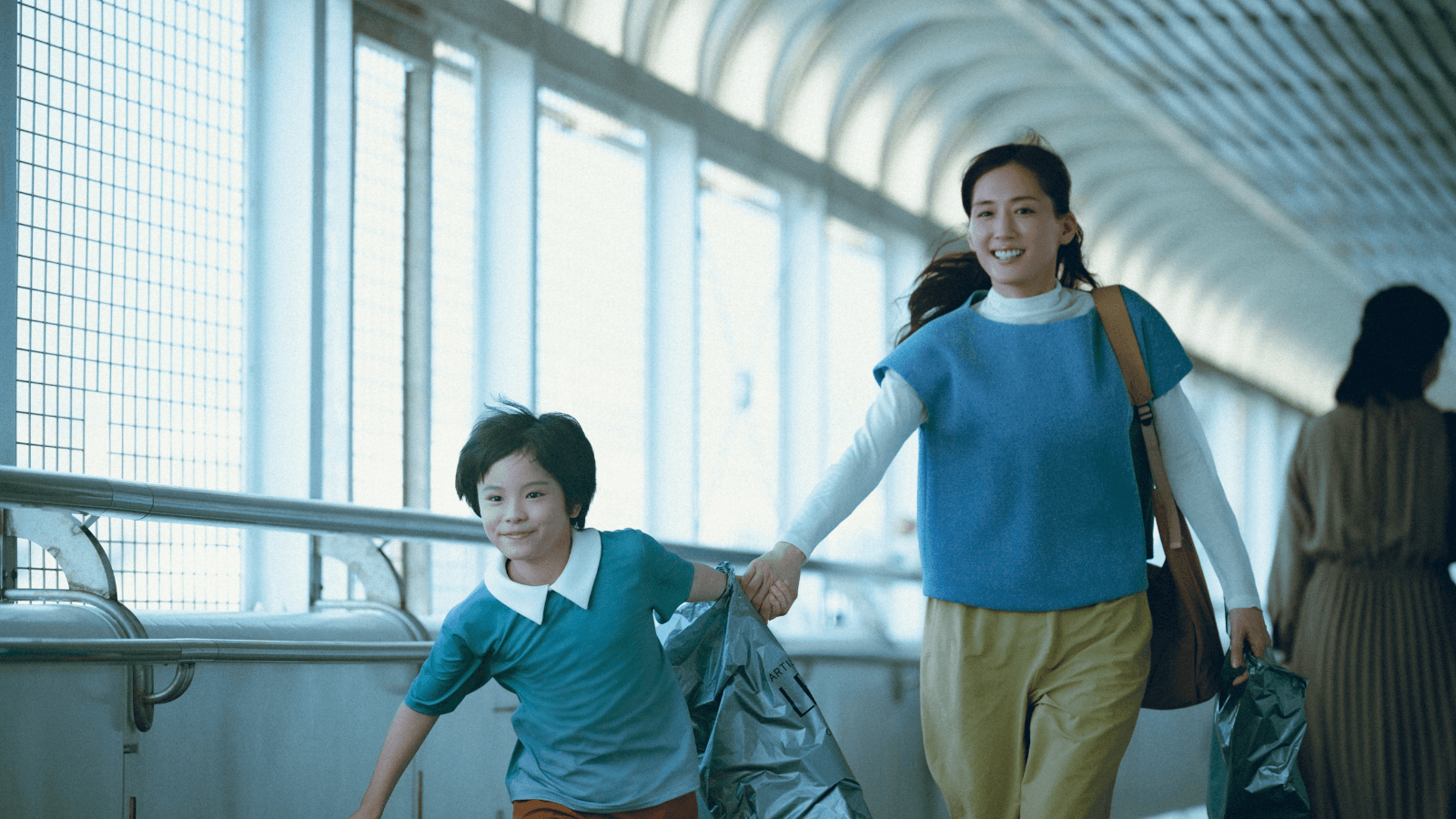
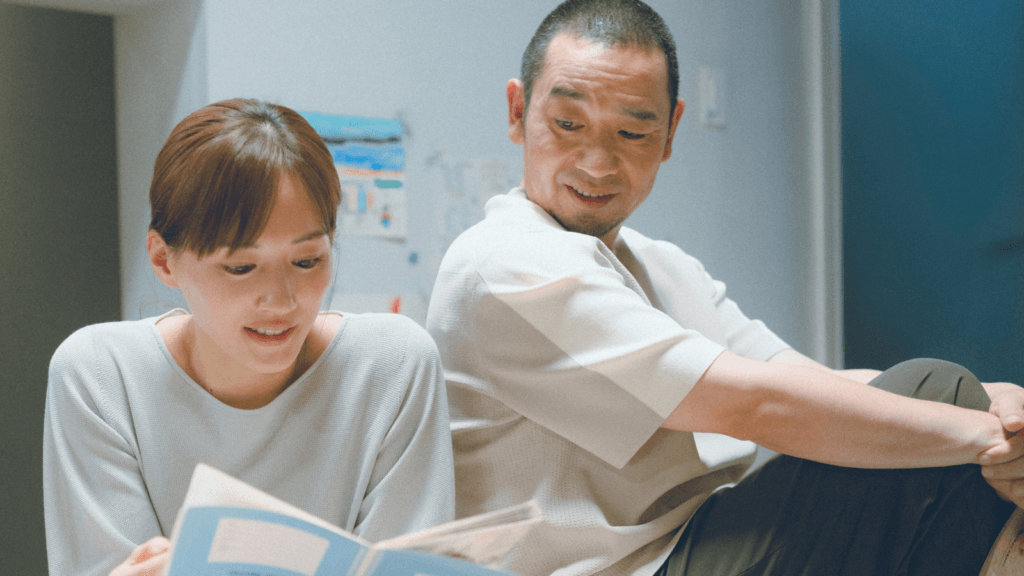
Set in Kamakura, the film’s premise feels like an extension of Japan’s rent-a-family industry, which allows users to hire an actor to portray a family member or friend to address an emotional need. Two years ago, Otone (Haruka Ayase) and Kensuke (Daigo Yamamoto) lost their seven-year-old child in some manner of train accident. One day, they receive a package from REbirth, a company that sells surrogate robo-children, called “humanoids,” to parents who have trouble letting go of their late child. Apparently, the company acquired a marketing list of parents with dead children. Otone opens a box containing a holographic luna moth—an insect that, in Japanese culture, is said to carry messages from the dead—to deliver REbirth’s pitch: a free model to parents who have lost a child to an accident or violence. Who could say no to a free robot? However, the gimmick doesn’t make sense economically. The company has sold just 3,000 units across Japan, so it’s unclear how they can afford to give away humanoids equipped with the latest in generative AI and robotics, unless they’re charging everyone else millions of dollars per unit.
In any case, Otone wants to sign up, while her skeptical husband expects nothing more than an elaborate Tamagotchi pet. To start the process, they upload background information, family photos, and home videos to inform their robot’s algorithmic brain. The eventual model, Kakeru (Rimu Kuwaki), named after their son, quickly brings joy to Otone. Then again, Kore-Eda doesn’t introduce the couple in the midst of their grief. Their unthinkable loss hardly registers in their behaviors early in the film. They seem to have moved on with their lives; she works as an architect, and he feels good enough to attend baseball games with coworkers. The couple doesn’t confront their prolonged grief until their faux child arrives, its presence reminding them of what they’ve lost. Otone even allows herself to forget for a time that her son actually died, like it was all a bad dream, and now he’s back—an unhealthy self-delusion, to be sure. Moreover, there’s nothing in the film to suggest that humanoids age, which means Kakeru will always resemble his flesh-and-blood counterpart at the age of his death, further stunting the grieving process. Details such as this, and REbirth’s questionable business model, do little to help the increasingly unconvincing world-building.
Kore-Eda’s subtle and familiar vision of the future is accented by sleek cars and drone deliveries, but the world hasn’t changed much. His humanoid design fares better, with blue lights under Kakeru’s synthetic skin to indicate his power status. At night, he sits in Otone and Kensuke’s bedroom, resting on a small bench-shaped recharging station. Cinematographer Ryûto Kondô, too, employs drones for sweeping shots of the REbirth headquarters or Kamakura landscape. The imagery is dreamily clean and brightly lit, with simple, welcoming interiors in the couple’s home. The PG-rated film also features composer Yuta Bandoh’s score of airy piano notes, wind instruments, and cellos to strike an accessible, borderline saccharine tone. Still, even with all of Kore-Eda’s effort to make Kakeru seem dimensional and unthreatening, he includes an unintentionally chilling scene where the mechanical boy squishes two pill bugs in his palm. As much as this evokes thoughts of the M3GAN movies, the film never goes there.
Rather, Kore-Eda explores the evolving relationship between Nature, humanity, and technology, without ever judging the ways they have evolved. In the course of human history, we started closer to the natural world, of course, but we have since erected cities and neighborhoods to inhabit. We’ve lost touch with Nature, and technology only further isolates us from one another. By contrast, AI humanoids can communicate in ways we cannot see, which Kore-Eda associates with how trees speak to one another through a system of leaves and roots that humans do not fully understand (see this year’s Silent Friend). Are humanoid behaviors merely replicating what they’ve learned and were programmed to do, or do they have a genuine ability to think, create, and evolve, just in a different manner than humans? The director prompts his audience to consider whether AI has more in common with Nature than we do. When a teen robot removes Kakeru’s GPS restraint chip, he teaches him the possibilities: “You’re not the humans’ past, but their future.” Along with other humanoids from the area, the newly established AI group prepares to “depart” and create a society of their own, reminiscent of the mass migrations in Spielberg’s film and Spike Jonze’s Her (2013).
With the sheep out of sight, how does one know what’s inside? We’re supposed to ask the same question about Kakeru. Kensuke believes that “What matters are the things you cannot see”—that our greatest advantages as human beings are the internal processes of imagination and memory. The departed have a second life in our memories, and there they live, without the need for a griefbot or digital twin to bring them back. Yet, some people are giving up those abilities to embrace AI. Even so, Kore-Eda is uncritical of humanity establishing a new form of artificial life because he wonders about AI’s internal possibilities. Surprisingly, these themes are not new to the director: Memory and imagination play vital roles in his 1998 film, After Life; he humanized an AI sex robot in Air Doll (2009); and in Shoplifters (2018), he examined a found family of thieves, similar to Kakeru’s chosen robot family. Alas, Sheep in the Box is thought-provoking, and it’s clearly conceived and executed with care, but it doesn’t have the emotional impact one might expect from a story about mourning characters who are unable to move on. Whereas Spielberg instilled a heartbreaking sympathy for his AI character, something doesn’t sit right about Kore-Eda’s take. Given that the film aligns with the parents, Kakeru feels at a remove, and his individuality feels underdeveloped. Even as Kore-Eda encourages us to consider the possibilities of artificial lifeforms, he barely taps into the ethical debates that surround his material. It’s a rare disappointment from a director whose work is otherwise reliably moving.
Like DFR? Support us.
This site exists because readers like you care about film. If DFR has enriched your experience with movies, I’d be grateful for your support. You have a few options:
• Join DFR’s Patreon community
• Make a one-time donation on PayPal
• Buy me a coffee
Whatever option you choose, it helps keep my work independent. And it means a lot to me.
Thank you for reading, and for making this work possible.
Brian Eggert | Critic, Founder
Deep Focus Review