In the Blink of an Eye
By Brian Eggert |
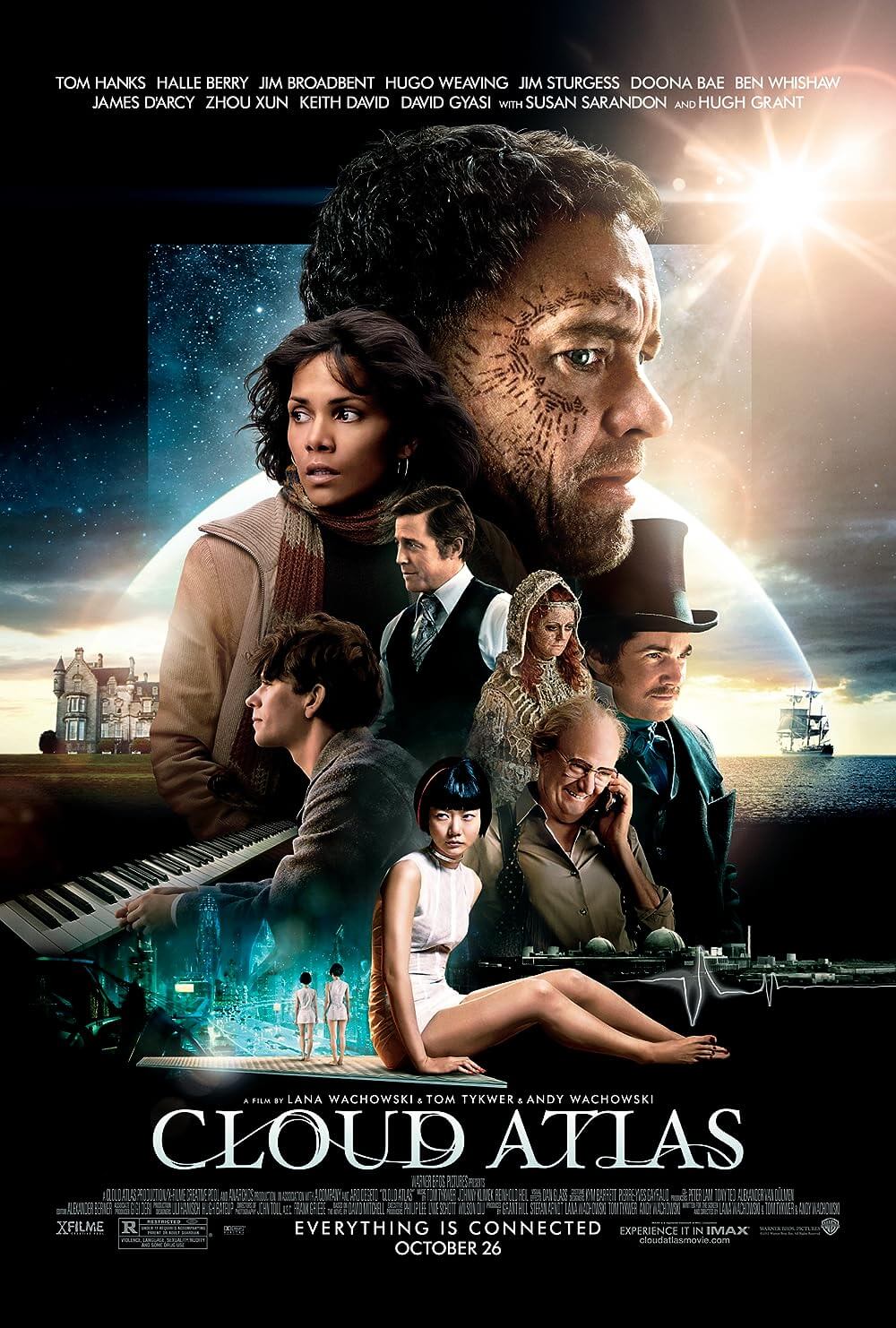
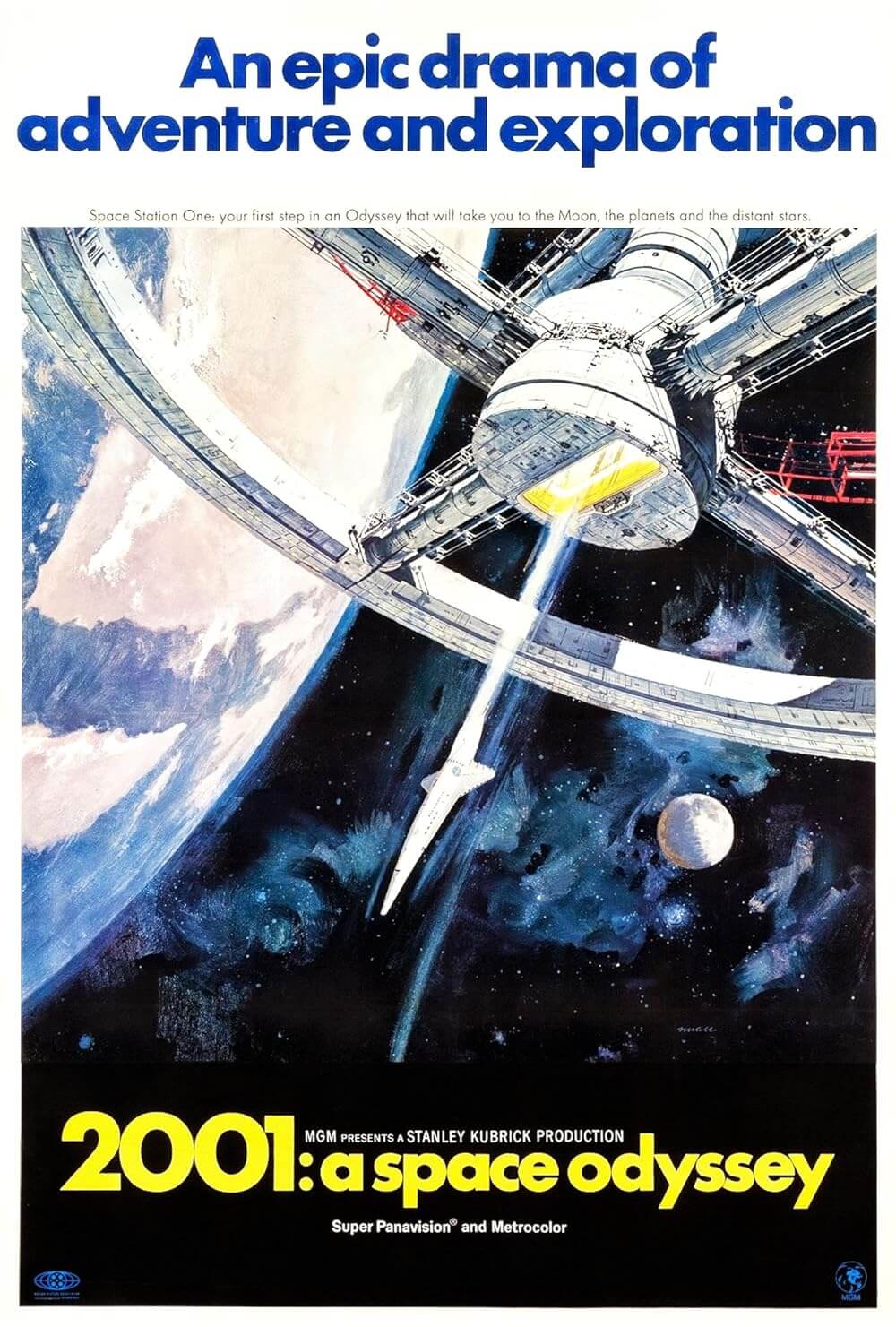
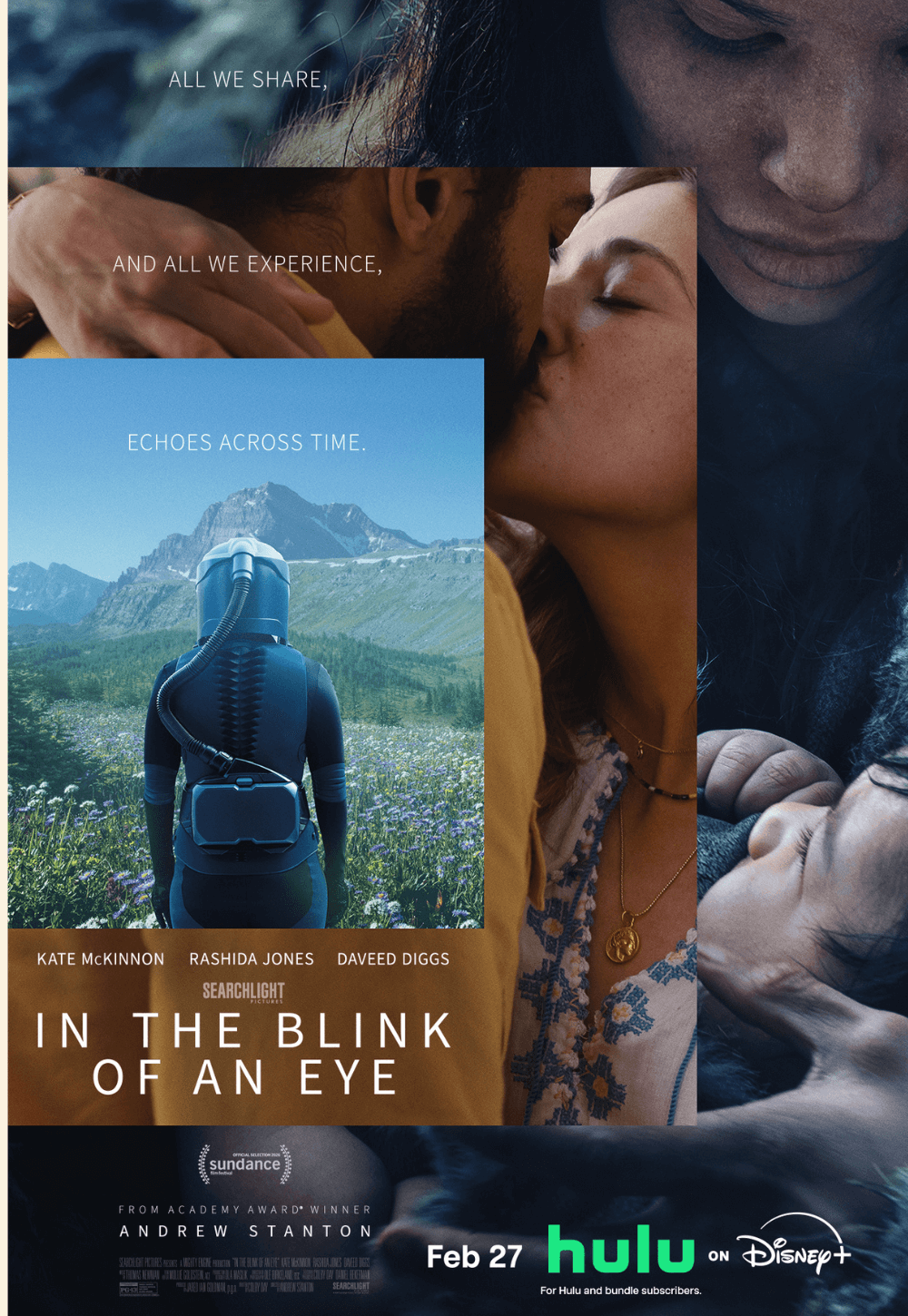
In the Blink of an Eye reminds me of several films I love. It has the multi-storied, time-spanning interconnectivity of the Wachowskis’ Cloud Atlas (2012), the cosmic meditation on life’s fragility of Terrence Malick’s The Tree of Life (2011), and the evolution of the species from cave-dwellers to intergalactic astronauts of Stanley Kubrick’s 2001: A Space Odyssey (1968). Some will find it profound and life-affirming; others will call it trite and schmaltzy. From an original screenplay written by Colby Day, the film consists of three stories about human progress spanning thousands of millennia. Each story charts an individual experience, following an intelligent woman who finds love, produces offspring, builds a family, and passes her knowledge to the next generation. When viewed together, the segments show how the species evolved, how we emerged from the caves, and how we eventually traveled to distant planets. Like the aforementioned titles, In the Blink of an Eye boasts a monumental story arc. Unlike them, it’s short at 94 minutes but feels like three hours. What’s curious is that, had the film actually run three hours and fleshed out these stories, it might’ve felt shorter, or at least more complete.
Day’s script was helmed by Andrew Stanton, who’s best known for his contributions to Pixar’s heyday in the 1990s and early 2000s—he served as co-writer on Toy Story (1995) and writer-director on Finding Nemo (2003) and WALL•E (2008). He’s had less success with live-action. Stanton’s disappointing 2012 adaptation of Edgar Rice Burroughs’ epic sci-fi series John Carter became one of the studio’s biggest financial disasters, given its budget approaching $300 million, poor marketing, and a lukewarm response. In the Blink of an Eye is a much smaller production, signaled by its debut at this year’s Sundance Film Festival, followed by a streaming debut on Hulu courtesy of Searchlight Pictures. But its ambition outweighs its content, leaving its considerable scope—starting with the Big Bang and formation of life on Earth—to feel unsupported by its lack of breadth. For a film with a title that evokes humanity’s minor place on the cosmic calendar, it doesn’t quite convey the insignificance of our little blue planet in the broader, 13-billion-year-old universe.
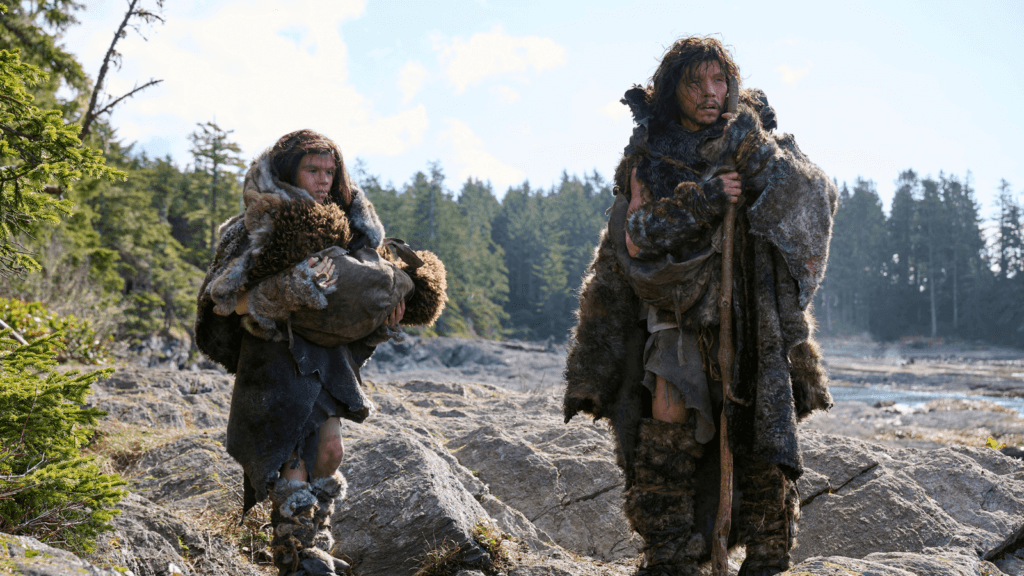
The earliest chapter, set around 45,000 BCE, follows a solitary Neanderthal family. Onscreen titles offer their names. The alpha male of the group is Thorn (Jorge Vargas), though no one actually says “Thorn.” It’s mostly grunts from Thorn and his pregnant mate, Hera (Tanaya Beatty), the smartest of the bunch. Unlike in other Neanderthal movies, such as The Clan of the Cave Bear (1986), Stanton doesn’t offer subtitles to explain their language, but the situations are clear enough to understand. Along with their young daughter, Lark (Skywalker Hughes), and infant son, Lucky, the couple struggles to survive in the wild. After an accident leaves Thorn wounded, Hera must not only heal him but also pass along her knowledge to her daughter. Their place in history becomes timeless with hand-stenciled cave paintings and an eventual encounter with a strange new group now known as Homo sapiens.
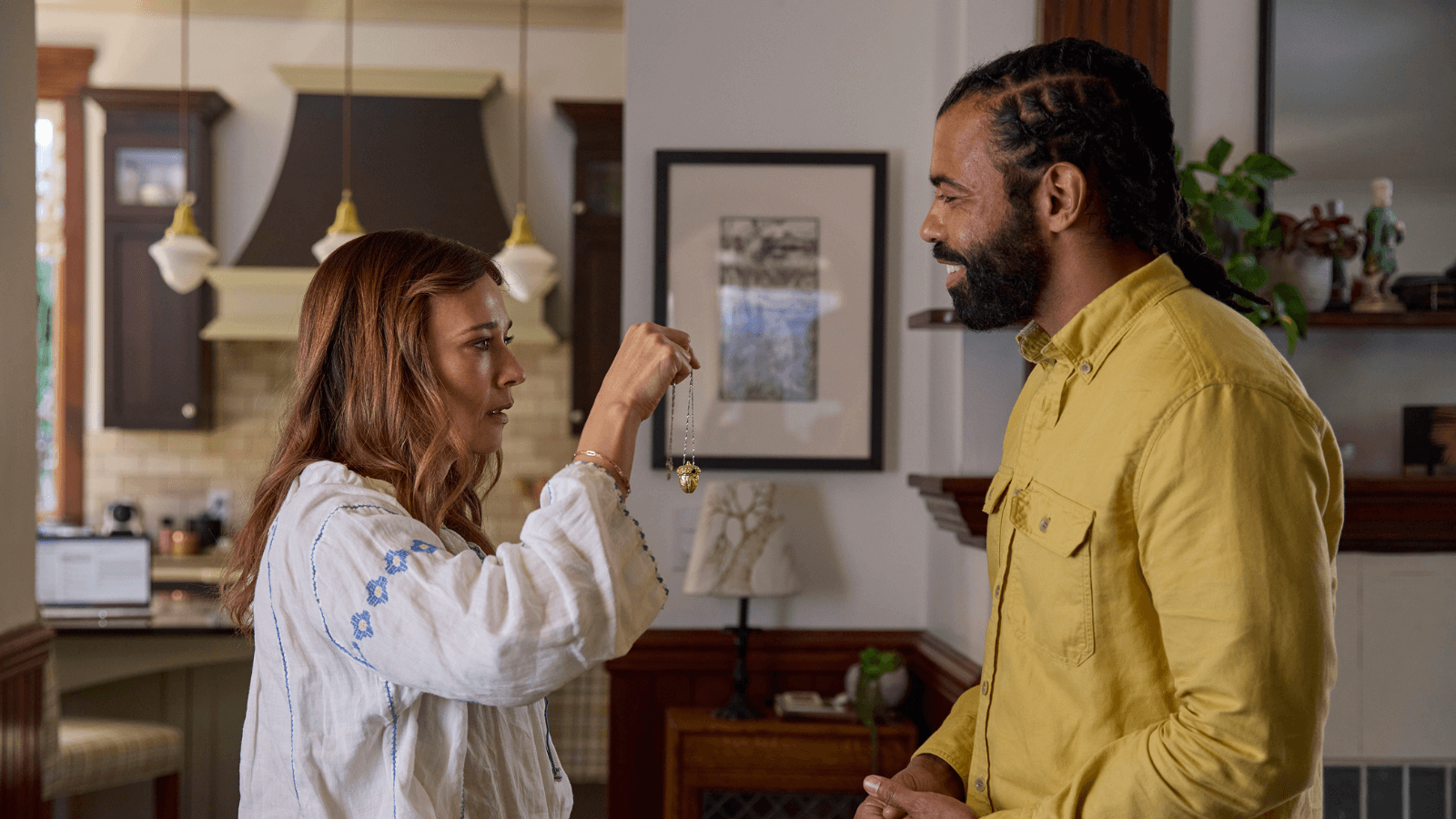
In a present-day storyline, the most affecting of the bunch, the Neanderthals’ fossils are the subject of research for Claire Robertson (Rashida Jones), a doctoral candidate in anthropology. She’s in the midst of a budding romance with Greg (Daveed Diggs), whose last name she doesn’t know, only that his field is statistics. Texts from “Greg Statistics” appear on her phone, much to her frustration at first—he’s another in a line of men incapable of bringing her to orgasm, at least at first. While Claire grapples with her mother’s failing health in Vancouver, she carries on a long-distance relationship with Greg over intimate conversations on FaceTime. All the while, her research leads her to a discovery in the human genome that could unlock a cure-all for diseases, even mortality. Apparently, it works, since the next story picks up in 2417 with a lone astronaut, Coakley (Kate McKinnon), already 210 years into a 336-year journey through space.
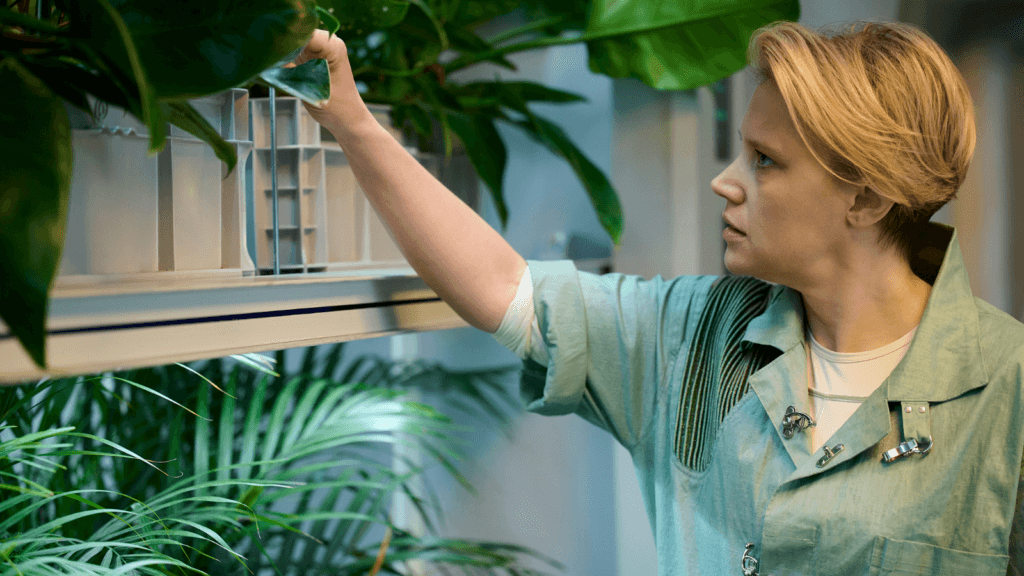
Coakley’s mission entails building the future of humanity on a distant planet with human embryos she maintains in storage. Genetically engineered to live indefinitely, she has only one companion on her journey: her ship’s AI computer, named Rosco (voiced by Rhona Rees). Rosco is a barely developed character who spends all night thinking. What does it think about? “I think about a lot of things,” Rosco says, eager for Coakley to ask. After more than two centuries, the two have an unspoken bond, despite Coakley’s resistance to small talk or a deeper interest in her artificial friend. The future scenes are the weakest of the three, if only because the story has the potential to be the strongest. The segment has notes of 2001: A Space Odyssey, given its nicer version of HAL-9000 in Rosco—who, despite a minimal screen presence, proves more compelling than her human counterpart—and its expedition that will take humanity into a new realm. Much of the story involves scientific problem-solving around a dwindling air supply, none of it as interesting as the hard sci-fi trappings of Andy Weir’s books The Martian or Project Hail Mary. Ultimately, the story becomes one of self-sacrifice and friendship alongside the overarching priority to save humanity.
Although introduced chronologically, the three stories intertwine throughout, with segments connected by visual bridges and overlapping audio from one passage to the next, underscoring their similarities. Stanton and editor Mollie Goldstein employ a free-flowing structure that left me wanting more. Much of the production looks stunning thanks to Ole Bratt Birkeland’s cinematography, which would have looked tremendous on a cinema screen rather than my home theater. But maybe the large-format presentation would have highlighted some of its lesser qualities, such as the subpar CGI skies and spaceship. Note also the silly Neanderthal prosthetics, with heavy brows and bad teeth that look like leftovers from Cha-ka in Land of the Lost (2009). The production design by Ola Maslik in the future segment also looks generic, like an episode of a middling TV space-adventure. To be sure, In the Blink of an Eye sometimes has the look of cheap television, which might explain its small-screen debut. Underneath it all, Thomas Newman’s score sounds lofty and desperately heartfelt, with each note dripping in saccharine.
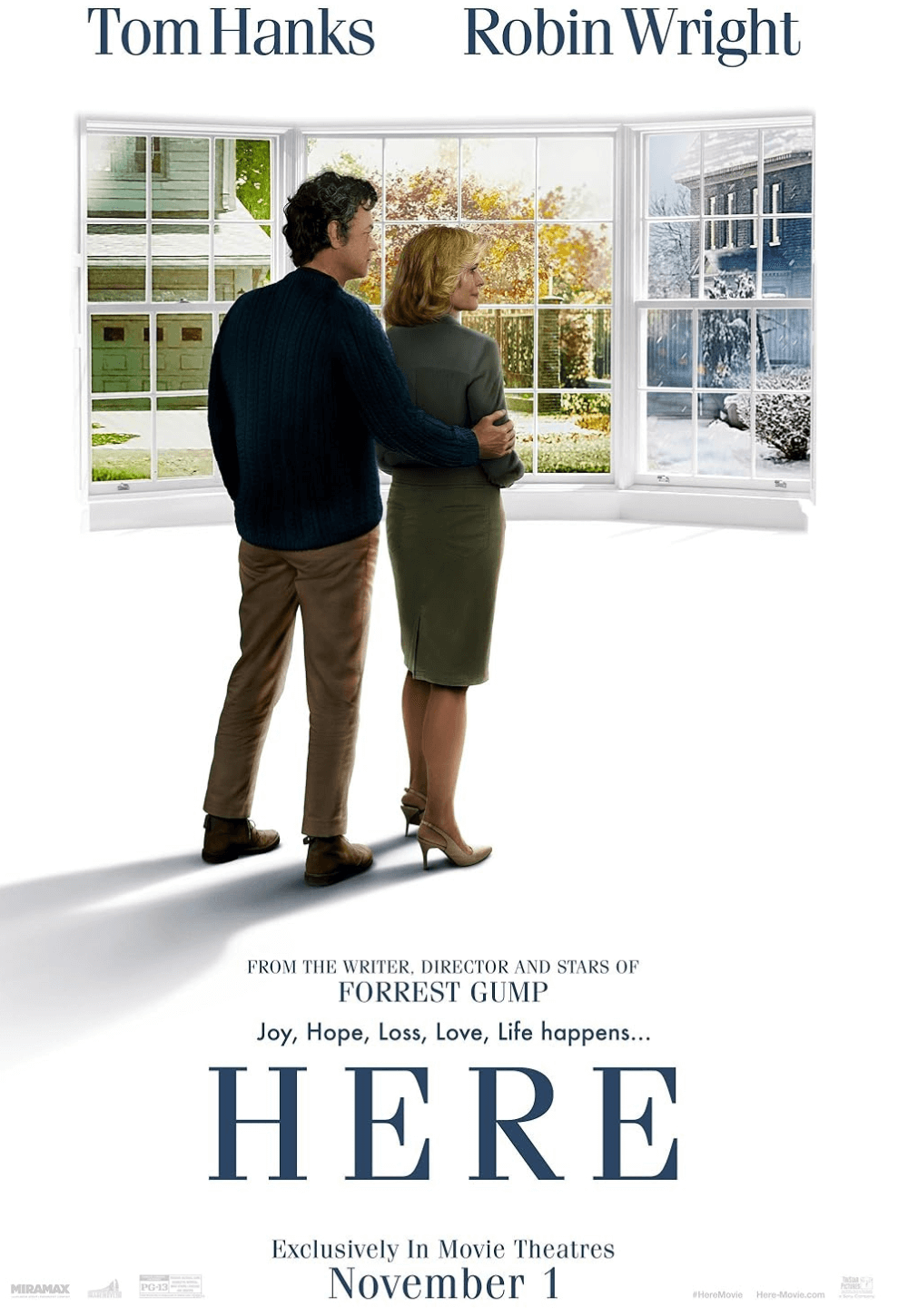
Still, the film earnestly appreciates humanity’s circle of life, as well as grander patterns in our species’ evolution and the development of technology throughout history. The conceit reminded me of Robert Zemeckis’ Here (2024), another time-spanning movie that doesn’t entirely work. And yet, like that film, I will no doubt keep thinking about In the Blink of an Eye until an inevitable second viewing, at which point I’ll probably enjoy it more. Until that day, I’ll appreciate its soaring aspirations, even if Stanton doesn’t always deliver the intended existential depth. (Though, its message that life is meaningful because it’s finite seems like a message to today’s billionaire class, who try to sustain their lives with bio-hacks, blood transfusions, etc.) An epic runtime and fleshed-out stories may have better served the material, making it more rewarding to step back and see the whole triptych. Instead, the minor binding element is an acorn that appears in all three stories, standing as the film’s equivalent of the monolith from 2001: A Space Odyssey—an integrative device that puts everything in perspective. I just wish the film offered more to process than these simple stories and familiar themes.
Thank You for Supporting Independent Film Criticism
If the work on DFR has added something meaningful to your love of movies, please consider supporting it.
Here are a few ways to show your support: make a one-time donation, join DFR’s Patreon for access to exclusive writing, or show your support in other ways.
Your contribution helps keep this site running independently. However you choose to support the site, please know that it’s appreciated.
Thank you for reading, and for making this work possible.
Brian Eggert | Critic, Founder
Deep Focus Review