Reader's Choice
Hard Eight
By Brian Eggert |
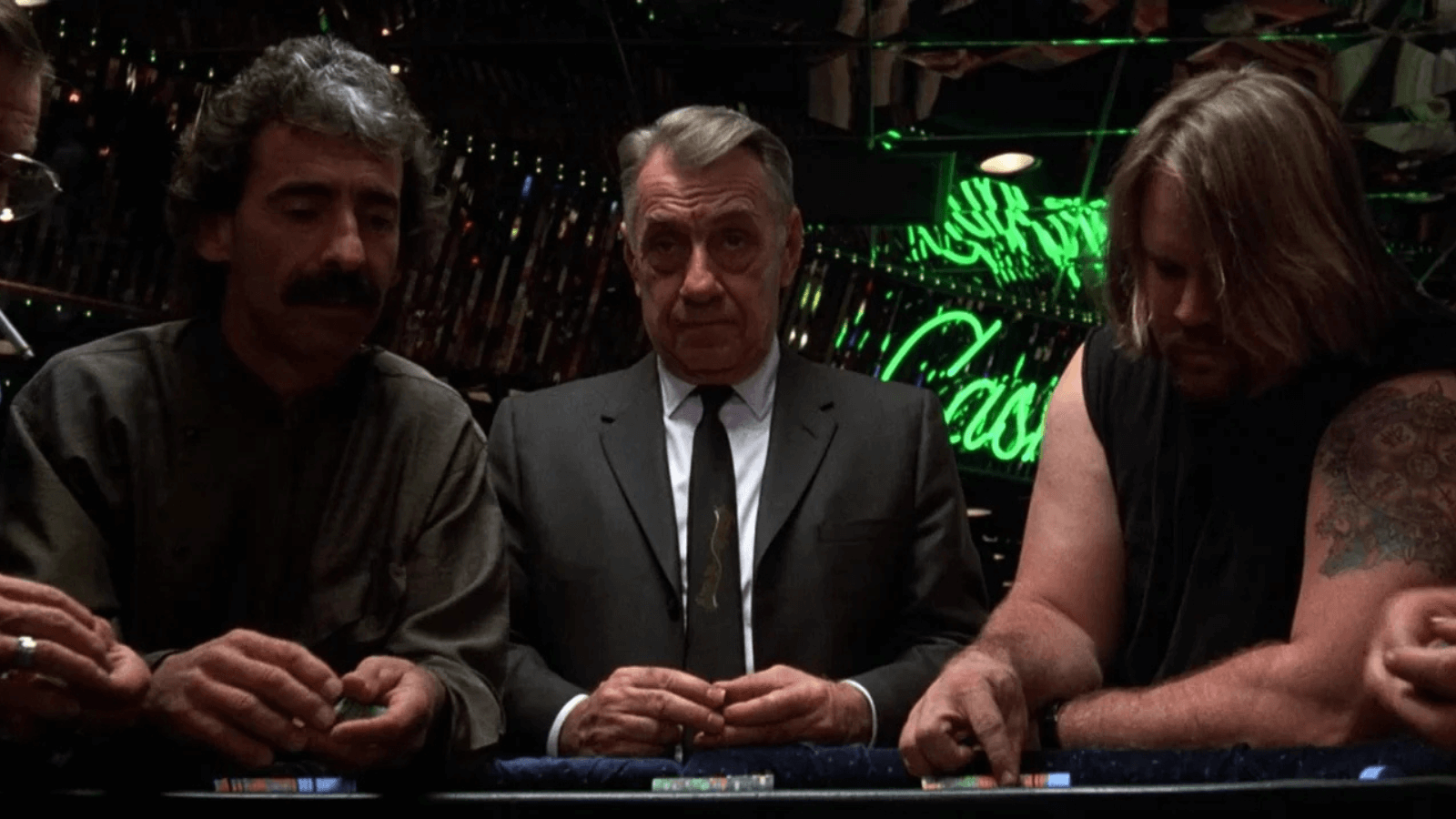
Hard Eight features a single scene with Philip Seymour Hoffman, and it’s a memorable one. Dressed in shitkicker garb and full of “shaka-laka-do” antics, Hoffman’s Reno showboater taunts the “old timer” at the other end of the craps table: Sydney, played by Philip Baker Hall, whose calm demeanor and tailored suit needle at Hoffman. With undue confidence, Hoffman challenges Sydney to place a bet before he can light a cigarette. Sydney doesn’t flinch at the persistent badgering. Instead, he places two grand in chips on a “hard eight”—meaning, if the shooter rolls two fours, there’s a hefty payout on the high-risk bet. This forces the loudmouth to pause. Though he places $100 on Sydney’s “hard eight,” Hoffman’s tone shifts to nervy confidence. Sydney has just placed a considerable sum on the table, making it Hoffman’s responsibility to deliver on his overconfidence. His inevitable loss cuts a hole right through him. He can only shakily laugh and make a half-hearted attempt to buy Sydney a drink. But Sydney has already left the table. The scene conveys Sydney’s composure under pressure, while his bet, a statistical loser, has another purpose: it’s a $2,000 demonstration to Hoffman’s character that acting like a big shot will get him nowhere.
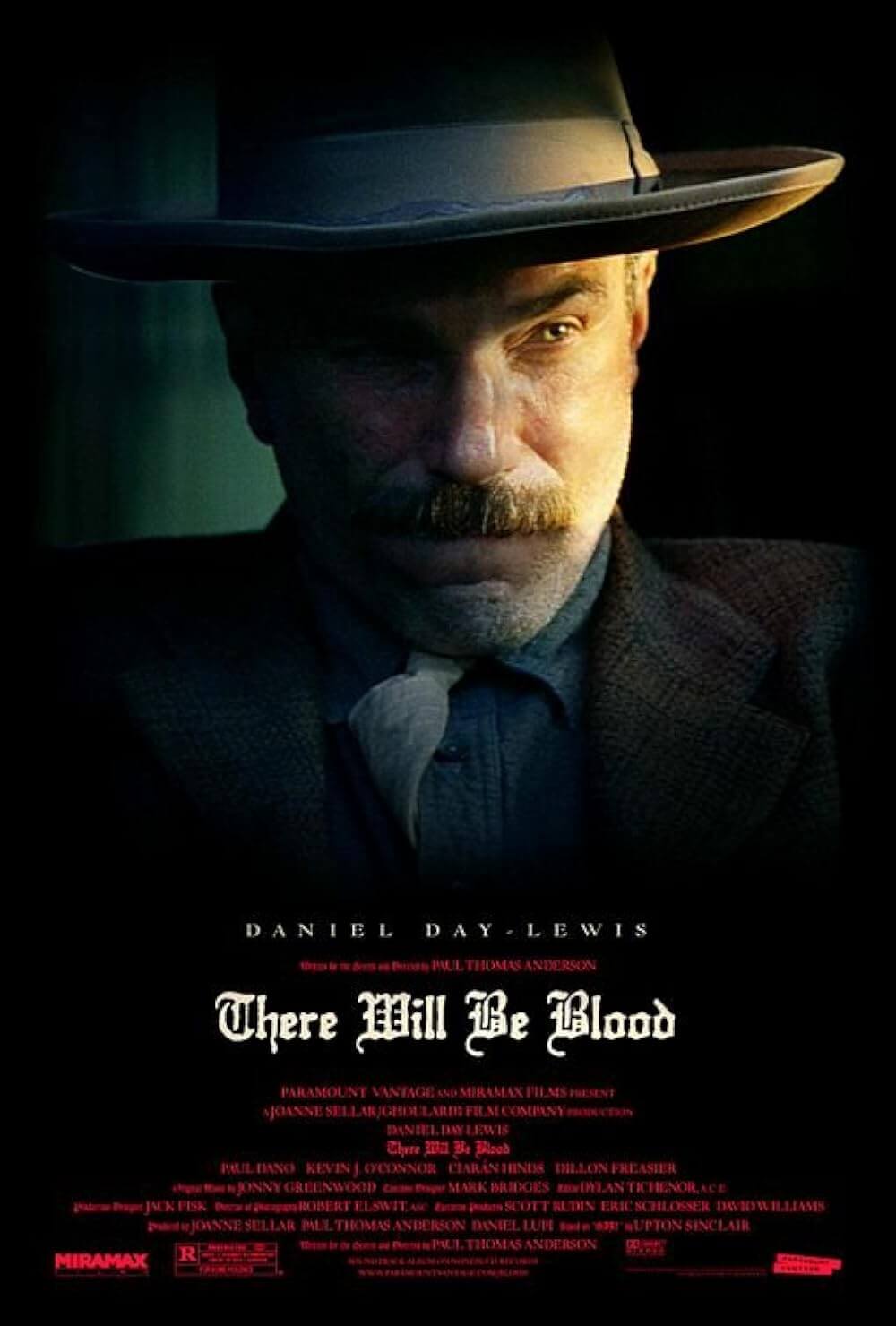
Revisiting Paul Thomas Anderson’s debut film, one doesn’t necessarily foresee the makings of a monumental auteur who would become one of today’s greatest living filmmakers, responsible for There Will Be Blood (2007) and Phantom Thread (2017). This modest and intimate character piece contains only a handful of speaking roles and offers several stylistic homages that remain among the most pronounced of Anderson’s career. Still, with this auspicious beginning, Anderson built relationships and directorial preoccupations that would remain intact throughout his filmography—most noticeably in his subsequent two Altmanesque projects, the exhilaratingly stylish porn industry satire Boogie Nights (1997), and the wonderfully indulgent portrait of Los Angeles, Magnolia (1999). Hard Eight’s stars—including Hall, Hoffman, John C. Reilly, and Melora Walters—would return to collaborate with Anderson on these films, as would many of his crew members, most notably cinematographer Robert Elswit. But Hard Eight is less a timeless classic than a promising start from a filmmaker who was just beginning to find his way.
Born in 1970, Anderson grew up in a show-business family in Studio City, Los Angeles. His father, Ernie Anderson, maintained a career as a television announcer and personality for several decades, from his role as the horror host Ghoulardi on Cleveland television’s late-night Shock Theater in the 1960s to the voice of ABC and America’s Funniest Home Videos. A lifelong cinephile, Paul Thomas Anderson began experimenting with home movies and short films in high school and college. After attending New York University film school, he returned to Hollywood and landed production assistant jobs on PBS’s Campus Culture Wars—where he met Hall—and other shows. Curiously, Anderson had admired Hall’s screen presence since high school, when he became obsessed with the actor’s small role as Sydney in the action-comedy Midnight Run (1988), starring Robert De Niro and Charles Grodin. From their friendship, Hall agreed to appear in Anderson’s first professional short film.
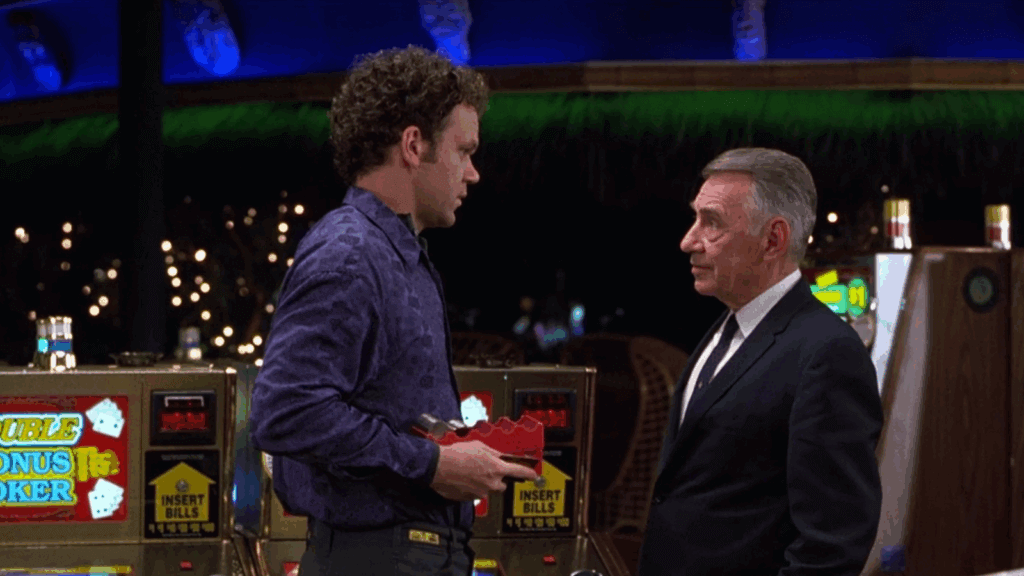
Although the myth surrounding Anderson is that he made 1993’s short film Cigarettes & Coffee—the basis for Hard Eight—thanks to scrappy self-funding, including his girlfriend’s credit card, the reality is that he received a loan from his father and other well-to-do family friends. Though, the $23,000 cost of the short did not include the Panavision 35mm camera rental, which the resourceful young director finagled for free. The completed short was accepted into the Sundance Film Festival, later earning Anderson an appointment to Sundance’s Directors Lab to workshop his ideas with experienced filmmakers such as John Schlesinger, Frank Oz, and Scott Frank. Eventually, he signed a deal with the aspiring mini-major production company Rysher Entertainment to turn Cigarettes & Coffee into a feature film, which he called Sydney. Rysher wanted to become the next Miramax, acquiring emerging new talent out of Sundance for cheap and leading them to a word-of-mouth triumph at the box office, similar to how Miramax had scored with Kevin Smith’s Clerks (1994) and Quentin Tarantino’s meteoric Pulp Fiction (1994).
To be sure, Tarantino’s success led to a mass greenlighting of countless imitations by studios and production companies desperate to capitalize on that QT magic. The 1990s would be awash with movies about low-life criminals acting tough but ironically funny, at once evoking 1970s cinema classics and inhabiting a dual space between nostalgia and postmodern cool. Anderson joined the post-Tarantino saturation of Hollywood along with Robert Rodriguez (Desperado, 1995), Guy Ritchie (Lock, Stock and Two Smoking Barrels, 1998), Doug Liman (Go, 1999), and others. However, as much as Anderson’s Hard Eight resembles a particular type of crime yarn from this decade, the resulting film feels smaller and more intimate than these other examples. The humanity and humor register as distinct Anderson flourishes even today, whereas many other directors who emerged in this era have lost control of their authorial voice.
The film maintains a reputation as a troubled production. Anderson felt the studio tampered with his vision, while Rysher struggled with their talented 25-year-old director, who refused to communicate during both production and post-production. Anderson shot the film in Nevada for $3 million, using the Rysher-approved, 90-page script, but the executives balked at the 150-minute result. The company wanted a more commercial length, but Anderson obstinately refused to provide it. Instead, he arranged to get his version into Sundance, then Cannes, against Rysher’s wishes, establishing that he would fight for his vision in a well-documented Artist vs. Corporation battle. Accounts of the production in trade reports positioned Anderson as an auteur fighting against The System for his film. Rysher’s team recut the film to 104 minutes and forced Anderson to accept the pulpier title, Hard Eight, along with other changes. However, some of what was reportedly cut—including expository flashbacks and an ending where Sydney dies—may have been for the best.
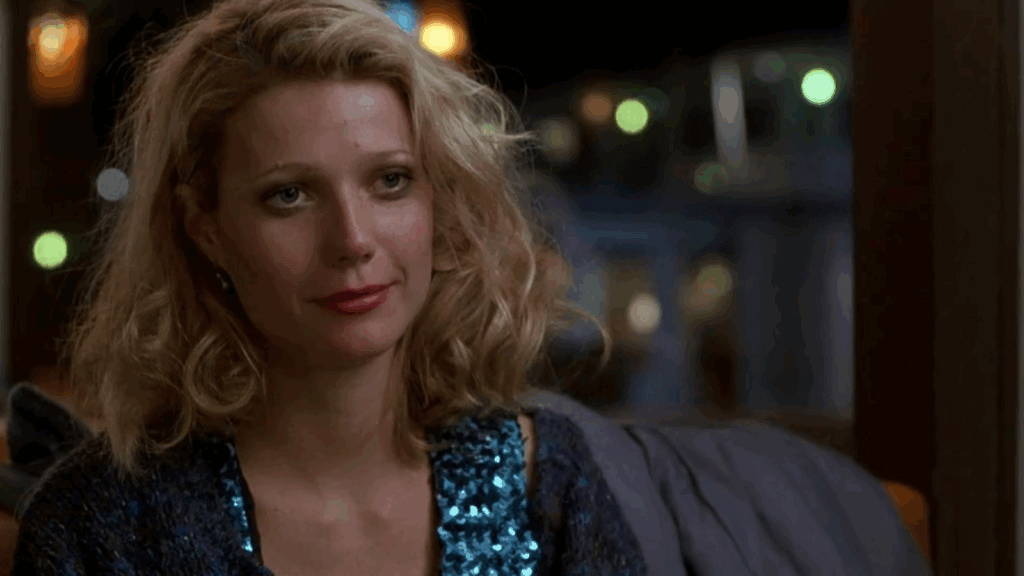
Hard Eight follows Sydney, a mysterious gambler in Reno who takes a hard-luck case named John (Reilly) under his wing. Sydney doesn’t suffer ill manners or conduct himself recklessly. He imparts his knowledge to John for reasons that remain unclarified until later in the film—he killed John’s father and now attempts to make amends, albeit without confessing to John. Much of the first half involves Sydney teaching John the ropes and how to survive in casinos. Two years pass, and they remain master and apprentice. Soon, Anderson introduces a wounded cocktail waitress, Clementine (Gwyneth Paltrow), and a windbag security consultant, Jimmy (Samuel L. Jackson). John and Clementine fall in love, but her occasional sex work with gamblers—officially prohibited but unofficially endorsed by her casino bosses—turns the couple’s impulsive wedding night into a disaster. They kidnap a man who refuses to pay Clementine after a sexual encounter, and they call on Sydney to help them resolve the situation. Sydney resigns himself to rescuing the young couple, even though it means unleashing his long-dormant criminal side on Jimmy.
Anderson’s screenplay contains several hallmarks of his later work. Reilly’s dopey, overconfident novice feels like a dry run for his characters in Boogie Nights and Magnolia. He’s a wryly funny character between his Velcro shoes and amusing matchbook-related trauma, but not so much so that he becomes a joke. John’s earnestness proves heartening, as does Clementine’s rather limited fallen woman status. By contrast, Sydney epitomizes the ‘90s post-Tarantino crime-movie ideal: he’s smart, dangerous, classy, and mysterious. He might be the cinematic cousin of Harvey Keitel’s fixer, Winston “The Wolf,” in Pulp Fiction. Hall was rarely better, save for Secret Honor (1985), his one-man show as Richard Nixon for director Robert Altman. As Sydney, Hall recalls Jean Gabin’s seasoned gangster in Jacques Becker’s Touchez pas au grisbi (1954), who commands respect for his allusive reputation. However, in typical ‘90s fashion, the hints at Sydney’s past become the keys to unlocking his secrets, whereas Gabin’s character’s past remains shadowy and implied. Filmmakers in this era were seldom content with leaving their characters a mystery; rather, their identities were wrapped up in narrative reveals and games that required deciphering.
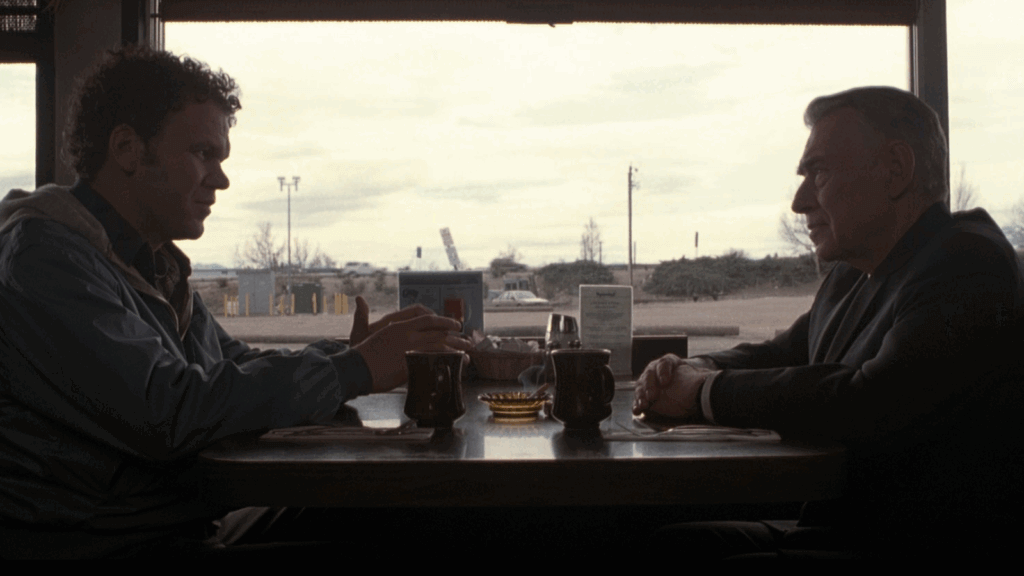
Anderson seems to draw from David Mamet for Sydney’s dialogue, giving him mannerist lines such as “And that is that” or “What then now,” along with repetitive speech patterns and various fits and starts. Anderson’s vaguely familiar, Mamet-esque approach to dialogue would crop up in his next two features before his career shifted with Punch-Drunk Love (2002). While Anderson’s influences would later become less apparent, they’re present throughout Hard Eight, rooted in the pastiche-centric approach of young filmmakers in the ‘90s. In visual terms, Anderson draws most from Martin Scorsese, with Elswit replicating many of the camera movements deployed by Scorsese’s frequent cinematographers, Michael Ballhaus and Robert Richardson. Anderson’s opening sequence in an out-of-the-way diner nods to similar scenes in After Hours (1985) and Goodfellas (1990), and his frequent use of two-shots also resembles sequences in these films. Elsewhere, the camera’s sudden adjustments to reset the frame’s position, extended takes that follow characters through the casino, and whoosh movements to emphasize the moment’s importance all feel sampled from Scorsese’s kit bag. Anderson would continue to use these tricks throughout his next two films, often labeled his “Scorsese period.”
However compromised or rooted in homage and influence one might find Hard Eight, Anderson’s debut signals a memorable start for the young filmmaker. The director’s patience and interest in his characters make the film so rewatchable. Faces compel him—the unfathomable depth in Sydney’s worn visage, John’s puppy-dog uncertainty, Clementine’s overwhelming sadness and shame, and Jimmy’s grotesque laughter. It’s not about a plot or scheme, like so many movies about criminals from the ‘90s. And perhaps most importantly, despite its rocky journey to the screen, it doesn’t feel like a compromised work with awkward edits or rogue plotlines. Instead, it’s a better film for its reduced runtime, maintaining its focus on Sydney without the oft-criticized indulgences of Anderson’s next two lengthy features. Above all, Hard Eight’s modest narrative and confident filmmaking offer a stylish showcase for the excellent cast and a promising start for one of today’s finest directors.
(Note: This review was originally published on May 8, 2025, and suggested by Steve, a Patreon supporter. Thank you for your pick and continued support, Steve!)
Bibliography:
Nayman, Adam. Paul Thomas Anderson: Masterworks: A Filmmaker’s Creative Journey. Abrams Books, 2020.
Sperb, Jason. Blossoms and Blood: Postmodern Media Culture and the Films of Paul Thomas Anderson. University of Texas Press, 2013.
Toles, George. Paul Thomas Anderson. Contemporary Film Directors. University of Illinois Press, 2016.
Warren, Ethan. The Cinema of Paul Thomas Anderson: American Apocrypha. Directors’ Cuts. Wallflower Press, 2023.
Thank You for Supporting Independent Film Criticism
If the work on DFR has added something meaningful to your love of movies, please consider supporting it.
Here are a few ways to show your support: make a one-time donation, join DFR’s Patreon for access to exclusive writing, or show your support in other ways.
Your contribution helps keep this site running independently. However you choose to support the site, please know that it’s appreciated.
Thank you for reading, and for making this work possible.
Brian Eggert | Critic, Founder
Deep Focus Review