Blue Heron
By Brian Eggert |
Note: Blue Heron was screened as part of the 45th Minneapolis St. Paul International Film Festival. For the full lineup of films available between April 8-19, check out the schedule here. The film arrives in theaters on April 17, 2026.
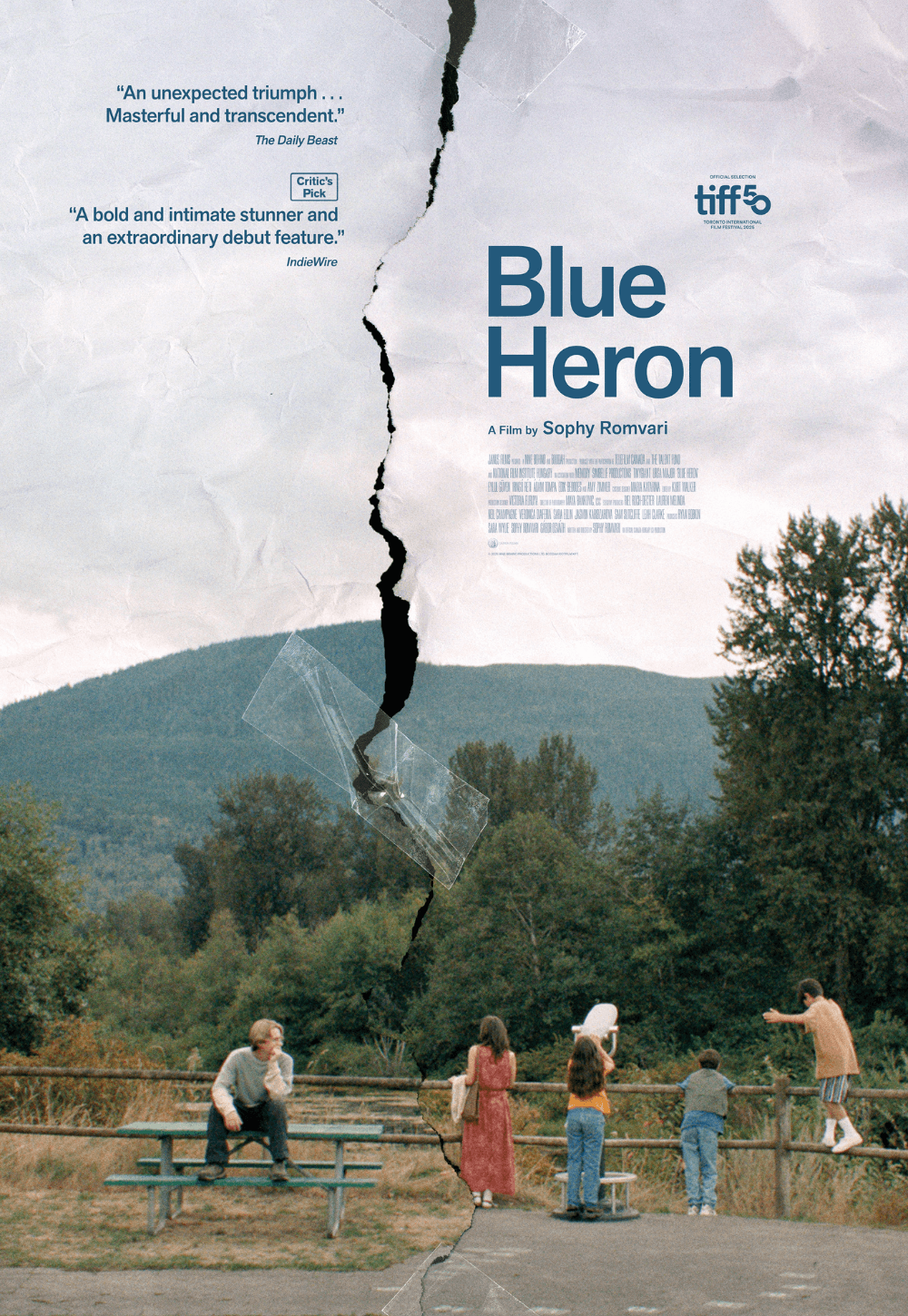
In one of those pointed movie moments that explains the title, a character in Blue Heron watches a wildlife program in which the narrator explains that the titular bird’s bond with its young corresponds to its offspring’s age. The older they become, the less love the parent reserves for them because, naturally, older herons grow out of their need for parental support. That’s bad news for the lanky, remote teen Jeremy (Edik Beddoes, who vaguely resembles Gaspard Ulliel or a young William Hurt), the older half-brother of Henry (Liam Serg), Felix (Preston Drabble), and Sasha (Eylul Guven), all of whom look about a decade younger. Jeremy is from his mother’s first marriage and, given his parentage, he feels like an outsider in his family, which is markedly dysfunctional. How Jeremy’s parents process his sense of detachment, and the often erratic, disruptive ways it manifests in his behavior, becomes the source of an investigation into the past.
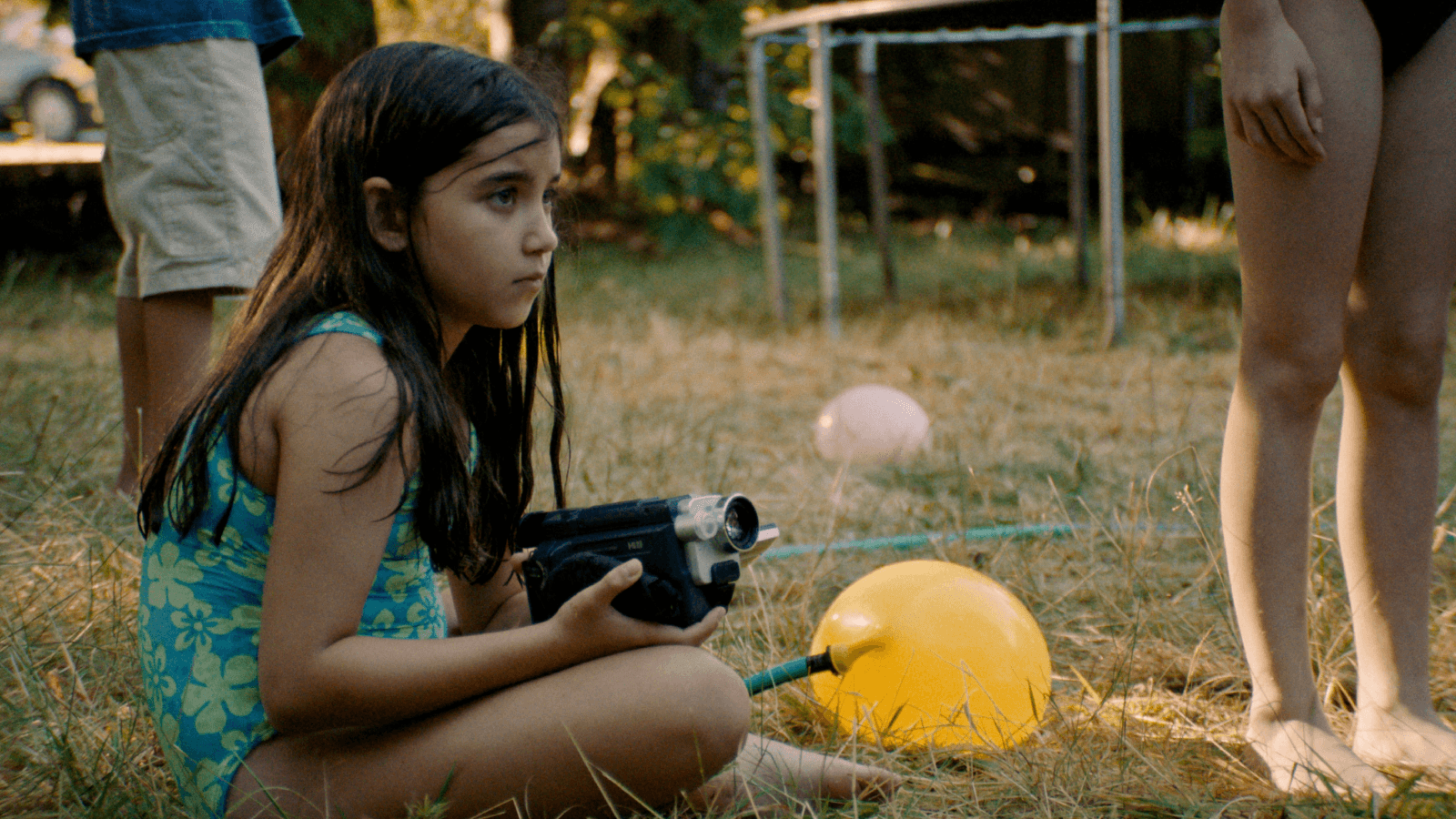
Blue Heron is the debut feature of Canadian director Sophy Romvari, who has been making a name in short films for over a decade. Much like her short films, especially Still Processing (2020), her screenplay draws on life experience to tell an autofictional tale, in which Romvari uses her art to navigate her memories and understand her past. The scenes with Jeremy take place in the late 1990s, after their family of Hungarian immigrants moves to Vancouver Island. Seen from the perspective of Romvari’s stand-in, the eight-year-old Sasha, the film attempts to understand how the children’s parents (Iringó Réti, Ádám Tompa) address, and remain baffled and overwhelmed by, Jeremy’s increasingly alarming behavior. These chapters later inform contemporary scenes with the adult Sasha (Amy Zimmer), who attempts to reconcile her memory with the documented evidence of what happened.
If there’s a comparison to be made, Romvari’s film recalls Aftersun (2022), where the filmmaker-protagonist reviews video evidence of her childhood and attempts to fill in her memories from an adult perspective. Sasha’s father, an amateur photographer with a darkroom, is one of those parents who constantly record their children. But perhaps Sasha realizes that his ever-present camera has another purpose—to gather evidence of Jeremy’s behavior, which resembles Oppositional Defiant Disorder (ODD). In other words, Jeremy has a problem with authority and acts out when they force him to do anything. Given that his parents have uprooted him to Vancouver, he’s in a constant state of acting out: shoplifting, tormenting his siblings, refusing to talk, stomping around on the roof, punching a hole through his window, and not engaging with the family. He’s nowhere as bad as the kid from Lynne Ramsay’s We Need to Talk About Kevin (2011), but Jeremy brought that character to mind.
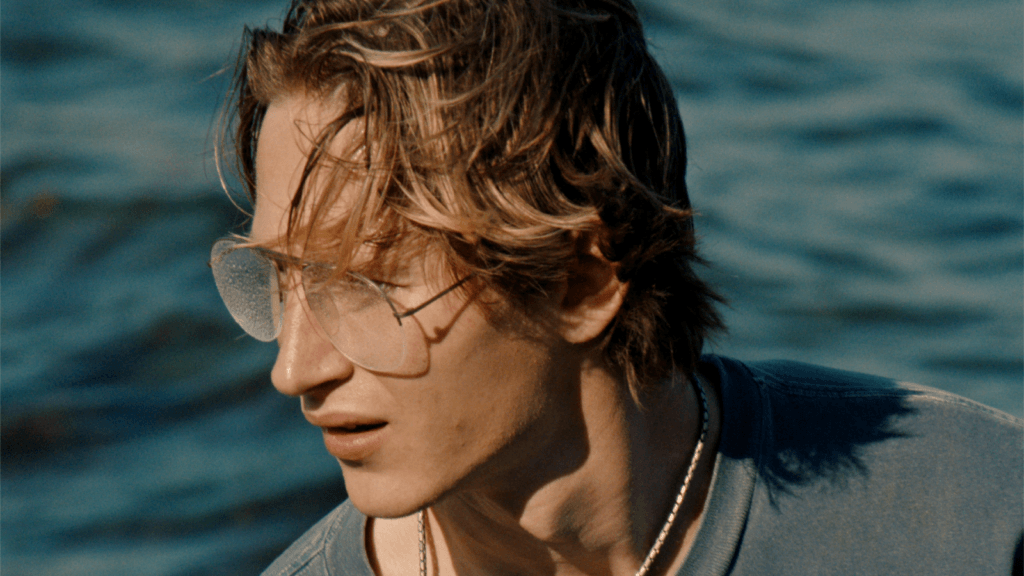
One of the first times we meet Jeremy, he lies on the family’s front porch as though dead, alarming the neighbors. It seems like a prankish cry for help at first, like those in Harold and Maude (1971). But later, he threatens to burn down the house. His mother remains at a loss and consults a child psychologist, who explains that she must assert herself as the boss, and if he acts out, call the police. His parents even consider his “voluntary placement” with a foster family. Only later does everyone realize their approach probably did little to help the boy. As an adult, Sasha consults a panel of child psychologists for a documentary she’s making about her older brother, and she provides them with Jeremy’s case file. What becomes apparent is that mental health treatment for teens has evolved in 30 years. Jeremy’s parents were woefully ill-equipped to understand him, and he was born at the wrong time to receive proper care. His fate is somewhat ambiguous but undoubtedly tragic.
Blue Heron’s aesthetic bears a quiet, nostalgic, observational quality akin to Janet Planet (2024). The memory images are composed of grainy photography by Maya Bankovic, who shoots on location in sun-dappled Vancouver and captures the dreamlike quality of Sasha’s childhood memories. Other footage comes from their father’s camcorder, whereas the contemporary digital photography looks conventional, if also gently surreal in the final moments. The aspect ratio and quality of the footage shift based on the camera’s source and the time it was recorded. Less essential are the hand-drawn opening titles that resemble Jeremy’s imaginative map drawings on his bedroom walls, and the tonal music by Blitz/Berlin that resides just beneath the surface of the drama. Topping it all off, Romvari’s restrained, often stunning imagery culminates with a shot as achingly symbolic as the one in last year’s Sentimental Value.
Without articulating it in overwrought dialogue—as with the unsubtle way she explains the title—Romvari uncovers how her mother and The System failed Jeremy. Sasha’s mother tells her not to bring friends over so that she won’t be embarrassed about her brother. She leaves Sasha with a pan of burning potato cakes to deal with Jeremy. And she reacts defensively to a social worker who wants to help. Jeremy is neither a devil nor a saint; he just needed a little compassion and patience, and Sasha discovers that he received neither in her family, which, over time, she recognizes was dysfunctional. Romvari gets at the way our limited experiences as children often disguise the reality of our pasts, only for us to realize years later, in an incomplete picture, what really happened. As a first feature, Blue Heron is thoughtfully conceived and executed, announcing the arrival of a filmmaker who translates the personal into moving art.
Thank You for Supporting Independent Film Criticism
If the work on DFR has added something meaningful to your love of movies, please consider supporting it.
Here are a few ways to show your support: make a one-time donation, join DFR’s Patreon for access to exclusive writing, or show your support in other ways.
Your contribution helps keep this site running independently. However you choose to support the site, please know that it’s appreciated.
Thank you for reading, and for making this work possible.
Brian Eggert | Critic, Founder
Deep Focus Review