MSPIFF 2026 – Dispatch 3
By Brian Eggert | April 18, 2026
The films below were screened at the 45th Minneapolis St. Paul International Film Festival (MSPIFF45), which runs from April 8-19. Check here for the full lineup and check back for additional dispatches and full-length reviews of MSPIFF releases.
The Last Viking
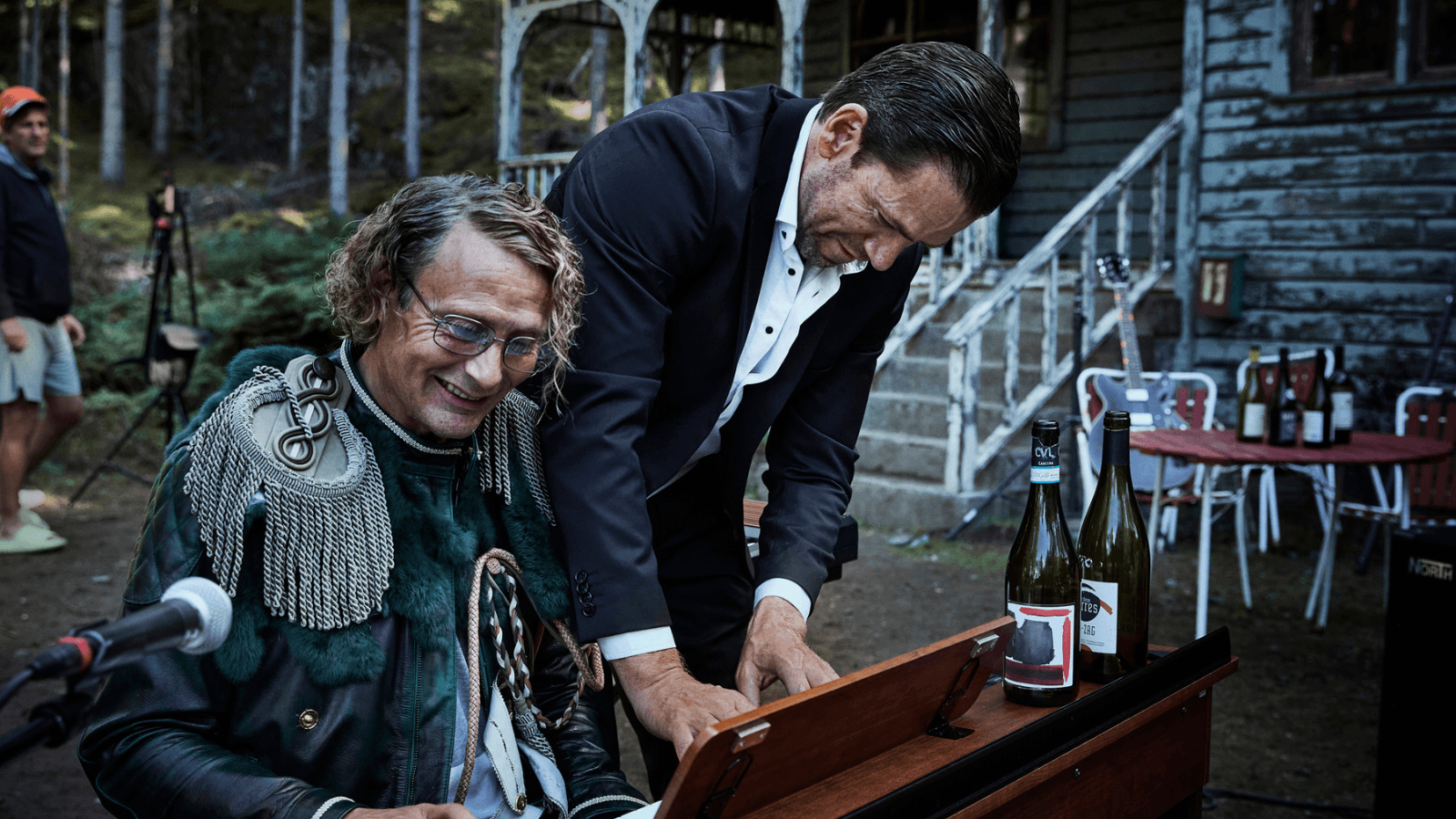
For the past quarter-century, Danish director Anders Thomas Jensen has made a half-dozen dark comedies, among them Flickering Lights (2000), Adam’s Apples (2007), Men & Chicken (2015), and Riders of Justice (2020). Some take the form of quirky crime stories, absurdist humor, or feel-good fare. Each of them stars the same few players, including Mads Mikkelsen, Nikolaj Lie Kaas, Sofie Gråbøl, and others. Though Mikkelsen often plays a cool cucumber in Hollywood projects, he’s a different actor for Jensen. He can be goofy and animated, making dopey faces and demonstrating an unexpected knack for physical comedy. Those qualities are on full display in their latest, The Last Viking, a movie that alternates between a touching drama about brotherhood and childhood trauma, and a Coen-brothers-esque yarn about brutal criminals and a bank robbery.
The Last Viking opens with an animated fable about Baldur, a Viking’s son who loses an arm, and whose father cuts off everyone else’s arm in his clan to ensure Baldur never feels different. Then we meet Anker (Kaas), who just stole millions from a bank and hid it inside a locker. Before the authorities capture him, Anker gives the only key to his unstable brother, Manfred (Mikkelsen), with a request to retrieve the money and bury it somewhere until he can return. After 15 years in prison, Anker is released to find that his brother’s eccentricities have escalated into dissociative identity disorder. Manfred now thinks he’s John Lennon of The Beatles, and since John didn’t hide the money, he doesn’t remember where it is.
Jensen’s script has no end of idiosyncrasies, leading to some silly comic moments and all-out shocks. For instance, while Anker was away, Manfred developed a penchant for stealing small dogs from women; he also leaps out of windows or moving cars when Anker calls him “Manfred” instead of “John.” To help his brother break free of his dissociation, Anker takes advice from a sarcastic, IKEA-obsessed psych ward doctor (Lars Brygmann) with a plan to fix him: He suggests finding other men who believe they’re members of The Beatles, so they can get the (ersatz) Fab Four back together. Except, when they’re eventually together, they play only ABBA songs. Meanwhile, Nicolas Bro, another regular in Jensen films, plays a heavy to whom Anker owes millions—a character who blends handyman thoughtfulness with the brutal violence of a criminal enforcer.
While the setup is often hilarious and unpredictable, The Last Viking’s second half is anything but, relying on corny, wistfully shot flashbacks to the brothers’ disturbing childhood and a saccharine score that plays up warm and fuzzy emotions. Suddenly, a grim but funny film that could have gone any which way resolves itself in a conventional, crowd-pleasing manner, spoiling some of the goodwill toward the whole. Even so, Mikkelsen and Kaas give strong performances in a film that’s a bit too sentimental by the end, but manages to be quite odd and pleasant for most of the two-hour runtime. Rating: 3 out of 4 Stars.
Young Mothers
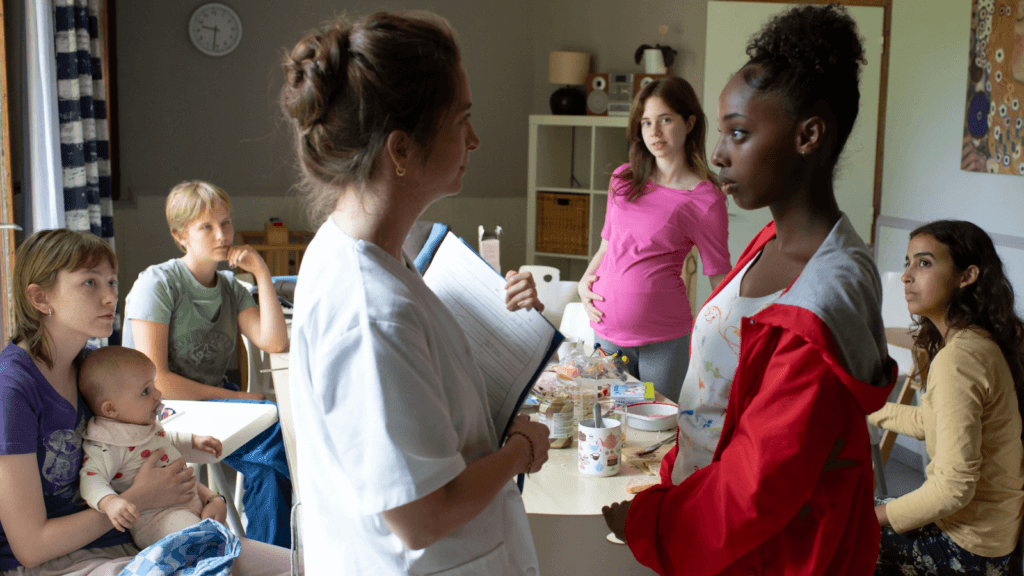
The Dardenne brothers, Luc and Jean-Pierre, continue their career-long portrait of life in the Liège province of Belgium with Young Mothers, a harrowing drama about a group of teenage girls who either are, or will be, new mothers. Housed in a Family Services program and cared for by a sympathetic staff of nurses who teach them to care for their babies, these girls have more to worry about than just motherhood. They also have all the pressure, anxiety, hormones, and uncertainty of being a teenager. Each of the Dardennes’ subjects must grapple with a distinct set of challenges: substance abuse, abandonment issues, uncertainty about the future, and establishing a family. These conflicts are difficult enough to manage as an adult. For girls in their mid-teens—none of them emotionally equipped for motherhood—such hurdles only complicate a difficult situation. Of course, they also make for great drama.
If you didn’t know any better, you might mistake Young Mothers for a documentary. Given the filmmakers’ start in the format, they’ve carried over that aesthetic to their dramatic features. Indeed, several of the Dardenne brothers’ films—from their Palme d’Or winner Rosetta (1999) to Two Days, One Night (2016), their star vehicle for Marion Cotillard—strip away artistic pretense for a really-there look and feel. Benoît Dervaux, cinematographer on the brothers’ last three features, employs handheld camerawork and natural lighting. The camera’s placement seems like a documentary crew keeping up with its characters, offering intimate close-ups and close-quarters blocking. The presentation is naturalistic, with no musical score, and the cast, mostly unknowns, makes it effortless to lose yourself in this world. Moreover, the character mosaic recalls documentaries that confront similar social issues affecting a variety of people.
The film opens with Jessica (Babette Verbeek), who is about to give birth any day. She waits at a bus stop for her biological mother, whom she’s never met. Jessica wants to tell her that she’s going to have a baby, and that she will not abandon the child as her mother did her. Jessica’s mother never shows up to the scheduled rendezvous, and it sends her reeling into so much anxiety that her impending birth is almost an afterthought. There is also Perla (Lucie Laruelle, terrific), who hopes her baby’s father, Robin (Günter Duret), fresh out of juvie, will finally settle down with her—she cannot handle the idea of being a single mother. Another girl, Julie (Elsa Houben), has a devoted partner in Dylan (Jef Jacobs). They plan to get an apartment and marry, but she grapples with drug use. Finally, there is Ariane (Janaïna Halloy Fokan), whose abusive and unreliable mother (Christelle Cornil) makes her choice to give her baby up for adoption even more necessary and difficult.
Statistically, in the United States anyway, many teen pregnancies among girls between 15 and 17 are fathered by men over 20—a disturbing metric, to be sure. Maybe this phenomenon doesn’t affect Belgium, but most of the pregnancies among Young Mothers seem to have originated among teenagers. Maybe it’s an unfortunate US bias, but the Dardennes seem to overlook how some of these pregnancies could be a result of predatory situations. However, perhaps confronting that aspect of teen pregnancy would have shifted focus away from the individual mothers to the statutory crime. That issue aside, the film is incredibly moving and predictably aching in its multi-layered portraits, brimming with the Dardennes’ profound empathy. It’s a worthy addition to their filmography, an ever-growing collection of humanist stories with far-reaching social consciousness. Rating: 3.5 out of 4 Stars.
Late Fame
Critic-turned-filmmaker Kent Jones’ new film Late Fame is one of many at MSPIFF this year that consider how the value of artistic integrity varies across generational divides. Another example, John Carney’s Power Ballad, addresses a similar topic, albeit in a more crowd-pleasing package of pop songs and commercially friendly actors (Paul Rudd, Nick Jonas). Based on a short story by Austrian author Arthur Schnitzler—who wrote the book on which Eyes Wide Shut (1999) was based—and adapted by screenwriter Samy Burch (May December, 2024), Jones’ film considers the fringe world of New York City poetry circles. Once a vital space for artistic resistance and intellectualism, overflowing with names like Allen Ginsberg and Eileen Myles, this brand of artists’ collective has been deprioritized and replaced today by social media influencers and “content” creators.
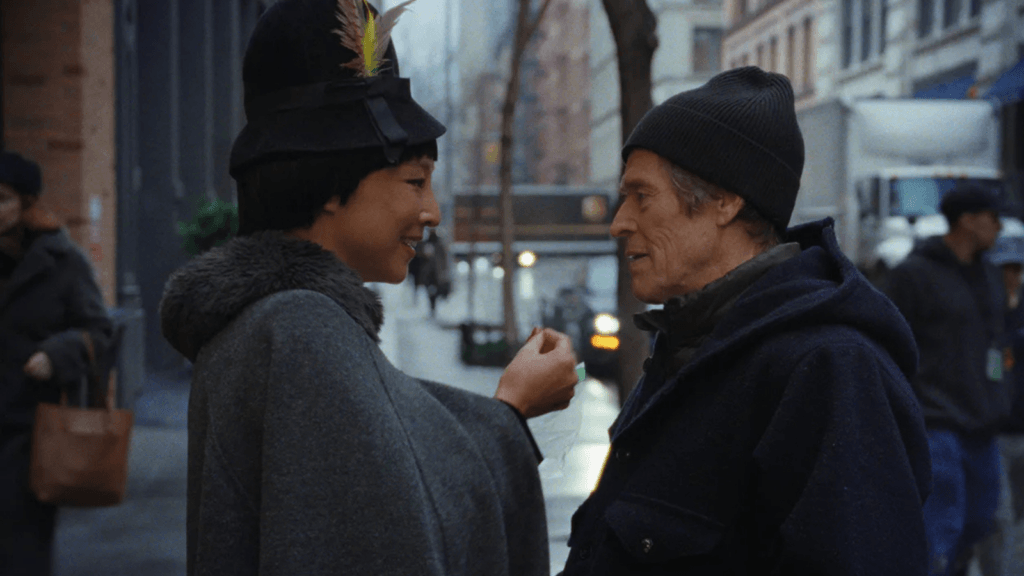
Late Fame centers on Ed Saxberger, played by Willem Dafoe in a rare everyman performance that he slips into effortlessly. Before he started his 37-year career as a postal worker, Ed wrote a formative book of poetry called Way Past Go. Ed’s quiet routine of work, returning home for a tuna fish sandwich, and playing pool with his USPS buddies at a local bar, is soon interrupted by Meyers (Edmund Donovan). A fan who wants to recreate the underground poetry scene of yesteryear, Meyers and a group of would-be poets known as the “Enthusiasm Society” welcome Ed into their fold, seemingly for the pleasure of saying his last name aloud, but hoping his presence will lend credibility to their half-baked movement. Although they declare themselves to be artistic purists who reject technology and “sociopath media,” there’s a stink of poserism about them that Ed doesn’t immediately recognize—mostly because he’s out of touch with younger generations.
On the periphery of Meyers’ group is a fascinating, tragic character named Gloria, played by a marvelous Greta Lee in a charmingly flamboyant turn. She takes to Ed, whose lack of pretense attracts her, even though she’s wearing layers of performative cover-up. Like Ed, she doesn’t have a trust fund or come from an ultra-wealthy family, unlike the others in this aspirational movement. Even so, Ed gets caught up in the moment, putting everything else in his life second, including an estranged brother who’s dying in the hospital. It’s all a little absurd, as he comes to realize during a meeting with a publisher (Jake Lacy) who wants Ed to write his memoir, which was Meyers’ idea. Gradually, Ed realizes that nobody in this collective of poets and performers has done the real work of an artist—at least not as he understands it. They’re trying to capture a nostalgic past they didn’t experience and capitalize on what others have done, in some vague attempt to appear as artists.
More authentic is Dafoe, who is extraordinary as Ed, a guy who set aside his creative outlet long ago. The Society wants him to write a new poem to showcase their live debut at a small club. He tries to put something together, walking around his neighborhood for inspiration, repeating the phrase “seasons collide.” But it’s not that easy. Ultimately, Late Fame is about having the energy to put in the artistic work and recognizing that great art comes from having something to say. There’s no shame in not having a perspective. However, recognizing the difference between inspired art and manufactured content is increasingly rare these days. Rating: 3.5 out of 4 Stars.
Like DFR? Support us.
This site exists because readers like you care about film. If DFR has enriched your experience with movies, I’d be grateful for your support. You have a few options:
• Join DFR’s Patreon community
• Make a one-time donation on PayPal
Whatever option you choose, it helps keep my work independent. And it means a lot to me.
Thank you for reading, and for making this work possible.
Brian Eggert | Critic, Founder
Deep Focus Review