The Definitives

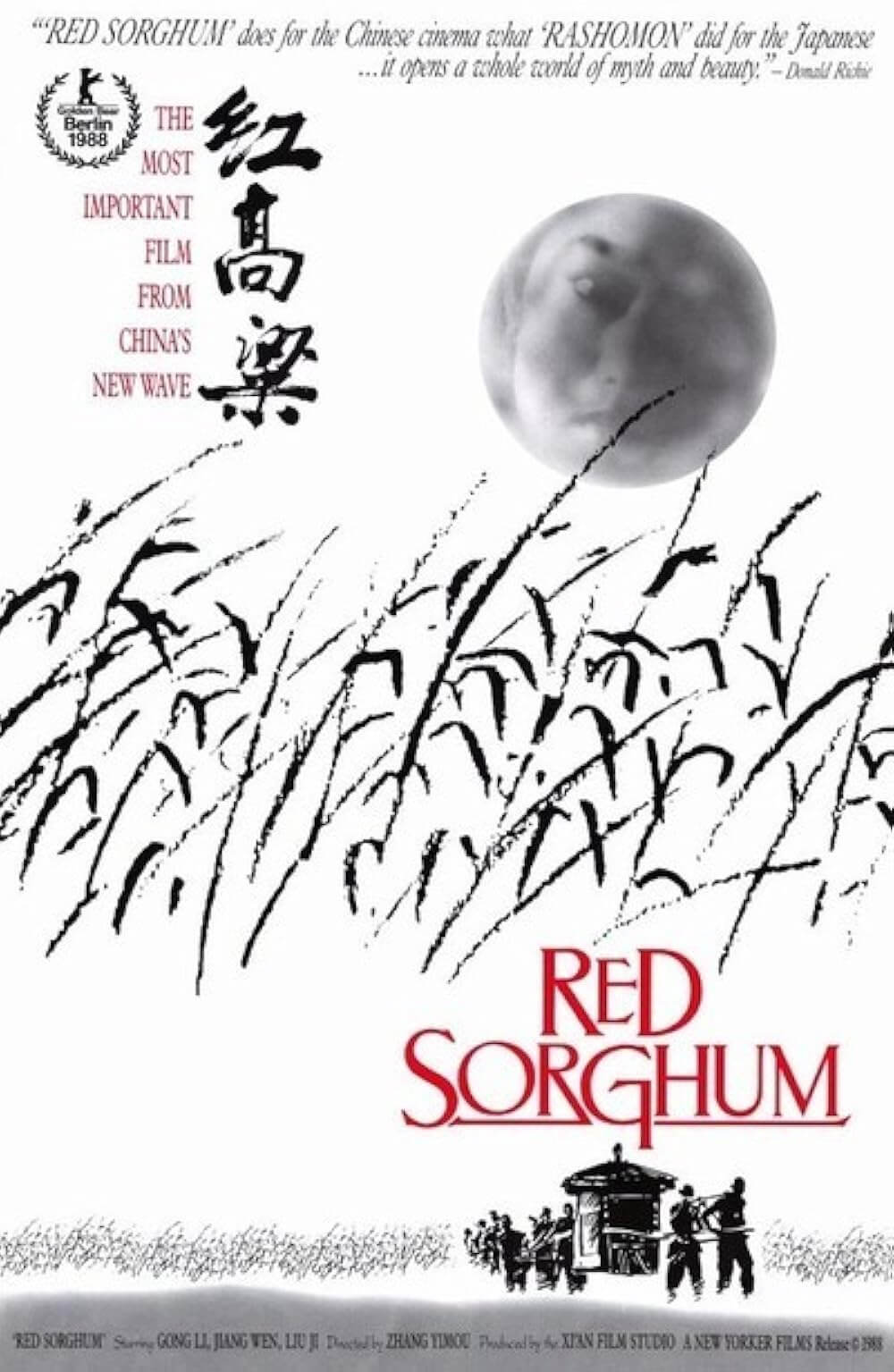
Red Sorghum (1988)
Essay by Brian Eggert |
Few other filmmakers have been so inextricably linked to their country’s cinema as Zhang Yimou. The preeminent figure among China’s Fifth Generation filmmakers, Zhang made several provocative films that transformed Chinese cinema from State-sponsored propaganda into internationally acclaimed art, effectively defining the nation’s cultural identity on the global stage for decades. In 1988, Zhang’s Red Sorghum, based on the book by Mo Yan, was released to international renown, winning the Golden Bear at the Berlin Film Festival, the highest honor ever bestowed on a Chinese film at that point. In many ways, the film served as the Western world’s introduction to new Chinese cinema; during the first years of China’s Reform and Opening Up period (1978-1989), few other films from the mainland had reached the international festival circuit. For Zhang, Red Sorghum launched his directorial career and marked his first of many successful collaborations with Gong Li. The film also became the first installment of his thematically and conceptually linked “Red Trilogy,” followed by Ju Dou (1990) and Raise the Red Lantern (1991). Like each entry in the trilogy, Red Sorghum’s setting and filming locations were situated far from the constraints of city life and Chinese Communist Party oversight. However, unlike many of his later twenty-first-century releases that conform to State ideology, Zhang’s trilogy considers various modes of survival and resistance to oppression in China before the 1949 revolution, serving as a symbolic critique of Mao Zedong’s People’s Republic of China (PRC). In Red Sorghum, Gong’s character, Jiu’er, represents a radical reclamation of female desire and autonomy. Through them, Jiu’er doesn’t just find personal liberation; she dismantles patriarchal order and channels her newfound agency into a force for the collective survival of her community.
The full 4,200-word essay is currently posted on Patreon. To read it, you can access the full piece individually. Or you can also join Deep Focus Review’s Patron community, where you’ll first receive exclusive access to this essay and many other reviews and blogs published on Patreon.
Patrons also get access to:
• Exclusive weekly blog posts
• Streaming recommendations every Friday
• Polls to pick the movies reviewed on Deep Focus Review and Patreon
• Access to the open AMA and DFR Community
Like DFR? Support us.
This site exists because readers like you care about film. If DFR has enriched your experience with movies, I’d be grateful for your support. You have a few options:
• Join DFR’s Patreon community
• Make a one-time donation on PayPal
• Buy me a coffee
Whatever option you choose, it helps keep my work independent. And it means a lot to me.
Thank you for reading, and for making this work possible.
Brian Eggert | Critic, Founder
Deep Focus Review