The Definitives
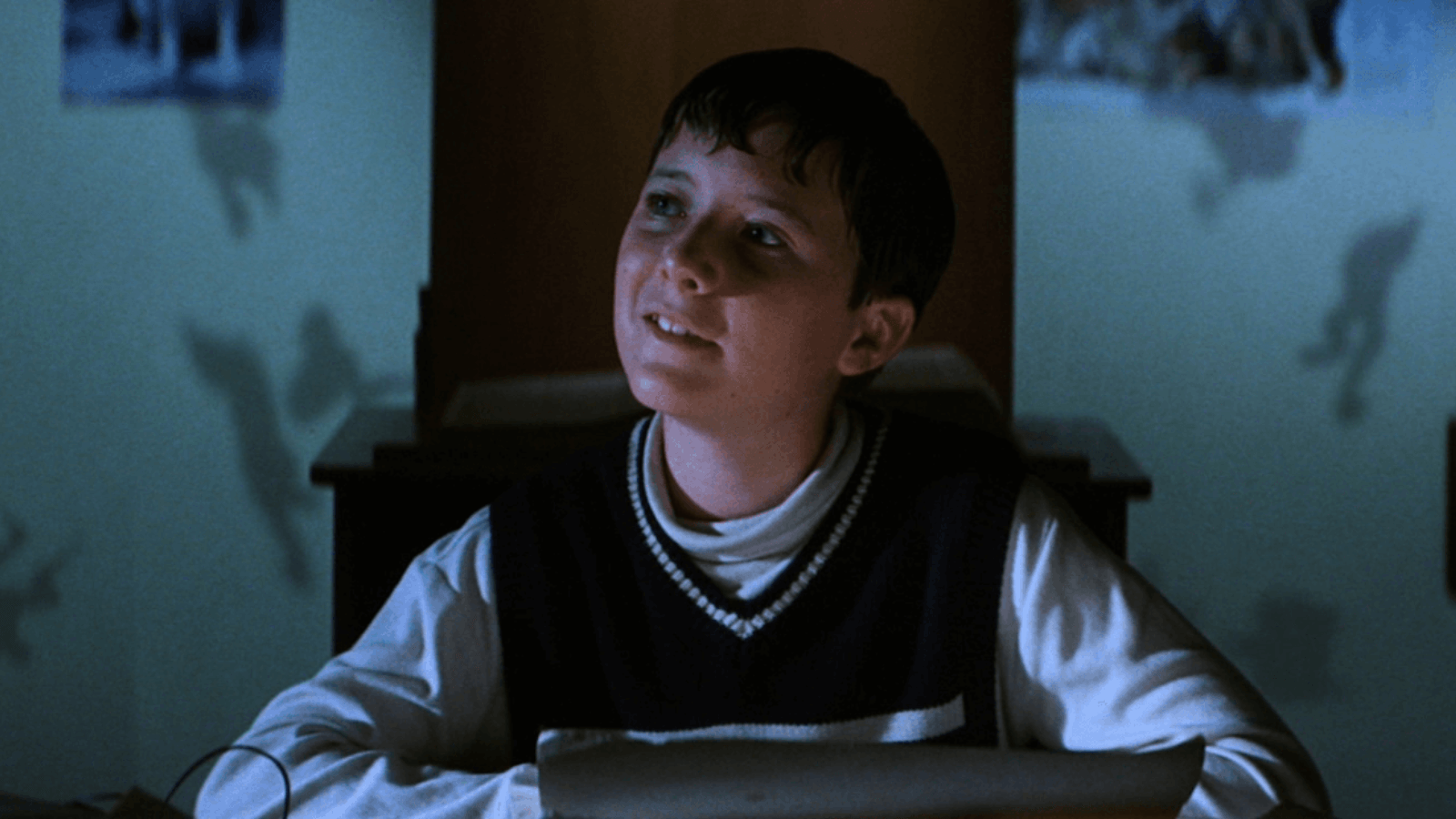
Magnolia (1999)
Essay by Brian Eggert |
“We may be through with the past, but the past is not through with us.” This simple idea frames Paul Thomas Anderson’s Magnolia, a story in which everything is connected: parents and children, colleagues and lovers, circumstance and proximity. Or maybe the pattern, if there is one, is that no pattern exists. Life happens. Trauma lingers. And sometimes frogs fall from the sky. Regardless of whether it’s about coincidence and fate, the film was made with unbridled creative freedom. Anderson’s unclassifiable 188-minute feature still divides viewers to this day. For some, it registers as the indulgence of a gifted but unchecked young auteur, intoxicated by his own ambition, who would go on to make far more controlled and inhibited films. For others, it stands as a life-affirming masterpiece, fueled by an outpouring of feelings. Indeed, to watch the film is to be caught in its emotional and cinematic gravitational pull. Its restless camera, onrushing music, heartbreaking monologues, and incomparable ensemble of marvelous performances generate a momentum that feels less plotted than propelled by raw emotion. What emerges is a work that insists on the messiness of human connection while conceding that, at times, the universe seems to have a grand design. And yet, in Magnolia, the questions of randomness or destiny prove secondary to the unfiltered humanity on display.
The full 4,300-word essay is currently posted on Patreon. To read it, you can access the full piece individually. Or you can also join Deep Focus Review’s Patron community, where you’ll first receive exclusive access to this essay and many other reviews and blogs published on Patreon.
Patrons also get access to:
• Exclusive weekly blog posts
• Streaming recommendations every Friday
• Polls to pick the movies reviewed on Deep Focus Review and Patreon
• Access to the open AMA and DFR Community

Like DFR? Support us.
This site exists because readers like you care about film. If DFR has enriched your experience with movies, I’d be grateful for your support. You have a few options:
• Join DFR’s Patreon community
• Make a one-time donation on PayPal
• Buy me a coffee
Whatever option you choose, it helps keep my work independent. And it means a lot to me.
Thank you for reading, and for making this work possible.
Brian Eggert | Critic, Founder
Deep Focus Review