The Definitives
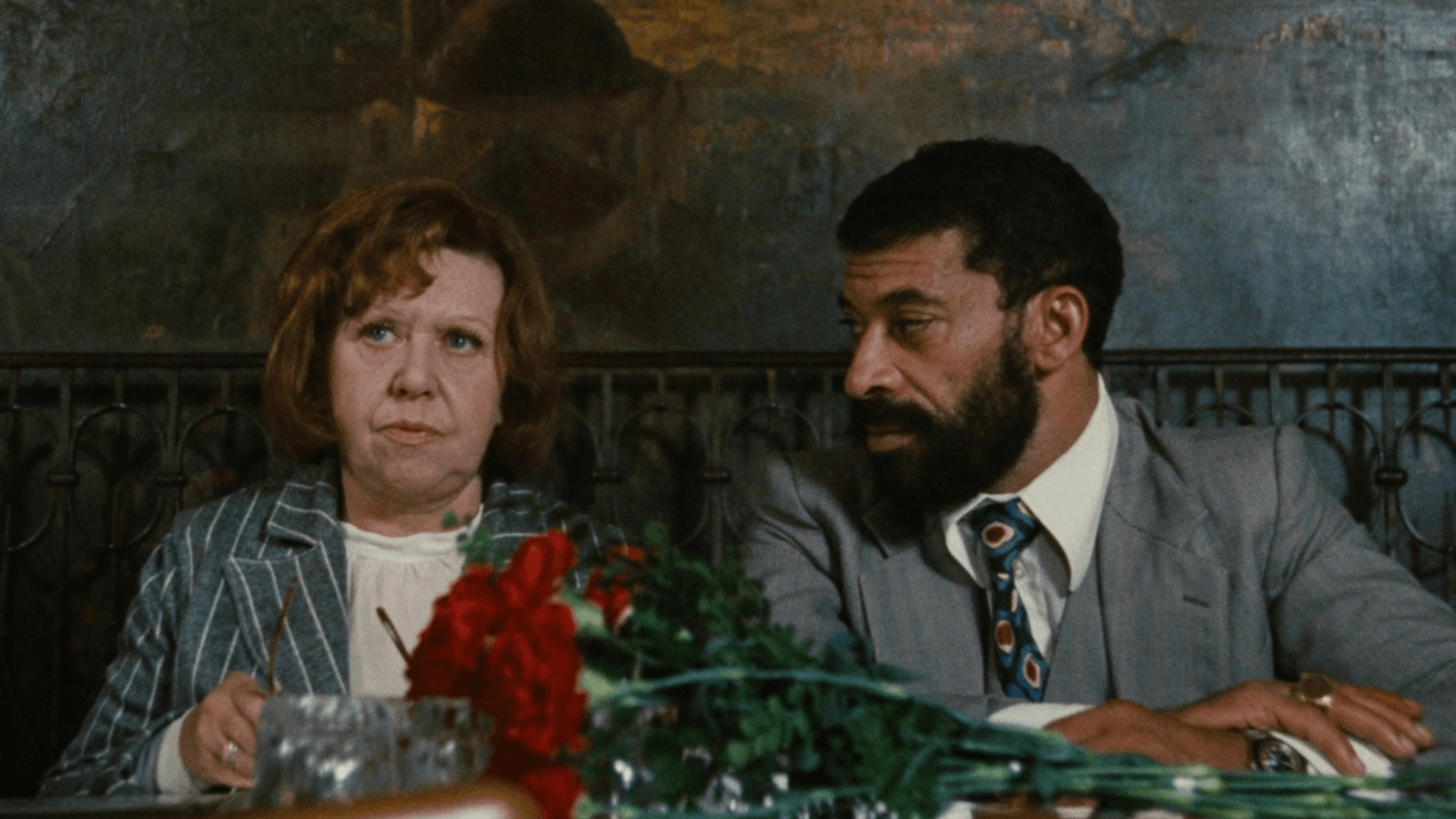
Ali: Fear Eats the Soul (1974)
Essay by Brian Eggert |
In Fear Eats the Soul, Rainer Werner Fassbinder rethinks the conventions of Hollywood melodrama into an unsparing portrait of social pressure set in West Germany. A radical figure of the New German Cinema movement, Fassbinder famously observed that “love is the best, most perfidious, and most effective instrument of social oppression.” This philosophy anchors his film’s central romance, which crosses generational and cultural lines. His tragic love story from 1974 is a work of oppositional cinema that challenges mainstream filmmaking. By muddying the pristine Technicolor veneer that inspired him and transplanting the narrative to the grimy realism of Munich in the 1970s, Fassbinder illustrates how cultural mores complicate the pursuit of love. The film’s opening epigraph encapsulates this intent: “Happiness is not always fun.” He examines how people tend to exclude and condemn nontraditional relationships, and how societal expectations can corrode something beautiful. Intertwined with Fassbinder’s own chaotic life and his turbulent romance with his leading man, Fear Eats the Soul has a complex legacy that elevates its otherwise simple message: Don’t let social pressure stop you from loving who you want, and don’t judge others for doing the same.
Much of the writing about Fear Eats the Soul (known in the United States as Ali: Fear Eats the Soul) centers on comparisons to Douglas Sirk’s All That Heaven Allows (1955)—one of the two uncredited sources of Fassbinder’s scenario. The other source hails from a newspaper story Fassbinder read about an older German woman who married a Turkish guest worker, only to be murdered. It’s unclear who killed her—her husband, one of his friends, or someone else. However, Fassbinder wanted to give her a happier ending, while confronting many of the collective problems in Germany that might complicate such a liaison. Accordingly, Fassbinder’s revision is not what most viewers would consider a traditional remake. Scholar Robert C. Reimer notes that it’s less a remake than a reflection of Fassbinder’s relationship with Sirk’s film. The director shifts many aspects of the story, from a picturesque 1950s New England suburb to a grungy 1970s West German city, from glossy Hollywood melodrama to stark social realism, from a romanticized style to an unvarnished one, and from the privileged upper-middle class to the marginalized lower-middle class. Many remakes of Hollywood hits made before and after Fear Eats the Soul have drastically changed such characteristics of their originals. What’s significant is less the novelty of a remake than what critic Andrew Sarris noted about Fassbinder—that he “manages to break the heart without betraying the mind.”
The full 4,500-word essay is currently posted on Patreon. To read it, you can access the full piece individually. Or you can also join Deep Focus Review’s Patron community, where you’ll first receive exclusive access to this essay and many other reviews and blogs published on Patreon.
Patrons also get access to:
• Exclusive weekly blog posts
• Streaming recommendations every Friday
• Polls to pick the movies reviewed on Deep Focus Review and Patreon
• Access to the open AMA and DFR Community
Thank You for Supporting Independent Film Criticism
If the work on DFR has added something meaningful to your love of movies, please consider supporting it.
Here are a few ways to show your support: make a one-time donation, join DFR’s Patreon for access to exclusive writing, or show your support in other ways.
Your contribution helps keep this site running independently. However you choose to support the site, please know that it’s appreciated.
Thank you for reading, and for making this work possible.
Brian Eggert | Critic, Founder
Deep Focus Review