Klara and the Sun
By Brian Eggert |
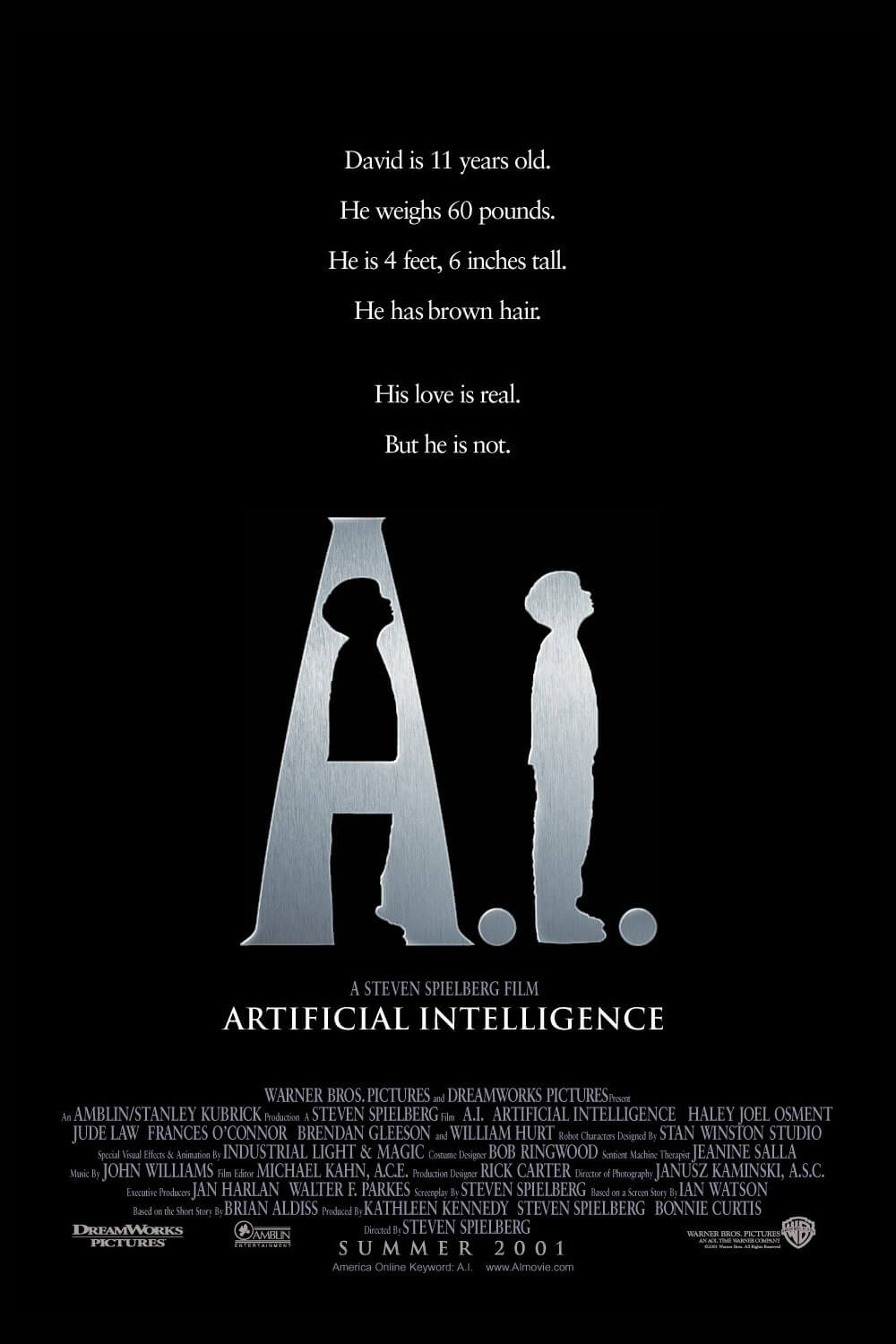
With no shortage of whimsy, Taika Waititi adapts Kazuo Ishiguro’s 2021 novel Klara and the Sun into a jumbled mix of earnest emotions and untidy world-building. Presented in an Edward Scissorhands-esque package, complete with throwback styles and music, and delivered with a lighthearted tone, the film nonetheless owes its root programming to the Spielberg-Kubrick masterpiece A.I. Artificial Intelligence (2001). Indeed, Waititi’s robot fairy tale unfolds in a post-World War III dystopia where the internet has been forbidden and rusty tanks lie abandoned in fields. Yet, there’s advanced technology and a sprawling metropolis to navigate. Regardless of the setting, Waititi’s third consecutive disappointment—after Thor: Love and Thunder (2022) and Next Goal Wins (2023)—also becomes yet another movie about grief in recent years. The theme, while relatable and true, has become naggingly omnipresent of late. When it works, it can bring up relatable feelings, even memories of departed loved ones; when it doesn’t, as in this case, the outcome can feel cloying and manipulative.
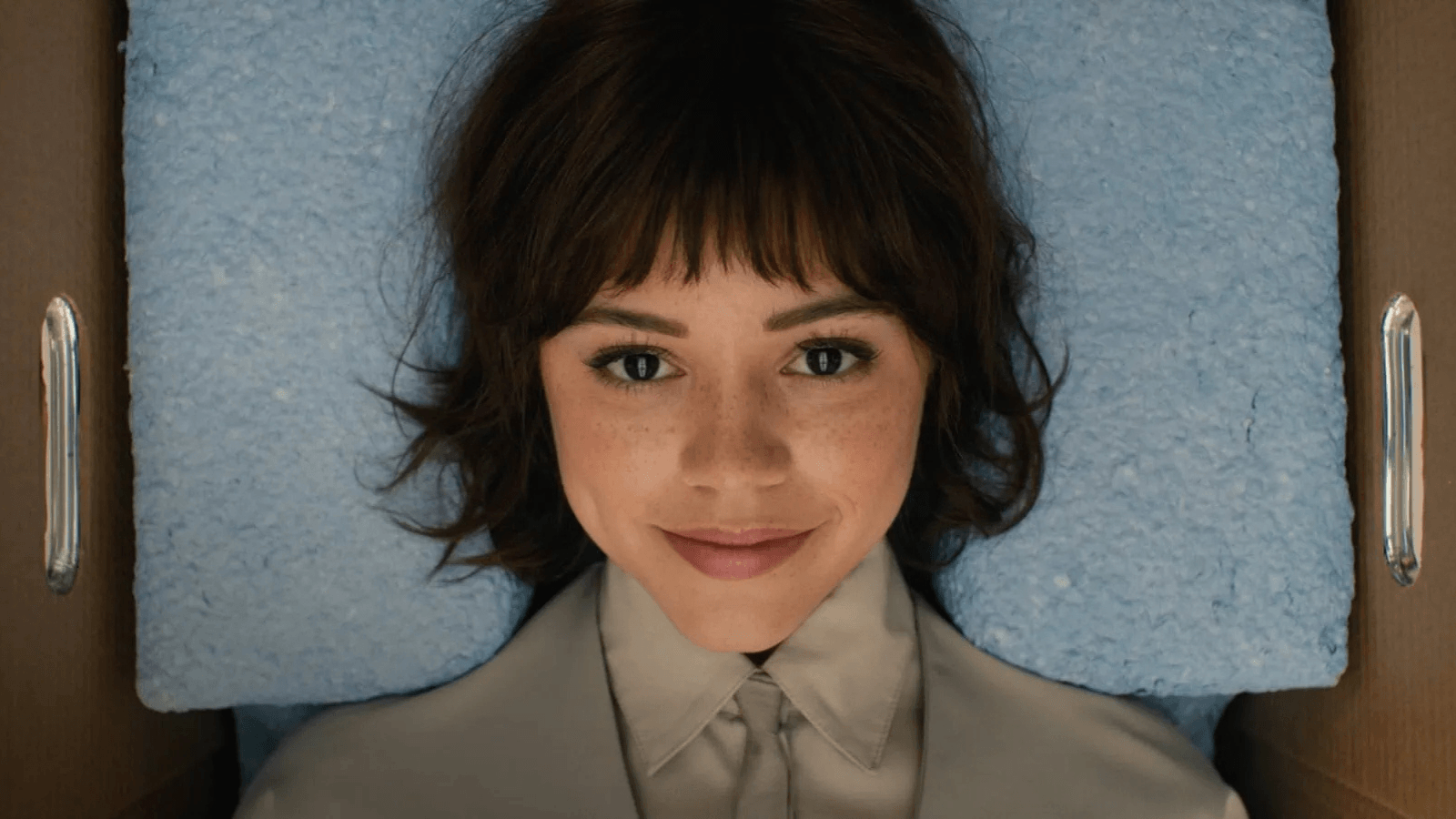
Jenna Ortega stars as Klara, part of a robot companion line called Artificial Friends or “AFs” for short. She’s an older B1 model, two generations behind the latest model, the more subservient and physically capable B3. Her model was discontinued for being “too humanlike, too empathetic.” Waiting at The Friend Store to be chosen by an owner, Klara spends her time looking at and talking to the Sun, which she worships like a god and believes gives all things life. This is true in a sense, of course, but not in the way she, a solar-powered robot, believes. Filled with kawaii-eyed wonderment about anything and everything, Klara is a manic pixie dreambot and a precocious idiot who somehow wasn’t programmed with a basic understanding of human behavior. She has to be shown what a hug is and never quite grasps that the Earth revolves around the Sun. The alternative, I suppose, is that she has a database and knows everything, but that might make her creepy. Isn’t there a happy medium, akin to Data from the first season of Star Trek: The Next Generation?
According to the store manager (Natasha Lyonne), Klara’s naïveté is part of her marketed appeal, since her would-be blank slate is meant to align with her owner. But because she’s been unpurchased for so long, Klara has developed a distinct personality and quirks, like her tendency to stand on one leg. Then again, maybe she always had a unique identity. Either way, teen Josie (newcomer Mia Tharia, a real discovery) spots her in a store window, and her uptight mother, Chrissie (Amy Adams), reluctantly buys the older companion bot. Overjoyed to fulfill her purpose, though worried she’ll be sent back before the 30-day return window ends, Klara arrives at her new home, an elaborately decorated estate nestled amid rolling wheat fields, and finds a family in crisis. She soon learns that Josie lost an older sister years earlier, prompting her father to leave. What’s more, Chrissie’s choice to have Josie “Lifted”—a DNA-altering process done among rich families to make their children into supergeniuses—is causing her daughter’s health to fatally deteriorate.
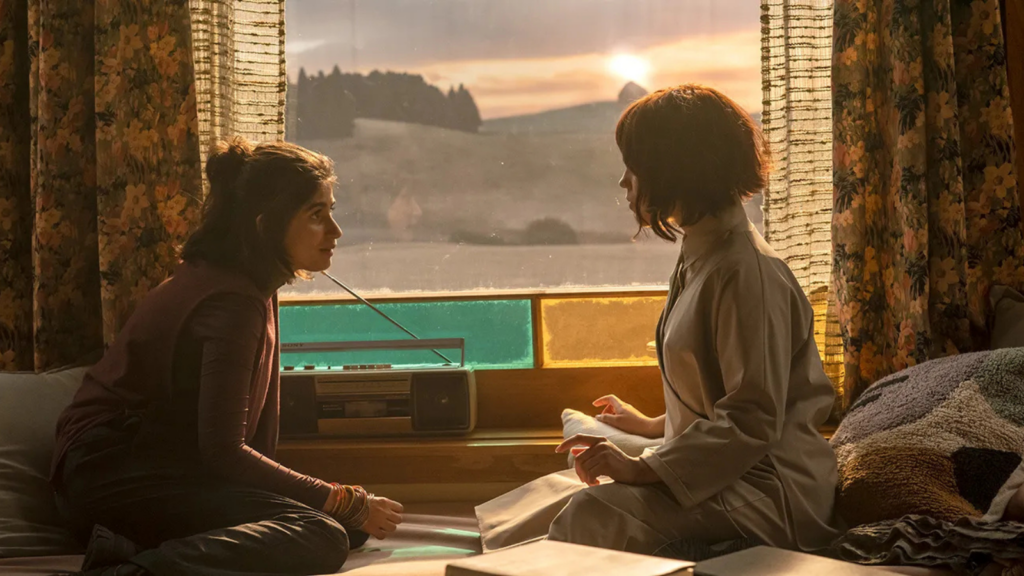
Much of the two-hour runtime follows Klara trying to protect and save Josie. The robot’s inability to quickly process her surroundings results in Klara Vision: a pixelated rendering of her environment that will short out her programming if she’s slammed with too much visual information. This prevents her from running up stairs or stopping a runaway car in desperate moments, which makes Chrissie and the paranoid housemaid (Rachel House) wonder what use she has. As for Josie, she looks forward to meeting her Lifted peers—bizarre elitist kids who torture their AFs and socialize by asking, “Shall we interact?” They’re a freakish bunch next to Rick (Aran Murphy), a normal kid and tech whiz who has always been there for Josie. The plot turns when Klara and Josie learn that Chrissie has been working with a shady figure, Capaldi (Steve Buscemi), to deal with her second daughter’s impending death.
Even with some classic Waititi-brand humor, Klara and the Sun is mostly a passive affair, with disparate moments of levity throughout. After working with Tim Burton on two seasons of Netflix’s Wednesday, Ortega is committed to an arch character; here, she may as well have scissor fingers. She handles the role’s physical comedy well, using Klara’s ever-wide-eyed expressions to charming effect. But later, her character becomes a sort of religious zealot—the climactic scene finds her behaving like a self-sacrificing fanatic who worships the Sun and goes to suicidal lengths to appease her god, leading to a tragic, scrambled conclusion. A few laughs and neat ideas aside, the movie’s lack of dramatic closure is more frustrating than interestingly ambiguous. The film is well-shot by cinematographer Mike Berlucchi, who represents true love with an all-encompassing golden, shimmering light (digitally augmented). And Michael Giacchino’s score has an appropriate level of idiosyncratic schmaltz for Waititi’s cutesy approach.
Although I haven’t read Ishiguro’s book, one assumes the text has a richer interiority that bonds us with the characters beyond the surface-level treatment Waititi brings to the movie. And the novel might better explain many of the plot holes and logical gaps scattered throughout. As is, the distancing effect of the director’s customary irony kept Klara and the Sun from landing an emotional wallop for me. What’s also frustrating is that, despite today’s conversations about AI and its destructive potential, the film shows little cynicism about robots who are just as meaningful as humans. “There’s nothing special about us that can’t be copied,” says Capaldi of humanity. But Klara thinks otherwise, noting how it’s the people who love us that define us, and that can’t be replicated. Klara, too, is loved. She behaves with selflessness and open-hearted honesty, but I found it hard to commit to her perspective, even though the film’s lessons and themes should resonate. Klara and the Sun tries way too hard to melt our hearts, and its persistence, somewhat fittingly, comes off as synthetic and hollow.

Like DFR? Support us.
This site exists because readers like you care about film. If DFR has enriched your experience with movies, I’d be grateful for your support. You have a few options:
• Join DFR’s Patreon community
• Make a one-time donation on PayPal
• Buy me a coffee
Whatever option you choose, it helps keep my work independent. And it means a lot to me.
Thank you for reading, and for making this work possible.
Brian Eggert | Critic, Founder
Deep Focus Review