Miroirs No. 3
By Brian Eggert |
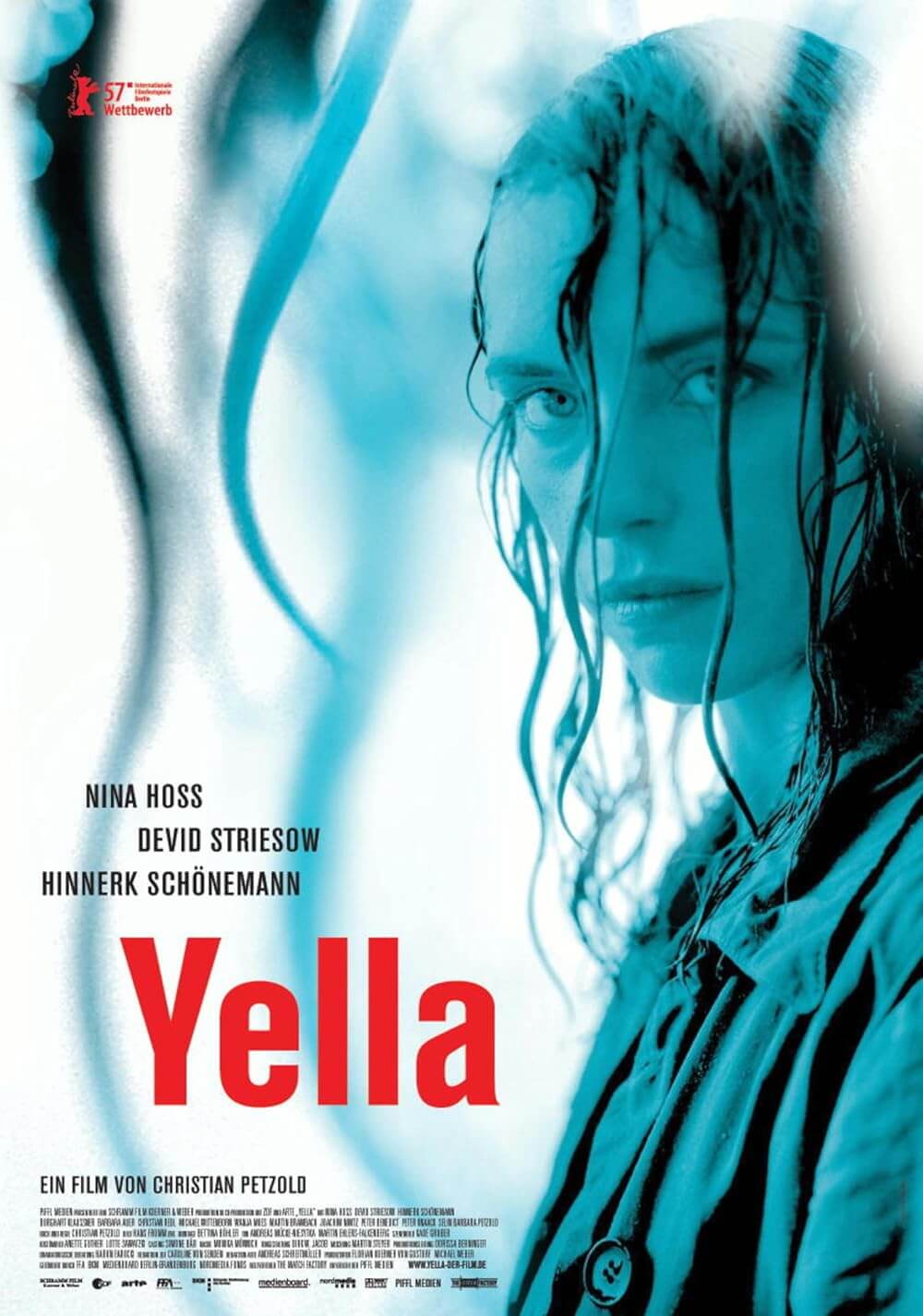
Christian Petzold’s latest, Miroirs No. 3, is another of the German filmmaker’s dramas about a woman caught between two identities. That’s not so much a complaint that he’s doing the same thing as an assurance that this auteur has revisited a venerable theme in his work for upwards of twenty years. Petzold often writes women with a fractured sense of self, from Phoenix (2014), in which Nina Hoss takes on a new identity after surviving Auschwitz in World War II, to questions about whether Paula Beer’s character in Undine (2021) is merely an enchanting woman or a mythical creature in disguise. But the closest comparison in Petzold’s filmography is Yella (2007), about a woman who survives a car crash intended by her abusive partner to kill them both. She emerges half in reality, half in a ghostly, haunted afterlife. A car wreck also occurs in Miroirs No. 3, though it’s not deliberate. What follows is less about literal ghosts than a moving examination of how trauma leaves people in a state of emotional suspended animation.
Miroirs No. 3 premiered at last year’s Cannes Film Festival in the Directors’ Fortnight section. It marks the final entry in Petzold’s conceptual “Elemental Trilogy,” following the water symbolism of Undine and the mysterious, apocalyptic blazes of Afire (2023). The elemental motif in Petzold’s new film employs less apparent symbolism. The title refers to a piano suite by the French composer Maurice Ravel in the early twentieth century, specifically the section titled “Une barque sur l’océan” (“A Boat on the Ocean”). Despite the water-bound title that could describe Petzold’s isolated and drifting protagonist, an argument could be made for the film’s earthiness. Much of the narrative takes place on a farm in the German countryside, where a grieving mother, Betty (Barbara Auer), has lost herself in mourning for her daughter, Yelena, who took her own life. Betty spends her days in the herb garden, and vast fields surround her cozy house.
One day, Laura, played by Beer, Petzold’s recent muse, passes Betty’s home in a convertible with friends. She locks eyes with Betty, sharing a vague moment that’s not quite recognition but an awareness that some metaphysical force draws them to one another. They exchange a similar look a short while later, after Laura, who feels uneasy and stand-offish, asks her boyfriend (Philip Froissant) to drive her home. From the first scenes of Miroirs No. 3, something nags at Laura, who studies piano at the Berlin University of the Arts. The way she lingers on a bridge and walks down by a river in an early scene has dreadful, if unstated, implications. Passing Betty’s house the second time, the two women’s loaded glance seems fateful somehow. A moment later, Laura’s boyfriend crashes the car. He dies while Laura is dazed but otherwise unharmed.
Never mind Laura’s curious request that she recuperate in Betty’s nearby house. The woman seems more than happy to care for this stranger, who supplies a surrogate for Yelena. She even accidentally calls Laura by her daughter’s name. But it’s more than that. Betty and Laura become platonic partners, like mother and daughter or two sisters, and share an immediate intimacy as if they had known each other for years. For Betty, Laura is a reflection of her daughter, playing piano like Yelena did, for instance. She’s confused yet swept up in the new relationship, and even invites her estranged husband, Richard (Matthias Brandt), and her son, Max (Enno Trebs), over for dinner as a family. Although they are both tradesmen more interested in fixing Betty’s dripping sink and broken dishwasher than complimenting Laura on her preparation of Königsberg dumplings, they nonetheless recognize something unhealthy happening between the two women when Laura appears in Yelena’s clothes.

These concerns initially reside beneath the surface, allowing the viewer to project and interpret the nature of this relationship. Petzold resists any temptation to clarify the emotional stakes with clunky exposition or overstated dialogue, only quiet, tender scenes and nuanced performances. As ever, the writer-director approaches drama elegantly, weaving its themes into the narrative with such sophistication that the viewer must find meaning from within. Petzold avoids playing up the scenario for thrills or suspense, enlisting his regular cinematographer, Hans Fromm, and editor Bettina Böhler to deliver a visually textured and measuredly paced story in less than 90 minutes. The filmmaker even forgoes a traditional score. He gives his actors long passages of pregnant silence, broken only by a gentle breeze. However, The Four Seasons’ “The Night” plays several times on the soundtrack and—much like Wallners’ single “In My Mind” did for Afire—offers a path to interpretation.
Miroirs No. 3 is Petzold’s fourth collaboration with Beer, who starred in Transit (2018), Undine, and Afire before this. Although her dialogue is limited, Beer captures Laura’s melancholy and uncertainty in her refined facial expressions and body language. It’s not always clear what’s going through her mind, nor Betty’s, but the viewer can intuit the unspoken connection between the two characters. Betty is more readable than Laura, driven by grief and an emotional need to replace Yelena, though eventually she recognizes that her behavior crossed a line. Laura internalizes her motivations. Her interlude with Betty might be a necessary escape from herself, forcing her to re-engage with her life after her horrifying car accident and whatever compelled her to contemplate suicide in the film’s opening scenes. Maybe staying with a woman who lost her daughter to suicide gave Laura perspective and convinced her not to take her own life. But what drew her to Betty in the first place?
The film is about those chapters in life that feel directionless and liminal. Betty is suspended by her grief, medicated, and trapped in her sorrow. Laura’s arc goes from questioning her relationship, not to mention mortality, to finding a welcoming escape before she settles on a path forward. They need each other. The final scenes in Miroirs No. 3 involve Betty’s family trying to keep Laura in their lives or at least ensure she’s doing well—albeit in a voyeuristic way that recalls Alfred Hitchcock’s Vertigo (1958), which was apparently on Petzold’s mind when writing his original screenplay. Regardless, Laura offers them some measure of closure in the finale with one of Beer’s signature enigmatic expressions, embodying the film’s interest in the ambiguous states between the living and the dead, ghosts and memories, mourning and acceptance. While a more grounded film than Petzold’s last several, each of which included peculiar narrative mechanisms, Miroirs No. 3 nonetheless reflects the filmmaker’s interest in the mysteries of human emotion.

Thank You for Supporting Independent Film Criticism
If the work on DFR has added something meaningful to your love of movies, please consider supporting it.
Here are a few ways to show your support: make a one-time donation, join DFR’s Patreon for access to exclusive writing, or show your support in other ways.
Your contribution helps keep this site running independently. However you choose to support the site, please know that it’s appreciated.
Thank you for reading, and for making this work possible.
Brian Eggert | Critic, Founder
Deep Focus Review