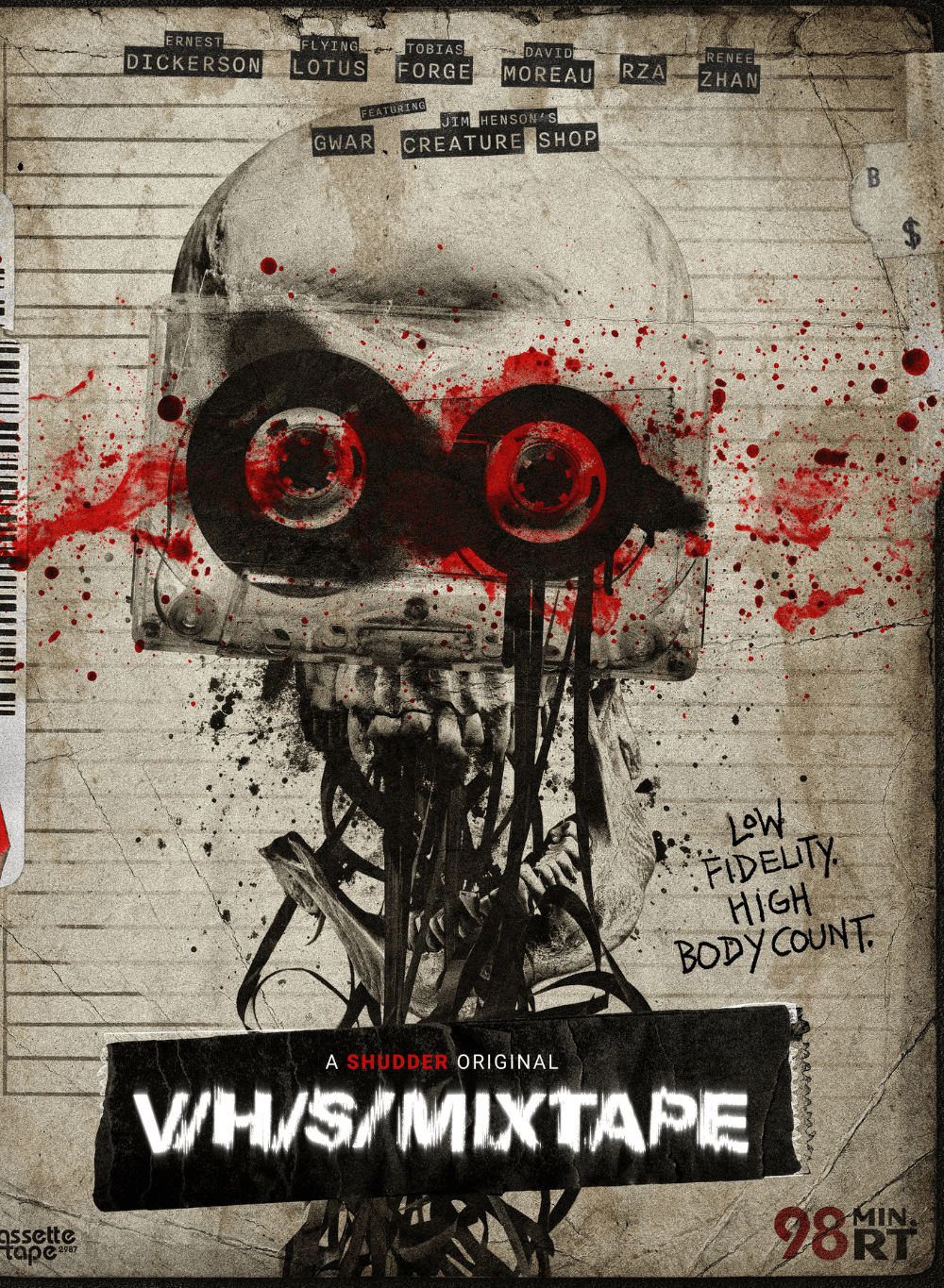
You Can See Everything
By Brian Eggert |
(Editor’s Note: This review contains spoilers. For the best experience, read the review after you see the film.)
The closer you look, the less you see. This adage is especially true of documentaries, where filmmakers piece together footage to elicit an intended reaction from the viewer. They discard certain moments and include others, shaping the narrative into the story they want to tell. The best documentaries, such as Errol Morris’ The Thin Blue Line (1988), often acknowledge and expose this about themselves. More than most films, audiences must question what they’re seeing in a documentary, if only because they’re often perceived as non-fiction. No medium shows how truth can be molded and distorted more clearly than film, particularly documentaries. You Can See Everything is about this very idea. Co-directed by the on-screen Nathan Fielder, in his signature deadpan style, and off-screen documentarian Lance Oppenheim, the film asks its audience to sift through layers of fact and fiction, perception and projection, intention and interpretation, and then determine what happened, even as it confronts the unreliable and elusive nature of reality. It belongs on a shortlist with Michelangelo Antonioni’s Blow-Up (1966) and Abbas Kiarostami’s Close-Up (1990) as a film that forces us to acknowledge the blinding nature of scrutiny.
In passing, I’ve heard You Can See Everything called “the Elizabeth Holmes movie,” but afterward, I would call it “the Nathan Fielder movie.” At the very least, it begins with Elizabeth Holmes, the founder of the Silicon Valley startup Theranos. Portrayed as the next Steve Jobs, she claimed to have developed revolutionary blood-testing technology. Before long, Holmes was exposed as a charlatan and, in 2022, convicted on four counts of fraud and sentenced to over eleven years in prison. Just two months before her sentence began in 2023, she and her partner, Billy Evans, invited Fielder to stay with them in their rented beachfront home in Southern California to capture what they’re really like. Evans wants “radical transparency,” he says, though Oppenheim’s choice to frame the image in the boxy Academy Ratio, while employing slow zooms and extreme close-ups, suggests we’re missing something—or rather, something has been hidden from us in plain sight. “What is the reality?” Holmes asks of her story. She maintains her innocence (“I know I didn’t commit any crime”) and vows she never lies. “I’ve never tried to deceive anyone,” she says. This statement makes Fielder, and the audience, react with comic disbelief.
If you’re familiar with Fielder’s television work, you can probably guess the film folds in on itself, turns itself inside out, and twists itself into knots, until it becomes something else entirely by the end. Although the Canadian got his start in improv comedy and writers’ rooms, Fielder has created inventive, genius-level shows. There’s Nathan for You (2013-2017) for Comedy Central, a satirical reality show that started with him helping businesses with cockamamie solutions only to become unusually existential. The same is true of HBO’s The Rehearsal (2022, 2025), where Fielder went to incredible, even surreal lengths to help prepare guests for tense confrontations. In the second season, he became so personally invested in trying to diagnose miscommunications between pilots and co-pilots that he decided to acquire his pilot’s license to understand their relationship. Fielder’s background is worth noting because he’s not a documentarian in the strictest sense. He’s more like a performance artist who works on the margins of documentary. His co-director, Oppenheim, has made traditional docs before (Some Kind of Heaven, 2020), and more recently a pure drama with this year’s Primetime.
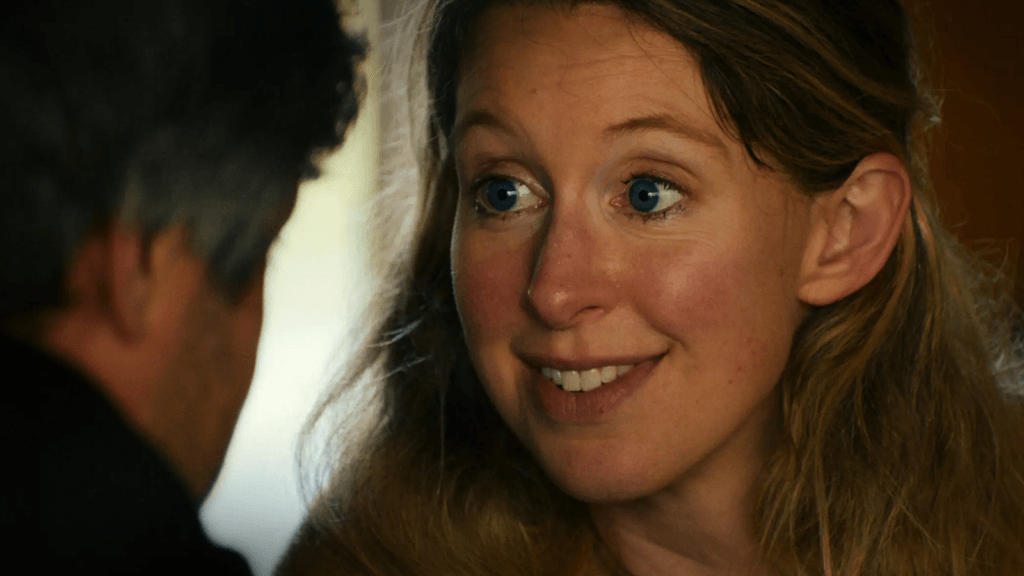
So why, of all people, did this couple reach out to Nathan Fielder? They don’t seem to know, other than that Evans saw some YouTube clips of Nathan for You. For reasons that become clear as mud later—baffled curiosity, perhaps—Fielder and Oppenheim have agreed to the month-long project. After two weeks together, Holmes reminds Fielder that he’s invited to stay with them, so he agrees and sleeps in their guest house, eats their bagels and pink pineapple, and records every moment he can with a series of cameras and boom operators. Almost immediately, Fielder admits he believes she defrauded and deceived people. But she’s determined to show him her truth, though it’s riddled with contradictions: The couple says they’re not interested in the spotlight, yet Holmes welcomes the cameras into their private life (Evans even lets himself be filmed in the shower for some unexpected full-frontal nudity). Holmes claims to have difficulty crying but has no trouble turning on the waterworks when the cameras are around. She even declares the original Theranos device worked, despite all evidence to the contrary. It comes down to the words “can” versus “could.” To help illustrate his confusion, Fielder shows her a clip of Abbott and Costello’s “Who’s on First?” routine. Holmes doesn’t get the wordplay. Media illiteracy aside, Evans explains, she’s just “weird” and “thinks differently.” After watching the clip and talking about it, she even appears confused by her own confusion.
Anyone who’s watched Alex Gibney’s doc The Inventor: Out for Blood in Silicon Valley (2019) or the Hulu miniseries The Dropout (2022), starring Amanda Seyfried as Holmes, knows it’s impossible to penetrate the fabricated surface of Holmes’ eerie resting smile. She’s an enduring enigma. And yet, she deems herself an open book, even as the couple has a secret moment debating whether they should really adhere to total visibility. “I’ve never tried to deceive anyone,” she contends. Fielder and his crew must decide whether Holmes, best known for sculpting her persona, is doing the same thing to them. Is she just trying to sell herself again? It comes across that way, given Holmes’ and Evans’ enthusiasm for launching Theranos 2.0 (now with AI and lasers!). How fitting that an ongoing thread includes an interview with The New York Times, where Holmes, speaking about The Dropout, was quoted as saying that Seyfried was “playing a character I created.” Holmes insists she never said that. Evans says he has proof she didn’t say it, too, but he always finds ways not to share their evidence.
Twitchy and sporting a case of the cocaine sniffles, Evans—who prefaces every other sentence with “I know this sounds crazy but”—is a reflection of Holmes’ unknowability. He’s just far more obvious in his deceptions. He also calls into question the power dynamic in their marriage. In one of the film’s many great scenes, Holmes lackadaisically beats eggs for breakfast, only for Evans to take the bowl and fork from her hands and whisk more intensely. It’s one example of many in what could be seen as Evans’ manipulation and control of Holmes, feeding into her personal history with men who use her like a puppet (among them Holmes’ former lover, Sunny Balwani, the President and COO of Theranos). Then again, maybe this is how she operates, making her partner do the dirty work while she feigns ignorance. Evans certainly fits the role. Not his contentious attitude about the crew’s effect on their Wi-Fi, his suspicious wariness about money conversations, and his attempts to control the narrative of Fielder and Oppenheim’s doc. Shifty and paranoid, Evans wants the production to serve his agenda, with which Holmes may or may not be aligned. They claim they’re one and the same; their love is “so real,” and they’re “building monuments” to it. But it’s all so precarious and suspicious, with Ari Balouzian’s ominous score playing beneath the footage, as if it were accompanying a psychological thriller.
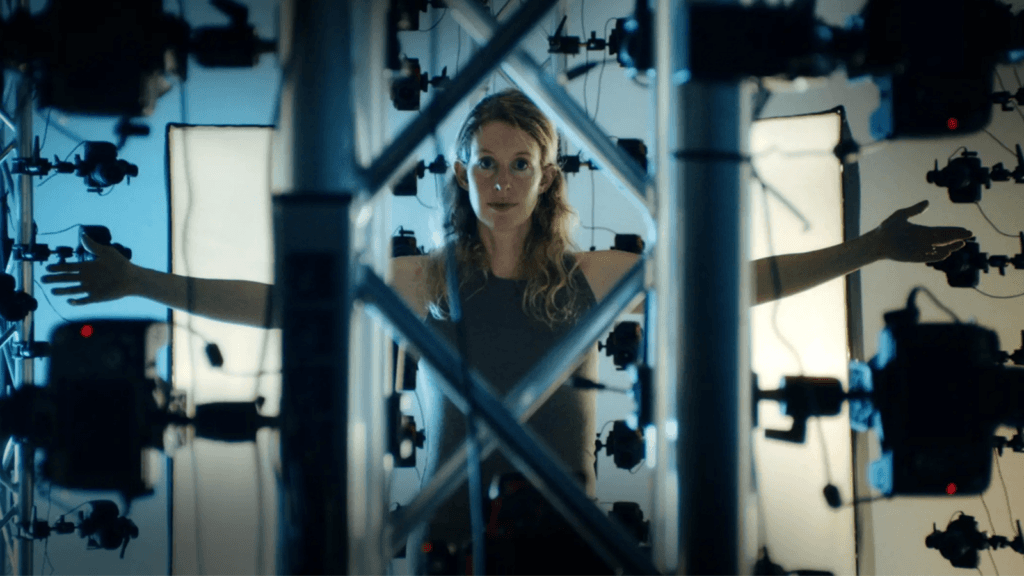
You Can See Everything runs just under three hours, and the filmmakers earn that runtime. It’s not only that Holmes and Evans remain intriguing subjects, capturing our attention with a what-the-fuck-is-going-on quality. It also has an unpredictable second half—most of which I will leave you to discover. Here, the documentary shifts from a live-in portrait of a controversial figure to something more introspective, probing, and characteristic of Fielder’s most experimental television work. Two years after Holmes goes off to prison, Evans, who has Power of Attorney over her, manages her social media accounts, creates an AI facsimile of her, and sells her likeness to some dubious people. Trying to wrap his head around the situation, Fielder reaches out to Seyfried and, with her help, recreates off-camera encounters that deepen this labyrinthine maze. He also asks for her input as someone who played Holmes, even enlisting her as a secret agent to assess Evans. They agree that Holmes needs to be informed of Evans’ chicanery. And they both agree: Either Holmes is clueless to Evans’ schemes, or she helped mastermind the whole thing. She’s either crazy or a psychopath.
Although You Can See Everything might seem like two movies stitched together in the middle, it plays like a long and winding road into Fielder’s equivocal investigation. Because he isn’t bound by journalistic integrity or even direct cinema’s pretense of objectivity, his perspective on Holmes becomes clouded and possibly personal. Moreover, to this point, I’ve probably undersold how funny the film is, and not just for its baffling strangeness. Just before Holmes goes to prison, for instance, Fielder awkwardly offers to leave so the couple can have sex one last time; later, he gives Holmes a priceless pre-prison gag gift. Fielder and Holmes have a curious bond, fueled by their shared misunderstanding of social cues, which he has discussed on his various shows. When they say goodbye, she tells him, “You got this,” even though she’s the one going to prison. Seyfried wonders if he’s withholding something for personal reasons; he maintains he’s just being “accurate.” And so, questions linger about what we’ve seen, and whether Fielder may have (mis)interpreted what happened because of his biases. Did Holmes dupe Fielder, enough to make him want to hide certain details from earlier in the movie until the final shots? Is the film remarking on the observer effect, where documentarians inherently affect their subject with their presence and become part of the story? Or is it using the situation to show how films and shows—particularly The Dropout, but also documentaries—shape public assumptions based on limited information or dramatized situations?
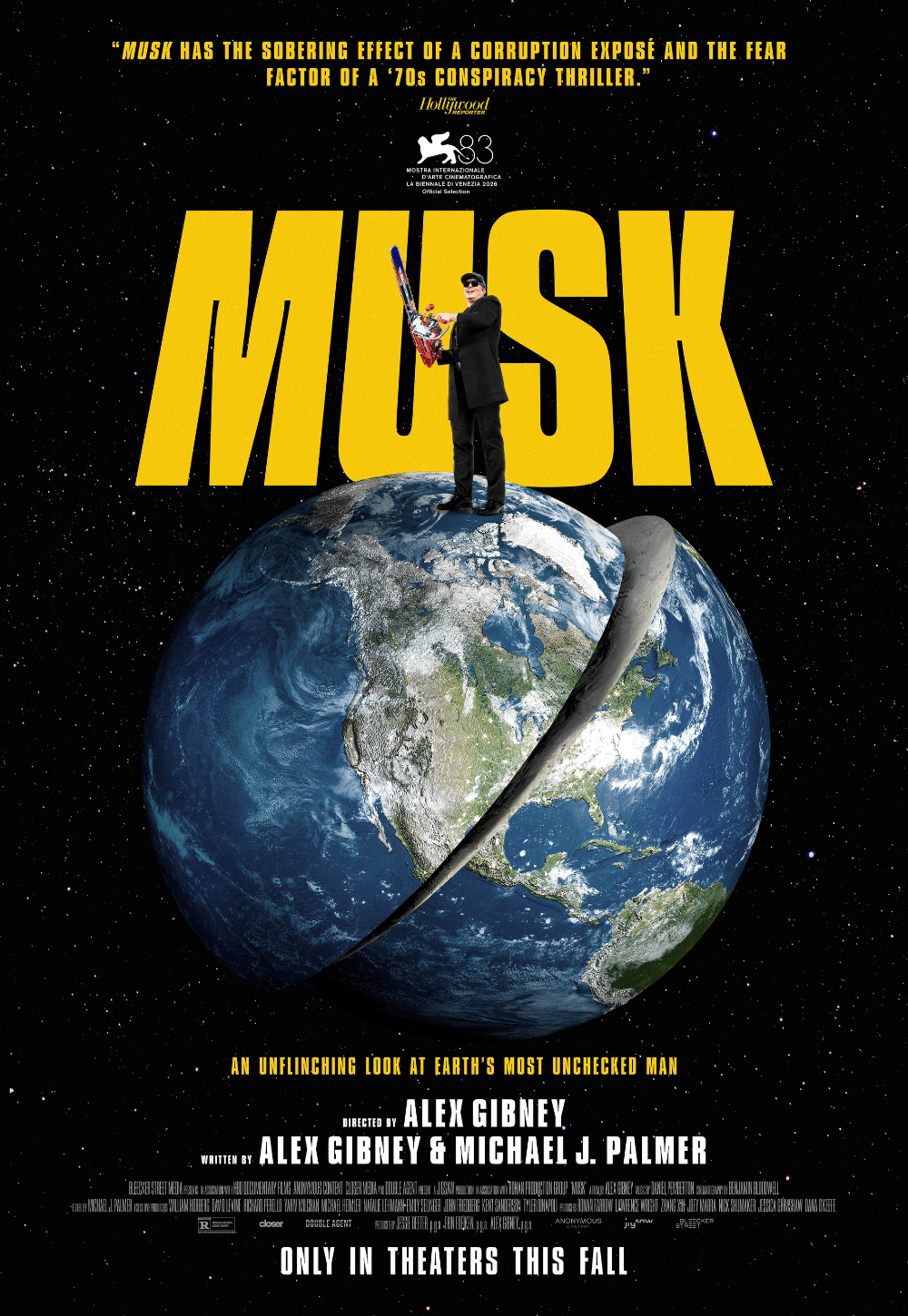
A riveting, maddeningly evasive film that experiments with the boundaries of documentary, You Can See Everything is one of the year’s best alongside John Wilson’s The History of Concrete, another otherwise straightforward doc that gradually veers into self-reflective terrain (appropriate, since Fielder produced Wilson’s How To with John Wilson for HBO). Even after spending a month with Holmes, Fielder seems no closer to having clear answers about her. However, given that films about America’s Silicon Valley oligarch problem are practically ubiquitous this fall, it’s refreshing to see Fielder and Oppenheim do something far less upfront. Aaron Sorkin targeted Mark Zuckerberg with The Social Reckoning, and Gibney released a four-hour exposé with Musk. Fortunately, You Can See Everything adds another inconclusive yet fascinating caveat to our understanding of the Elizabeth Holmes story. But it also confronts personal biases and media representations in a way that will probably leave many unsure what to think. When so many contemporary movies deliver unabashed messages to today’s subtext-averse moviegoers, it’s refreshing to see a documentary that embraces bewilderment about its subject, its makers, and the whole project before us.
Thank You for Supporting Independent Film Criticism
If the work on DFR has added something meaningful to your love of movies, please consider supporting it.
Here are a few ways to show your support: make a one-time donation, join DFR’s Patreon for access to exclusive writing, or show your support in other ways.
Your contribution helps keep this site running independently. However you choose to support the site, please know that it’s appreciated.
Thank you for reading, and for making this work possible.
Brian Eggert | Critic, Founder
Deep Focus Review