We Bury the Dead
By Brian Eggert |
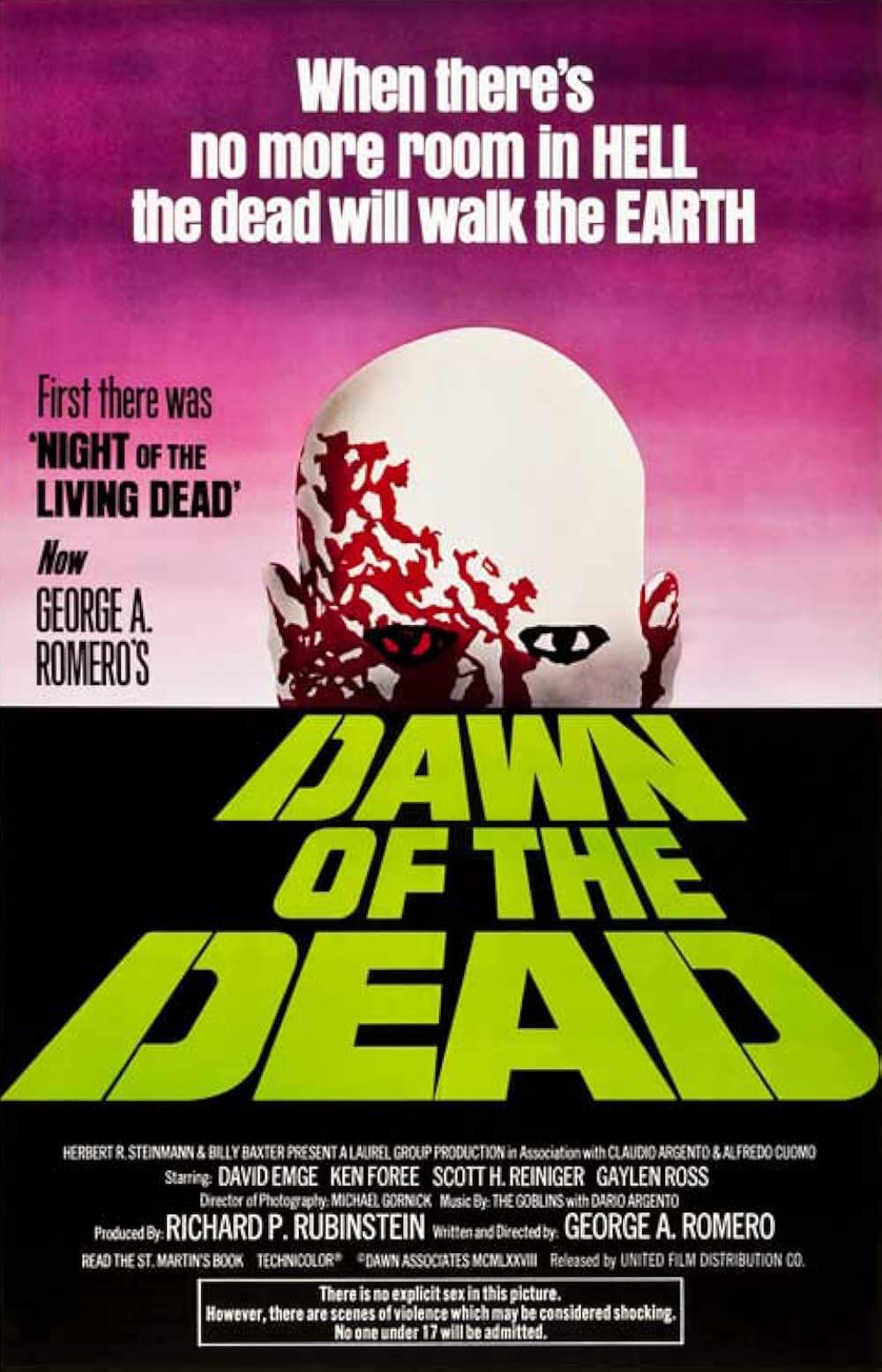
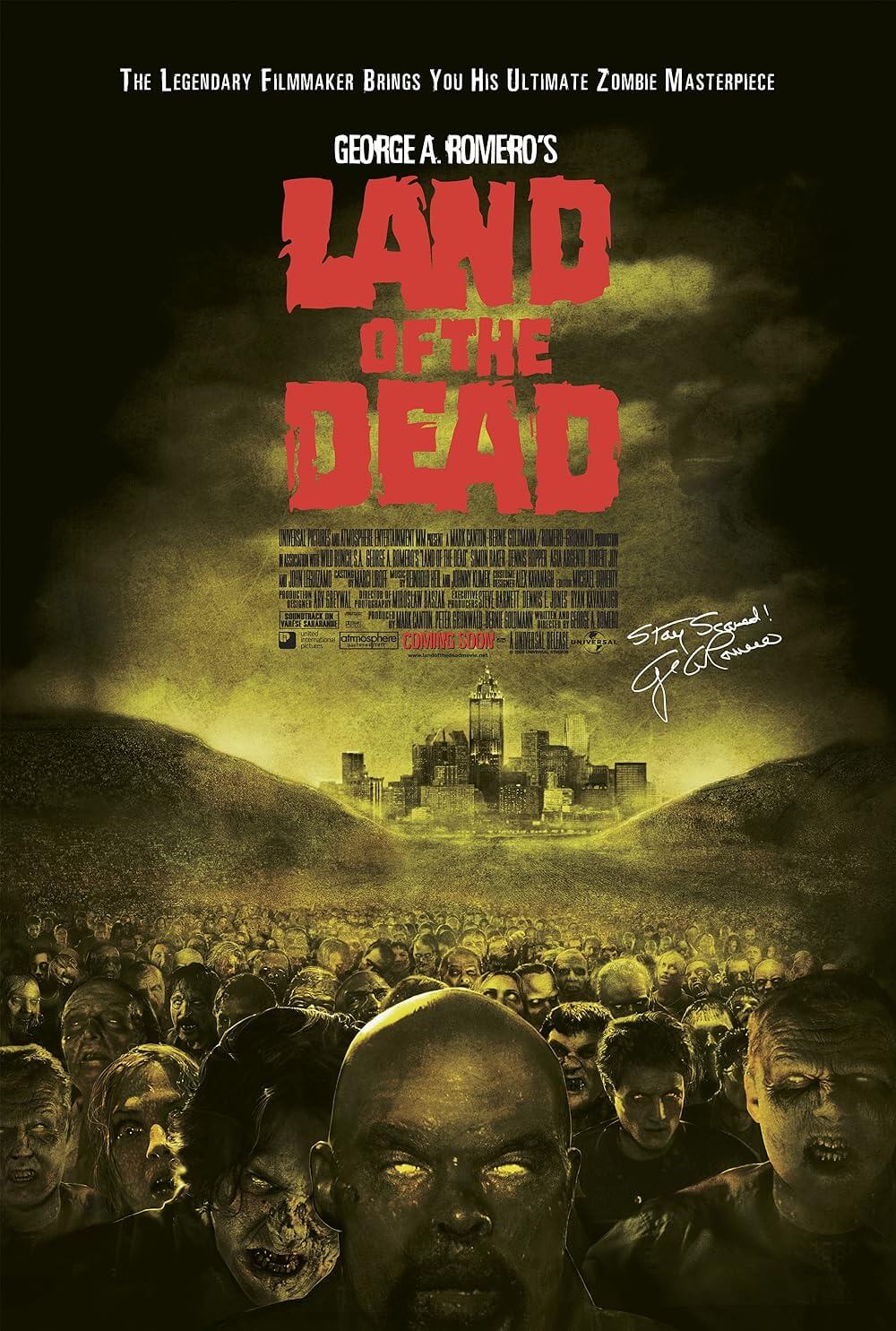
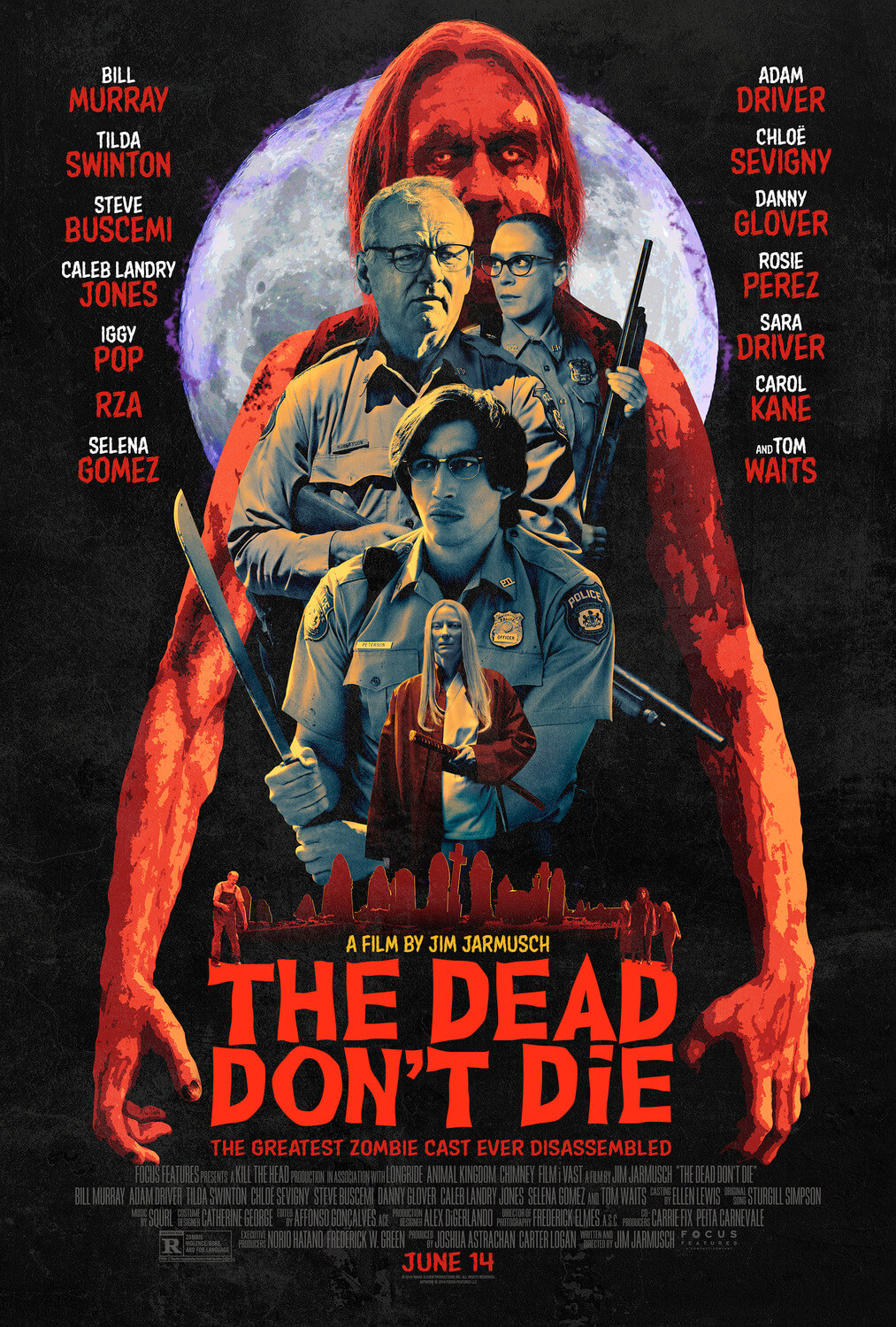
We Bury the Dead is the rare zombie movie that uses the undead to reflect the emotional state of its main character. Usually, zombies serve as metaphors for societal issues, representing a widespread social problem that their survivors must overcome. For instance, George A. Romero commented on humanity’s anger and lust for violence in Night of the Living Dead (1968), the mind-numbing effect of consumerism in Dawn of the Dead (1978), and turned zombies into an underclass that revolts against and eats the rich in Land of the Dead (2005). Similarly, in The Dead Don’t Die (2018), Jim Jarmusch used them to echo humanity’s apathy over the impending global environmental collapse. However, other examples employ brain-eaters for more personal stakes. In Edgar Wright’s Shaun of the Dead (2004), zombies both mirror the slothful lifestyle of its titular protagonist and provide a catalyst for him to re-engage with his otherwise detached life.
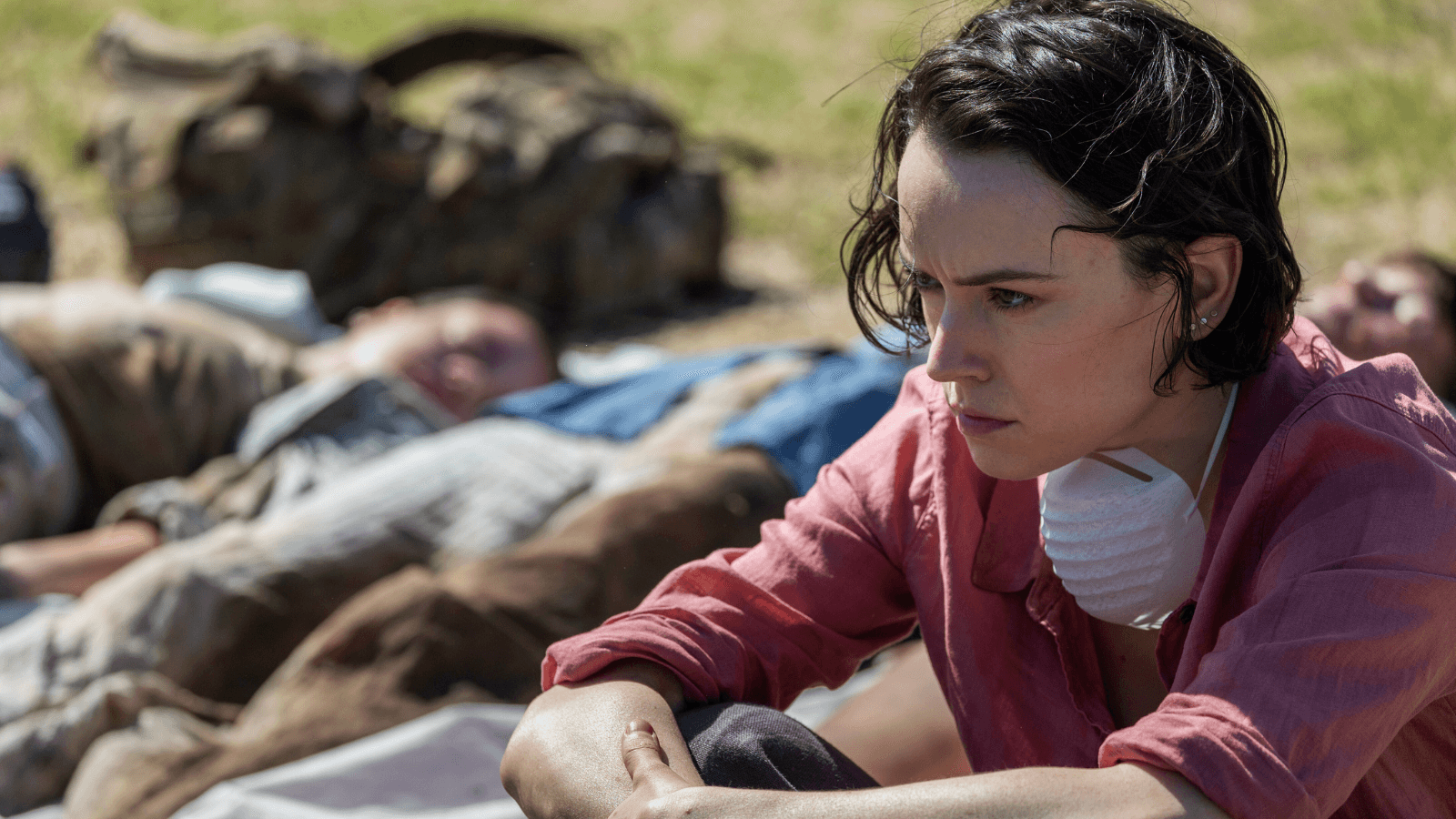
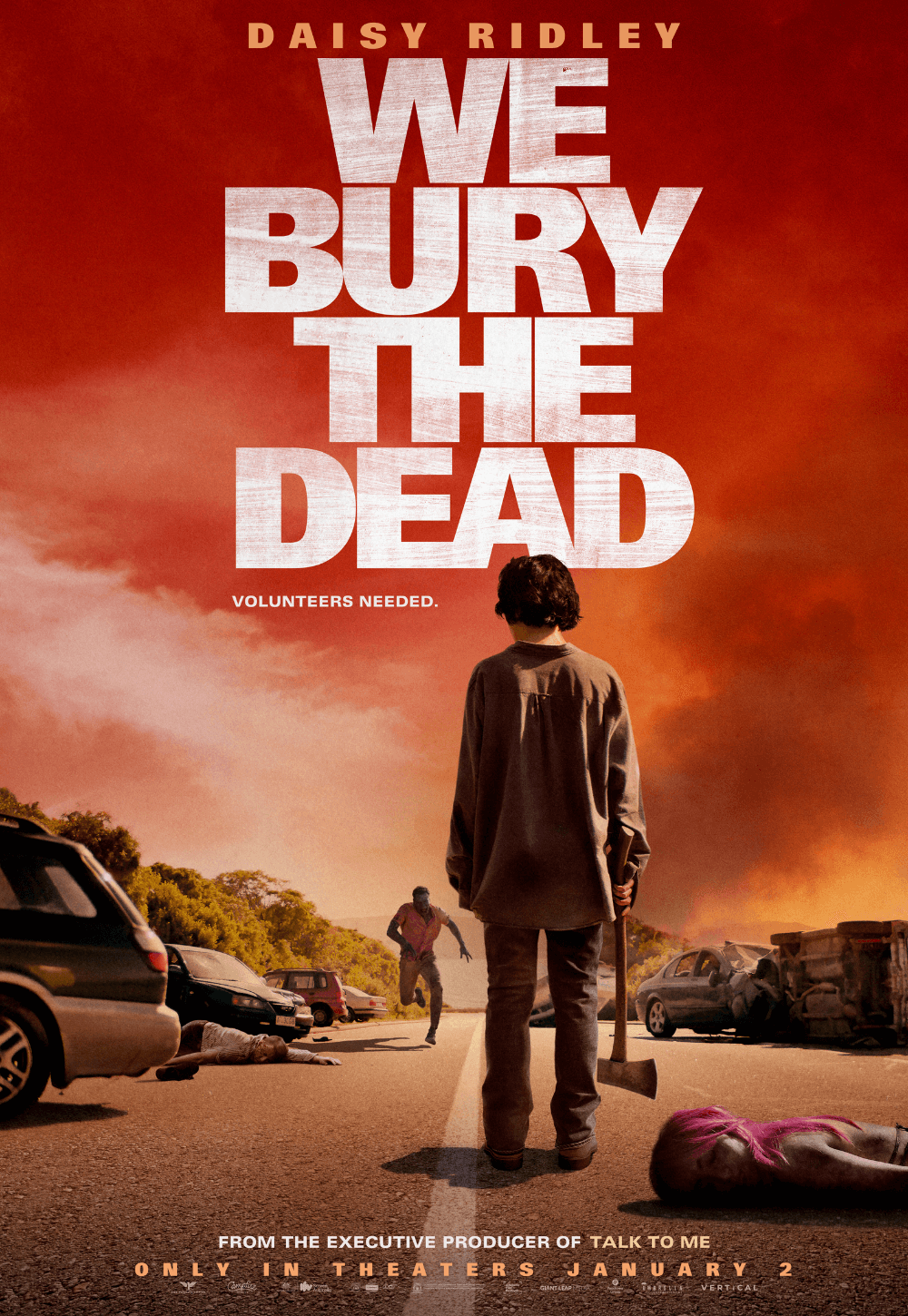
Written and directed by Australian filmmaker Zak Hilditch, We Bury the Dead is a story—like so many horror movies of late—about processing grief and enduring some horrifying circumstances to achieve closure. The setup involves the US detonating an experimental weapon off the coast of Tasmania, leaving half a million people dead, their brains deactivated by an electromagnetic pulse. Most remain dead, but some occasionally “come back online,” not as flesh-eating ghouls, but as catatonic shadows of their former selves. Daisy Ridley plays Ava, an American physical therapist whose husband, Mitch (Matt Whelan), was on a company trip to a resort in southern Tasmania—ground zero. But Ava needs to know what happened, whether Mitch is one of the victims who will wake up, so she joins a global volunteer operation to assist in identifying bodies, with the plan of sneaking away to find Mitch some 200 miles south.
The zombies in We Bury the Dead are unique and grow ever scarier over the 95-minute runtime. The reanimated people begin as immobile figures, motionless and vacant. After some time, they start grinding their teeth in a horrible sound that recalls the “clickers” from The Last of Us. Eventually, they become “agitated” and aggressive. Later, Ava meets a soldier (Mark Coles Smith), who suggests they return only when the person has unfinished business. While this isn’t entirely accurate based on what we see, Ava witnesses more than one sauntering corpse that seems to retain some shred of humanity. That’s why she believes she might be able to locate Mitch and find some closure in their marriage, which we learn was struggling.
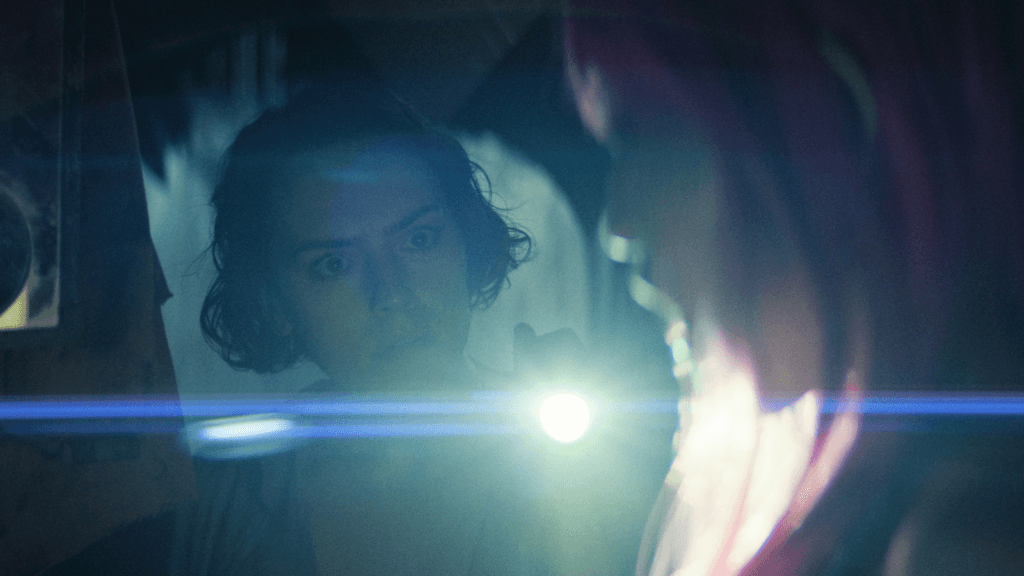
Fortunately, Hilditch is less concerned about his zombie stand-ins than his human characters. Ridley is excellent as Ava, a capable and wounded character. Along with Young Woman and the Sea (2024) and Cleaner (2025), Ridley has continued to pursue strong, complex characters in her post-Star Wars career. She’s a commanding lead here, capable of handling both the genre-heavy scenes of terror and the later emotional scenes involving Mitch. Alas, Hilditch relies on some lazy ideas throughout the movie, such as Ava’s nightly dreams, which are memories that gradually accumulate to reveal the details of her marriage. It’s a banal screenwriter’s device that makes little sense, as people don’t dream like episodes of a television show airing night after night. Hilditch also deploys a confusing development in the final scenes that left me scratching my head and saying, “But how…?”
Nevertheless, Hilditch delivers a confidently made B-movie, with cinematographer Steve Annis capturing the Australian countryside with equal parts beauty and post-apocalyptic emptiness. Some of the VFX reveal the production’s limited budget, such as the smoking crater where the US weapon went off—a distracting bit of bad CGI. But the practical makeup used on the undead looks chilling and far removed from the gloopy, decaying corpses seen on AMC’s The Walking Dead. Here, they look like recently deceased bodies that have only begun to turn purple and black for a particularly nasty-looking result. Underneath the bleak landscape and unnerving bodies, British electronic musician Clark provides a score with booming notes that vibrate the rib cage. But mostly, Ridley and Smith command our attention, along with Brenton Thwaites in a supporting role.
We Bury the Dead has an unmistakable air of familiarity. Take a scene in which Ava discovers that a crazed character, unable to accept his personal losses, has kept zombies chained in his barn—an almost identical scene occurs in The Walking Dead’s second season. But for every derivative idea, Hilditch delivers two more engaging touches, from Ridley’s terrific performance to the attention paid to practical realities, such as blisters from bad shoes. What’s most affecting is Hilditch’s exploration of how death seldom allows us to achieve any real closure with loved ones who have passed, and that’s what grief is. That idea drives not only Ava but also the people who return to life, sometimes angry, sometimes just to bury the dead.
Thank You for Supporting Independent Film Criticism
If the work on DFR has added something meaningful to your love of movies, please consider supporting it.
Here are a few ways to show your support: make a one-time donation, join DFR’s Patreon for access to exclusive writing, or show your support in other ways.
Your contribution helps keep this site running independently. However you choose to support the site, please know that it’s appreciated.
Thank you for reading, and for making this work possible.
Brian Eggert | Critic, Founder
Deep Focus Review