Tow
By Brian Eggert |
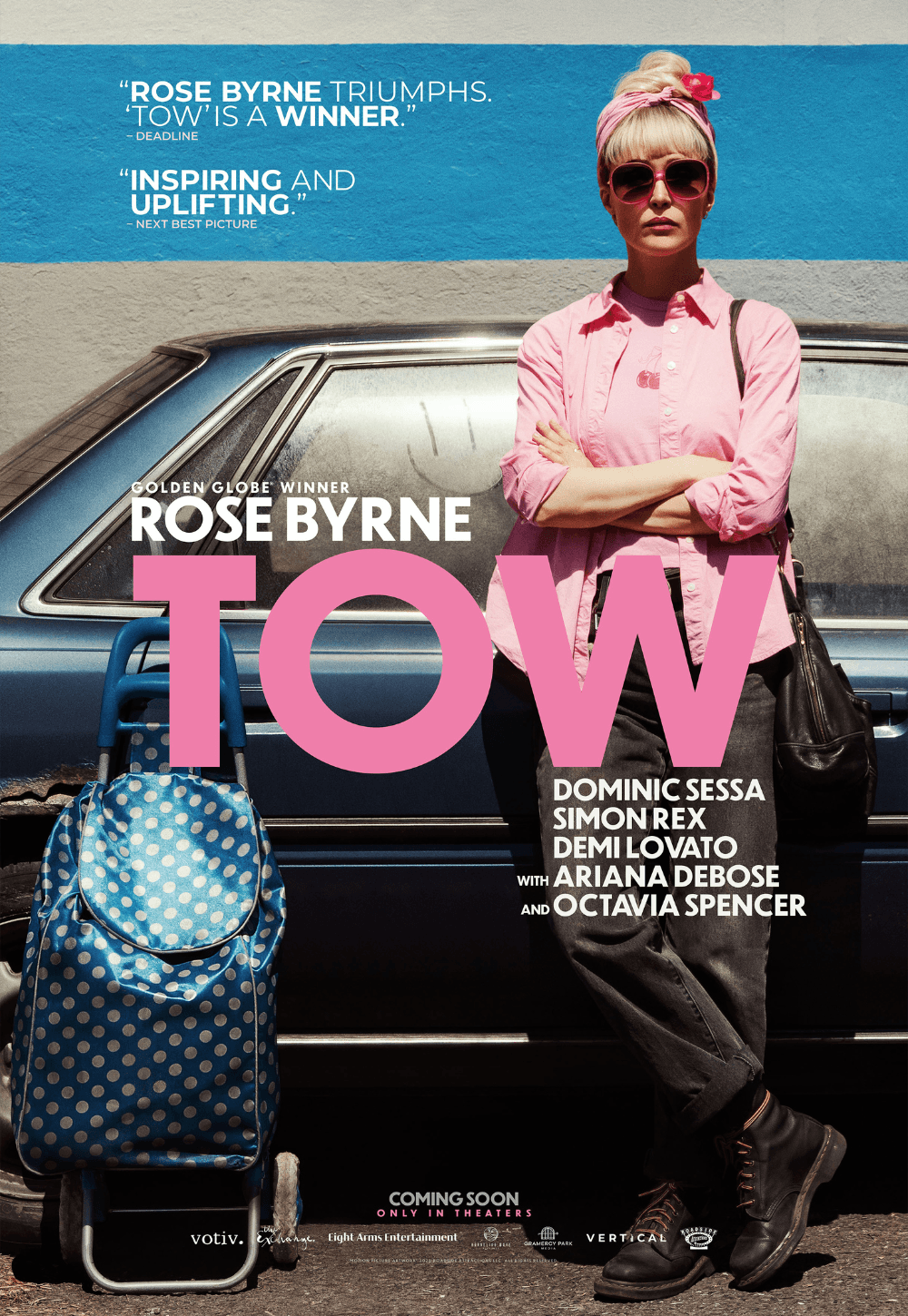
Now, here’s a timely story. Tow is about Seattle vehicle resident Amanda Ogle, whose 1991 Toyota Camry was stolen and then towed after the thief abandoned it. The towing company charged her $273.20 to claim the car, in which Amanda spent her nights and kept her things. Unemployed, she couldn’t pay the fees. So, the towing company added daily penalty charges that steadily accumulated to $21,634 and change. What followed was a classic David-and-Goliath battle between a poor, everyday American and the shady corporation that exploits people like her. Within that framework, Tow confronts the prejudices some people have against the unhoused. Some would have you believe they leech off the system out of sheer laziness. But in the United States, where inflation and joblessness have left a vast number of people unable to pay bills or keep a stable residence, sometimes one or two bad-luck incidents are enough to leave you trapped in a crooked and broken system.
Originally covered in The Seattle Times by journalist Danny Westneat, the story that inspired Tow belongs in the feel-good, human-interest camp. The movie explores the reality of unhoused women and, reportedly, the upwards of three million vehicle residents in the United States on any given night. The screenplay by Jonathan Keasey and Brant Boivin recalls a familiar template found in many courtroom dramas about environmental malfeasance. See A Civil Action (1998), Erin Brockovich (2000), and Dark Waters (2019). You know the setup: Someone desperate hires an unlikely attorney, who spends countless hours in a legal battle with a much larger and better-funded corporate firm. Eventually, their commitment and determination result in a crowd-pleasing victory. The script for Tow follows this template, albeit with much smaller stakes.
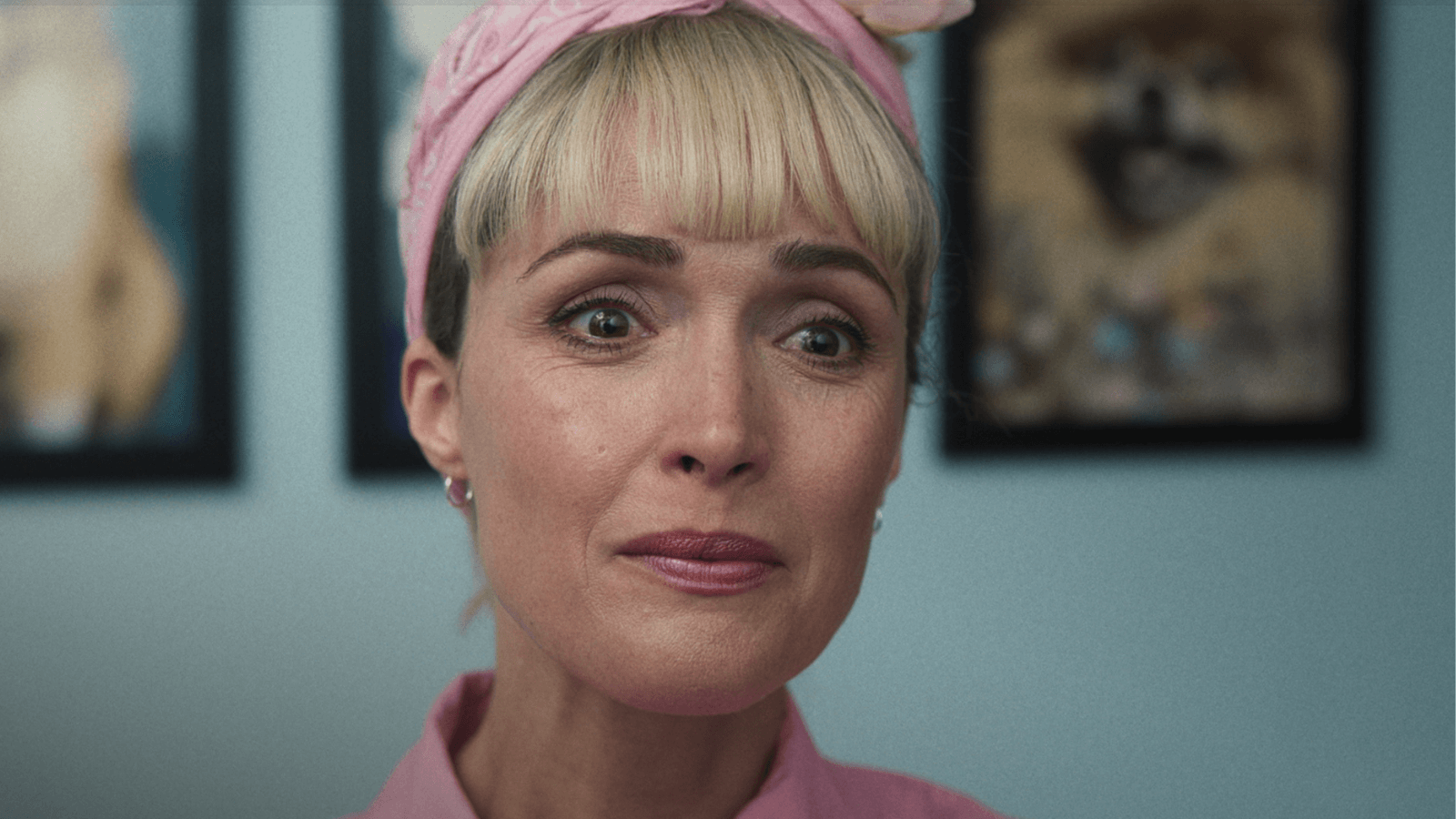
But don’t tell that to Amanda, played by Rose Byrne under shaggy peroxide hair and a wardrobe of black and pink. Amanda’s Camry is her sole mode of transportation and her home. She’s separated from her family in Utah, and she struggles with alcoholism and attends periodic AA meetings while trying to find a job. At night, she sleeps in her back seat, clutching a baseball bat; during the day, she charges her phone at a local coffee shop and looks for work. Though she has no college degree, she’s a licensed veterinary technician (with the student loans to prove it). She even lands a job at a vet’s office that also takes cutesy pet photos. But that’s when her car is stolen. Everyone wonders why she cares so much about the old jalopy. It’s not just about the sentimental value of the car, which also happens to be her home; it’s the principle of the thing.
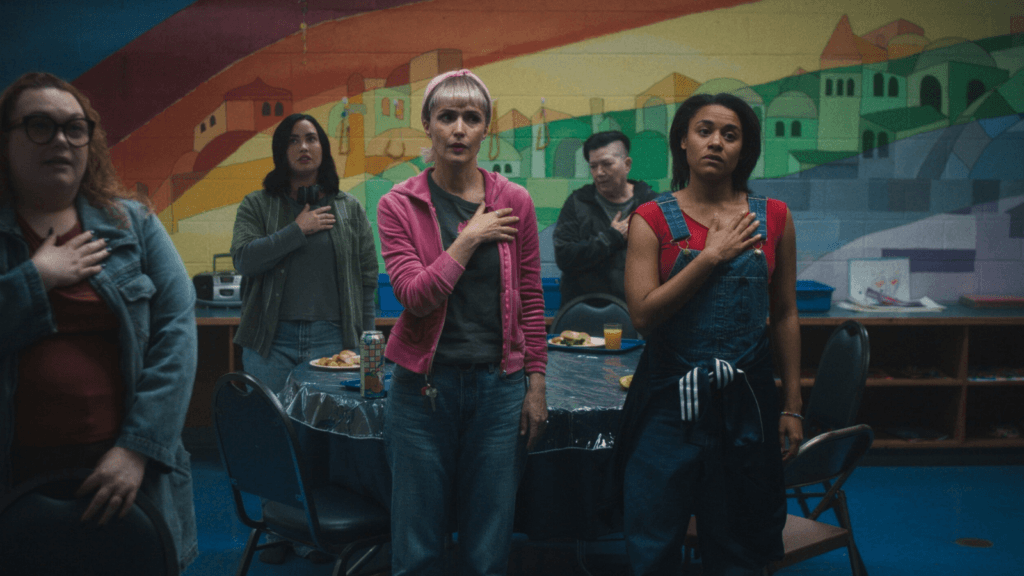
The movie alternates between a portrait of Amanda’s legal case, the realities faced by someone experiencing homelessness, and her fractured relationship with her daughter (Elsie Fisher)—an aspiring journeyman seamstress who knows nothing of her mother’s situation. Helping Amanda with the case is a plucky, idealistic young attorney (Dominic Sessa), who’s out of his depth against the opposition’s smarmy corporate lawyer (Corbin Bernsen). The most moving scenes involve her time at a women’s shelter, her temporary home while she fights the towing company in court. Run by a taskmaster (Octavia Spencer) who forces her visitors to recite the Pledge of Allegiance and study the Bible, the shelter helps women recovering from addiction. There, Amanda makes some friends, among them Demi Lovato and Ariana DeBose. The former sings, of course, but otherwise offers a stilted performance. DeBose continues to underwhelm in her post-Oscar career.
Directed by Stephanie Laing, whose credits include several TV shows and the Netflix feature Irreplaceable You (2018), Tow has a generic quality despite its talented ensemble. It’s shot and presented in a straightforward, unexceptional style, which Laing tries to liven up with distracting asides. For instance, she includes quirky cutaways to dogs in the aforementioned portrait studio for randomized cuteness, though they have nothing to do with the story. Dogs seem to be Laing’s go-to set decoration to inject some happiness into the proceedings, evidenced by the distractingly adorable scenes with a towing company clerk (Simon Rex) and a stray dog. About halfway through Tow, Laing introduces Amanda’s animated diary entries, though it’s never established that she writes in a journal. Where did this come from? And why not until halfway through the movie? These devices suggest that Laing wasn’t confident in the story alone and felt the movie needed something lighthearted to tie one scene to the next. All of this schmaltz is countered somewhat by the terrific score from Este Haim and Nathan Barr, whose sounds recall 1980s-era Brian Eno.
Tow is the kind of pandering movie in which the characters give big speeches and narrative progress is conveyed in several montages. As written, Amanda risks becoming a caricature, save for Byrne’s ability to give the character dimension in two key scenes: when she breaks down upon sharing her backstory with her shelter’s group therapy circle, and when she reads a powerful statement in court. Byrne always enhances a movie, and her talent is on full display here (though it’s unclear if she had trouble speaking through her yellowed false teeth or if that was a character tic). Tow might have been a serviceable feel-good, based-on-a-true-story yarn if not for Laing’s gooey digressions and random structural devices, which were probably included to prevent this story about unhoused addicts from descending into miserabilist territory. Somehow, the movie turns the realities of corporate greed and homelessness into a lighthearted romp. However relatable the setting may be for many Americans, and however much empathy the story encourages in the audience, its well-intentioned ambitions never quite overcome its clunky execution.
Thank You for Supporting Independent Film Criticism
If the work on DFR has added something meaningful to your love of movies, please consider supporting it.
Here are a few ways to show your support: make a one-time donation, join DFR’s Patreon for access to exclusive writing, or show your support in other ways.
Your contribution helps keep this site running independently. However you choose to support the site, please know that it’s appreciated.
Thank you for reading, and for making this work possible.
Brian Eggert | Critic, Founder
Deep Focus Review