Greenland 2: Migration
By Brian Eggert |
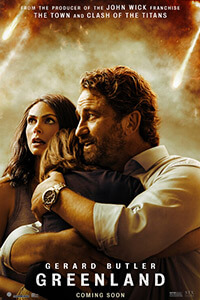
What’s refreshing about Greenland 2: Migration and its predecessor is that they don’t follow the usual disaster movie formula. Even though they entail a comet fragment called Clarke causing an extinction-level event on Earth, they’re not about coming up with an elaborate plan to stop what will inevitably occur à la Armageddon (1998). They also avoid many of the tropes found in Roland Emmerich fare, such as dwelling on the mass destruction of human lives with almost perverse delight. Instead, characters drive the story. In the original, structural engineer John Garrity (Gerard Butler) races to get his wife, Allison (Morena Baccarin), and their son, Nathan, to an underground bunker beneath Thule Air Force Base in Greenland. The world as everyone knows it will end, and the movie maintains focus on a single family. The sequel finds them with no choice but to head out into a scorched, irradiated world in search of a new home.
Greenland debuted in December of 2020 at the height of the COVID-19 pandemic, when most (responsible) people weren’t going to movie theaters. Even so, it turned a profit for Lionsgate, earning over $52 million on a $35 million budget. Despite the price tag more than doubling for the sequel, Greenland 2 somehow feels similar in scale. Once again, the experience is more about the characters on a desperate journey than about the standard disaster-movie spectacle. But given that the survivors must travel across post-apocalyptic landscapes, navigate flooded cities, and run like hell away from deadly radiation storms, the budget was no doubt inflated by VFX requirements. That, and the returning cast surely negotiated higher salaries this time around.
Co-written by Mitchell LaFortune and the original’s screenwriter, Chris Sparling, the sequel opens five years later. An estimated 75% of life on Earth is gone. Those who made it to the Greenland bunker now face food and water shortages—though some of them look quite well fed—prompting debates about whether they can accept more survivors. Allison insists on rescuing anyone they can, regardless of their limited supplies. And despite a significant subplot in Greenland hinging on their diabetic son, Nathan (here played by Roman Griffin Davis, replacing Roger Dale Floyd), and his need for insulin, the writers never adequately explain how Nathan has survived the last five years. Are the survivors producing more insulin? It’s a persistent question throughout the movie that the filmmakers almost completely ignore, and it occasionally prevented me from getting caught up in the proceedings.
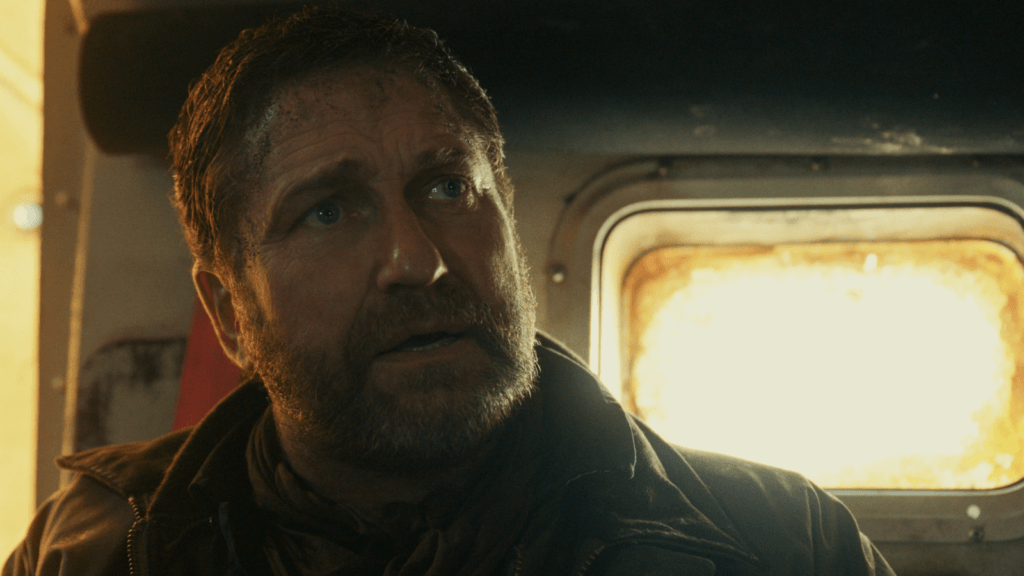
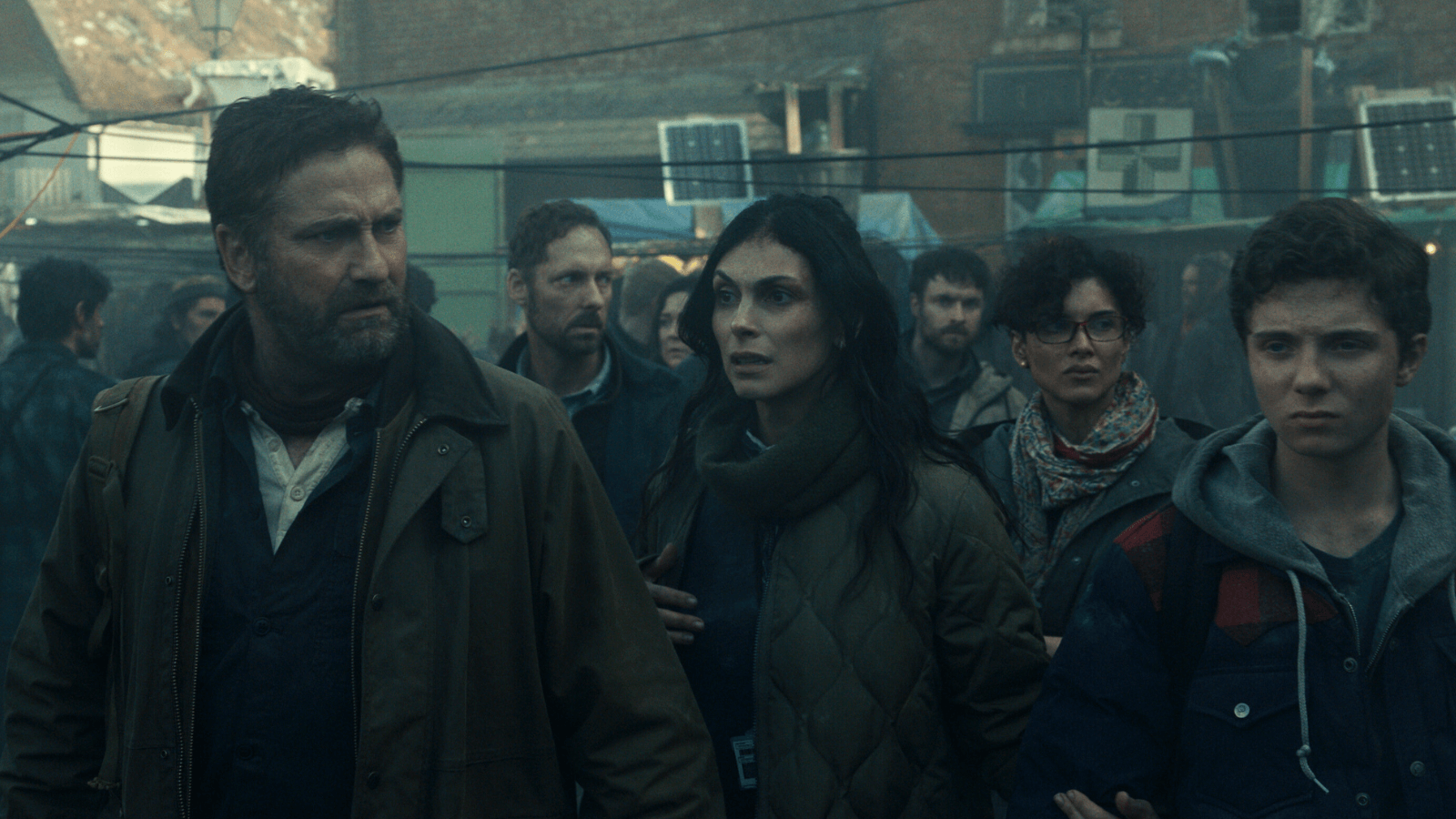
Nevertheless, much of Greenland 2 is exciting and involving, with an array of new dangers and obstacles to overcome. Clarke disrupted the planet’s tectonic plates, leading to persistent earthquakes that eventually shatter the underground bunker. The survivors scatter. John vows to find his family a new home, and a resident scientist suggests the Clarke crater might be a safe zone from radiation, where fresh water and plant life might already be growing. Call it a Crater of Life. But between Greenland and the crater in southern France, the Garrity family must cross the North Atlantic Ocean, survive deadly raiders, cross a deep fissure with unstable gear, sneak through a war zone, and avoid fireballs that still occasionally fall from the sky. These rather episodic sequences kept me involved, even if the story proved predictable. For instance, some of the earliest scenes show John with a nasty cough that increases in severity throughout the film. And as the movie rulebook tells us, whenever someone coughs in a movie, they’re probably very sick and going to die.
Unlike many disaster movies, Greenland 2 doesn’t dwell on the environmental conditions. Most examples in this genre, including the 2020 original, establish that a threat is coming and that everyone has to find a way to stop it or survive it. But the sequel places the characters in an unpredictable world where, at any moment, a natural disaster could occur. Director Ric Roman Waugh and cinematographer Martin Ahlgren capture the action with intimate close-ups and subtly shaky camerawork that plays up the immediacy of each moment. Their color palette is grayed out, since most of the landscape—shot on location in Reykjavík and various UK towns—has been pummeled by meteorites and turbulent weather. It all looks pretty convincingly bleak, apart from the tsunamis and meteorites rendered via B-grade CGI.
There’s plenty about Greenland 2 that doesn’t work, from my nagging questions about Nathan’s insulin to the cloying bookend narration meant to tie the story up in a bow. And there’s a general air of familiarity to everything onscreen. Moviegoers and television audiences have been inundated with post-apocalyptic survival stories in recent years, and apart from its interest in humanity over disaster gimmicks, the sequel shares much of the narrative and formal DNA of countless other examples in this genre. Nevertheless, Butler delivers a fine performance, as does the supporting cast, and the material serves up a decent conclusion. Compared to Greenland, the follow-up feels a little less novel, but that’s usually the case with Hollywood sequels. Maybe this review has damned the sequel with faint praise, but I maintain that it’s an easy recommendation for a matinee or a casual late-night watch.
Thank You for Supporting Independent Film Criticism
If the work on DFR has added something meaningful to your love of movies, please consider supporting it.
Here are a few ways to show your support: make a one-time donation, join DFR’s Patreon for access to exclusive writing, or show your support in other ways.
Your contribution helps keep this site running independently. However you choose to support the site, please know that it’s appreciated.
Thank you for reading, and for making this work possible.
Brian Eggert | Critic, Founder
Deep Focus Review