Crazy Old Lady
By Brian Eggert |
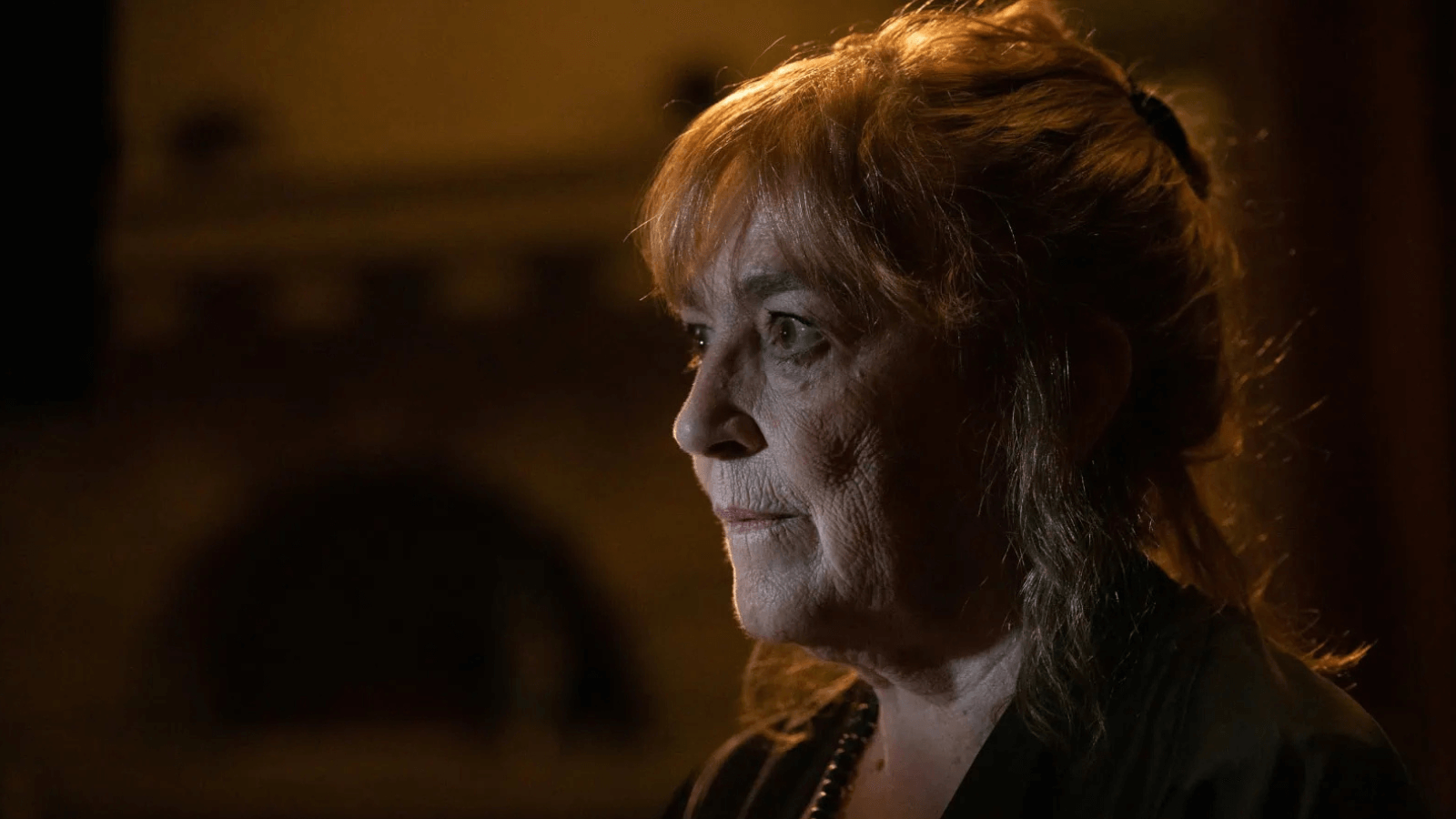
Martín Mauregui channels Alfred Hitchcock with his feature debut as writer-director, Crazy Old Lady (Vieja Loca). The Argentine filmmaker doesn’t take the Brian De Palma route of homage—seen in everything from Sisters (1972) to Raising Cain (1992)—by borrowing whole camera movements and story elements from Hitchcock’s body of work, only to recombine them in sleazy, exploitative, yet inspired ways. Instead, Mauregui conceives a twisted scenario that feels like the demented offspring of Hitchcock and the Hagsploitation genre of the 1960s, with traits of both evident in the movie’s DNA. This Spanish-Argentine coproduction, which debuted at Fantastic Fest last year before finding its scheduled home on Shudder, is an accomplished first film by Mauregui, with a slick presentation and impressive production design. It’s also a showcase for Carmen Maura, the 80-year-old star who reached stardom in the cinema of Pedro Almodóvar, in everything from his early shorts in the 1970s to his later masterpiece, Volver (2006).
Maura plays Alicia, an older woman who calls her daughter Laura (Agustina Liendo) in the first scenes. On the road, Laura is traveling out of town with her daughter (Emma Cetrángolo), who is sleeping in the back seat. Laura answers her mother’s call; Alicia wants the recipe for Alfajor Santafesino. She also complains that her maid, who has left her alone, is drugging her food. Laura dismisses the idea. Alicia apparently has a history of dementia. They hang up, but soon Laura’s mother calls back, asking the same questions. Her senility becomes concerning to Laura, who takes yet another call from her mother asking about the recipe again, with no memory of having called just minutes earlier. Laura finally calls her ex-boyfriend, Pedro (Daniel Hendler), and convinces him to do a wellness check while she’s out of town, just to confirm Alicia is taking her medication (she’s not). Pedro agrees, and he quickly finds himself ensnared by the delusional woman, who sees him as César—her first husband, whom Laura knows nothing about.
Mauregui follows Hitchcock’s recipe for suspense: he makes the audience aware of a threat, then prolongs the collision between that danger and an unsuspecting victim for as long as possible. For instance, in Sabotage (1936), Hitchcock shows a political terrorist placing a time bomb inside a film canister. A young delivery boy must carry the canister across town, except that street vendors and other distractions delay his journey until he steps onto a bus. Hitchcock draws out the journey while the audience squirms in dreadful anticipation over what happens next: the bomb goes off, killing the boy and everyone on the bus. Crazy Old Lady is similarly structured, establishing Alicia as a time bomb when she doesn’t take her medication, with anyone who enters her home subject to her paranoid, explosive mind.
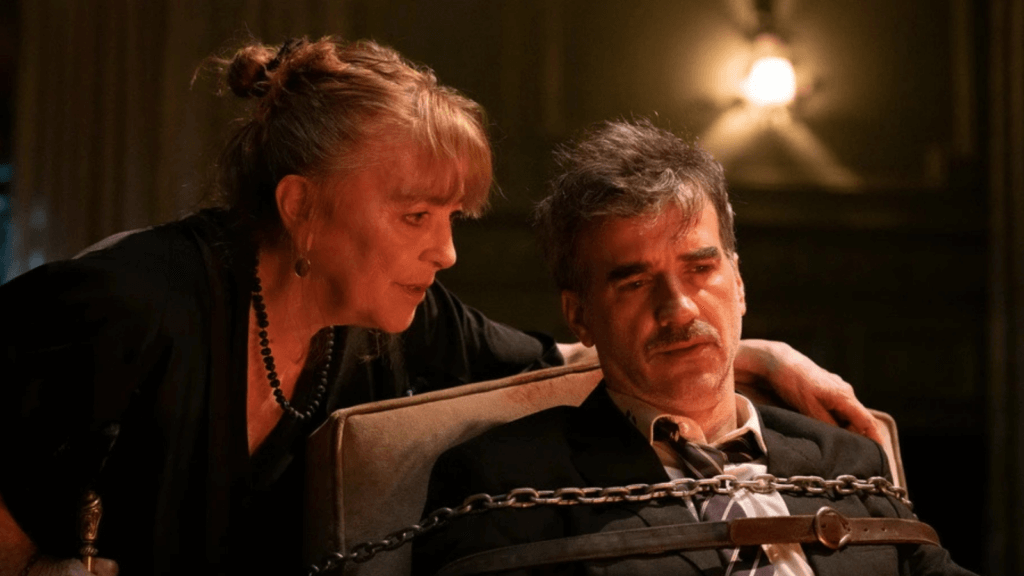
However, Pedro lost me when he first arrived on the scene, ran over Franquito, Alicia’s small dog, and kept this information to himself. This is Pedro’s Save the Cat! moment, where his kindness to animals tells the audience how much sympathy he deserves. And while I wasn’t actively rooting against Pedro, I found it difficult to care much once Alicia began to unravel. With a sprightly jaunt across the floor worthy of Norma Bates, she knocks Pedro out, chains him to a chair, and proceeds to subject him to all manner of horrors that would earn the Annie Wilkes stamp of approval. Alicia believes Pedro is César, and while trying to convince him to admit his identity, she recounts her disturbing relationship with César from her youth. She forces the matter with hot pokers, electric knives, and a towel soaked in Pedro’s urine.
If it weren’t already obvious by the title, Crazy Old Lady embraces the so-called Hagsploitation subgenre that emerged between the Golden Age and New Hollywood. As former starlets such as Bette Davis and Joan Crawford had passed their prime and studios no longer cast them in prestige pictures, they begrudgingly lowered themselves to grotesque B-movies that exploited their age for thrills and sensationalism. The superb What Ever Happened to Baby Jane? (1962) gave way to Dead Ringer (1964), Hush… Hush, Sweet Charlotte (1964), and others. The subgenre has made a resurgence in Spain in recent years, with The Grandmother (La Abuela, 2021) and The Elderly (Viejos, 2022), which use older characters as symbolic allusions to a period decades earlier, in both Argentina and Spain, when their right-wing governments often captured and executed political dissenters. People would simply disappear without a trace, and only in recent years have the uncovering of mass graves and written records given victims’ families closure. Even the ’80s pop music on the soundtrack harkens back to an era in Argentina after the Dirty War, and in Spain after the end of Francoism, when democracy and accountability returned to both countries.
Mauregui’s production is also gorgeous to look at, set in an evocative old house crafted by production designer Matías Martínez with books piled on the floor, water damage, and a haze in the air—the home of someone living in the past. Cinematographer Julián Apezteguia shoots these textured production values with evocative use of light, shadow, and atmosphere. Much of the film takes place in this single setting, apart from scenes of Laura on the road or later, in a hotel, where she has a freaky dream about lagoon creatures. But Crazy Old Lady hinges on a tour de force performance by Maura, who embraces the role with macabre glee. While touching on the lasting effects of Argentina’s and Spain’s traumatic pasts on subsequent generations, Mauregui crafts a disturbing thriller showcasing Maura’s exceptional talent.
Thank You for Supporting Independent Film Criticism
If the work on DFR has added something meaningful to your love of movies, please consider supporting it.
Here are a few ways to show your support: make a one-time donation, join DFR’s Patreon for access to exclusive writing, or show your support in other ways.
Your contribution helps keep this site running independently. However you choose to support the site, please know that it’s appreciated.
Thank you for reading, and for making this work possible.
Brian Eggert | Critic, Founder
Deep Focus Review