The Magic Faraway Tree
By Brian Eggert |
At the almost certain risk of sounding like an old man shaking his fist at the youth of today, I’ve noticed that younger generations—and I’m making a broad generalization here—seldom have to grapple with boredom. A smartphone or tablet is usually nearby, designed with an addictive, gamified interface to keep users hooked. When they’re not on devices, they’re thinking about getting back to those sweet, sweet app rewards of color flashes and satisfying beeps and boops. Forget looking out the backseat window and daydreaming, or spending a rainy afternoon building a fort or playing The Floor is Lava. In this accelerated, AI-saturated version of the Digital Age, the benefits of boredom and the creativity it fosters have practically disappeared. The benefits of unplugging and exploring the worlds inside your head remain the most endearing quality of The Magic Faraway Tree, based on Enid Blyton’s book from 1946. But that’s about the height of my admiration for this silly, well-intentioned family movie that never quite whisks us away as intended.
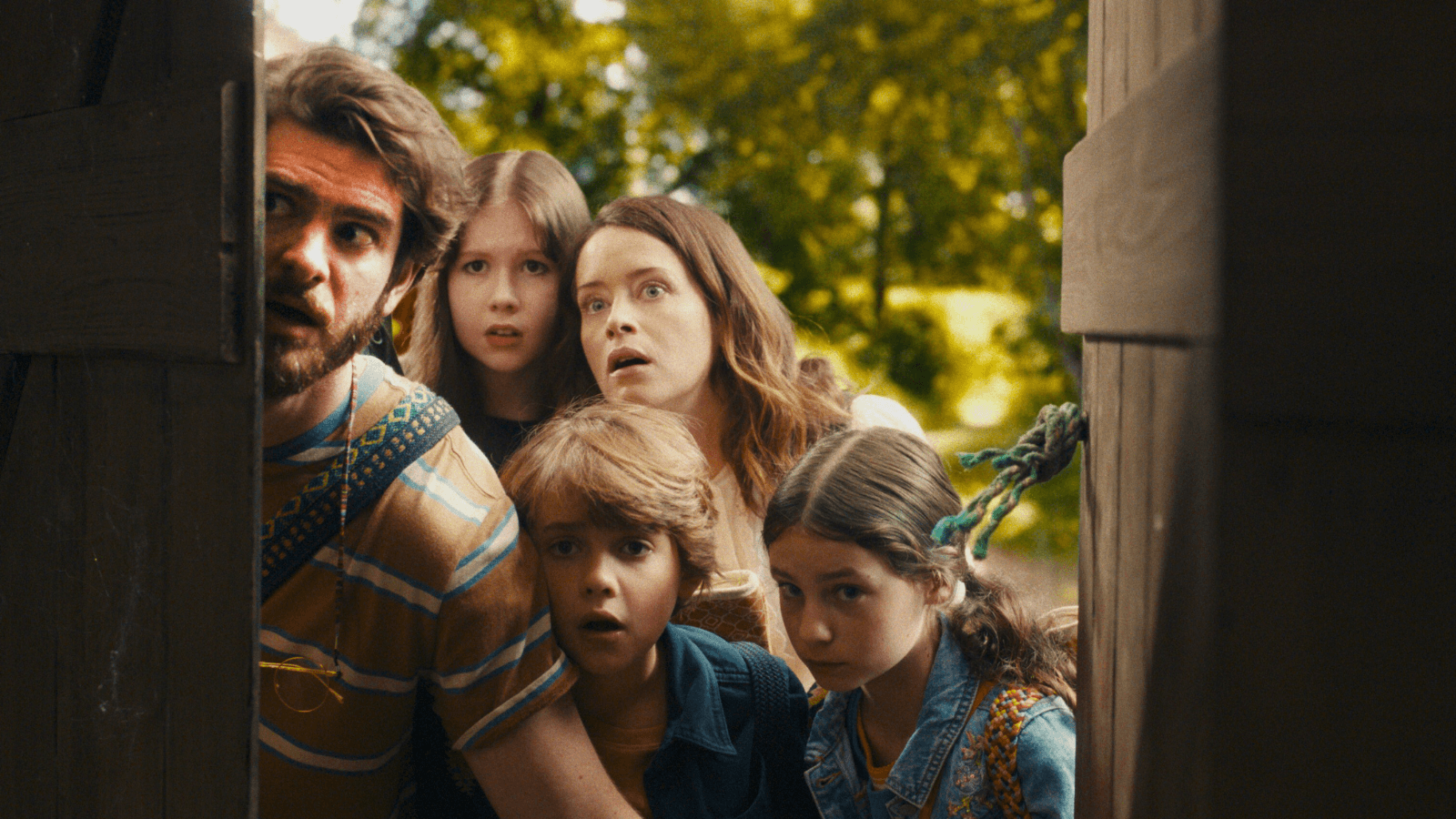
Adapted by Simon Farnaby, co-writer of the Paddington movies and Wonka (2023), the film tries to reinvigorate viewers’ imaginations with a fanciful tale about shutting off devices and reconnecting with your creative self. The story follows the Thompson family, led by refrigerator designer Polly (Claire Foy) and homemaker Tim (Andrew Garfield), and their three children: the black-clad feminist teen Beth (Delilah Bennett-Cardy), the quiet and inward Fran (Billie Gadsdon), and the technophile Joe (Phoenix Laroche). One day, Polly announces she quit her job because her company inserted invasive smart-home features into her designs. But this means the family loses the company-provided house and car. Acting fast, Tim arranges for them to move to a ramshackle country house (a barn, really), where he plans to grow toe-mah-toes and make a living by drawing on his dubious Italian heritage to sell pasta sauce. But not surprisingly, their kids complain about living in the countryside without WiFi and being forced to read books.
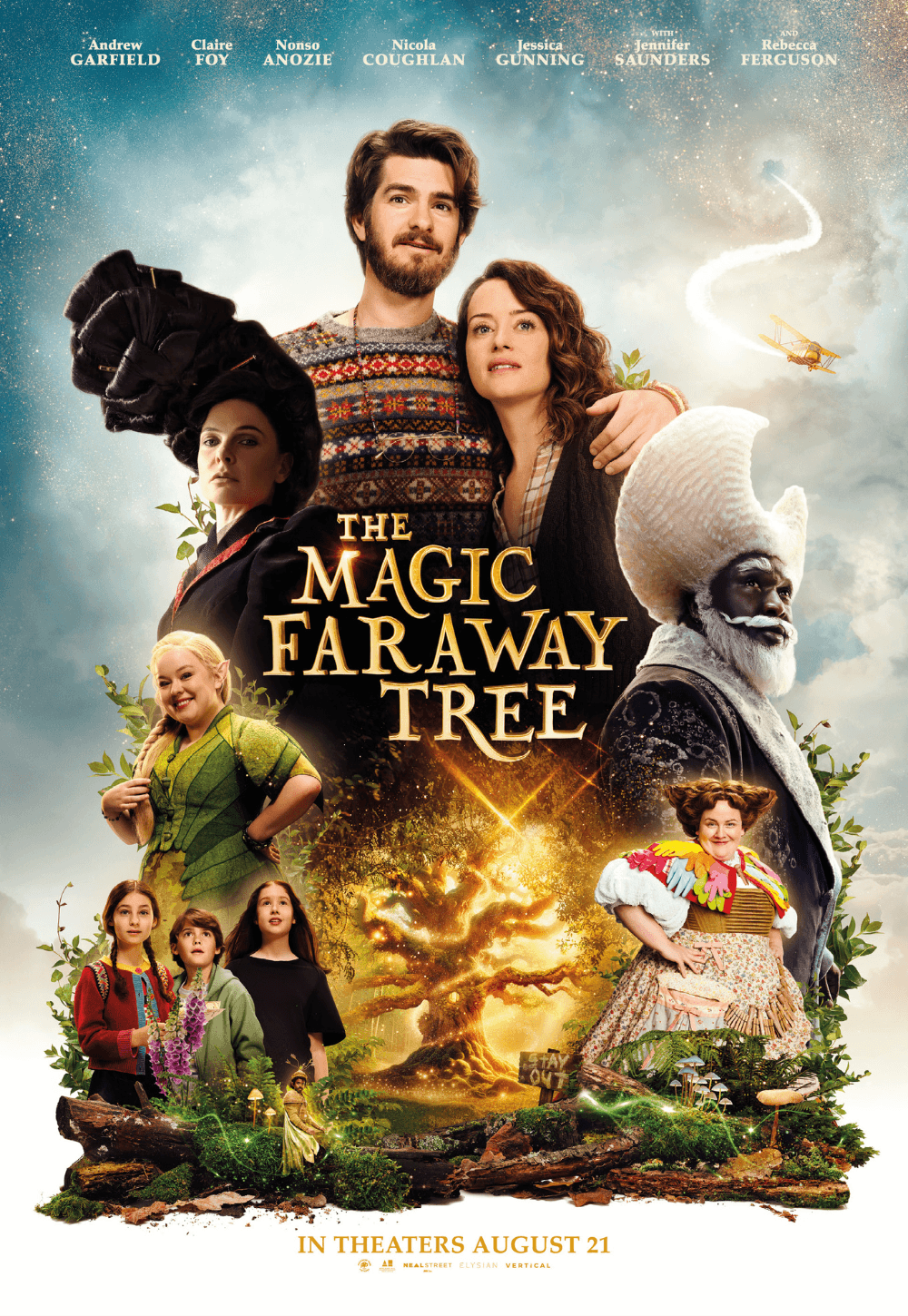
Upon their arrival at the new home, Tim approaches every dusty discovery and challenge with a Tigger-like huh-huh-ho laugh, much to everyone else’s exhaustion. Meanwhile, Fran discovers something in the off-limits woods nearby: a pointy-eared fairy named Silky (Nicola Coughlan) invites her to a picnic at the titular tree, where she must declare “I believe in magic” three times before entering its mystical world. (Kids, if someone claiming to be a fairy invites you into the forbidden woods, do not go.) When she does, Fran discovers a fantastical tree fort inhabited by goofy-looking characters, such as Moonface (Nonso Anozie), who should be named Moonhair because his face appears normal; Saucepan Man (Dustin Demri-Burns), who’s only covered in saucepans because that’s his name; the forgetful Mr. Watzisname (Oliver Chris); and Dame Washalot (Jessica Gunning), who does laundry, I guess. For some reason, when they dance to ‘70s-era disco on vinyl, a skybound ladder opens to various other worlds, prompting an episodic series of adventures with everyone from snooty French birthday elves to the gratingly loud Mr. Oom Boom Boom (Mark Heap).
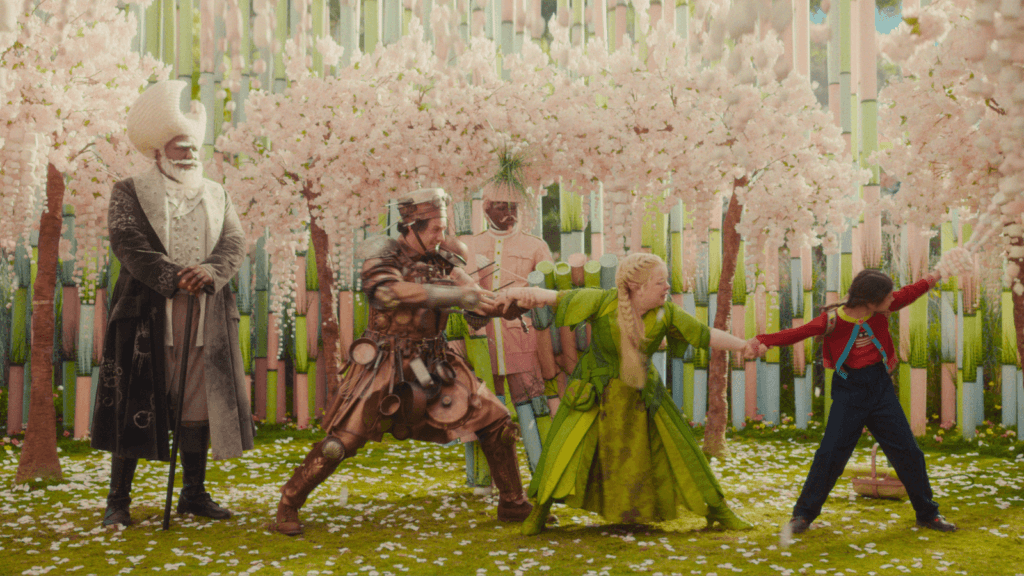
Similar to My Neighbor Totoro (1988), there’s never a real sense of danger in The Magic Faraway Tree. But unlike that film, the result feels lightweight, meandering, and forgettable. Ironically, director Ben Gregor never engages the imagination. At times, the practical set and costume designs look impressive, if unnatural, with a whimsical, plastic quality that recalls the garishness of 2018’s A Wrinkle in Time or one of France’s live-action Asterix & Obelix movies. The concepts work better on the singular illustrated page than in a live-action movie where the grounded reality and fantasy worlds feel like different mediums altogether. To be sure, the rampant CGI reaches embarrassing lows, with artificial skies and backdrops that betray the tangible work of costumer Ann Maskrey and production designer Alexandra Walker. And like the visuals, the acting and humor feel generic, catered to the very young and less so to their parents.
Dreadfully long at nearly two hours, The Magic Faraway Tree may appeal to those who have nostalgic memories of the book series or small children who don’t know any better. And despite its worthy theme—that engaging the imagination can lead to inventive ideas (a vital commentary in a world where some people rely on AI for creativity)—watching the movie felt like looking at a party through a window and feeling both excluded and confused about why everyone seemed to be having so much fun. When the story finally introduces some conflict with 20 minutes to go, brought about by Dame Snap (Rebecca Ferguson), a cruel teacher, it quickly resolves the matter with farts and a hastily planned escape. The candy-colored schmaltz never reaches its transportive potential, not even with its talented cast or Garfield’s trademark wounded sincerity. However warm, innocent, and gentle this family adventure may be, it lacks a certain ungraspable element that would make it special.
Thank You for Supporting Independent Film Criticism
If the work on DFR has added something meaningful to your love of movies, please consider supporting it.
Here are a few ways to show your support: make a one-time donation, join DFR’s Patreon for access to exclusive writing, or show your support in other ways.
Your contribution helps keep this site running independently. However you choose to support the site, please know that it’s appreciated.
Thank you for reading, and for making this work possible.
Brian Eggert | Critic, Founder
Deep Focus Review