The Invite
By Brian Eggert |
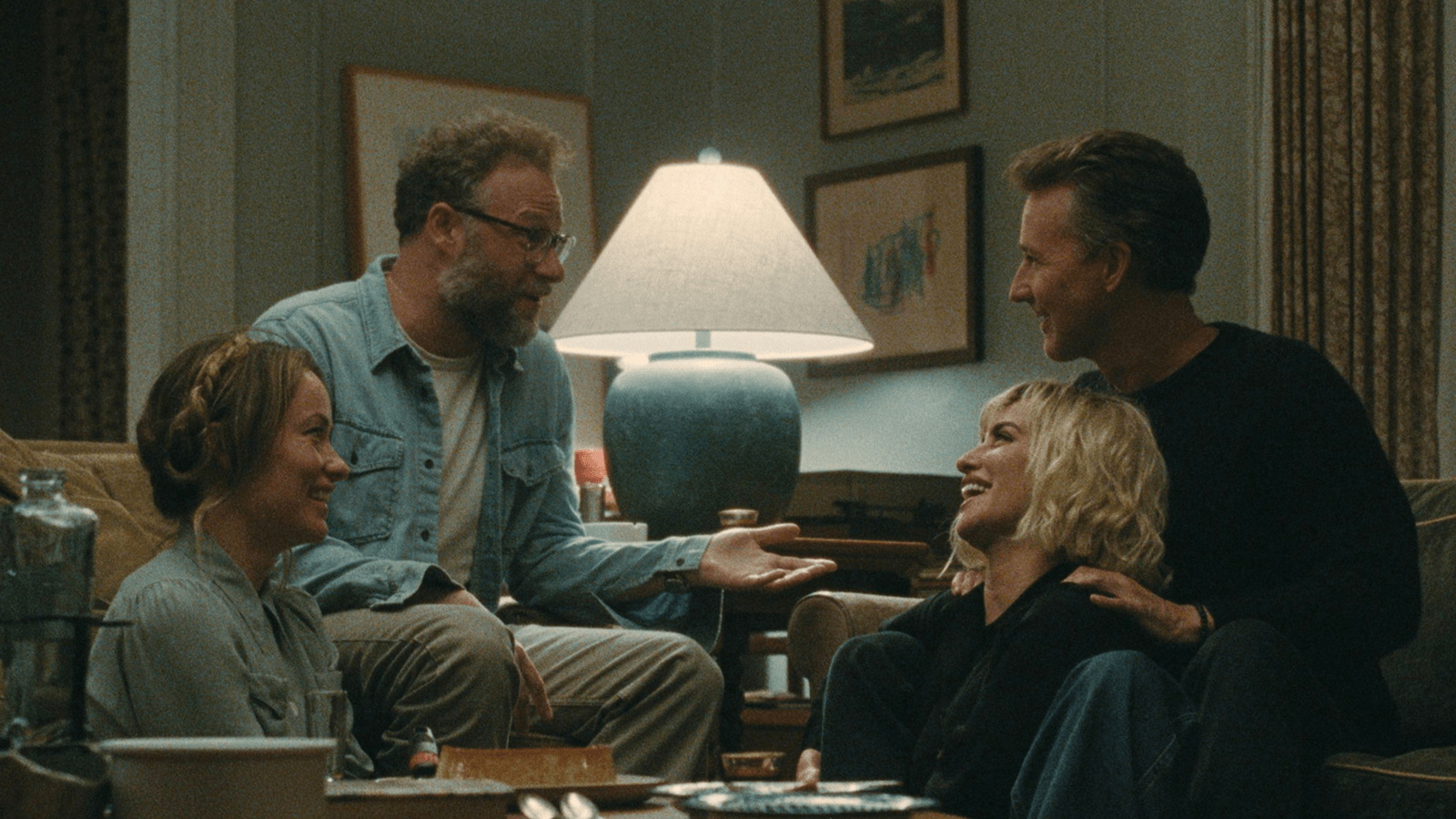
Olivia Wilde’s The Invite, her third and best film as a director, opens with the sound of joy from a couple, Wilde and Seth Rogen, playing piano together. This memory of their blissful early relationship does not carry over into the film’s core—a dinner party with their neighbors, another couple played by Penélope Cruz and Edward Norton. Instead, Wilde arouses a morbid euphoria in her audience, who watch as the evening unravels spectacularly. The dialogue is snappy. The editing is sharp, with a jazzlike momentum. And there’s a rapturous hilarity in these early scenes, the sort that delivers such big laughs that I strained to hear the next lines through the cackles around me. But the evening is anything but a casual meetup as the situation grows more complex. Devonté Hynes’ high-tension strings underscore the increasingly outrageous mood. Then the night goes from hot-and-heavy to just-plain-heavy. Personal boundaries and the loyalties they imply begin to blur. Characters who seemed like broad types at first soon reveal their layers. Wilde’s tone darkens, becomes acidic, and finally turns somber and reflective. Before long, the personal motivations and stability of these relationships come into question. How fitting that she opens The Invite with a quote from Oscar Wilde, the source of her chosen surname: “One should always be in love. That is the reason one should never marry.”
While promoting The Invite, Wilde has been open about how the end of her decade-long relationship with Jason Sudeikis influenced this production. While some will surely examine the film through that lens, suffice it to say she was drawn to the production for personal reasons. However, screenwriters Will McCormack and Rashida Jones deserve attention for their ability to effortlessly shift from a flirting-with-disaster farce to a character study that earns a comparison to Mike Nichols’ Who’s Afraid of Virginia Woolf? (1966). McCormack and Jones, who previously worked together on Celeste and Jesse Forever (2012), adapt the Spanish comedy Sentimental (2020) by Cesc Gay, itself an adaptation of his play Los vecinos de arriba. Through precision editing and clever blocking, The Invite never feels like a filmed play. The smaller-scale production is a step back from Wilde’s previous two productions: the raucous teen comedy Booksmart (2019) and the disappointing Stepford Wives-esque thriller Don’t Worry Darling (2024). But it’s her best work to date, demonstrating an admirable control of tone and space. She also directs four outstanding performances.
The setting is the Bay Area apartment of Angela (Wilde) and Joe (Rogen). With their teen daughter sleeping at a friend’s house, Angela has scrambled to assemble a spread of fancy cheeses and meats, along with a soufflé (recipe courtesy of The Joy of Cooking), for a seemingly relaxed get-together. Joe, a former rock musician who has settled into a dreary gig teaching music at a local conservatory, arrives home from work with severe back pain to learn that they’re hosting their upstairs neighbors, Pina (Cruz) and Hawk (Norton). Angela has spent months revamping their cozy, fastidiously decorated apartment, all the while delaying what has been an awkwardly long-overdue gathering. She’s frantically concerned with impressing their “cool” neighbors. But during their initial bickering, Joe, who claims he was never told about this little soirée and who didn’t pick up the wine he was supposed to, wants to cancel. Absolutely not, says Angela. Their guests will arrive in ten minutes. Fine then, says Joe. If they’re coming, then he plans to confront them about their loud sex that keeps him up at night. The notion is mortifying to Angela, who admires the sheer decibel level of Pina’s orgasms. She knows how challenging they can be to achieve, just as she knows that pointing out the noise might inhibit them in the future.
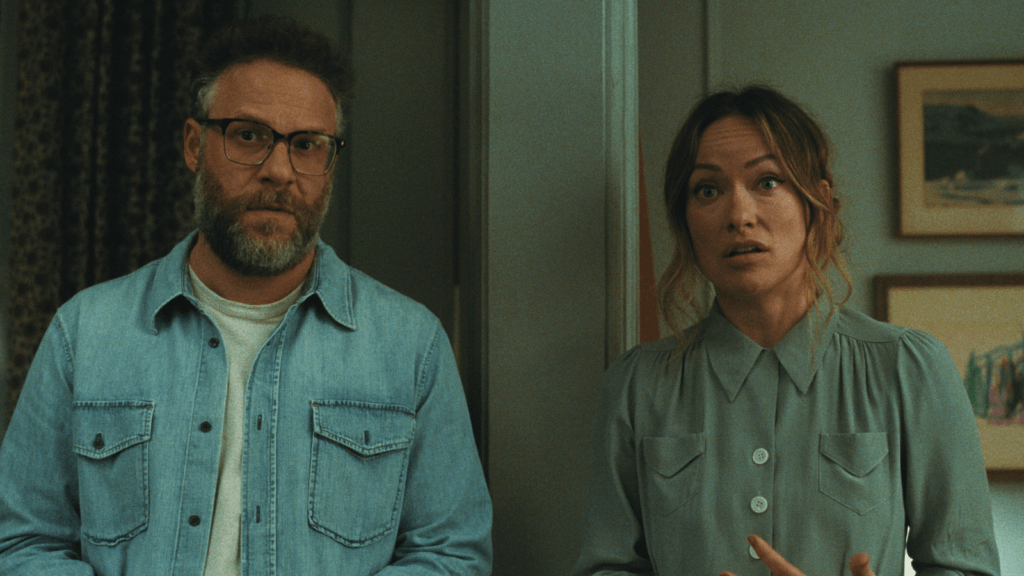
When the guests arrive, they immediately recognize the “contentious environment,” which they claim to love. Hawk is a former firefighter. Pina is a psychotherapist and sexologist. He harbors a borderline invasive intimacy that leads to awkward interactions, along with an interest in interior design, especially rugs. She’s poised and assertive, sizing up everyone around her. They seem open, even if they, too, have an ulterior motive. The rocky getting-to-know-you period of the evening is marked by Joe’s disdain at being forced to host and his desire to confront them about their nocturnal noises. Angela, desperate to please her guests, tries to prevent Joe from saying anything, further straining the dynamic. The conflict boils under the surface before an unexpected discussion about the guests’ interest in sex parties completely shifts the dynamic. The second half of the story evolves in a way that makes the entire experience worth revisiting. I saw The Invite twice, and once I looked beyond the story’s surprises, the performances became central, brimming with nuanced character work.
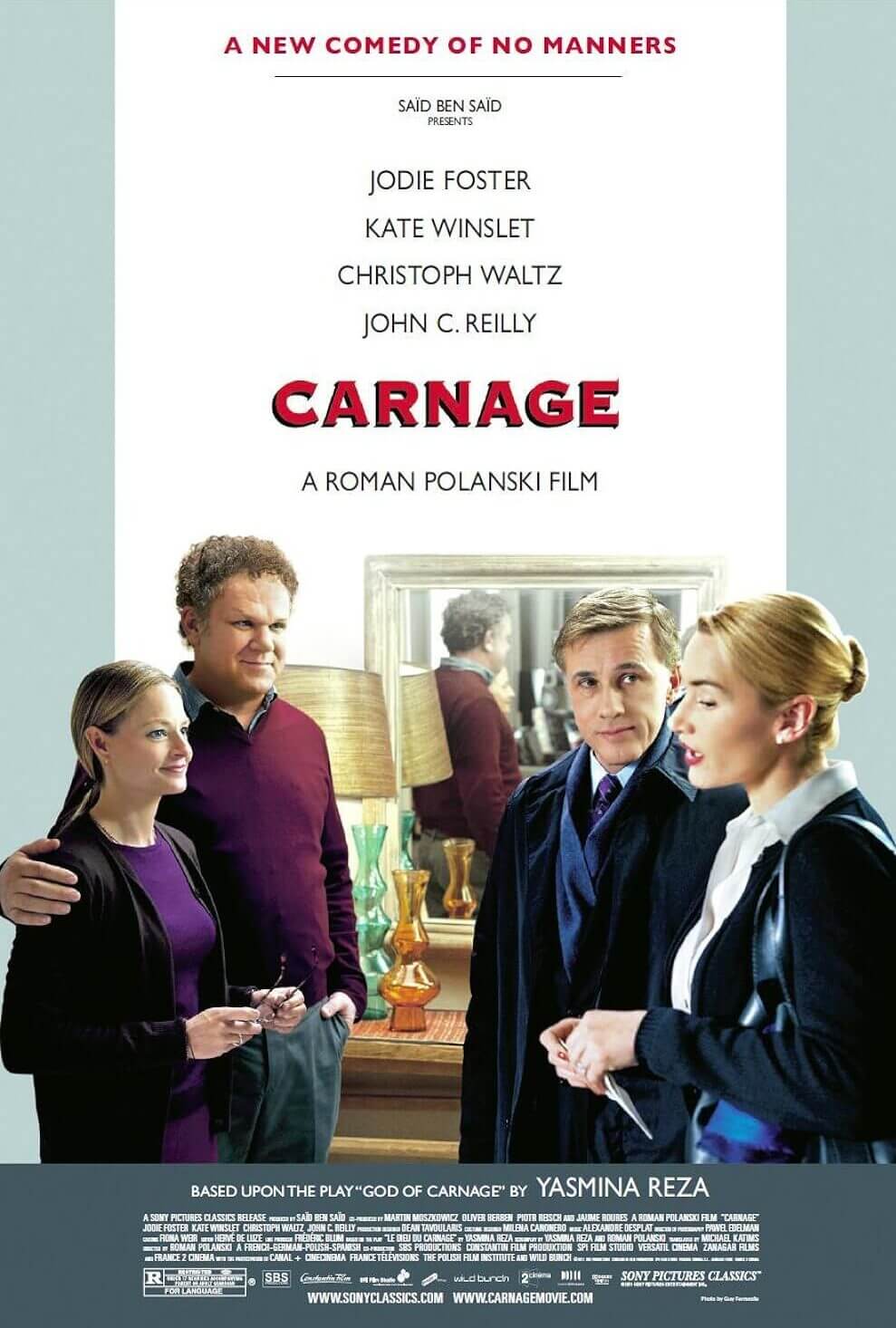
Wilde’s formal approach is fully considered. Fittingly, she dedicates her film to Diane Keaton, who, among other iconic turns, starred in several Woody Allen features. He, too, influences her style here. Wilde and cinematographer Adam Newport-Berra render the visible grain, earth-toned color palette, and fluid camerawork in some of Allen’s 1980s and 1990s work. The early scenes in The Invite recall the two-couple setup in Allen’s Manhattan Murder Mystery (1993), which starred Keaton. Later, as the conflict among all four characters begins to simmer, the material evokes the rawness of Husbands and Wives (1992). I also thought about Roman Polanski’s Carnage (2011), with its dashes of paranoia, aggression, and uninhibited behaviors. Despite the single setting’s potential to feel stagey, Wilde and production designer Jade Healy keep the space looking authentic and varied. The apartment is an engaging setting, filled with paintings and doorways that foster visual variety. But the real treat is how well Wilde directs her actors, who bring to life characters full of suppressed anger, resentment, anxiety, desire, and unspoken truths.
To be sure, Wilde’s ensemble is exceptional, starting with her performance as a woman who desperately wants more, even as she remains oblivious to some signals early on. Angela can almost touch a happier life but feels held back by both herself and her partner. Rogen, who maintains his chummy stoner persona while flexing a dramatic muscle seldom seen outside Danny Boyle’s Steve Jobs (2015) and Steven Spielberg’s The Fabelmans (2022), gives one of his best performances. Cruz was cast to her strengths, playing a role that allows her to be the most emotionally intelligent and sexually self-aware character in the room, reminiscent of her work with Pedro Almodóvar. Understated is Edward Norton, who, less in the spotlight in recent years than he once was, has been appearing in small roles in several Wes Anderson features and most recently in James Mangold’s A Complete Unknown (2024) as folk singer Pete Seeger. Norton perfectly captures the self-assured Hawk’s subtle innuendos, laid-back pretentiousness, and bemusement over Joe’s brutal honesty. But this seemingly tropey character becomes someone more dimensional when he reveals the heartbreaking origins of his name.
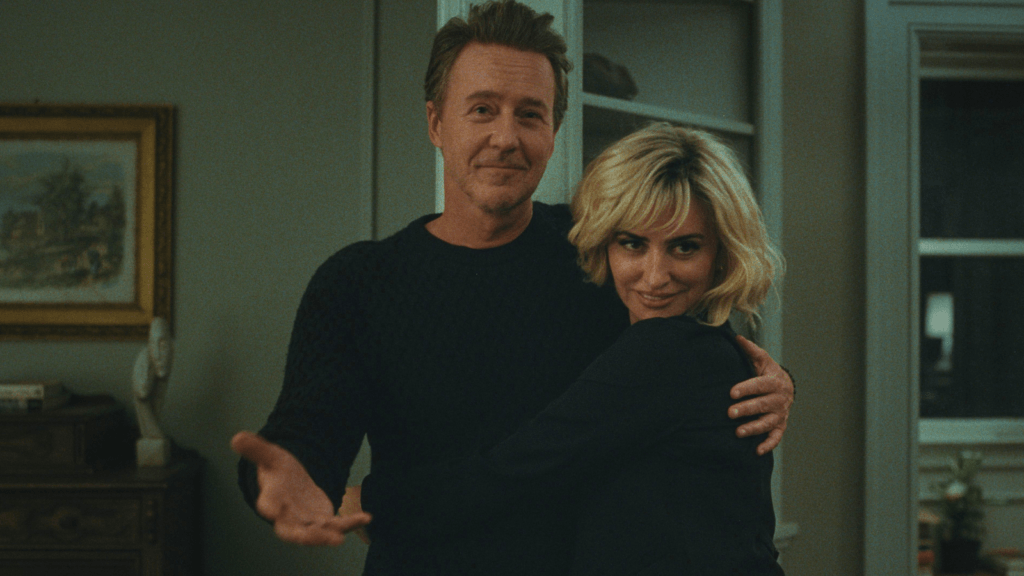
The Invite is ultimately less about the dinner party than what it reveals about Angela and Joe and the toxicity of their marriage. Both have set aside their ambitions—he wanted to be a musician, she studied photography—to raise their daughter and maintain their union. Their lack of personal fulfillment has led to self-hatred and resentment of their partner. Angela has channeled her dissatisfaction into obsessive home-decorating and a touch of exhibitionism. Joe deflects any serious discussion with sarcasm and humor, which often takes a hysterical, sometimes cruel form, particularly in a late exchange with Hawk. Joe puts down Angela’s interests because of his own unhappiness. Angela yearns for Joe to be passionate about music again. Their eagerness to accept Pina and Hawk’s eventual proposal is a symptom that something is wrong between them. However, their relationship has reached the point where they resent each other so much that they cannot experience pleasure in each other, in others, or even in themselves. The final scene, which echoes the audio from the early part of their relationship that plays over the opening credits, leads to an ending that could be seen as a bittersweet end or a hopeful new beginning. I interpreted it as the former on my first viewing, and the latter on my second. Wilde retains the moment’s ambiguity to her picture’s benefit.
After a debut at this year’s Sundance Film Festival that prompted a bidding war, The Invite landed with A24, which, with any luck, will have a buzzy hit on its hands. And for good reason. It’s a deliriously entertaining, squirm-inducing, yet emotionally exhausting watch in the most sublime way. Even as it zigzags in various directions, Wilde controls each move with incredible skill. The film is also more observant about long-term relationships and marriages than it might initially seem. What begins as a cringeworthy comedy becomes unexpectedly resonant and poignant by the last frames. Angela and Joe’s relationship has a rich history of love and passion, but “living on crumbs” for so long has made them miserable, to the point where they no longer see themselves as worthy of love or happiness. Angela’s inner voice, which casually refers to her as a “stupid fucking cunt,” is particularly devastating. Despite the wallops Wilde delivers in the second half, she maintains a pitch-perfect grip on the material, with performances that feel supported by every choice from behind the camera. It’s an impressive and affecting watch that feels deeply personal to the filmmaker. And it’s a thoughtful, intuitive story about recognizing when a relationship no longer supports growth or self-love, leaving room for the marriage to end or enter a new chapter.
Thank You for Supporting Independent Film Criticism
If the work on DFR has added something meaningful to your love of movies, please consider supporting it.
Here are a few ways to show your support: make a one-time donation, join DFR’s Patreon for access to exclusive writing, or show your support in other ways.
Your contribution helps keep this site running independently. However you choose to support the site, please know that it’s appreciated.
Thank you for reading, and for making this work possible.
Brian Eggert | Critic, Founder
Deep Focus Review