Return to Silent Hill
By Brian Eggert |
Moviegoers have lucked out this January. Rather than the usual beginning-of-year sludge dumped into theaters, the first few weeks of 2026 have brought an array of solid genre flicks. We Bury the Dead, the first release of the year, presented an innovative take on zombie fare. Nia DaCosta’s similarly themed The Bone Temple, her sequel to 28 Years Later (2025), delivered the best in the franchise since the original. Johannes Roberts’ Primate was a memorable entry in the when-animals-attack subgenre. And Night Patrol put cops, gangs, and vampires into an inspired mashup. With so many worthy movies this January, the world feels even more topsy-turvy than it already has of late. Fortunately, Return to Silent Hill has arrived to remind us what January movies usually look like. With its combination of subpar VFX and inane storytelling, it delivers the sort of empty ordeal those well-versed in January trash have come to expect.
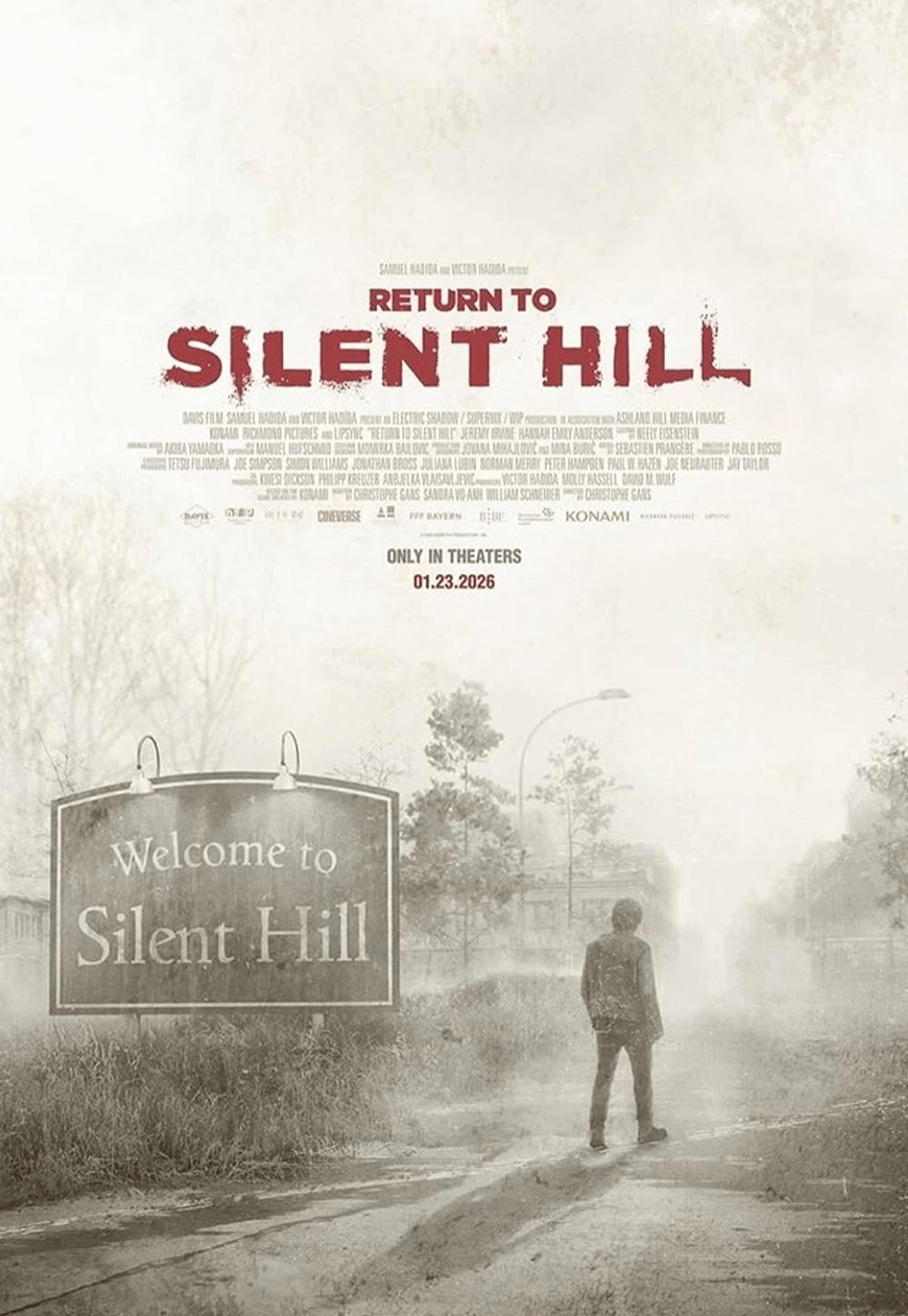
Return to Silent Hill marks the second trip to the cursed New England town by French director Christophe Gans, who helmed the original 2006 movie, Silent Hill—one of the best-looking bad movies ever made. However, despite the title, the new one has no relation to Gans’ earlier effort or to the 2012 sequel, Silent Hill: Revelation. Instead, the filmmakers draw inspiration from the Konami video game series. Gans, who wrote the screenplay with Sandra Vo-Anh and Will Schneider, based the story on 2001’s Silent Hill 2 video game. He and production designer Jovana Mihajlovic replicate images and whole scenes from the game and its 2024 remake. Costumes, set pieces, monsters, and even a gross row of urinals look identical to the game. But that also means the movie ends up looking like a feature-length cutscene rendered with embarrassing digital effects.
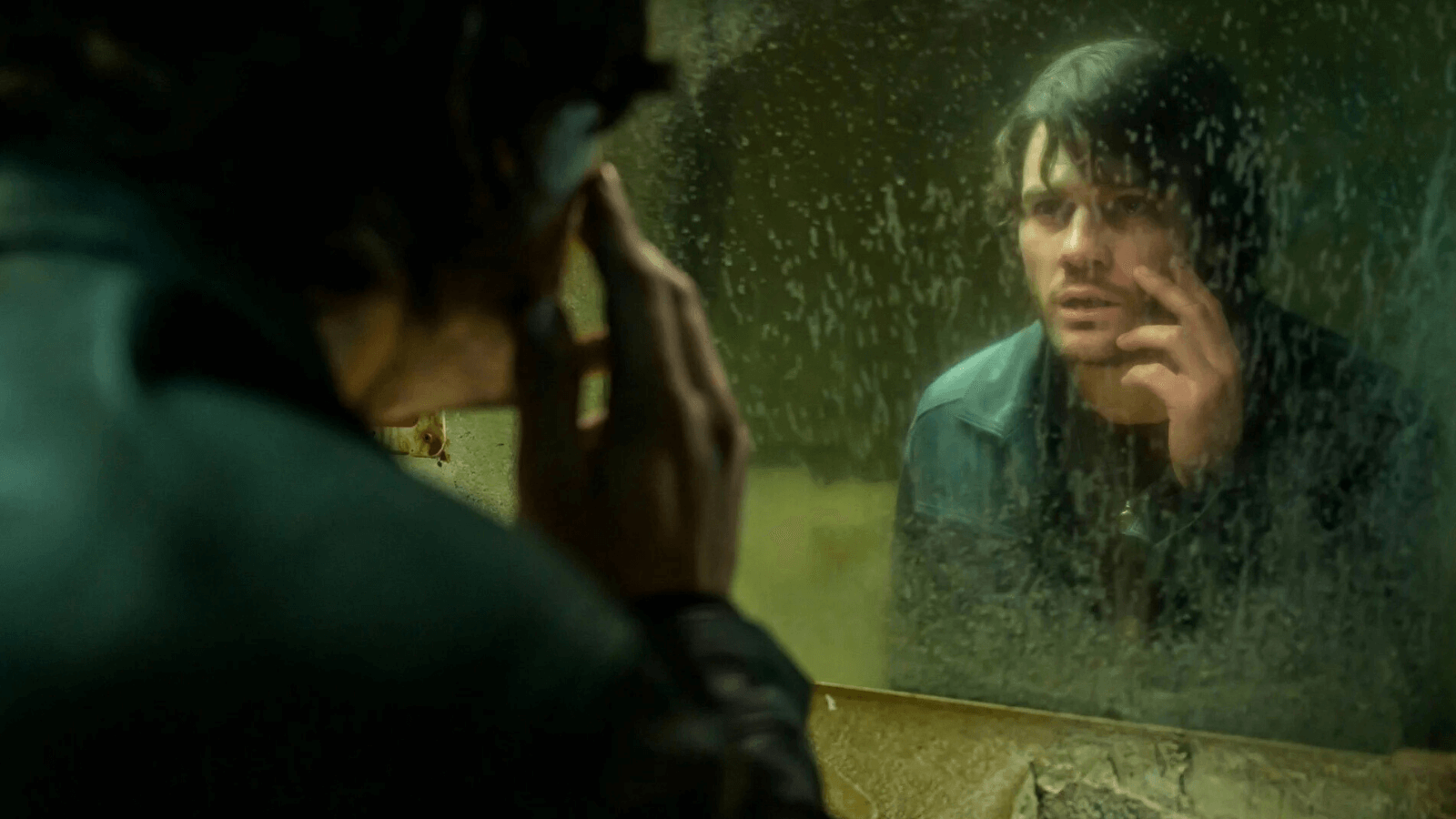
Players of the game could probably describe the plot better than I can. It’s a confusing story in which much hinges on James Sunderland (Jeremy Irvine, in a thankless role), a tortured artist with bad hair who ignores his shrink’s advice and returns to Silent Hill. There, he finds the town shrouded in fog, the sky raining ash. But James has an unstable mind, fractured by memories of his former lover, Mary (Hannah Emily Anderson), whom he met on a fateful day of reckless driving in his convertible. Mary hails from the sleepy town, set in a secluded valley and founded by her religious zealot father. Horrible stuff happened there in the past, and Mary hoped to escape for a time. But it’s impossible to know what really occurred and what James’ broken mind manufactured, and the movie never clarifies either way. He tries to piece together the clues, but by the end, the only thing we know for sure is that trauma and grief—the horror genre’s go-to themes in recent years—fuel James’ perspective.
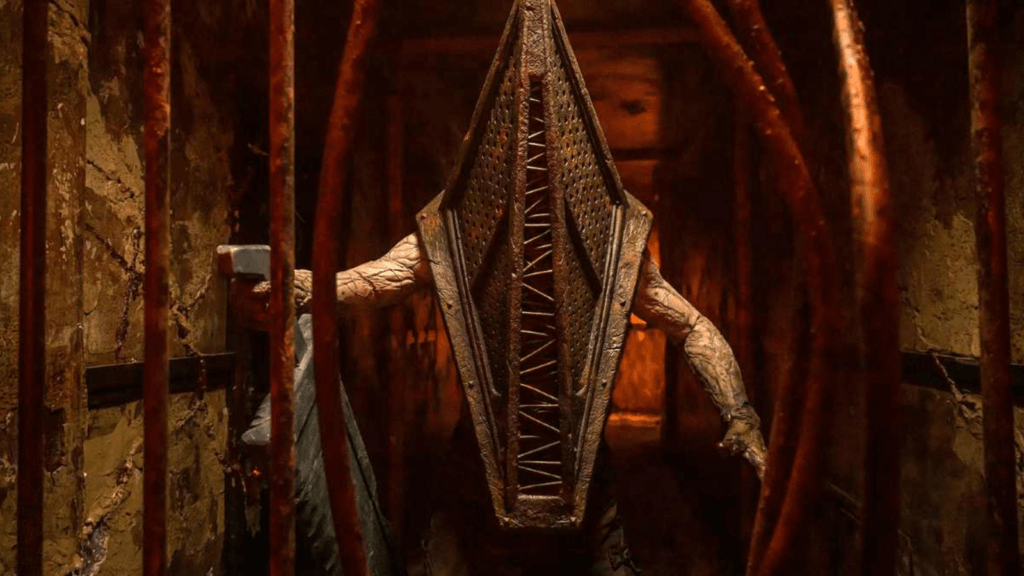
Much of Return to Silent Hill involves James running from one scary situation to the next, with no plan or sense of progress whatsoever. All the while, the rules of this nightmare world confounded me. The whole movie exists less to tell a coherent story than as an excuse to explore creepy imagery. Amid a preponderance of chain-linked fences, grubby corridors, and mazes, James encounters armless, faceless creatures who spew acidic black gunk from a chest cavity; a swarm of bugs that prove unintentionally funny because of their silly tongues; a throng of contorted nurses with porcelain doll heads; and the dreaded “Pyramid Head” juggernaut. Every so often, James hears a chilling siren and clutches his head, and the whole world around him turns from a gray, ashen space to a decrepit, fiery hellhole. It’s disturbing stuff in concept, none of which I understood, and all of which made me feel nothing but confusion.
Whereas the 2006 movie benefited from a $50 million budget that supported its superb cinematography and above-average VFX for the time, the new installment cost between $23 and $40 million. Not only is the budget lower in dollars, but, adjusted for inflation, Return to Silent Hill relied on less than half the original’s budget, which explains why it looks so cheap by comparison. Many scenes appear to be shot in green-screen environments, with a blatant separation between the actors and their shoddy backgrounds. Silent Hill’s gruesome inhabitants have a digital quality outclassed by today’s next-gen video games, such as the plastic-looking, multi-legged monster that resembles the doll-headed spider that Sid Frankensteined together from random parts in Toy Story (1995). The animated bugs in the movie look about as convincing as the scarabs from The Mummy (1999). All of this imagery may have been frightening in another movie, where the story or characters made any impact, but that’s not the case here.
Throughout the entire runtime of Return to Silent Hill—an otherwise reasonable 106 minutes that feels like an endless slog—I struggled to make heads or tails of the story. What is the source of these images? Why do these creatures look the way they do? Is the story all in James’ head, or was there a genuine religious cult at work that caused these horrors to come alive? Maybe we’re not supposed to know, and the imagery alone should sustain our investment in the story. Doubtless, those who love the popular video game will approach the movie through a more nostalgic, even forgiving lens, perhaps relishing how Gans recreates segments of the game. I found the experience difficult to sit through and nonsensical from moment to moment, with its confounding story and shoddy CGI matched only by its lack of entertainment value.
Thank You for Supporting Independent Film Criticism
If the work on DFR has added something meaningful to your love of movies, please consider supporting it.
Here are a few ways to show your support: make a one-time donation, join DFR’s Patreon for access to exclusive writing, or show your support in other ways.
Your contribution helps keep this site running independently. However you choose to support the site, please know that it’s appreciated.
Thank you for reading, and for making this work possible.
Brian Eggert | Critic, Founder
Deep Focus Review