Top 10 Films of 2025
By Brian Eggert | December 27, 2025
It never fails. Every year, I publish my list of the best films, and I always end up looking back and wishing I had made different choices. Whether I regret putting a film on my list or wish I had ranked something higher or lower, there are always some tweaks I would like to make. What strikes me at a particular moment in time isn’t always what becomes a lasting favorite. People change or have moods, and they look at movies with new eyes. I’m no exception. With those qualifiers about the impermanence of listmaking in mind, I present to you my Top 10 Films of 2025, plus one Runner Up.
Read my list of the Top 25 Films of 2025 and additional commentary on the year on DFR’s Patreon.
RUNNER UP: It Was Just an Accident
Jafar Panahi’s Palme d’Or winner carries an unmistakable personal charge for its director, whose ongoing conflict with the Iranian government remains in the headlines. Shot in secret to avoid raising his government’s antennae, Panahi’s story of former political prisoners confronting a man who may have tortured them mirrors the filmmakers’ own experiences with imprisonment, turning its frantic scenes of driving and moral dead ends into reflections of his time under interrogation, house arrest, and now the looming threat of reincarceration. While the narrative wrestles with accountability and the trauma that lingers long after captivity, Panahi resists the catharsis that a lesser filmmaker might employ. Instead, he chooses ambiguity for a no less confrontational look at the long-term psychological effects of governmental persecution. The result is an artistic response forged from the injustices Panahi endured, redirected into a vibrant film that contains a broader warning for any society governed by fear and cruelty.
10. The Life of Chuck
Mike Flanagan has done wonders with Stephen King’s fiction. Between Gerald’s Game (2017) and Doctor Sleep (2019) alone, he made two of the finest adaptations of the author’s work. Here’s another one, based on a metaphysical short story about the universe inside the titular character’s head. Exploring the idea that we all have “multitudes” within us through a reverse chronology, it considers the impact one person can have. But it’s also uniquely cinematic in a way King’s story couldn’t capture, specifically in the music-and-dance sequence that might be the most joyful scene in any movie this year. Anchored by tender performances from the cast—Tom Hiddleston, Chiwetel Ejiofor, Karen Gillan, Mark Hamill, Mia Sara, and Benjamin Pajak—the film is a needed tonic to a bleak, devastating year outside the cinema.
 9. The Shrouds
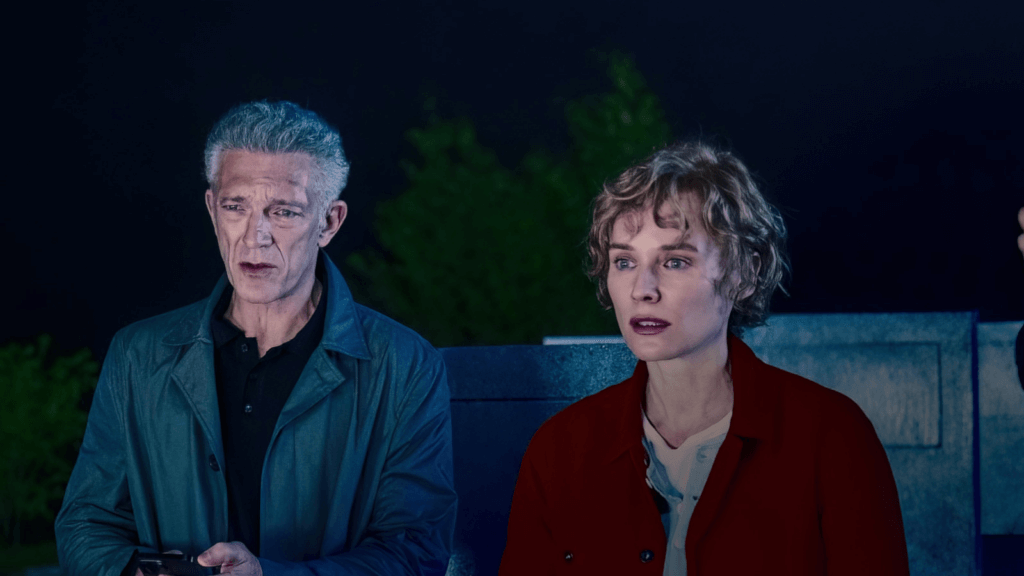
The Shrouds is Cronenberg’s most personal work in decades (since 1979’s The Brood), channeling the grief he felt after losing his wife in 2017. Through Karsh—played by Vincent Cassel, who is made to look like Cronenberg—the director transforms his mourning into a twisting yet oddly funny tale of corporate espionage. Karsh’s compulsive need to watch his wife’s decomposing body through new tech becomes a literal embodiment of Cronenberg’s struggle to remain connected to his late wife. The film’s winding conspiracies, demented romantic entanglements, and bodily horrors add rich layers to its core of unresolved sorrow, dramatizing how grief distorts the mind and worldview. In exploring these themes, the Canadian auteur delivers an intimate story that pours mourning into a distinctly Cronenbergian affair that continues to occupy the mind long afterward—particularly for those who have experienced the loss of a loved one.
8. Sinners
The best theater-going experience I had this year was the IMAX presentation of Ryan Coogler’s Sinners, a wildly entertaining blend of vampire thrills and historical commentary. The whole audience was on the film’s wavelength, from its humor to its portrait of race in America to its metaphysical ideas about music and time. Coogler innovates within the vampire genre without sacrificing his film’s political edge, smuggling provocative ideas about conformity, race, religion, freedom, and cultural inheritance into a blockbuster-sized package. To be sure, he delivered a hugely successful film that had Hollywood clutching its pearls over the lucrative deal Coogler made. How appropriate that he turned familiar tropes into a pointed cautionary tale against indoctrination and a celebration of artistic resistance.
7. The Long Walk
In a year of several excellent Stephen King adaptations, including The Life of Chuck and The Running Man, Francis Lawrence’s take on The Long Walk was my favorite. It’s a story that reminds people that their enemy isn’t their neighbor but the State that pits neighbors against each other. Set in a dystopian, fictionalized version of America, this brutal setup follows a group of young men who compete for glory by walking in a televised competition, which lasts until they can no longer walk. It’s an unflinching story about entertainment as a system of control, and it’s headed by a superb ensemble, including Cooper Hoffman and David Jonsson. With a stripped-down aesthetic and bold remarks about authoritarianism, it’s one of many films in 2025 that seem all too apt for today.

6. If I Had Legs I’d Kick You
Rose Byrne gives possibly my favorite performance of the year in writer-director Mary Bronstein’s portrait of a beleaguered mother faced with a series of disasters: a hole in her apartment ceiling, a child with gastrointestinal sickness, strange visions, no one to help her, and no way to relax. Bronstein portrays motherhood as a thankless series of obligations and never-ending stress, and not even Conan O’Brien’s dry, humorless therapist can help. This is high-tension filmmaking at its best, with Bronstein capturing the style of her former collaborators, Josh and Benny Safdie, and elevating it with a frantic story of a woman under the influence of motherhood. Wildly surreal yet emotionally true, it’s a unique blend of real-life problems and a downright celestial search for meaning.
5. Mickey 17
Bong Joon-ho returns after Parasite (2019) with a wildly entertaining slice of science fiction that blends dark comedy, political allegory, and head-spinning spectacle with a tonal agility that defines his best work. Robert Pattinson delivers hilarious, sharply contrasted dual performances (based on the titular cartoons from The Ren & Stimpy Show) as two iterations of Mickey, an expendable laborer contracted into repeated deaths and rebirths. The premise alone raises thorny questions about identity, mortality, and personhood, but it’s also imbued with a heartening romantic subplot courtesy of Naomi Ackie. Bong saturates the film with vivid personalities—from Mark Ruffalo’s autocratic, Trump-like mission leader to Toni Collette’s sauce-obsessed spouse—while charting humanity’s reckless colonization of a planet inhabited by intelligent, pillbug-like creatures. Bong orchestrates the chaos with remarkable control. The result is an ambitious, off-kilter, and wildly fun studio film that proves big-budget sci-fi can still have an edge.
4. The Mastermind
With a dry wit, formal precision, and a pointed takedown of entitlement and privilege, Kelly Reichardt dismantles the traditional heist narrative from the inside out. Rather than glorifying competence or cool-headed ingenuity, Reichardt reframes the genre around a bumbling figure—terrifically played by Josh O’Connor—whose self-delusion fuels the film’s suspense and supplies its sly comedy. Reichardt applies soft ’70s textures, subtle character beats, and the improvisational rhythms of Rob Mazurek’s jazz score to build a world where every detail, from color palettes to offhand gestures, deepens the film’s critique. Having given several terrific performances in 2025 (A History of Sound, Wake Up Dead Man, Rebuilding, etc.), O’Connor delivers his most magnetic turn here, embodying a man whose charm and incompetence coexist in ways that are at once empathetic and infuriating. The darkly funny result is a quietly brilliant work that exposes the fragility of male mythmaking with such clarity and style that it feels both refreshing and essential for today.
 3. Sentimental Value
Joachim Trier’s latest is a study of how the creation of art becomes an emotional conduit, enabling family members who cannot communicate to connect. The film also showcases Trier’s gift for shaping intimate emotional textures through refined visuals and a literary sensibility. Renate Reinsve gives a marvelous performance alongside her outstanding costars (Stellan Skarsgård, Elle Fanning, and Inga Ibsdotter Lilleaas) in a film about characters shaped by ambition, longing, and lingering emotional hangups. Trier achieves a sophisticated interplay between his literary writing and quiet observational moments that deepen the film’s multifaceted exploration of identity. And with the arrival of its powerful final sequence—perhaps the best ending of any film this year—it becomes apparent this is Trier’s best and most moving film. It’s a beautifully acted and emotionally perceptive exploration of how creation becomes a form of therapy.
2. Marty Supreme
No other film in 2025 had me writhing in my seat, gripping my armrest, and gasping like Marty Supreme. Josh Safdie channels his signature, nerve-shredding momentum into a sharply realized portrait of ambition, ego, and American self-mythology. Timothée Chalamet delivers the most commanding performance of his career, embodying the titular table tennis champ whose hunger for greatness is electrifying and deeply flawed, yet he has the potential to change. Safdie’s filmmaking—with Ronald Bronstein’s breathless editing, Darius Khondji’s gritty 35mm images, and a cleverly anachronistic soundtrack—creates a frenetic experience that merges New York street-level chaos with the success-minded worldview of ’80s sports movies. The film’s meticulous sense of place, drawn from lived-in Lower East Side locations and Jack Fisk’s impeccable period design, grounds its kineticism. What ultimately elevates Marty Supreme is how its relentless velocity gives way to genuine emotional impact, delivering a rare Safdie story in which the protagonist’s odyssey yields not just anxiety and exhilaration, but a surprising, hard-won sense of personal growth.
1. One Battle After Another
Watching Paul Thomas Anderson’s $150 million production in the theater—another astounding IMAX presentation—there were moments when I couldn’t believe my eyes and ears. Whether it was the cinematic virtuosity on display or the unsettling parallels to contemporary America, right down to the white supremacist cabal known as the Christmas Adventurers Club pulling the strings, Anderson delivered a spectacle with razor-sharp political and emotional insight. In his first non-period piece in over two decades, Anderson applies a fluid, spatially precise, and visually inspired approach that keeps every high-stakes sequence thrilling and clear. And while the story of revolutionaries fighting against a xenophobic State authority resonates in myriad ways—not the least of which is a vital theme about keeping up the good fight against fascism and oppressive government tactics—the film never feels like it’s on a soapbox. Instead, it’s funny and entertaining, and its 162-minute runtime plays like an 80-minute thrill ride.
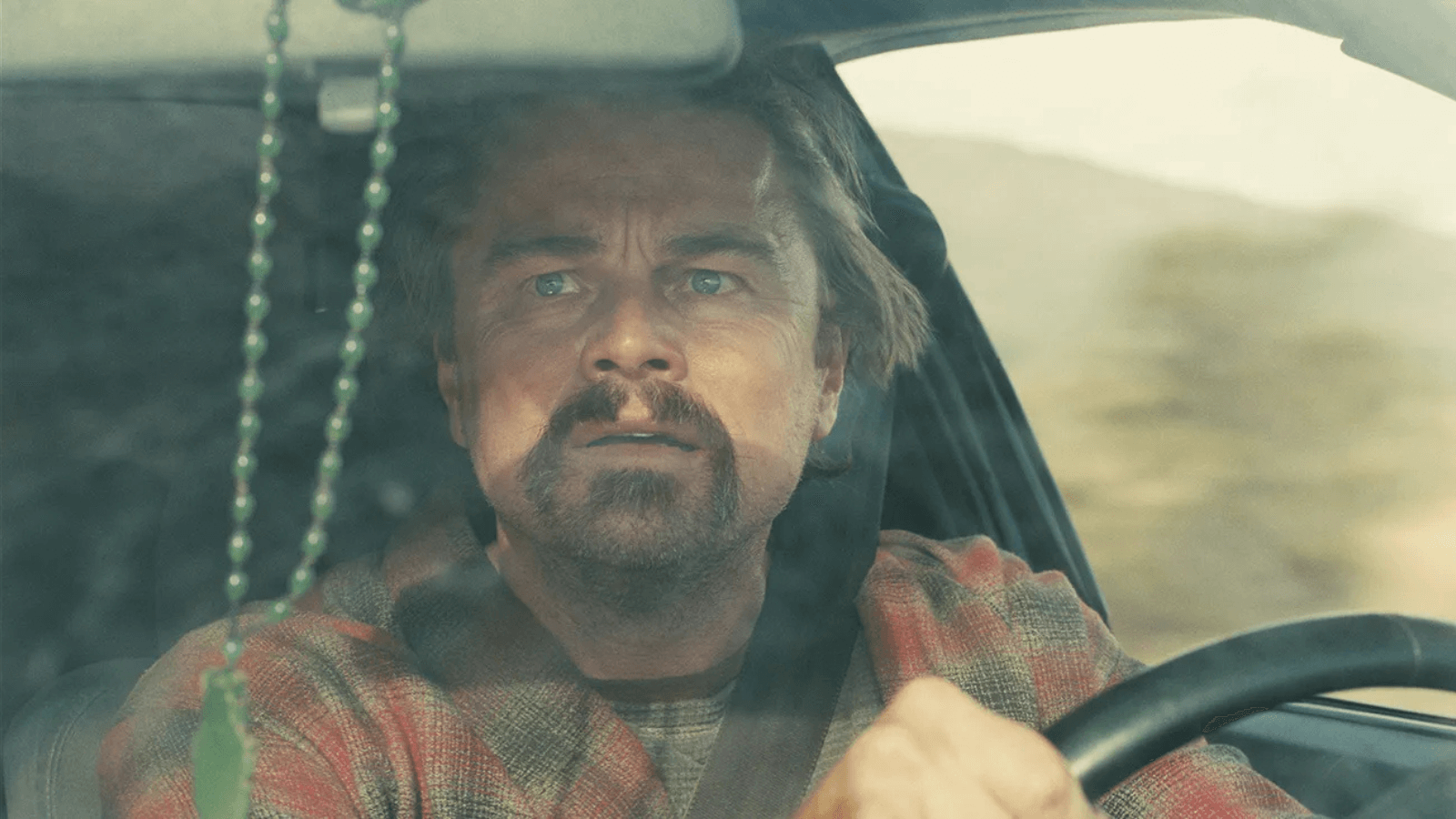
In adapting Thomas Pynchon’s book Vineland, Anderson holds a mirror up to present-day America, complete with government forces entering sanctuary cities and children in cages. Still, he keeps the story rooted in unforgettable characters: Leonardo DiCaprio’s hapless stoner and former demolitions expert, Teyana Taylor’s uncontainable Perfidia Beverly Hills, Benicio del Toro’s martial arts coach and underground fixer, and of course, Sean Penn’s cartoonish and twitchy military freak. It’s an achievement that finds Anderson at the peak of his powers, supported by Michael Bauman’s inspired cinematography, Andy Jurgensen’s crack editing, and Johnny Greenwood’s discordant score that punctuates the chaotic chase at the center. The experience is exhilarating, intelligent, ambitious, germane, and affecting—the kind of viewing that gives me goosebumps from how brilliant it is.
Thank You for Supporting Independent Film Criticism
If the work on DFR has added something meaningful to your love of movies, please consider supporting it.
Here are a few ways to show your support: make a one-time donation, join DFR’s Patreon for access to exclusive writing, or show your support in other ways.
Your contribution helps keep this site running independently. However you choose to support the site, please know that it’s appreciated.
Thank you for reading, and for making this work possible.
Brian Eggert | Critic, Founder
Deep Focus Review