Is This Thing On?
By Brian Eggert |
Note: This review was originally published on November 18, 2025. It has been re-posted in advance of its expanded release on January 9, 2026.
“We need to call it, right?” says Tess, played by an exquisite Laura Dern, brushing her teeth before bed. Stepping out of the shower, Will Arnett’s Alex, her husband of 20 years, concurs. Their mutual agreement does not stem from infidelity or a nasty argument, but from honesty and emotional maturity seldom seen in films about divorce. Whatever spark they had fizzled out long ago, they believe, and they must confront that. The third feature directed by Bradley Cooper, Is This Thing On?, presents a portrait of a marriage in crisis; it’s also about how being under a spotlight can have either a therapeutic or destabilizing effect on a relationship. Cooper has already made two other films about how the creative lives of artists can impact their personal relationships, first in A Star Is Born (2018) and again in Maestro (2023). His latest is my favorite of the three, in part because it feels less self-conscious than his previous two, and in part because his characters carry a warmth and geniality that, along with the often riotous humor throughout, makes the experience endearing.
Propelled by marvelous performances from Dern and Arnett, Is This Thing On? was inspired by John Bishop, the Liverpool-born footballer who, upon splitting with his wife in 2000, decided to give stand-up a try. He restarted his life with a second career in comedy, telling stories about his marriage that ultimately led to the former couple having honest conversations and, in time, reconciling. Bishop receives a story credit here, while the screenwriting duties fell to Cooper, Arnett, and Mark Chappell. The result might be described as a classic comedy of remarriage, where a couple separates only to end up in each other’s arms by the end. That’s somewhat reductive, since the film explores how each partner, along with their two 10-year-old sons (Blake Kane and Calvin Knegten), whom Alex calls “Irish” twins, handles the separation. The story goes beyond comedy into something more complex and emotionally raw, with Arnett embodying the wounded and deflated Alex, and Dern reminding us that her range has no limits.
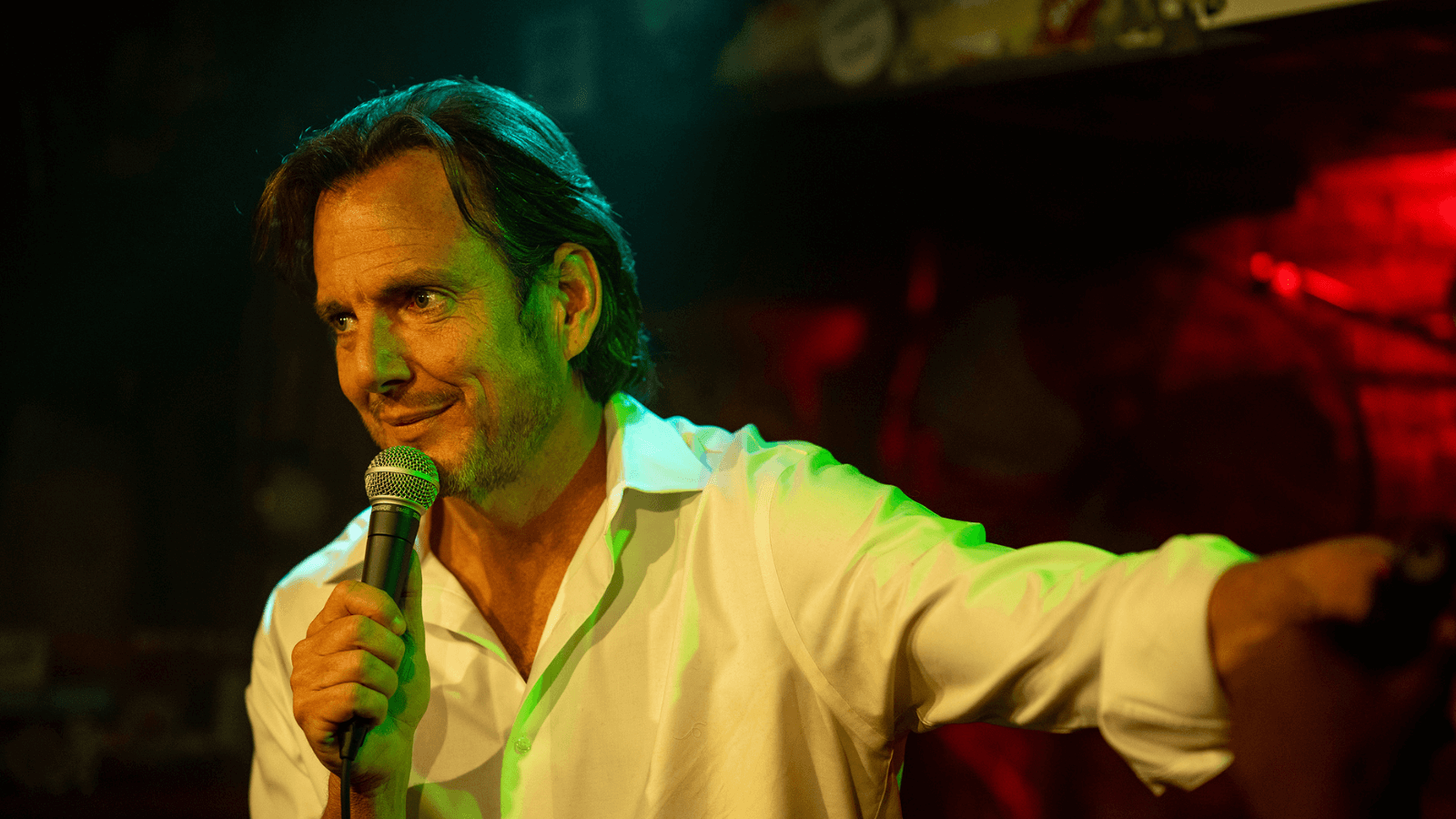
Before telling anyone about their separation, Tess and Alex get together with their longtime friends, the married Manhattanites Christine (Andra Day) and Balls (Cooper), and the newly wedded Stephen (Sean Hayes) and Geoffrey (Scott Icenogle). At Balls and Christine’s apartment, Tess quips that Alex isn’t alive—one of those remarks that’s framed as a joke but isn’t. Alex reels from this and, after splitting a hash cookie with her, wanders into the West Village’s Olive Tree Cafe and signs up for an open mic night at the downstairs Comedy Cellar to avoid the $15 cover charge. He doesn’t exactly nail his first impromptu performance, but he gets enough laughs telling stories about his life to encourage him to return. Soon enough, he’s pulled into the gravity of the stand-up comic culture and does the rounds at various open mic nights around the city, getting better all the time. Alex keeps his nightlife a secret from everyone while pouring his energy into writing, testing, and polishing his routine. Performing gives him a thrill, but it also gives him a method of working through his feelings.
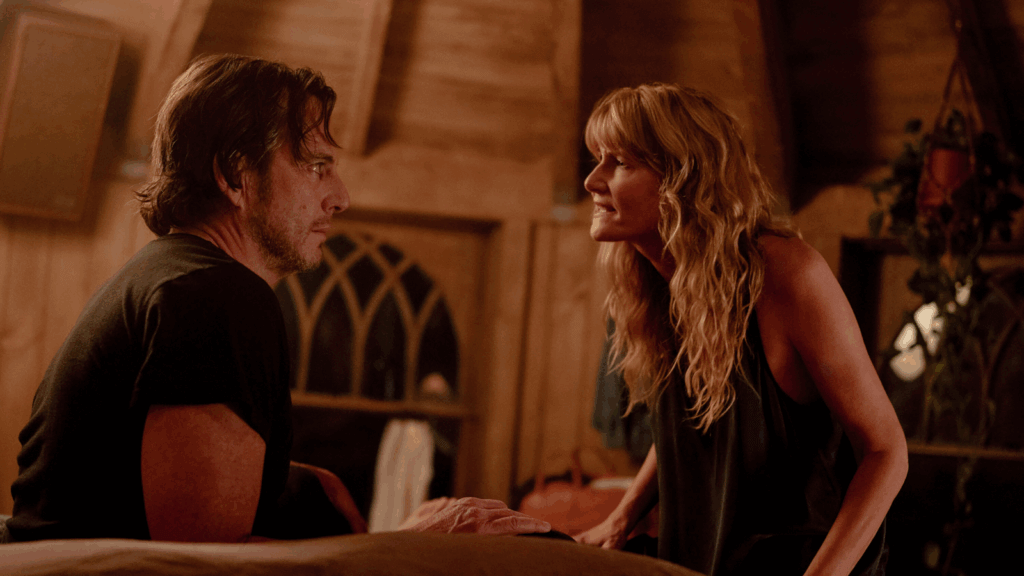
Meanwhile, Tess, a former Olympic volleyball champ, considers returning to the sport as a coach and even dating. She and Alex remain on good terms, often approaching their situation with open communication, even when it hurts. Visiting Alex in his spartan single-dad apartment, she breaks down when she notices he bought the kids the same brand of light-up toothbrushes for his place. They can’t just shut off a 20-year connection. This builds to a devastating scene where Alex gets his first 10-minute spot and talks about his sex life with Tess, comparing it to his first sexual encounter as a newly single man. The problem is that Tess shows up at the club with a date (Peyton Manning, for some reason). She not only learns about Alex’s new passion for comedy but must listen as Alex shares intimate details about them with strangers. Whatever initial betrayal she feels, she cannot help but smile and, afterward, admit, “It’s hot.” Then, Alex and Tess begin to have an affair while keeping it secret from their friends, and especially their sons.
Cooper’s direction and camerawork draw from the manic energy of his work with David O. Russell on Silver Linings Playbook (2012) and American Hustle (2013). He orchestrates chaotic moments with effortless clarity, particularly in scenes involving Alex’s parents: the thoughtful and warm Jan (Ciarán Hinds) and the unfiltered Marilyn (Christine Ebersole). There’s lots of shouting and overlapping dialogue, contrasted by the open-hearted conversations mined with long-held resentments and overdue honesty. One devastating scene finds Alex explaining to his boys, who have discovered his joke notes, that his stage stories, while rooted in truth, are make-believe. Whether it’s a stage performance or domestic scene, Cooper’s direction can be summed up by one imperative: naturalism. Every performance feels lived-in and authentic, offering a pleasant variation on many of the dynamics in Noah Baumbach’s Marriage Story (2019). Arnett, in particular, delivers his best work to date, giving a vulnerable performance that undoubtedly draws from his experiences as a divorcé who maintains a strong relationship with his former partner.
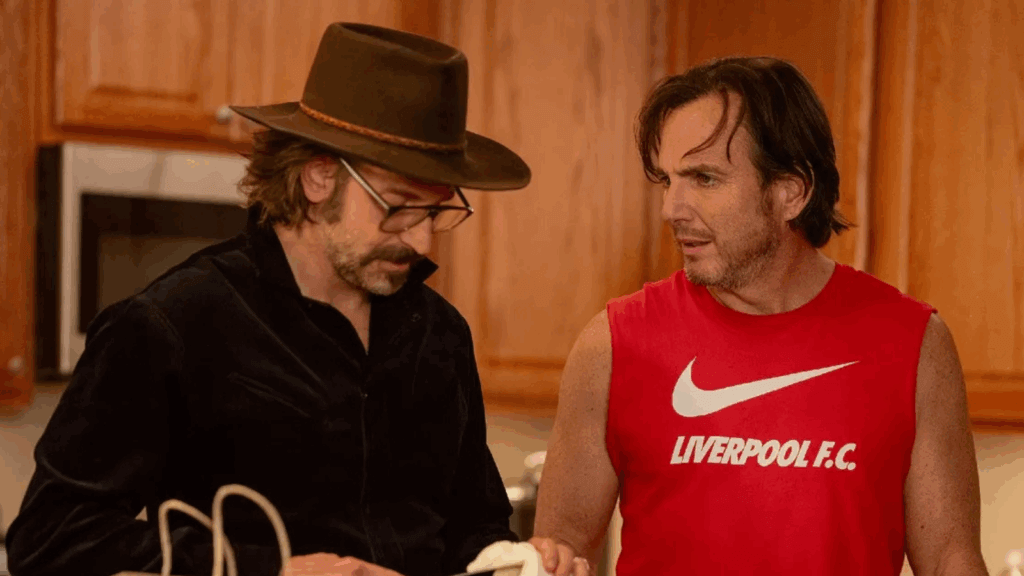
In each of his three directorial efforts, Cooper’s aesthetic choices have been tailored to the material. For A Star Is Born, he and cinematographer Matthew Libatique alternated between a realistic grit and showbiz gloss to reflect the dichotomy between authenticity and performance that drives the film’s themes. A similar visual dynamic played out in Maestro, albeit to more pronounced degrees, given that film’s pointed monochrome passages and fanciful movie musical sequences. For Is This Thing On?, Cooper’s primary concern is a casual, worn-in feel, imparting the narrative’s emotional realism concerning long-term relationships. Libatique’s handheld cameras underscore the improv vibe throughout; however, as in A Star Is Born, his close-ups sometimes come too close for comfort, presenting an invasive distraction. This is especially true during Alex’s stage performances and the final scene, the result of a subplot about the twin boys practicing for a school concert. They perform a cover of the Queen and David Bowie duet “Under Pressure,” with its refrain “Why can’t we give love that one more chance?” being a tad too on-the-nose given the subject matter.
Regardless, Cooper remains a committed artist who has now made three films about how performers grapple with the personal and professional overlap in their lives. This is most beautifully shown in Is This Thing On? when Alex walks out on Tess during an argument and steps onto the stage in a fluid transition. He proceeds to have an on-stage breakdown about relationships. Afterward, Alex’s father tells him to “Give yourself the grace to work through all of this”—a theme echoed by a scene, perhaps inspired by a similar one in The Big Chill (1983), when Sean Hayes leads an impromptu kitchen rendition of “Amazing Grace” while preparing a breakfast spread. It’s another pointed song choice for a film about finding grace—a state of love and forgiveness that leads to redemption. Both Tess and Alex realize they’ve been blaming their partner for their sense of self-worth and personal validation rather than exploring the actual source of their discontentment. When marriages last as long as theirs, it’s easy for the line between “me” and “us” to blur. And with this terrifically acted and written film, Cooper offers a thoughtful, funny, and earnest look at what tears long-married couples apart and what pulls them back together.
Thank You for Supporting Independent Film Criticism
If the work on DFR has added something meaningful to your love of movies, please consider supporting it.
Here are a few ways to show your support: make a one-time donation, join DFR’s Patreon for access to exclusive writing, or show your support in other ways.
Your contribution helps keep this site running independently. However you choose to support the site, please know that it’s appreciated.
Thank you for reading, and for making this work possible.
Brian Eggert | Critic, Founder
Deep Focus Review