No Other Choice
By Brian Eggert |
Note: This review was originally published on December 2, 2025. It has been re-posted in advance of its theatrical expansion on January 9, 2026.
Yoo Man-su has “got it all.” A family, a home, a career. So when he’s unexpectedly laid off, he will do anything to preserve his idyllic life. In Park Chan-wook’s latest, No Other Choice, the Korean director takes a shrewd, if satirical, look at the dog-eat-dog competition bred by capitalist systems. Instilling a Hitchcockian sense of humor, Park adapted the story from crime novelist Donald E. Westlake’s 1997 book, The Ax, which Costa-Gavras adapted in 2005. It’s been a passion project for Park, who started developing his version over a decade ago. The material feels rather light and effortless next to some of his earlier work, from Oldboy (2003) to The Handmaiden (2016). But it’s no less potent a picture, slyly arming its twisted premise with commentary on how corporations have scaled back the human workforce in favor of automation, artificial intelligence, and higher profits. And though Park set out to make his masterpiece, I wouldn’t rank No Other Choice among his very best; however, it’s a skillfully made, thoroughly entertaining screwball thriller with searing relevance.
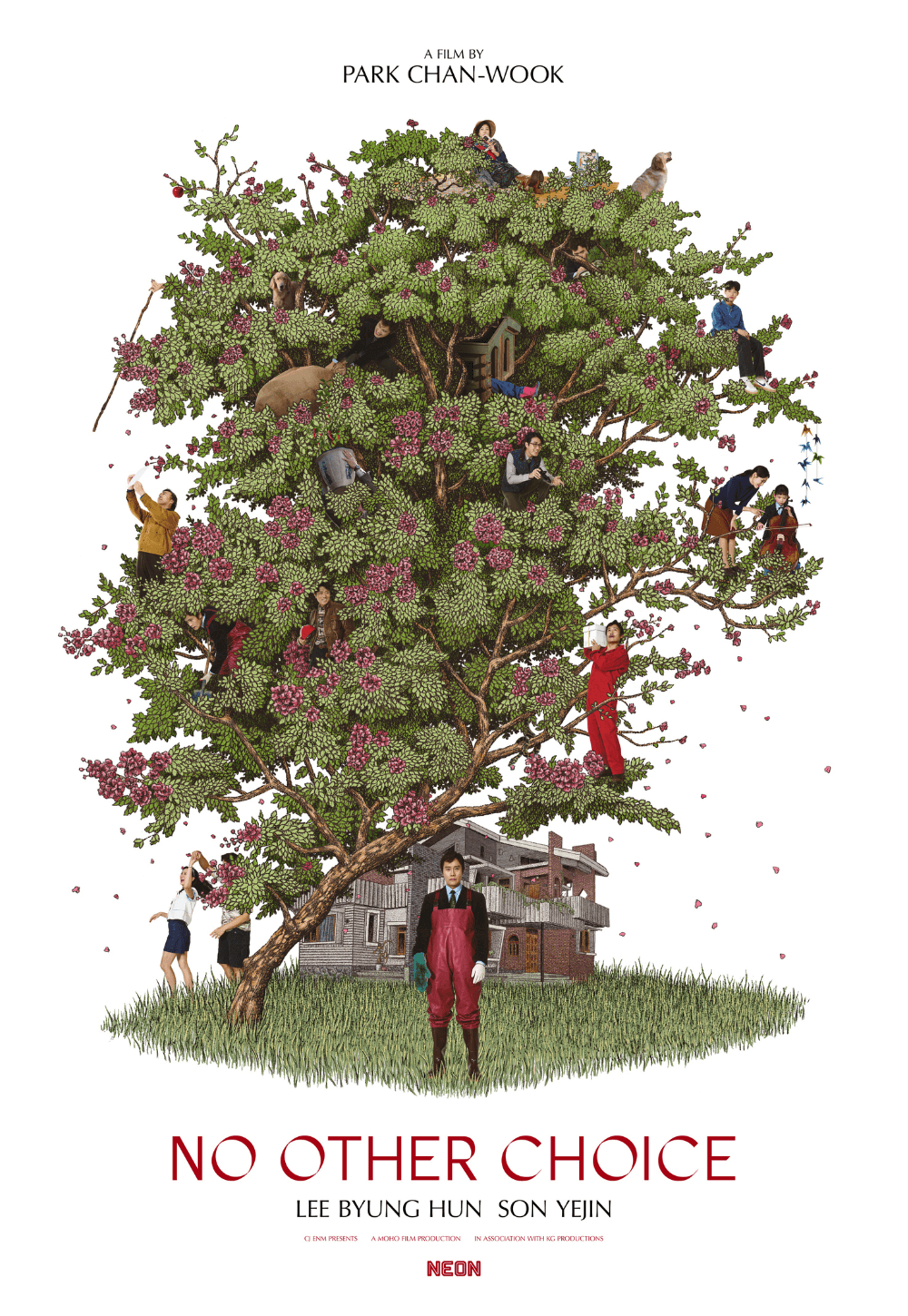
A family man, Man-su (Lee Byung-hun, star of Park’s breakout hit in 2000, Joint Security Area), has been married to his wife, Lee Mi-ri (Son Ye-jin), for many years. They have two children, including her teenage son from a previous marriage and a withdrawn daughter who is an emerging cello prodigy. Completing the picture are two golden retrievers, who bring their dopey and loving energy to the family. They all live in a beautiful home on a hill—the house where Man-su grew up and later struggled to buy and renovate with a modern interior. It’s nestled amid forest hills of vibrant green and flowering trees. Though he lives a privileged life, Man-su has not inherited his good fortune. He has worked hard to achieve success in a lucrative paper industry career, earning him a reputation as one of the top paper men in South Korea. He even won the “Pulp Man of the Year” award in 2019. But his world crumbles when an American corporation buys out his company and lays off twenty percent of the workforce, including Man-su.
More than a year later, Man-su remains unemployed, and Mi-ri forces them to make some concessions: less meat with dinner, no more Netflix, and, worst of all, their two dogs will have to live with her parents. They may even lose their gorgeous home. Desperate, Man-su takes drastic measures. He creates a faux job listing for a paper company executive, knowing that others in the field who have been laid off will apply. Then he uses that information to determine his major rivals for a legitimate job in the industry, all of whom he plans to murder to eliminate the competition. Instead of following Man-su as he checks one name after another off his target list à la Quentin Tarantino’s Kill Bill movies, Park watches him stumble along the way, often making silly mistakes or benefiting from whimsical circumstances and pure dumb luck.
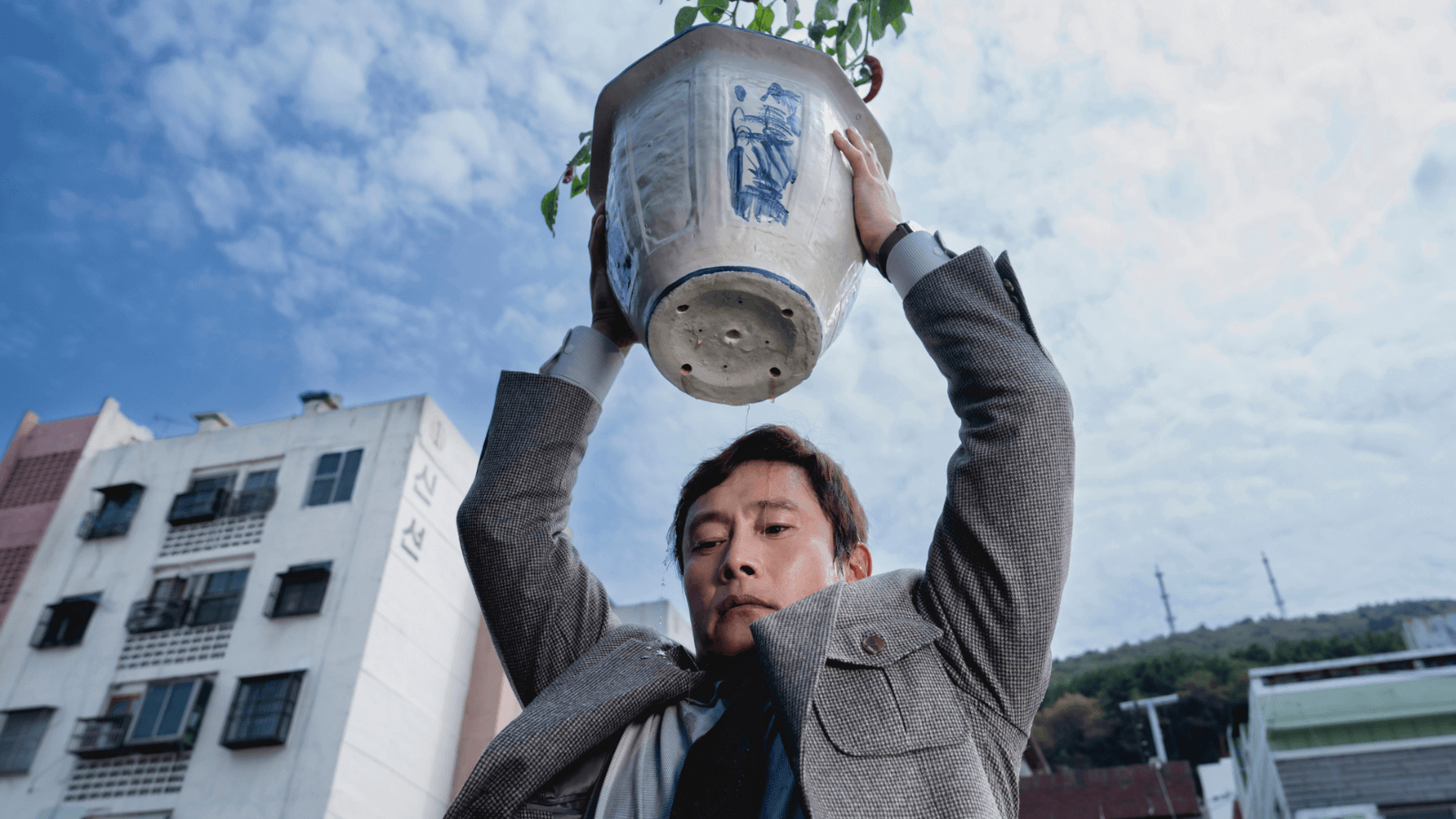
The tone of No Other Choice reminded me of an Ealing-style comedy, such as Kind Hearts and Coronets (1949) or The Ladykillers (1955), where murder can be a punchline. Still, Park doesn’t shy away from gnarly details. This isn’t the first time the director has depicted a gasp-inducing tooth extraction, for instance. And Man-su’s solution to body disposal involves bonsai tree wire and his green thumb, resulting in an unforgettable image. Sure enough, Man-su finds practical solutions to his problems. What else can he do? Just as the American executives explain they have “no other choice” but to eliminate one-fifth of the workforce, Man-su believes he has “no other choice” but to do whatever it takes to stay in the paper industry and provide for his family. Park’s film (co-written by Don McKellar, Lee Kyoung-mi, and Lee Ja-hye) exposes a disturbing reality of capitalism—it’s a system that sets people and corporations up, leaving them with “no other choice” but to act against their principles to get ahead.
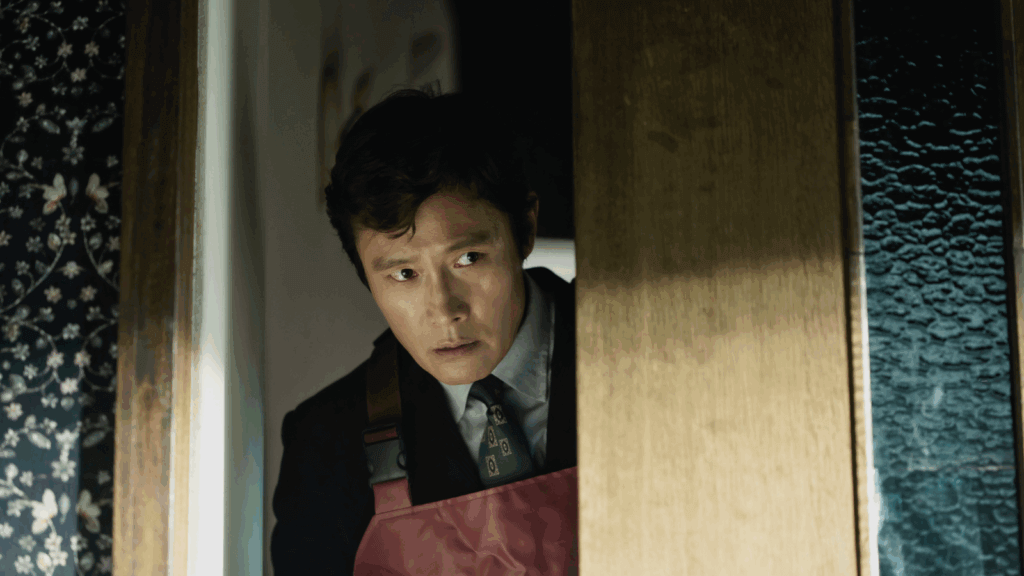
Most effective is the family dynamic that adds substance to the narrative’s hit list propellant. Man-su has tried to build a rapport with their teen son, Si-one (Kim Woo-seung), and the boy getting into trouble for some petty crime gives them a chance to bond. Their daughter, Ri-one (Choi So-yul), has a similarly moving subplot involving her reportedly genius-level cello skills, which no one but her instructor has heard because she refuses to play for her parents—especially after they give up the beloved family dogs, Si-two and Ri-two, adorably named after the children. These relationships sustain the film, making it more than just its gimmicky setup. Most affecting is the loving partnership between Man-su and Mi-ri, full of playful flirting and intimacy. They also have a lot of history. Man-su is a recovering alcoholic, and memories of that period have left a stain. Yet, regardless of her suspicion that Man-su may be drinking again or even having an affair when he’s out at night executing his plan, Mi-ri has an unshakable devotion to her husband, even after she discovers what he’s been up to. Whereas the dutiful men in the film claim they have “no other choice” but to act in deplorable ways, Mi-ri’s conscious choice to support him offers the film’s most tender scenes.
Of course, No Other Choice has been executed with the confidence of a master. Park reteams with Kim Woo-hyung, his cinematographer on the AMC limited series The Little Drummer Girl (2018), based on the John le Carré novel. The production looks slick, with brisk editing by Kim Sang-bum that keeps the 138-minute runtime moving along. But the production also has an intentional slapdash quality, mirroring Man-su’s poorly planned scheme. Elsewhere, it’s ironic that Park’s film employs iffy CGI to complete some scenes at the family’s house, which often looks like a soundstage amid artificial backgrounds. Just as CGI has eliminated the need for on-location shooting, as well as film workers in the technical, practical, and design departments, the increasing use of AI in movie productions threatens digital artists. The pressure to reduce costs informs the film’s central theme, but it has also changed how movies look over the years.
The lightness and humor throughout defang its bite somewhat, so No Other Choice doesn’t have the scarring effect of Park’s best films. It’s not an unshakeable experience, even if the late sequence of Man-su in his new job remains a chilling dose of reality. If the visceral edge feels tempered next to some of Park’s earlier work, the themes resonate, recalling the frequent capitalist critiques found in his fellow countryman Bong Joon-ho’s output—see The Host (2007), Okja (2017), Parasite (2019), and this year’s Mickey 17. Indeed, it’s a larkish takedown packaged as a blithe serial-killer comedy, and it’s surprisingly moving and thoughtful. Consider when one of the men Man-su targets learns a valuable lesson from his spouse: “Losing your job isn’t the problem. How you deal with it is.” Doubtless, everyone dismissed from jobs in the paper industry could have looked elsewhere for work, but they live in a ruthless system that leaves them with few perceived options. No Other Choice asks its audience to look outside of capitalism’s limitations.
Thank You for Supporting Independent Film Criticism
If the work on DFR has added something meaningful to your love of movies, please consider supporting it.
Here are a few ways to show your support: make a one-time donation, join DFR’s Patreon for access to exclusive writing, or show your support in other ways.
Your contribution helps keep this site running independently. However you choose to support the site, please know that it’s appreciated.
Thank you for reading, and for making this work possible.
Brian Eggert | Critic, Founder
Deep Focus Review