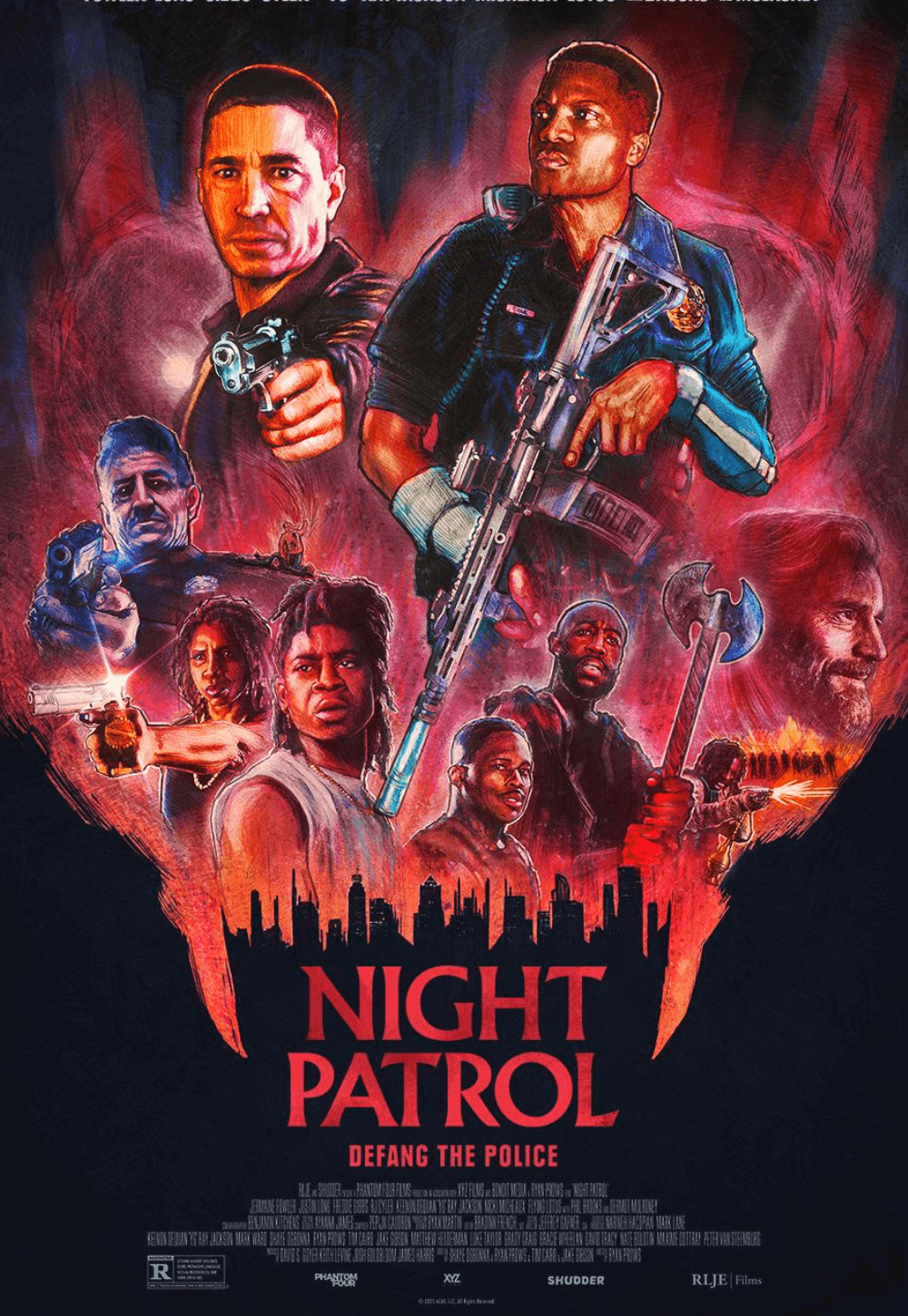
Night Patrol
By Brian Eggert |
Much like From Dusk Till Dawn (1996) or last year’s Sinners, the latest from director Ryan Prows is an inspired genre mashup that follows its own rule book. Night Patrol combines the grittiness of a Los Angeles street crime drama with an out-there strain of vampirism. Add some themes about cultural heritage and institutional racism, and you’ve got a pretty thoughtful, definitely entertaining flick that will invite plenty of comparisons to earlier movies, even while boasting enough innovative ideas to feel unique. Set amid the feud between the Crips and Bloods, the story involves a young gang member who discovers that members of the LAPD’s Night Patrol—a clandestine task force of all-white cops who target gangs—are vampires determined to eliminate the projects and feed on their blood. With humor and gore to spare, it’s a bloody good time that, like many exploitation movies, sneaks in a commentary on the back of its genres.
This sort of hybrid has become the norm in recent years. It’s more common for viewers today to see mix-and-match genre combinations than a straightforward monster movie. Night Patrol feels drawn from LA crime movies of the 1990s, such as Boyz n the Hood (1991) and Menace II Society (1993), as well as from screenwriter David Ayer’s various LAPD-themed films, including Harsh Times (2005) and End of Watch (2012). Prows includes both aesthetics into his presentation, which looks grainy and natural, with cinematographer Benjamin Kitchens employing long takes and gritty handheld cameras to immerse us in the situation. When the monster elements enter the story, Prows shows us the vampire POV in black-and-white (albeit inconsistently) with a wonky stretching effect to convey the disorientation of vampire mind control. With an entire cast that looks engaged in the material’s many shifts, it’s a novel variation.
RJ Cyler (The Harder They Fall, 2021) stars as Wazi, a young Crip who, in the first scene where two star-crossed lovers meet in secret, witnesses his Blood girlfriend, Primo (Zuri Reed), murdered in a Night Patrol initiation ritual. The killer cop in question is Ethan, played by Justin Long, whose usual nice-guy persona is weaponized here, as in Barbarian (2022). Ethan’s partner is Xavier (Jermaine Fowler), and the two have similarly complex backgrounds: Ethan was a Navy SEAL; Xavier was a Crip gang member. Ethan’s father died in the Night Patrol; Xavier’s father died for his gang affiliation. However, Ethan isn’t pure evil. He plans to infiltrate the Night Patrol to discover what happened to his father, and apparently, he’s willing to murder to get answers. Once Ethan joins, Xavier gets a new partner (Jon Oswald), an embodiment of the racist and toxic behaviors often linked to members of the LAPD. And as the Night Patrol searches the projects for the Crip witness, Xavier keeps quiet about Wazi being his brother.
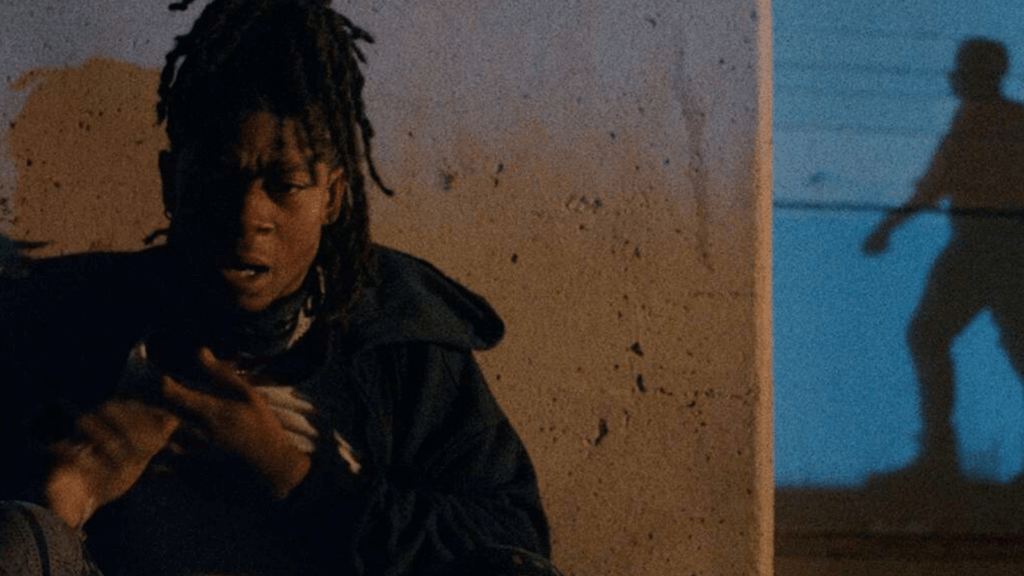
Wazi takes a risk when he visits the Crips’ sworn enemies to report on what happened to Primo, the sister of the Blood boss Bornelius (Freddie Gibbs). Here, the Bloods believe in all manner of mythological creatures, among them demons, lizard men, and shapeshifters. So, they’re not surprised to discover the Night Patrol is a band of vampires on a “holy mission” to rid the world of underprivileged people of color. To quote Roddy Piper’s character from They Live (1988), “It figures it would be somethin’ like this.” Luckily, neither Wazi nor Xavier comes to this fight unprepared. Their Crip mother, Ayanda (Nicki Micheaux), has taught them about Zulu mysticism all their lives. She has been telling them to prepare for a battle between good and evil, between their people and the Obayifo—a West African breed of vampire-colonizer. Not that they believed her until now.
Written by Prows, Shaye Ogbonna, Tim Cairo, and Jake Gibson, Night Patrol draws on imagery reminiscent of Netflix’s Vampires vs. the Bronx (2020). In both films, neighborhoods of color become targets for white institutions. The earlier movie features vampire-developers bent on gentrifying a neighborhood distinguished by its cultural diversity; in the latter, the bloodsuckers are white cops who intend to harvest people of color like cattle. But Prows’ vampires don’t have the usual characteristics. They wear metal fangs and cannot be killed by crucifixes or stakes through the heart. This leads to a climactic battle, where the Night Patrol tries to manufacture a turf war so they can come in and clean up. Instead, the gangs team up against them. Ayanda says she was “put on this Earth to burn white Satan to a crisp,” but no amount of firepower is effective. Eventually, Wazi dons an authentic costume to become a vampire-killing Zulu badass, complete with a green glowing spear that sounds like a lightsaber.
In different hands, the thematic force of Night Patrol could’ve resulted in a mess reminiscent of Ayer’s Bright (2017), a grounded cop movie blended with fantasy creatures. It might’ve also become too preachy or heavy to be fun, but that’s not the case. Despite a confusing chapter structure—with titles such as “LAPD,” “Night Patrol,” and “The Courts”—which proves nonsensical since none of the chapters are unique to the stated characters, Prows maintains an impressive control of his movie’s varying tones. He never allows his message to disrupt the movie’s raw entertainment value, complete with several laugh-out-loud lines of dialogue, splattery moments of vampire bloodshed, and multiple unexpected deaths of main characters. The movie might jump the shark in the finale—I rolled my eyes at one sequence that seemed to lift out of nowhere—but overall, the experience is refreshingly distinct. Night Patrol is familiar and unique in all the right ways.
Thank You for Supporting Independent Film Criticism
If the work on DFR has added something meaningful to your love of movies, please consider supporting it.
Here are a few ways to show your support: make a one-time donation, join DFR’s Patreon for access to exclusive writing, or show your support in other ways.
Your contribution helps keep this site running independently. However you choose to support the site, please know that it’s appreciated.
Thank you for reading, and for making this work possible.
Brian Eggert | Critic, Founder
Deep Focus Review